
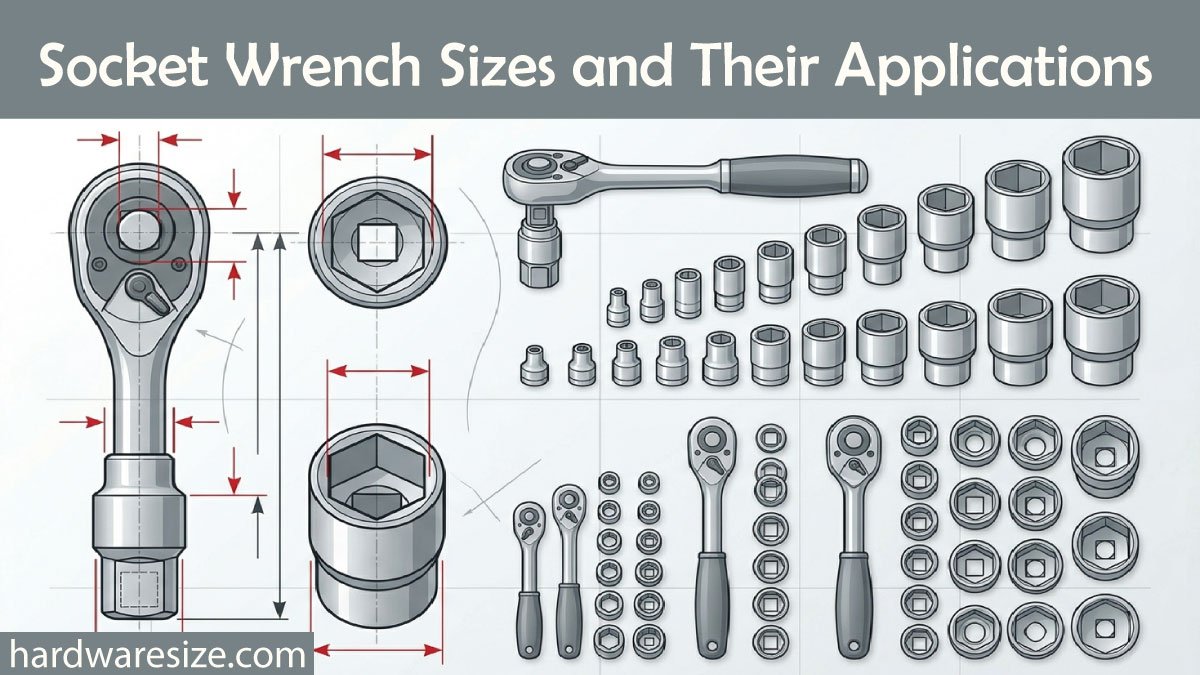
A socket wrench is one of the most essential tools in mechanical work, automotive repair, and industrial maintenance. Whether you are a professional mechanic or someone who enjoys DIY repairs at home, understanding socket wrench sizes and their applications is very important. Choosing the correct size not only improves efficiency but also prevents damage to bolts, nuts, and tools.
In this detailed guide, we will explore socket wrench sizes, drive types, measurement systems, and real-world applications in a simple and practical way.
What Is a Socket Wrench?
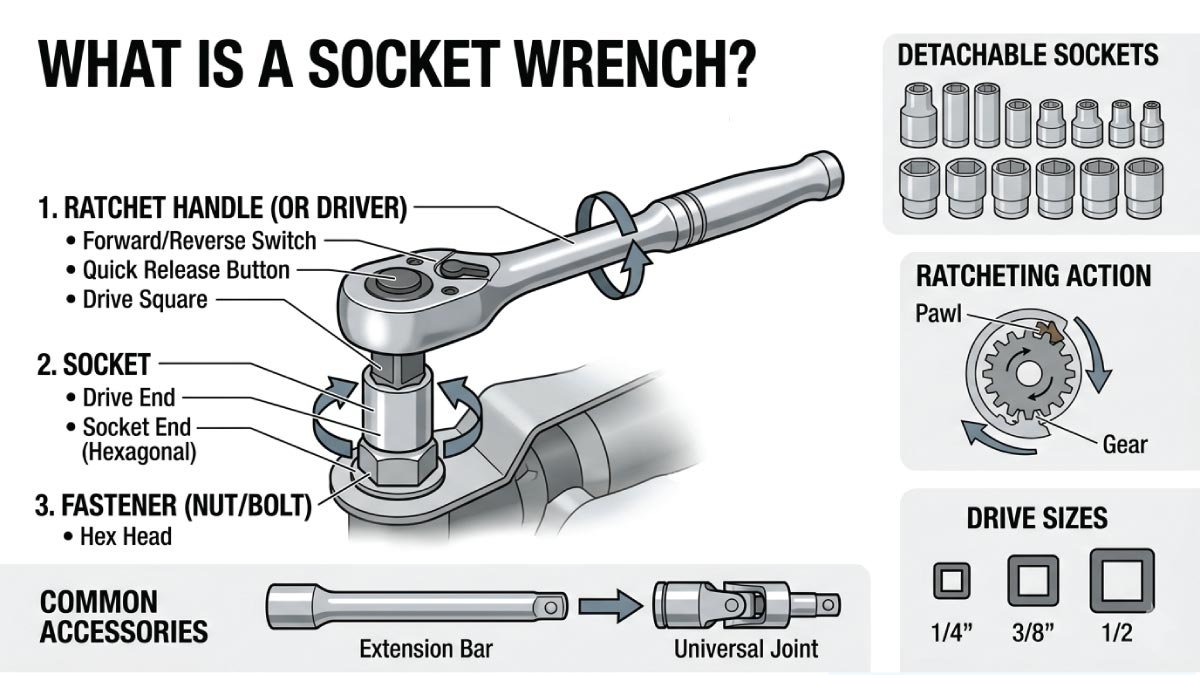
A socket wrench, also known as a ratchet wrench, is a hand tool used to tighten or loosen nuts and bolts using interchangeable sockets. Unlike traditional wrenches, a socket wrench has a ratcheting mechanism that allows continuous movement in one direction without removing the tool from the fastener.
This feature makes it extremely useful in tight spaces where movement is limited.
Key Features of a Socket Wrench:
- Ratcheting mechanism for fast operation
- Interchangeable sockets for different bolt sizes
- High torque application capability
- Compact design for confined areas
Socket wrenches are widely used in automotive repair, construction work, machinery maintenance, and household tasks.
Understand The Socket Wrench Sizes
Socket wrench sizes are a fundamental concept in mechanical work, automotive repair, and industrial maintenance. Choosing the correct size ensures proper torque application, prevents damage to fasteners, and improves efficiency during assembly or disassembly tasks. Socket systems are generally divided into two key sizing categories that must be clearly understood for safe and accurate use.
1. Drive Size (Wrench Side)
The drive size refers to the square-shaped connection point between the socket and the wrench handle or ratchet. This part determines how much force or torque the tool can safely handle without breaking or slipping during operation. A larger drive size allows for higher torque applications and heavy-duty work.
Common drive sizes include:
- 1/4 inch drive
- 3/8 inch drive
- 1/2 inch drive
- 3/4 inch drive
- 1 inch drive
A larger drive size means more strength and higher torque capacity, making it suitable for heavy machinery, while smaller drives are ideal for precision work and tight spaces.
2. Socket Size (Bolt Side)
The socket size refers to the internal opening of the socket that fits onto the nut or bolt head. This size must match the fastener exactly to ensure a secure grip and prevent rounding or stripping of the bolt edges during tightening or loosening operations.
Socket sizes are measured in two systems:
- Metric system (millimeters)
- Imperial system (inches)
For example:
- 10 mm socket fits a 10 mm bolt
- 1/2 inch socket fits a 1/2 inch bolt head
Correct matching is essential for avoiding damage, ensuring safety, and achieving accurate torque application in mechanical and engineering tasks.
Metric vs Imperial Socket Sizes
Socket sizes are manufactured in two main measurement systems: metric and imperial. Understanding the difference between these systems is essential for selecting the correct socket, avoiding damage to fasteners, and ensuring compatibility with different types of machinery and vehicles across global engineering standards.
1- Metric System (mm)
The metric system is the most widely used socket measurement system in modern engineering and manufacturing. It is commonly found in Europe, Asia, and most modern vehicles and machinery. This system is based on millimeters, making it more precise and easier to standardize in mechanical design and production.
Common sizes include:
- 8 mm
- 10 mm
- 12 mm
- 14 mm
- 17 mm
- 19 mm
- 22 mm
Metric sockets are standard in most modern mechanical systems because they provide accurate fitment and are compatible with international manufacturing standards used in automotive, industrial, and construction equipment.
2- Imperial System (Inches)
The imperial system is an older measurement system still widely used in the United States and in some legacy machinery and equipment. Instead of millimeters, socket sizes are measured in fractions of an inch, which can sometimes make selection more complex compared to metric sizing.
Common sizes include:
- 1/4 inch
- 3/8 inch
- 1/2 inch
- 5/8 inch
- 3/4 inch
- 1 inch
Mechanics often encounter imperial fasteners in older American vehicles, industrial machines, and imported equipment, where matching exact fractional sizes is necessary to prevent rounding or damaging the bolt heads.
3- Transition Between Metric and Imperial Systems
In real-world mechanical work, technicians often deal with both metric and imperial fasteners, especially in repair shops and mixed equipment environments. Because of this, adapter sets and dual socket wrench kits are commonly used to bridge the gap between the two systems.
Key points to understand:
- Metric is more common in modern equipment
- Imperial is still used in older American systems
- Adapter tools help switch between both systems
- Mixing incorrect sizes can damage bolts and sockets
Understanding both measurement systems ensures flexibility, accuracy, and efficiency in mechanical, automotive, and industrial applications.
👉 If you work with measurements, understanding vernier caliper sizes is very important for accuracy. This guide explains different sizes, uses, and how to choose the right one easily. Learn practical tips and improve your precision—read the full post to boost your measuring skills and work more confidently.
How to Choose the Right Socket Wrench Size
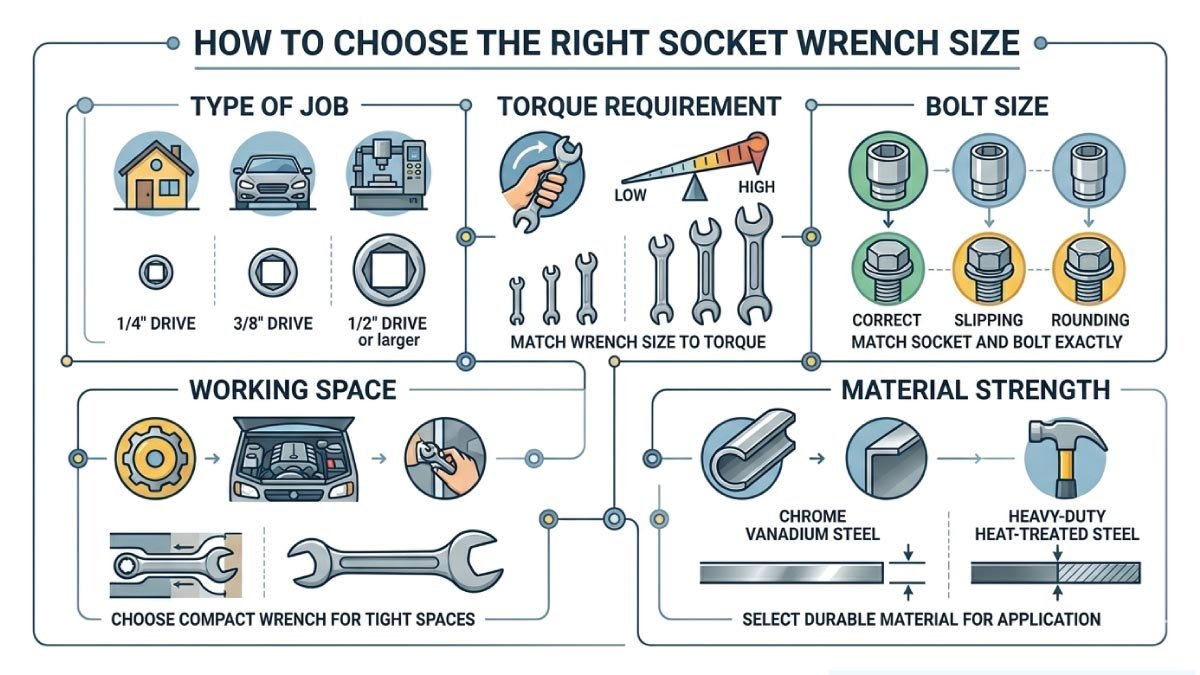
Selecting the correct socket wrench size is important for safe, efficient, and damage-free work. The right choice depends on the type of job, required torque, bolt size, working space, and tool material. Understanding these factors helps you improve accuracy and extend tool life.
1. Type of Job
The first step is identifying the type of task you are performing, as different jobs require different levels of torque and tool strength. Light-duty tasks such as small household repairs typically use a 1/4 inch drive. General mechanical work often requires a 3/8 inch drive, while heavy-duty industrial applications need a 1/2 inch or larger drive size for proper performance.
2. Torque Requirement
Torque refers to the rotational force applied to tighten or loosen a bolt. Higher torque demands stronger and larger socket wrench drives. If you use a small wrench for high-torque bolts, it can lead to tool damage or even injury. Always match the wrench size with the torque level required for safe and efficient operation.
3. Bolt Size
Matching the socket size exactly with the bolt head is critical for proper grip and performance. A correct fit ensures smooth operation and prevents slipping. If the socket is too loose, it can strip the bolt head, while an incorrect or tight mismatch may cause rounding or damage to both the tool and the fastener.
4. Working Space
The available working space plays an important role in selecting the right socket wrench size. In tight or confined areas, smaller socket wrenches are more practical because they offer better maneuverability. Larger tools require more clearance and may not fit properly in narrow spaces, making them less suitable for compact mechanical environments.
5. Material Strength
Socket wrenches are made from different materials depending on their application. Chrome vanadium steel is commonly used for general-purpose tools due to its strength and durability. For heavy-duty or industrial applications, stronger, heat-treated steel sockets are preferred because they can withstand higher stress, torque, and continuous usage without failure.
Applications of Socket Wrenches
Socket wrenches are essential tools used in nearly every mechanical and industrial field. Their versatility, ease of use, and ability to handle different bolt sizes make them a standard choice for professionals and DIY users alike.
1- Automotive Industry
In automotive work, socket wrenches are used for engine repair, wheel changing, brake system maintenance, and suspension adjustments. Their ability to apply controlled torque makes them ideal for working on critical vehicle components safely and efficiently.
2- Construction Industry
In construction, socket wrenches are widely used for assembling steel structures, installing heavy equipment, and supporting machinery setup tasks. They help workers tighten large bolts securely, ensuring structural stability and long-term safety in demanding environments.
3- Home DIY Projects
For home users, socket wrenches are useful in furniture assembly, appliance repair, and general household maintenance tasks. Their simple design and ease of use make them a practical tool for everyday repair and improvement projects.
4- Industrial Manufacturing
In industrial settings, socket wrenches play a key role in production line maintenance, machine assembly, and equipment servicing. They ensure fast, accurate fastening and are essential for keeping machinery running smoothly with minimal downtime.
Conclusion
Understanding socket wrench sizes and their applications is essential for safe, efficient, and professional mechanical work. Each drive size from 1/4 inch to 1 inch—has a specific purpose and torque capacity.
For general use, the 3/8 inch drive is the most versatile, while the 1/2 inch drive is essential for automotive and heavy-duty tasks. Larger sizes are used in industrial environments where maximum strength is required.
By choosing the correct socket wrench size, you not only improve your work quality but also extend the life of your tools and fasteners.
FAQs:
How are socket wrenches sized?
Socket wrenches are sized based on their drive size and socket opening. Common drive sizes include 1/4, 3/8, 1/2 inch, and larger. The socket must match the bolt head size for proper grip, torque transfer, and safe mechanical operation without slipping or damaging fasteners.
How to select socket size?
To select a socket size, measure the bolt head across flats using a caliper or wrench gauge. Choose a socket that fits snugly without play. A proper fit ensures efficient torque transfer, prevents rounding of bolt edges, and improves safety during tightening or loosening tasks.
How to calculate socket size?
Socket size is calculated by measuring the bolt head’s flat-to-flat distance in millimeters or inches. This measurement directly determines the required socket size. Always match the exact value or nearest standard size to ensure proper engagement and avoid slipping or fastener damage during use.
What is the size of a normal socket?
A normal socket typically refers to common metric or SAE sizes used in everyday work. Standard ranges include 8mm to 19mm or 5/16 inch to 3/4 inch. These sizes cover most automotive, household, and mechanical applications requiring general-purpose fastening and repair work.
How to calculate wrench size?
Wrench size is calculated by measuring the bolt head width across flats using a caliper or ruler. The measurement gives the exact wrench size needed. Matching size precisely ensures strong grip, prevents slipping, and allows proper torque application without damaging the fastener or tool.
Is 13mm the same as 1/2 inch?
No, 13mm is not exactly the same as 1/2 inch. 1/2 inch equals 12.7mm, which is slightly smaller than 13mm. Although they are close, they are not identical, and using the wrong size may cause slight slippage or rounding of the bolt head over time.
Which is bigger, 13/16 or 21mm?
21mm is slightly larger than 13/16 inch. 13/16 inch equals about 20.64mm, while 21mm is exactly 21mm. The difference is small but important in precision work, where using the correct size ensures proper grip and avoids damaging the bolt or socket.
How many mm is a socket?
Sockets come in many sizes, but metric sockets typically range from 4mm to over 50mm. The most common working range is 8mm to 19mm for general tasks. The exact size depends on the bolt or nut being used in mechanical or automotive applications.
Is a 22mm socket the same as 7/8?
No, a 22mm socket is not exactly the same as 7/8 inch. 7/8 inch equals 22.225mm, which is slightly larger than 22mm. They are close enough for some applications but not perfectly interchangeable in precision or tight-fitting mechanical work.

Engineer Hassan is a Mechanical Engineer with 16+ years of hands-on experience in mechanical hardware, fasteners, and workshop tools. He focuses on size selection, thread identification, and measurement, helping users choose the correct components with accuracy and safety.