
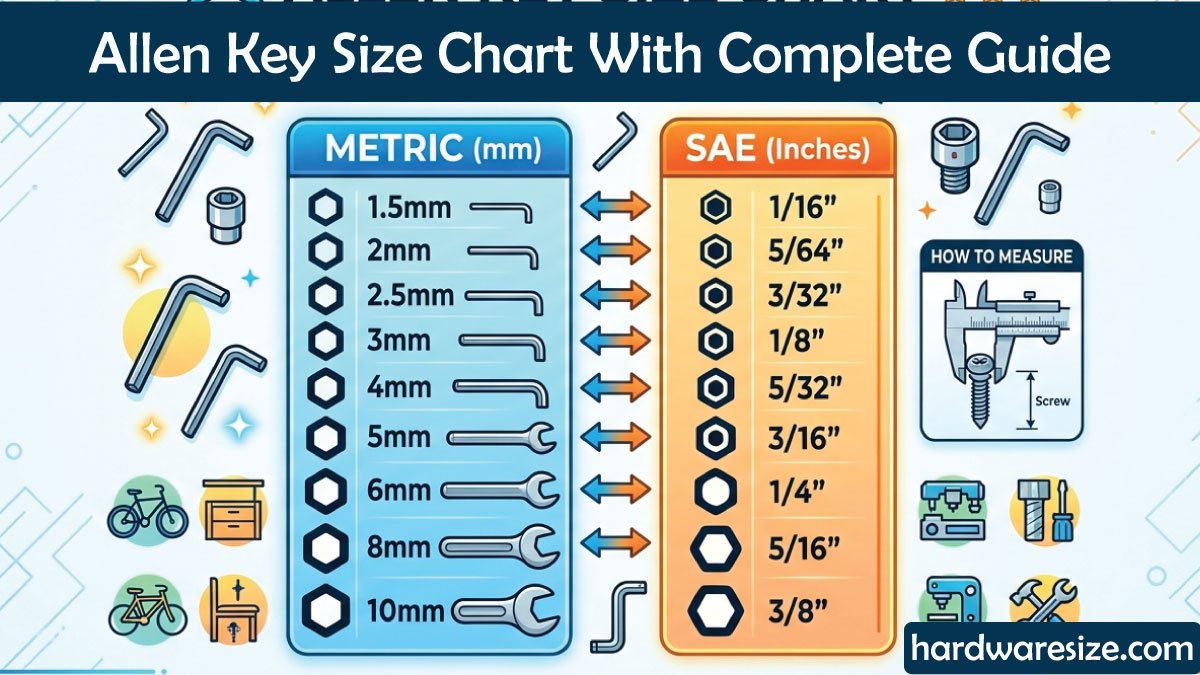
Allen keys, also known as hex keys are important tools to have in your workshop or when you are doing DIY projects. Whether you are putt together furniture fix a bike or worked on machines you need to know about Allen sizes to do the job correctly and safely.
In this guide you will learn about Allen key sizes, included the metric and SAE sizes, how to measure them and how to pick the right one for your project.
What Is an Allen Key?
An Allen key is a tool that looks like an L. It is used to turn bolts and screws with hexagonal sockets. It gives you a grip and makes it easy to apply torque especially in tight spaces.
These tools are commonly used in:
- Furniture assembly
- Automotive repairs
- Bicycle maintenance
- Machinery and industrial equipment
Why Allen Key Sizes Matter
Use the size Allen key is crucial for safe and efficient work. If you use the size you can strip the bolts damage your tools reduce the grip cause slipp and increase the risk of getting hurt or doing a poor job.
- Strip the bolt head
- Damage the tool
- Lose grip while tightening or loosening
- Cause safety issues
A properly fitted Allen key ensures:
- Better torque application
- Longer tool and fastener life
- Smooth and efficient work
Metric Allen Key Size Chart (MM)
Metric Allen keys are used over the world especially in Europe and Asia. These tools are measured in millimeters, which makes them perfect for engineering, mechanical work putting together furniture and doing repairs in various industries.
Common Metric Sizes
| Size (mm) | Common Uses |
|---|---|
| 0.7 mm | Precision electronics |
| 0.9 mm | Small devices, eyeglasses |
| 1 mm | Watches, small screws |
| 1.5 mm | Electronics, gadgets |
| 2 mm | Light machinery |
| 2.5 mm | Furniture, appliances |
| 3 mm | Bicycles, light repairs |
| 4 mm | Furniture assembly |
| 5 mm | Automotive, machinery |
| 6 mm | Industrial bolts |
| 8 mm | Heavy-duty equipment |
| 10 mm | Large machinery |
SAE Allen Key Size Chart (Inches)
SAE Allen key sizes are mostly used in the United States. These keys are measured in inches. Are commonly found in cars, machines and industrial applications.
Common SAE Sizes
| Size (Inches) | Decimal Equivalent | Common Uses |
|---|---|---|
| 0.028″ | 0.71 mm | Precision work |
| 1/16″ | 1.59 mm | Small screws |
| 5/64″ | 1.98 mm | Electronics |
| 3/32″ | 2.38 mm | Light tools |
| 1/8″ | 3.17 mm | Furniture |
| 5/32″ | 3.97 mm | Bikes, repairs |
| 3/16″ | 4.76 mm | Machinery |
| 1/4″ | 6.35 mm | Automotive |
| 5/16″ | 7.94 mm | Heavy-duty |
| 3/8″ | 9.53 mm | Industrial use |
Metric Allen Key Size Chart
Also Read:
👉 Discover all screwdriver types in this complete guide for beginners. Learn their uses, tips, and tricks to choose the right tool for every job. Don’t miss out—read the full post to become a screwdriver pro!
Metric vs SAE Allen Keys: What’s the Difference?
Know the difference between metric and SAE Allen keys is important for pick the tool make sure it fits properly prevent the damage to bolts and doing safe and efficient work on any project.
Key Differences
1. Measurement System
- Metric: Millimeters (mm)
- SAE: Inches
2. Usage
- Metric: Used in most countries worldwide
- SAE: Mostly used in the USA
3. Compatibility
- Not interchangeable
- A close size may fit, but it can damage the bolt
👉 Example: A 5 mm Allen key is not exactly equal to a 3/16″ key, even though they are close.
Allen Key Conversion Chart (Metric to SAE)
Sometimes you need to convert between SAE Allen key sizes. Here is a quick chart to help you match the measurements accurately and avoid damaging bolts or tools.
| Metric (mm) | Closest SAE |
|---|---|
| 1.5 mm | 1/16″ |
| 2 mm | 5/64″ |
| 2.5 mm | 3/32″ |
| 3 mm | 1/8″ |
| 4 mm | 5/32″ |
| 5 mm | 3/16″ |
| 6 mm | 1/4″ |
| 8 mm | 5/16″ |
| 10 mm | 3/8″ |
⚠️ Always use the exact size whenever possible to avoid stripping the fastener.
Also Read:
How to Measure Allen Key Size
Measure an Allen key correctly is important for making sure it fits properly and avoid the damage to bolts or tools. If the key is not marked there are reliable ways to measure it. Measure it correctly prevents stripped, slipped and unsafe conditions and ensures you can work efficiently on furniture, cars, electronics or industrial projects.
1. Use a Vernier Caliper
Measure the distance across the sides of the hex key. This method gives you results, especially for small or unmarked keys. It is perfect for mechanical and industrial applications where accuracy is essential.
2. Use a Ruler
Place the key against a ruler. Measure it in millimeters or inches. Although this method is not as precise as using a caliper it works well for sized Allen keys and general DIY or household projects.
3. Test Fit Method
Try fitting the key into a bolt:
-
If it’s loose → too small
-
If it doesn’t fit → too large
-
Perfect fit → correct size
This method is simple, effective, and ensures the key fits the fastener properly, avoid the damage during work.
Types of Allen Keys
Allen keys come in designs to suit various applications from simple DIY projects to heavy machinery maintenance. Pick the type ensures efficiency, safety and convenience. Know the types helps you pick the tool for the task at hand whether it is furniture, electronics, bikes or industrial work.
1. Standard L-Shaped Keys
Most common type
Simple and cost-effective
The L-shaped design gives you leverage. Is perfect for general-purpose tasks. These are widely used in putt the furniture, home repairs and light mechanical applications.
2. Ball-End Allen Keys
Allows angled entry (up to 25°)
Ideal for tight spaces
Ball-end keys give you flexibility when access is limited. They allow insertion into fasteners making them useful in cars, electronics or machinery applications with tight spaces.
3. T-Handle Allen Keys
Better grip and torque
Used for heavy-duty applications
T-handle Allen keys give you grip and allow higher torque application. They are perfect for bolts or industrial machinery where extra leverage and comfort are required.
4. Folding Hex Key Sets
Compact and portable
Great for quick repairs
Folding sets are convenient for carrying quick access. They are excellent for on-the-go repairs or situations where you need sizes in a single compact tool.
Common Applications of Allen Keys
Allen keys are tools used in many industries due to their simple design and efficient torque application. From home projects to mechanical work these tools provide precision and reliability. Know the applications helps you pick the correct size and type for each task.
1. Furniture Assembly
Most flat-pack furniture uses hex bolts make the Allen keys essential for assembly. They allow tightening without stripping screws ensuring stability and durability in cabinets, tables, chairs and other household furniture.
2. Automotive Work
Allen keys are used extensively in car repair and maintenance. They secure engine components, brake systems, interiors and other parts where precision and proper torque are critical for safe vehicle operation.
3. Bicycle Maintenance
Bicycles rely on hex bolts for seats, brakes, handlebars and gear components. Allen keys allow adjustments making them essential for safe, smooth and reliable bicycle maintenance.
4. Electronics
Small Allen keys are used in assembling and repairing gadgets, computers and electronic devices. They help tighten screws without damaging components ensuring precision in compact spaces.
5. Industrial Machinery
Heavy-duty machinery requires hex bolts for assembly and maintenance. Allen keys provide the torque and control to secure industrial equipment safely and efficiently preventing mechanical failures or accidents.
Also Read:
Tips for Choosing the Right Allen Key
Picking the Allen key improves efficiency, safety and tool longevity. Use the size or type can strip bolts, damage tools or make tasks harder. Considering size, quality and intended application ensures use and a smooth workflow in all projects.
1. Match the Exact Size
Do not use close sizes. A precise fit prevents stripping bolts ensures torque application and protects both the fastener and the tool.
2. Use Quality Tools
High-quality steel keys resist wear and bending provide grip and last longer. Invest in tools ensures reliability for both light DIY projects and heavy-duty industrial work.
3. Consider the Job Type
-
Light work → Standard keys
-
Heavy work → T-handle keys
Pick the type for the task improves efficiency, comfort and safety while reduce the risk of damage or injury.
4. Keep Both Metric & SAE Sets
Have both metric and SAE sets ensures you can handle any fastener, whether imperial, without risk of damage or improper fitting. This is essential, for workshops and professional repair work. Allen keys are important tools to have and know about Allen keys will help you do your job better.
Common Mistakes to Avoid
A lot of people accidentally damage their tools, like bolts or fasteners because of mistakes. If you know about these mistakes you can avoid wasting the time and money on repairs. Using tools the way and paying attention to details can make them last longer and help you work safely and efficiently.
-
Using the wrong size
-
Applying excessive force
-
Using worn-out keys
-
Mixing metric and SAE tools
Avoid these mistakes will save time and prevent costly damage.
Allen Key Storage and Organization
Keep your Allen keys in order is an idea because it helps you work faster and makes your tools last longer. When you store them properly you will not lose them your workspace will be cleaner. You can find what you need quickly. This is important for people who like to fix things at home and, for professionals who work in workshops.
Storage Options:
-
Plastic holders
-
Wall-mounted racks
-
Toolboxes with labeled slots
Pro Tip: Always return the key to its place after use to avoid losing sizes.
Also Read:
Allen Key Maintenance Tips
You need to take care of your Allen keys so they keep working stay safe and last a long time. You should clean them often store them correctly and replace them when they get worn out. This will make your tools reliable prevent them from rust and make your work easier and faster when you are working on machines or fixing things.
-
Keep them clean and dry
-
Avoid rust by storing properly
-
Replace worn-out keys
-
Do not use as a pry tool
Conclusion
If you use tools you should know about the Allen key size chart. It does not matter if you use SAE sizes you need to choose the right Allen key to be precise, safe and efficient.
By know about both size systems, measure things correctly and doing things the way you can avoid make mistakes and finish your work with confidence.
If you often work with fasteners it is an idea to buy a complete set of Allen keys. This will make your work easier. You will be able to do it like a professional.

Engineer Hassan is a Mechanical Engineer with over 16 years of hands-on experience in mechanical hardware, fasteners, bolts, screws, nuts, washers, and related mechanical components. He has extensive expertise in selecting, measuring, and installing hardware, ensuring accuracy, safety, and reliability in every project.
Through Hardware Size, he provides detailed size charts, installation guides, and technical tutorials, helping engineers, technicians, students, and DIY enthusiasts solve practical hardware problems with confidence.