
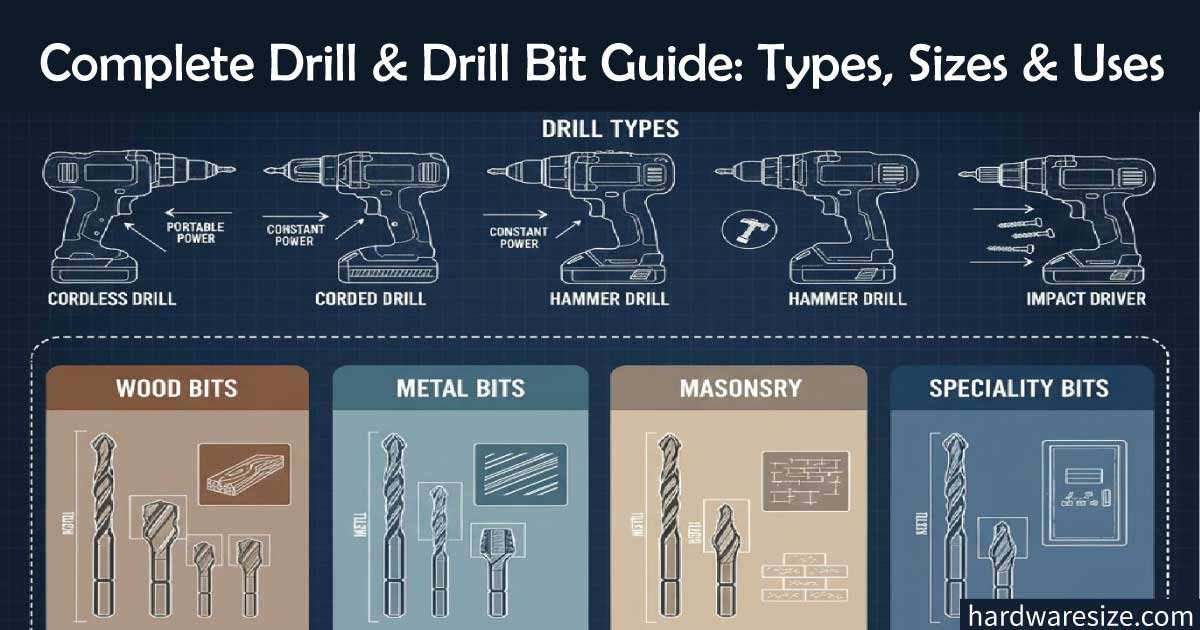
A drill is the most popular tool used at home as well as in a workshop and a construction place. DIY projects such as shelf hanging and more advanced and professional tasks such as metal shaping or concrete drilling are performed by using drills, which make work quicker, cleaner and more accurate.
Nevertheless, not all of its users know what drill is suitable to their task. Other drills are made of light household use and others to deal with concrete, stone or heavy-duty fastening. The incorrect drill may harm the materials, fracture the drill bits or even injure. The following entire drill and drill bit instruction is intended to address that issue.
This is the first section that we will dedicate to the kind of drills, their functionality, and to which type of drill should be applied. Further sections will discuss the type of drill bits, sizes, chart and tips of their practical use and you will always be able to make the correct selection.
What Is a Drill and Why Is It So Important?
A drill is a common hand or power tool used to wear round holes and screw screws or fasteners into various substances. It works on the principle of high speed rotation of a drill or driver bit. A hammering mechanism is also involved in some of the drills, which enables one to overcome hard surfaces like concrete, brick and masonry without building up.
Drills are essential because they:
- Save time compared to manual tools
- Create clean, accurate holes
- Allow controlled fastening and screw driving
- Work across multiple materials like wood, metal, plastic, and concrete
Modern drills are designed to be versatile, meaning one tool can handle multiple tasks when paired with the correct drill bit.
How a Drill Works (Simple Explanation)
A drill at its simplest consists of a transfer of power between a motor and a rotating chuck where the drill bit can be found. As the pressure is exerted, the rotating bit slices the material. Other drills provide an additional force by a hammering motion which is effective in disaggregating hard materials such as masonry.
The effectiveness of a drill depends on:
- Power (voltage or motor strength)
- Speed (RPM control)
- Torque (rotational force)
- Correct drill bit selection
Understanding these basics helps you avoid common problems such as overheating, bit slipping, or rough holes.
Main Types of Drills Explained Clearly
It is preferable not to list the tools at random: it is preferable to get acquainted with drills by purpose and load. A drill is a common hand or power tool, which is used to make round holes and insert screws in various materials. It functions by spinning a drill bit with a high speed and some models have a hammering feature which is used on hard surface such as concrete and masonry.
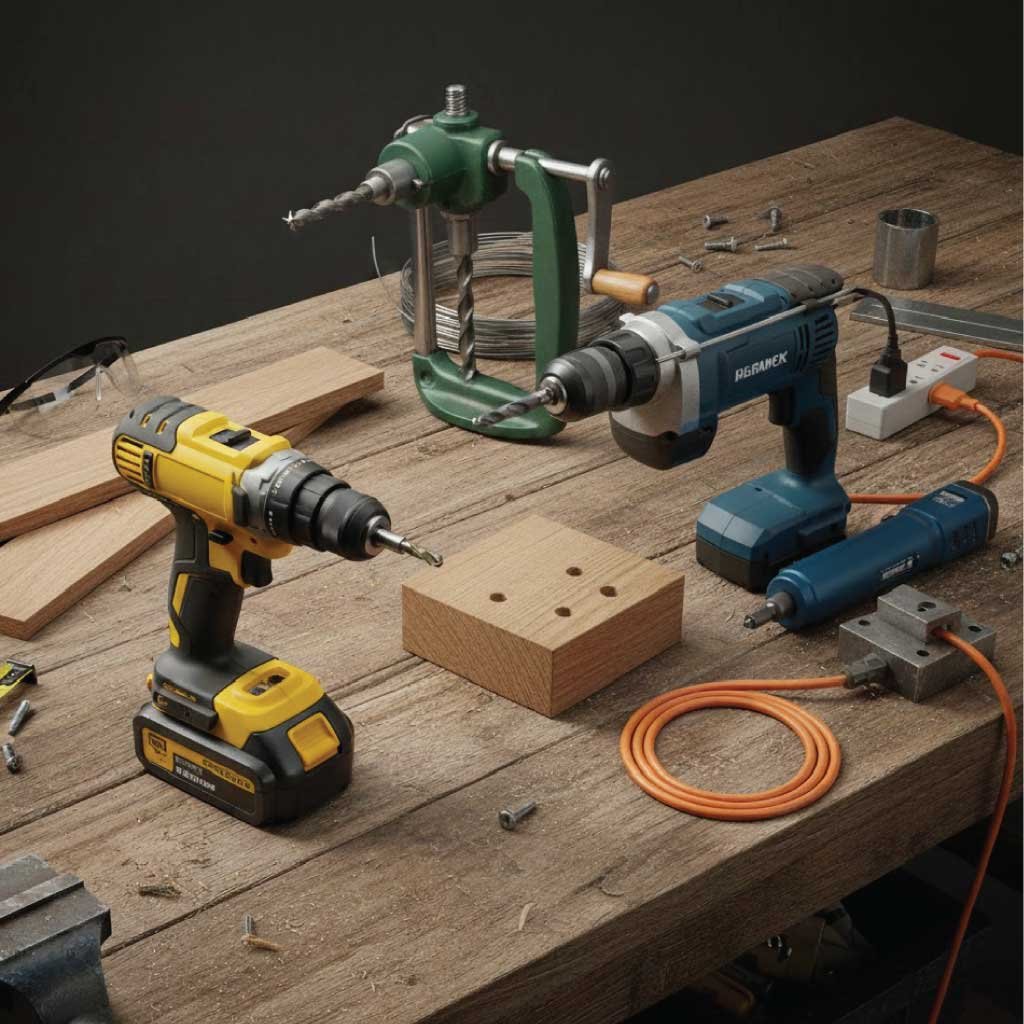
1- Cordless Drill – The Everyday All-Purpose Tool
The most common drill that is available nowadays is the cordless drill. It uses a rechargeable battery hence it is portable and can be used in any place without fear of power outlets.
It is mostly deployed to make holes on wood, plastic and thin metal and also to drive screws. The question is that most cordless drills provide the possibility of adjusting the speed and torque which provides an opportunity to be more precise when working.
A cordless drill can be the most helpful and the first purchase of a homeowner and a person who uses it in DIY.
2- Corded Drill – Consistent Power for Long Jobs
A corded drill is an electrical drill that is attached directly to an electrical outlet. It does not lose its performance with time as a battery drains in case of cordless drills.
The corded drills are used where there is prolonged working period especially when drilling metal or hard wood.
They are mostly more robust than entry level cordless ones but lack portability. In case you work in one place and must have constant power, a corded drill is a good choice.
3- Hammer Drill – Designed for Masonry
A hammer drill is similar to a regular drill but it has a mechanism of hammering attached to it. During rotation, the bit also moves forward and backward causing fast impacts. This combined movement is used to penetrate hard materials such as, concrete, brick, and even stone, and is therefore suitable in masonry drilling activities.
Hammer drills are ideal for:
- Concrete walls
- Brick surfaces
- Masonry anchors
They are not meant for heavy demolition but work well for household masonry tasks.
4- Rotary Hammer Drill – Heavy-Duty Professional Tool
A rotary hammer drill instead of a mechanical hammering action has a pneumatic system. This enables it to exert a lot more force of impact.
These exercises are usually applied in the construction and industrial process where one wants to excavate large holes through concrete or stone. SDS or SDS-Plus bits fit into the chuck and are used by the majority of models.
This tool is not normally needed by the average users of a home yet it is essential to professionals.
5- Impact Driver – Powerful Fastening Tool
Impact drivers are usually confused with drills, but most of them are primarily used to drive screws and bolts. They provide great torque in bursts, and these bursts are short but with lots of power, hence less strain is exerted by the user. This renders them highly successful in fitting long, fat or intractable fasteners in wood and metal.
Impact drivers are commonly used in:
- Deck building
- Framing
- Structural fastening
They are not ideal for precision drilling but excel at heavy fastening jobs.
Drill Types Comparison Table
This is a compare and contrast table that assists you to rapidly find out the distinction between frequent drills. It explains the power sources, the most appropriate application, and constraints, so it is not necessary to get confused and select the perfect drill to use in DIY-related projects, construction work, precision drilling, or heavy-duty jobs.
| Drill Type | Power Source | Best For | Limitations |
|---|---|---|---|
| Cordless Drill | Battery | DIY, wood, light metal | Limited runtime |
| Corded Drill | Electric | Continuous heavy work | Less portable |
| Hammer Drill | Electric/Battery | Concrete, brick | Not for fine work |
| Rotary Hammer | Electric | Large concrete holes | Heavy & expensive |
| Impact Driver | Battery | Screws & bolts | Poor for drilling |
| Drill Press | Electric | Precision drilling | Not portable |
Drill Power, Speed & Torque Explained
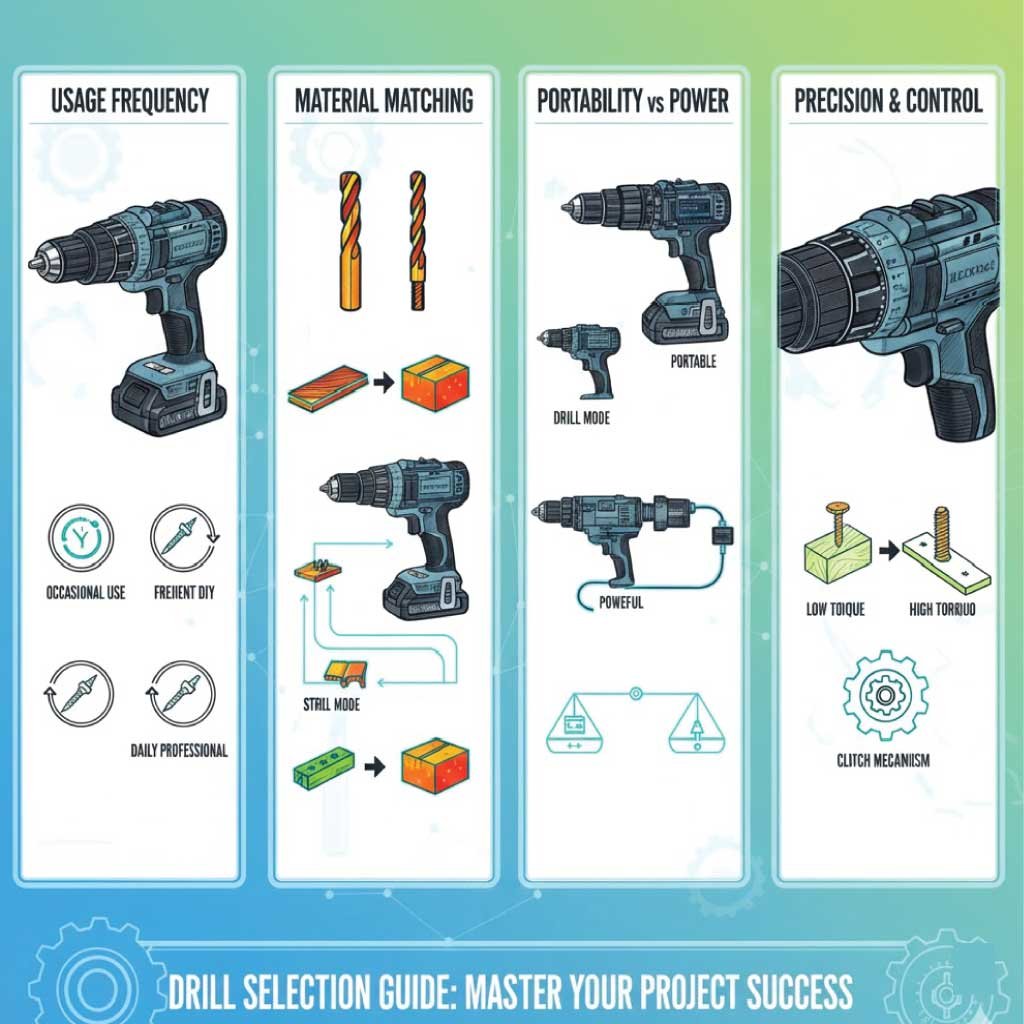
The correct drill is not only type, but it may be affected by power, speed, and torque. These are the factors that determine the efficiency of a drill when applied to various materials. Knowing the power of drills is good to work with difficult tasks, speed is important in accuracy, and the torque is used to ensure the drill operates the screws without ruining materials.
Voltage (Cordless Drills)
- 12V – Light DIY and household tasks
- 18V / 20V – Most common, balanced performance
- 24V+ – Heavy-duty and professional use
Speed Control
Most drills feature variable speed triggers and two gear settings:
- Low speed for screw driving and hard materials
- High speed for drilling wood and plastic
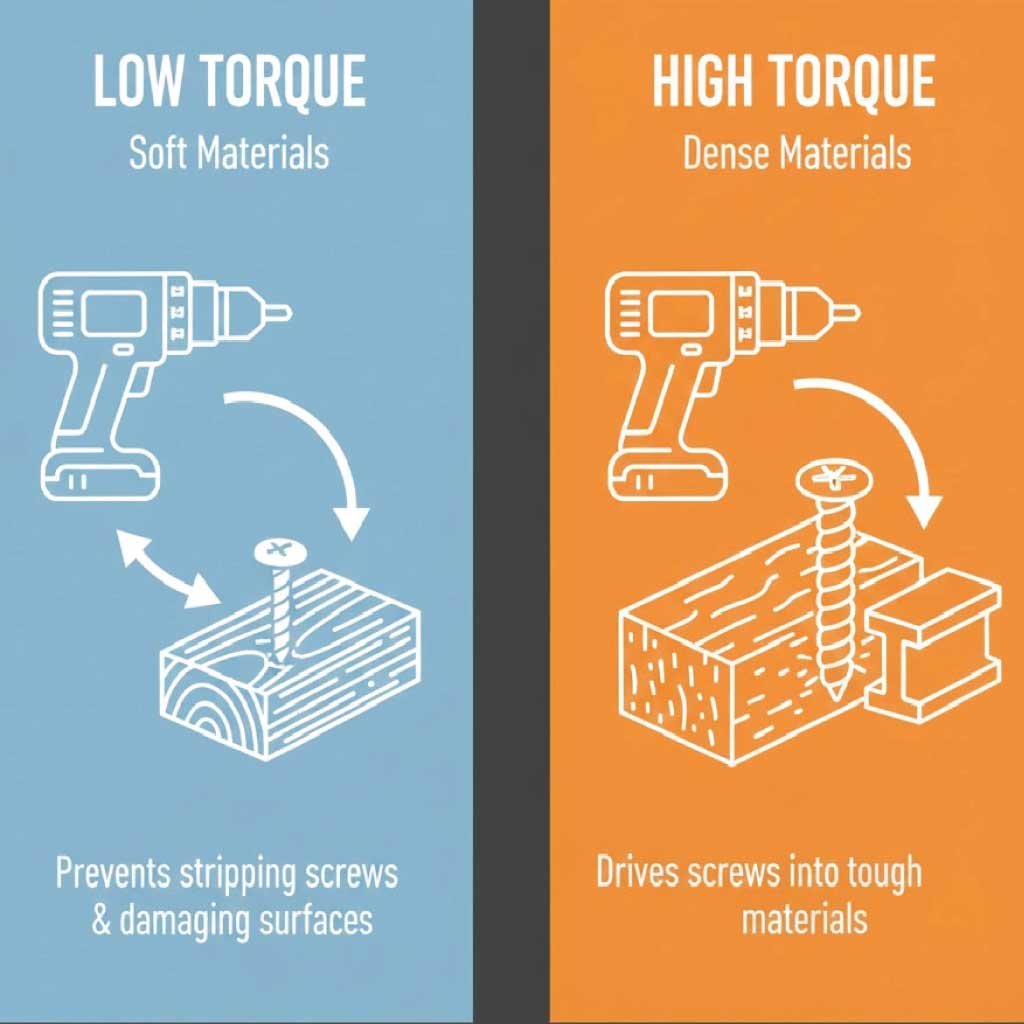
Torque Control
Torque is used to protect over-tightenment of screws and surface damages. Soft materials are handled by lower torque whereas dense materials demand higher torque.
Common Drill Mistakes People Make
Most of the drilling issues occur due to mere inaccuracies. They are the use of the incorrect type of drill, excessive pressure, or the wrong speed setting.
The other error that is frequent is working with dull or chipped drill bits resulting in coarse holes and overheating.
The right technique and accessories are likely to significantly enhance the outcome and the life of tools.
What Is a Drill Bit?
A drill bit is a cutting tool which is attached to drill and is used to make holes by spinning at a high rate. There are various shapes of drill bits, tip shapes and materials which are used to cut a specific surface in an effective manner.
A good drill bit should:
- Cut cleanly without tearing or cracking the material
- Stay sharp under heat and pressure
- Match the material being drilled
Using the wrong bit often leads to poor results, even if you’re using a powerful drill.
Drill Bit Types Based on Material Use
You can memorize dozens of names of drill bits or it is more practical to consider what they accomplish. When one does know what each bit is set up to drill, wood, metal, masonry or specialty, one will be able to choose the correct tool quicker, make fewer mistakes, and get a cleaner, efficient and accurate drilling outcome on any project.

1- Wood Drill Bits
Wood drill bits are made to cut a clean and precise hole on wood without splitting the surface or tearing. When selecting the appropriate wood bit, it should be ensured that the cut is smooth and that it is appropriately placed and that the material does not suffer a lot of damage. They are available in different shapes and sizes that can be applied in different woodworking activities, such as assembling furniture, practicing rough carpentry, etc., and thus are now necessary not only to a DIYer but also to a professional woodworker.
2- Twist Drill Bits (Wood & General Use)
The most common drill bits are Twist drill bits which are commonly found in simple drill sets. Though they can handle wood, plastic and light metal, they are not designed to work fine wood. They can be used in general-purpose drilling where accuracy is not the issue.
They work best for:
-
Softwood and hardwood
-
Plywood and MDF
-
General-purpose drilling
3- Brad Point Drill Bits (Clean Wood Holes)
Point bits made of wood, in this case, are specifically 23- Brad. They have a sharp center point which avoids the wandering of the bit and leaves clean and accurate holes. These pieces are ideal in fine jobs where holes of entry and exit require to be clean. They are typically utilized in cabinetry, furniture production, and fine woodworking however are not applicable to metal or masonry.
They are ideal when:
-
Precision is important
-
You want clean entry and exit holes
-
Working with furniture or cabinetry
4- Spade Bits (Large Holes in Wood)
Spade bits are flat and wide and therefore, ideal in drilling large holes within a short time. They are not as precise as the brad point bits but they are very fast and effective in rough carpentry work. Spade bits are also used in work involving electrical, plumbing, or construction work where a nice finish is not required. Close attention must be paid to them so that they do not splinter, or have sharp edges.
Common uses include:
-
Electrical wiring holes
-
Plumbing pass-throughs
-
Rough carpentry
5- Auger Bits (Deep, Clean Holes)
Auger bits are screw tipped long wood bits that are meant to punch holes through thick wood with minimum effort. They leave clean and deep holes that can be used in structural or heavy-duty work on wood. Auger bits are used with robust workouts and are stable and need constant control to achieve precision, which is why they are mostly used in construction framing and large timber work.
They are used for:
-
Deep holes in wood
-
Thick beams and posts
-
Construction framing
6- Metal Drill Bits
Drilling metal needs pieces that have the ability to withstand heat and wear. The high speed steel, cobalt or titanium-coated metal drill bits are the common ones. The choice of the type guarantees efficiency, bit breakage reduction, and the absence of overheat. Depending on their design, metal bits can be used on plastics and other hard materials.
7- High-Speed Steel (HSS) Bits
The HSS drill bits are used in light to medium metalwork, and they are versatile. They are able to withstand the elevated temperature in comparison with normal steel bits making them applicable in a continuous drilling operation. HSS bits can also be used with wood and plastic, and take a general purpose approach to home workshop or DIY work.
They work well for:
-
Aluminum
-
Copper
-
Brass
-
Thin steel
8- Cobalt Drill Bits (Hard Metals)
Cobalt drill bits are an improved HSS bit, which is made of a larger proportion of cobalt alloy to ensure extreme durability. They are also anti-heat resistant and anti-wear, which makes them suitable in intense metalworking and in professional use. These bits have been created to be capable of working with hard metals without becoming dulled easily.
Best for:
-
Stainless steel
-
Cast iron
-
Hardened metals
9- Titanium-Coated Drill Bits
Titanium-coated bits are HSS bits that have a titanium nitride coating that decreases friction and increases the life of the bits. They suit light metals, wood and plastic work well. But after the coating has worn there is a tendency to reduce the bit to a typical HSS bit hence this is to be used carefully in order to ensure that it continues to perform.
They are suitable for:
-
Light metal work
-
Plastic
-
Wood
10- Masonry Drill Bits
Masonry- Brick, concrete and stone are stone materials that need drill bits that are impact resistant. Masonry bits have carbide tips, which do not cut, but rather crush the materials, hence they are applicable in hammer drills. The right bit will result in quicker and cleaner holes and will not cause damage to the tool and surface.
11- Standard Masonry Bits
Standard masons are masonry bits with a carbide tip which can be hammered on hard surfaces. They are necessary in building of homes, or other masonry work involving concrete, brick, stone, or block walls done by a homeowner. These bits are efficient when used together with a hammer drill to do the drilling effectively.
Used for:
-
Concrete
-
Brick
-
Stone
-
Block walls
12- SDS Drill Bits (Rotary Hammer Use)
SDS drill bits are engineered in rotary hammer drill and they have high impact performance and tight fitting chuck. They are heavy-duty in concrete or masonry drilling, and they are typical in the professional construction. Standard drills cannot be used with SDS bits, so they are designed to work with big projects.
They are used for:
-
Large concrete holes
-
Heavy construction work
-
Professional masonry projects
13- Specialty Drill Bits
There are certain drilling operations which need peculiar solutions other than ordinary bits. Specialty drill bits such as step bits, hole saws and countersink bits are made to work in certain material or exact work. With the appropriate specialty bit applied, efficiency, accuracy and clean results are guaranteed in difficult or specialized tasks.
14- Step Drill Bits
Step bits are cone bits that are able to drill different hole sizes using a single tool. They make holes in sheet metal, electrical panels and thin plastics with smooth and burr-free holes. Step bits conserve time and enhance precision where there are more than two hole diameters required in one material.
Common uses:
-
Sheet metal
-
Electrical panels
-
Thin plastic
15- Hole Saw Bits
Hole saw bits make large-diameter holes in a short time with the help of a toothed ring. They can be used in woodworking, metal and multi-material. They are usually installed as door frames, plumbing, electrical boxes, and ducts in large and clean openings.
Used for:
-
Door hardware
-
Pipes and ducts
-
Electrical boxes
16- Countersink Bits
Countersink bits enable a screw to be level with or sunk in the surface to provide a clean professional appearance. They are mostly utilized in furniture making and woodworking. Countersink bits do not allow wood to split and the surfaces to be painted or stained with ease, enhancing usefulness as well as beauty.
Drill Bit Material Comparison Table
This bit material comparison table is intended to allow you to find the best bit within the shortest time possible. It makes emphasis on what content each bit can fit into, along with durability and heat resistance. The right bit material assures the cleanest holes, extended tool life as well as safe and efficient drilling of wood, metal or masonry.
| Bit Material | Best For | Durability | Heat Resistance |
|---|---|---|---|
| Carbon Steel | Wood only | Low | Low |
| HSS | Wood & light metal | Medium | Medium |
| Titanium-Coated | General use | Medium–High | Medium |
| Cobalt | Hard metals | High | Very High |
| Carbide-Tipped | Masonry | Very High | Extremely High |
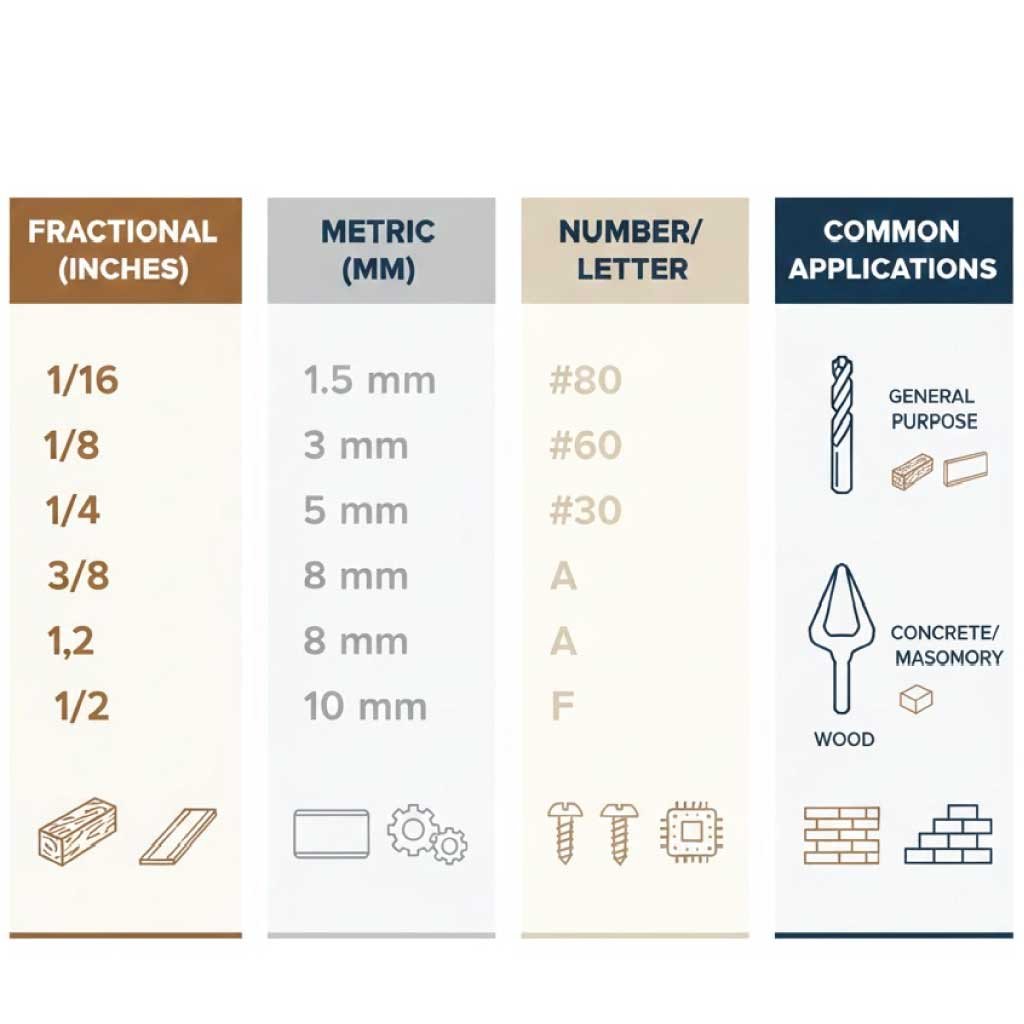
Fractional vs Metric Drill Bit Conversion Chart
It is easy to use this conversion chart to perform the matching of inch-sized drill bits with metric equivalents. It is particularly handy in cases where instructions or projects are done using a different set of measurements than the one your drill bits can measure, so the size of the hole can be taken and that one does not make a mistake during drilling.
| Inch Size | Metric Equivalent (mm) |
|---|---|
| 1/16″ | 1.59 mm |
| 1/8″ | 3.18 mm |
| 3/16″ | 4.76 mm |
| 1/4″ | 6.35 mm |
| 5/16″ | 7.94 mm |
| 3/8″ | 9.53 mm |
| 1/2″ | 12.70 mm |
This chart is helpful when instructions are written in a different measurement system than your drill bits.
Choosing the Correct Drill Bit Size for Screws
One of the mistakes that are common is the digging of holes that are too large or too small to fit the screws in such that they may cause loose fittings or breakages. To prevent this, it is better to use the size of the drill bit equal to the core (shaft) of the screw and not the threads in order to have a tight fit and good, stable connections.
Pilot Hole Size Guide (Wood Screws)
| Screw Size | Recommended Bit Size |
|---|---|
| #4 | 3/32″ |
| #6 | 7/64″ |
| #8 | 1/8″ |
| #10 | 9/64″ |
| #12 | 5/32″ |
Pilot holes reduce wood splitting and make screw driving easier.
Drill Bit Sizes for Wall Anchors
It is important to note that when putting up wall anchors one should align the hole to the anchor. A hole that is too wide will not allow the anchor to be clamped appropriately, whereas a hole that is too narrow will make it very challenging or even impossible to insert. Note: always keep in mind the anchor packaging, though the general guide stated below will help in giving tips as to what size to use.
| Anchor Size | Drill Bit Size |
|---|---|
| Small plastic anchor | 3/16″ |
| Medium plastic anchor | 1/4″ |
| Large plastic anchor | 5/16″ |
| Masonry anchor | Exact anchor diameter |
For concrete and brick, always use masonry drill bits and a hammer drill.
How Deep Should You Drill?
The depth of the holes is as important as the width is. A hole that is shallow may not allow screws or anchors to fit well. One such simple method is to tape the depth in which you are required on your drill bit. This will assist you in not drilling at the right point thinking.
Drill Speed Guide by Material
Using the correct speed improves accuracy and extends drill bit life.
| Material | Recommended Speed |
|---|---|
| Wood | High speed |
| Plastic | Medium speed |
| Aluminum | Medium speed |
| Steel | Low speed |
| Stainless steel | Very low speed |
| Concrete | Medium speed (hammer mode) |
Lower speeds reduce heat buildup, especially in metal drilling.
Step-by-Step Guide to Drilling Clean Holes
Clean holes are to be drilled in a proper manner and not just by force. Making sure that the correct speed and controlled pressure is used with the right drill bit will result in smooth and precise holes. Best practices help avoid spoilage of the workpiece, minimize wear on bits and enhance the overall efficiency of the drilling operation, be it of wood, metal, or masonry.
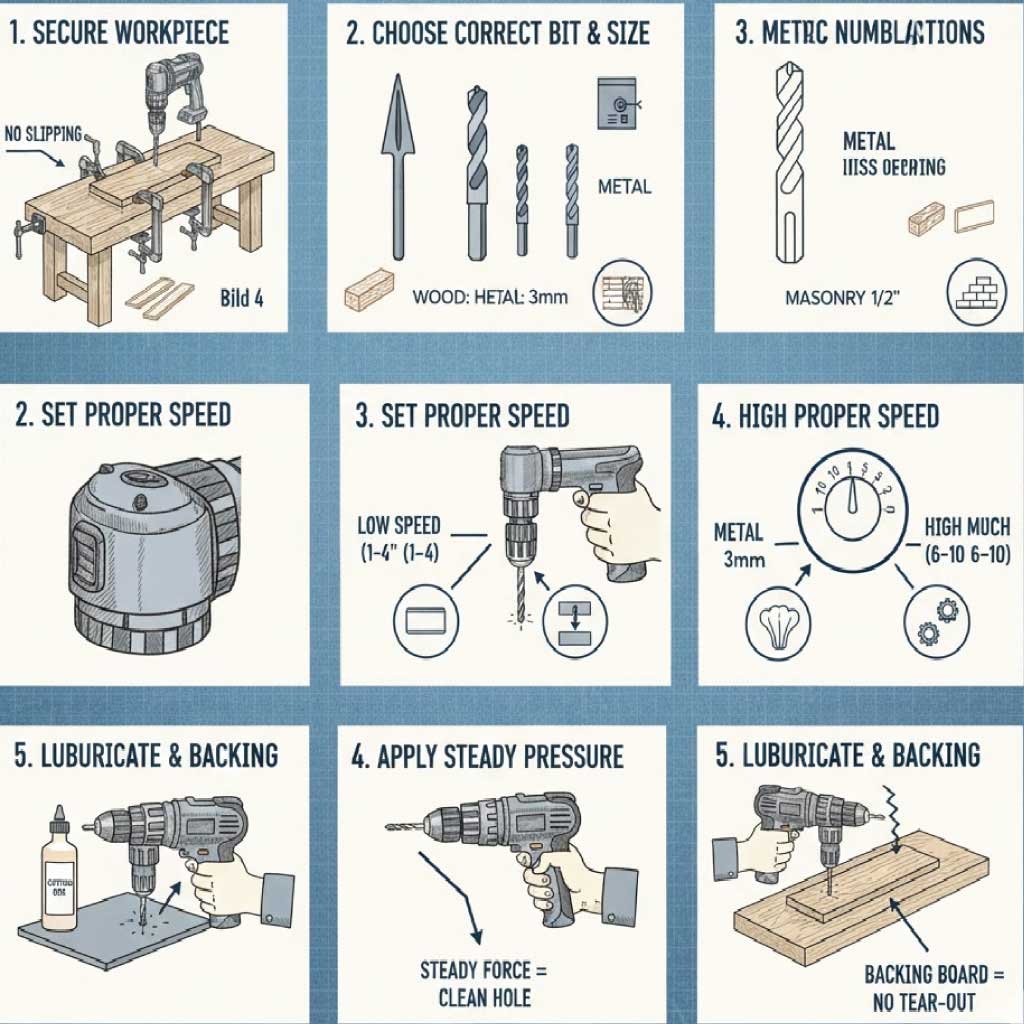
1. Secure the Workpiece Firmly
Make sure that the material is clamped or held before the drilling process. Rigid work piece limits slip, non-uniform holes and possible accidents. When it is properly supported, vibration is also minimized ensuring that the drill bit cuts smoothly and remains precise throughout the drilling exercise.
2. Choose the Correct Drill Bit and Size
Choose a suitable drill bit size and drill bit is important in clean holes. Correlate the bits with the material and hole requirements. The improper use of the wrong bit may lead to splintering, over heating or damage to both bit and the work piece.
3. Set the Proper Speed
The speed of drill may vary depending on the material. Hardwood or plastic can be used at high speeds whereas metal or hard material should be used at low speeds. Suitable speed minimizes heat accumulation, avoids dulling of the bit and provides a smooth and accurate cut.
4. Apply Steady, Controlled Pressure
When drilling, place an even pressure; pushing the bit may lead to wandering, breakage or sharp edges. Let the bit do the cutting. Regulated pressure guarantees the cleanliness of holes, guards drill bit, and is accurate during the process.
5. Use Lubrication and Backing Techniques
In the case of metal, cutting oil is used to cool the heat and prolong the life of the bit. In the case of wood a backing board is used to prevent tear-out upon exit. These easy methods enhance the quality of holes and avoid the damages on material and drill bit.
Safety Tips When Using Drills and Drill Bits
Safety must always be used when drills are applied, irrespective of the size of the project. Adhering to the basic precautions will guard you against accidents and injuries and will guarantee efficiency and easy working. Correct handling, safety equipment and being aware of the environment make drilling safe among the novices and among those who are already skilled.
Always:
-
Wear safety glasses
-
Keep loose clothing away
-
Hold the drill with both hands
-
Unplug or remove the battery before changing bits
Maintaining Drill Bits for Long-Term Use
Drill bits remain sharp, safe and efficient over the years with proper maintenance. Regular maintenance ensures that there is no damage, less wear and that it is drilled accurately. You can also save money and extend bit life, and performance through the simple habits, which are not expensive to follow and keep.
To extend bit life:
-
Clean bits after use
-
Store them in labeled cases
-
Avoid overheating
-
Sharpen metal bits when dull
Final Thoughts: Choosing the Right Drill & Drill Bit Every Time
Drill bits and drills are not universal. The ultimate outcome is being able to know what you are drilling, the drill to use and the optimum size of the bit to be used.
Drilling wood, metal or concrete, the correct combination of drill type, drill bit material and size are sure to make a clean hole, create tighter fastenings, and work safely.
The entire drill and drill bit tutorial is meant to be your reference tool- be it you are a new user in learning the ropes or an advanced user who needs to perfect his or her craft.
Discover More:

Engineer Hassan is a Mechanical Engineer with over 16 years of hands-on experience in mechanical hardware, fasteners, bolts, screws, nuts, washers, and related mechanical components. He has extensive expertise in selecting, measuring, and installing hardware, ensuring accuracy, safety, and reliability in every project.
Through Hardware Size, he provides detailed size charts, installation guides, and technical tutorials, helping engineers, technicians, students, and DIY enthusiasts solve practical hardware problems with confidence.