
Nylon insert lock nuts are small yet incredibly important components in mechanical assemblies. They may appear to be simple, yet they are important in ensuring that the bolts are secured, and they do not lose torque or vibrations.
This guide is going to cover all the information that you need to know about the nylon insert lock nuts such as the usage process, their sizes and the torque values.
Whether you are a DIY enthusiast, engineer, or mechanic, this guide will give you all the details you need.
What Is a Nylon Insert Lock Nut?
Nylon insert lock nut (alternatively called a nyloc nut) is a kind of lock nut that has a nylon collar insert. This is an insert that creates friction on the threads of the bolts and this prevents the nut to loosen due to vibration or torque.
The nylon insert lock nuts are a reusable and reliable alternative to standard nuts in terms of ensuring fasteners remain in place in automotive as well as industrial machinery.
These nuts are especially famous since they do not need washers or adhesives in order to keep the grip. The nylon insert serves as a self-locking mechanism and this is what makes them efficient and easy to use in a vast array of projects.
Nylon Insert Lock Nut Dimensions
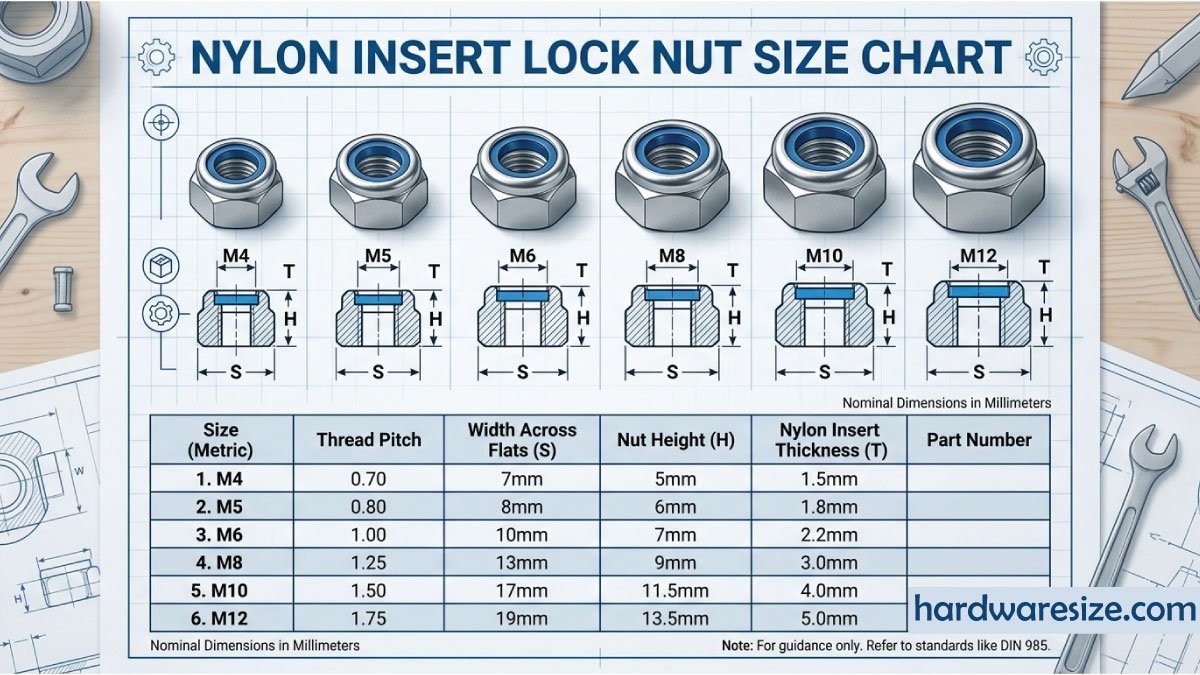
It is important to know the dimensions of nylon inserts lock nut to use the appropriate nut in your project. The dimensions consist of nut width across flats, height, thread diameter as well as internal nylon collar size. The correct dimensions are chosen so that the fit and operation is done correctly.
Here’s a sample dimensions table for commonly used nylon insert lock nuts:
| Thread Size (mm) | Width Across Flats (mm) | Height (mm) | Nylon Insert Thickness (mm) |
|---|---|---|---|
| M4 | 7 | 4 | 1 |
| M5 | 8 | 5 | 1.5 |
| M6 | 10 | 6 | 1.5 |
| M8 | 13 | 8 | 2 |
| M10 | 17 | 10 | 2.5 |
| M12 | 19 | 12 | 3 |
Note: Dimensions may vary slightly depending on standards (ISO, DIN, ANSI).
Nylon Insert Lock Nut How to Use
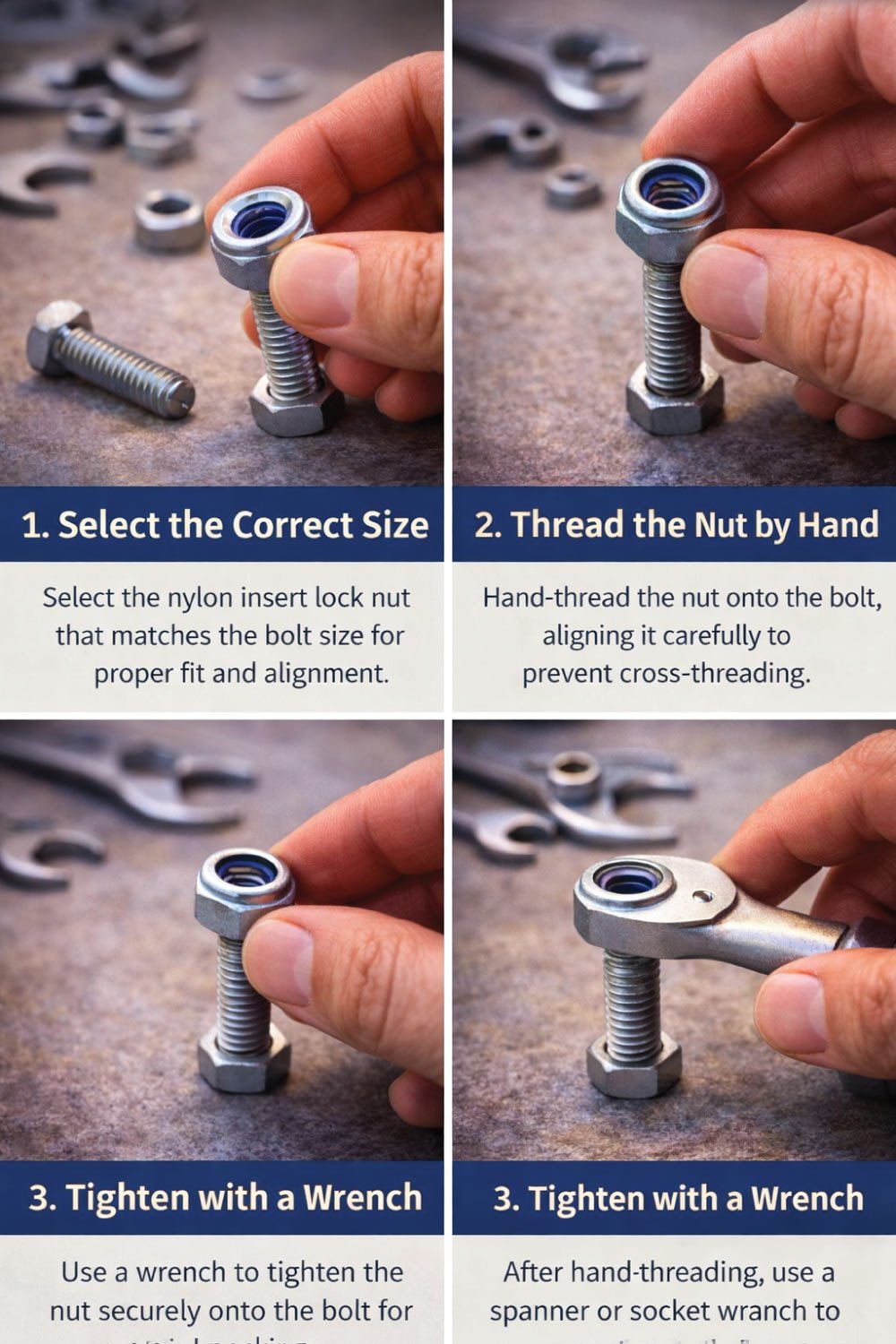
Consider the question of nylon insert lock nut how to use or how to use nylon insert lock nut is simple. The process is simple in that you have to choose the right size, thread the nut on the bolt using your fingers and tighten it using a wrench. When using correct torque, it will be sure and reliable to fasten.
Steps to Use a Nylon Insert Lock Nut:
1- Select the Correct Size
Selecting the correct nut is important in ensuring that the nut fits. Align the nylon insert lock nut with the nylon bolt or threaded rod. Not sure, consult the nylon insert lock nut size chart. Right size helps to avoid damage of the threads, and there is always a good fastening in any use.
2- Thread the Nut by Hand
Start by holding the nylon insert lock nut onto the bolt by threading it on by hand. Be careful to center it in the right way to prevent cross- threading, which will destroy both nut and bolt. Smooth installation is guaranteed by first threading by hand, making the nylon insert to fit in its place and providing the nut with its locking action and long-lasting attachment.
3- Tighten with a Wrench
Hand-threading is done, followed by tightening the nylon insert lock nut with the spanner or socket wrench. This is provided with the addition of a nylon insert that prevents loosening when vibrated. With a steady but not forceful tightening make sure the nut fits into position. This is important to retain the locking property of the nut, as well as, to hold your assembly together.
4- Check Torque
On critical application, apply the appropriate force using a torque wrench on the nylon insert lock nut. Its effectiveness can be decreased by over- or under-tightening. See the chart of recommended nut torque of the nylon insert to provide optimal operation, good fastening, and life of the nut.
👉 Discover the ultimate Lock Nut Guide! Learn about different types of lock nuts, their uses, key benefits, and step-by-step instructions on how to install them correctly. This comprehensive guide helps both DIY enthusiasts and professionals ensure secure, reliable fastening. Read the full post to master every detail!
How to Remove a Nylon Insert Lock Nut
A nylon lock nut is sometimes just going to have to be removed. These nuts are not meant to loosen easy but they are easy to remove. Always use a proper wrench and make sure you are turning the nut counterclockwise and do not make sudden force. With recalcitrant nuts, the surgery can be made easier by heating the nylon insert just a little, and it can now be easily removed with no damage to the threads.
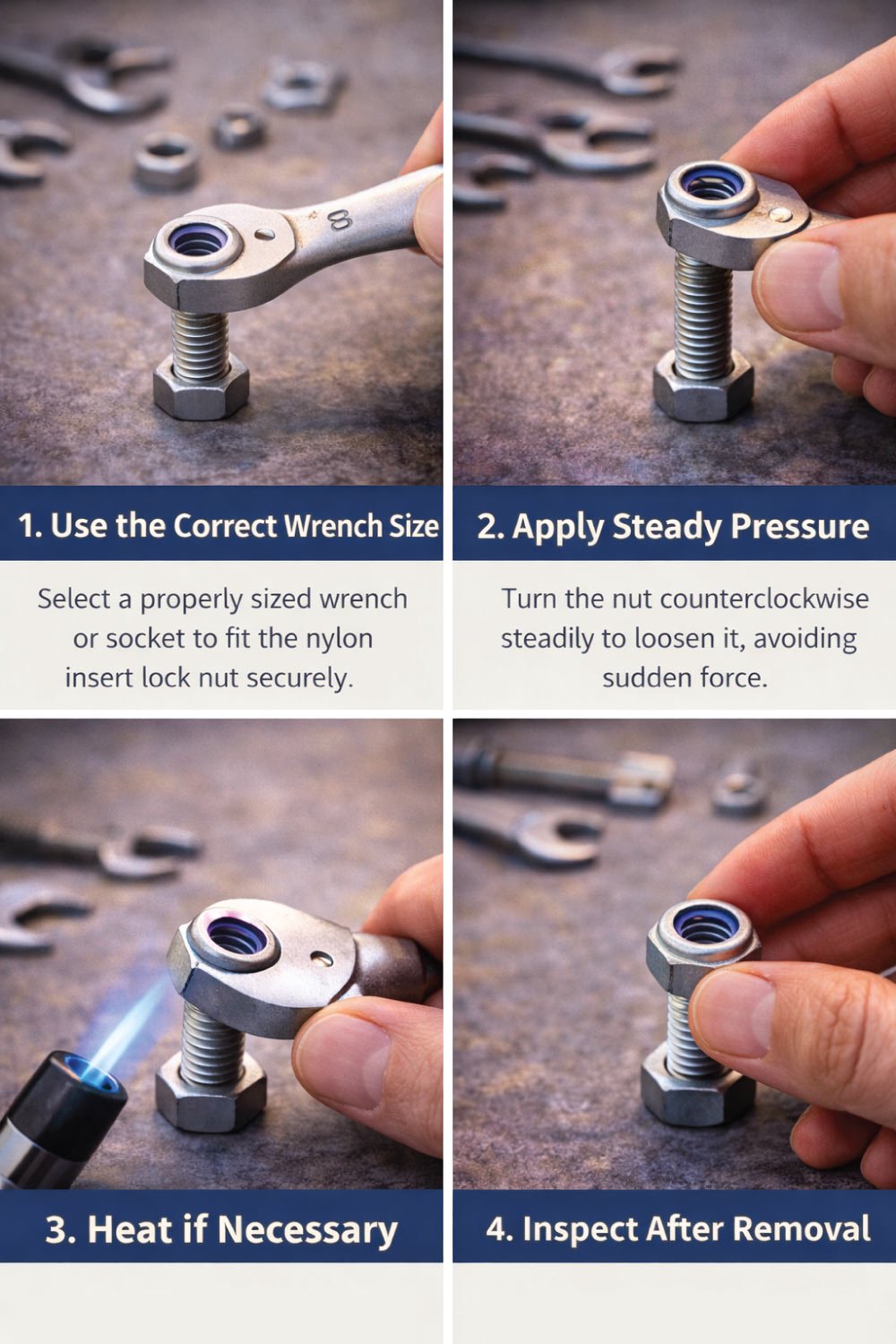
1- Use the Correct Wrench Size
Never put the incorrect wrench or socket into the nylon insert lock nut. When the incorrect size is used, there is a tendency to round off the nut corners and this means that they are hard to remove and they may break threads. A well-fitting tool will guarantee easy and secure removal, as well as retain the nut and the bolt to be used later.
2- Apply Steady Pressure
It will be necessary to rotate the nylon insert lock nut counterclockwise to loosen it. Do not use quick jerks or excessive forces and this may strip off the threads or break the nut. This can be done by applying a steady force to the nylon insert to make it release in bits whilst the bolt and other parts remain.
3- Heat if Necessary
To remove hard nuts or ones firmly attached, heat the part around the nylon fit lock nut. This makes the nylon insert a bit soft and thus the nut does not have to be forced open. To avoid this, avoid excessive heating because over heating may ruin other materials around the nut or the nut itself.
4- Inspect After Removal
After changing, examine the nylon one-lock nut nut on its wear or damage. In case the nylon insert is deformed or broken, change the nut and reuse it. Checking also makes the future assemblies safe and the locking system of the nut is healthy so that it is fastened safely and securely.
👉 Explore the complete Heavy Hex Nut Guide! Learn the definition, understand dimensions and sizes, and discover the materials used for heavy hex nuts. This detailed guide helps you choose the right nut for your project and ensures proper installation and secure fastening. Read the full post now!
Nylon Insert Lock Nut Size Chart
Choose the right nut size is critical for the effectiveness of nylon insert lock nuts. Here’s a size chart for common metric sizes:
| Bolt Size (mm) | Nut Size (mm) | Recommended Torque (Nm) |
|---|---|---|
| M4 | 7 | 3–4 |
| M5 | 8 | 5–6 |
| M6 | 10 | 10–12 |
| M8 | 13 | 20–25 |
| M10 | 17 | 40–45 |
| M12 | 19 | 70–75 |
Tip: Always check the manufacturer’s recommendations for torque limits, as excessive torque can damage the nylon insert.
Nylon Insert Lock Nut Torque Chart
The performance of nylon insert lock nut is critical to the kind of torque that is used. Excessive tightness may break the nylon and excessive loosening may occur when tightening is not enough. This is the torque chart to follow:
| Nut Size (mm) | Recommended Torque (Nm) | Max Torque (Nm) |
|---|---|---|
| M4 | 3–4 | 5 |
| M5 | 5–6 | 8 |
| M6 | 10–12 | 15 |
| M8 | 20–25 | 30 |
| M10 | 40–45 | 55 |
| M12 | 70–75 | 90 |
Note: Torque values may vary depending on materials and application conditions.
Applications of Nylon Insert Lock Nuts
Nylon insert lock nuts are found in most industries since they are hard to loosen when subjected to vibrations and stress. They are reliable and therefore can be used in serious applications.
These are typically used in securing engine and suspension components in the automotive industry, attach structural components in the building industry,
Fixing fragile components in the electronics industry, and stabilizing joints in the furniture industry.

1- Automotive Industry
Nylon insert lock nuts are applied in the automotive industry to fix the engines, suspension and body components. Their vibration-free structure makes components to remain tight at all times regardless of the constant motion, which offers vehicle performance and safety.
2- Construction
Nylon insert lock nuts can be used in the construction industry to fix structural components and machinery. They inhibit vibration loosening or heavy load loosening to provide stable stability and safety of connection in structures, bridges etc.
3- Electronics and Appliances
In electronics and appliances, delicate components are held by the nylon insert lock nuts. Their self-locking nature ensures that they will not become loose as a result of vibration, and sensitive circuits and mechanical components are also kept safe and operational in daily devices.
4- Furniture Assembly
Nylon insert lock nuts are used in assembling furniture to form solid and stable joints in having movable furniture and cabinet. They ensure that bolts and other screws do not loosen with time and that home as well as office furniture remains safe, durable and stable.
Nylon lock nuts of the insert type have an impressive range of applications and are also dependable and affordable, which makes them a popular option in both professional and amateur projects.
👉 Check out our complete guide on Hex Nut Sizes, Dimensions, Grades & How to Measure! Learn to identify the right hex nut size, understand dimensions and grades, and master the correct way to measure nuts for secure and reliable fastening. Read the full post for all essential details!
Advantages of Nylon Insert Lock Nuts
Nylon insert lock nuts have a number of benefits that have seen them be favored with most applications. They are vibration resistant, reusable, and installable easily by only hand- threads and a wrench. They come in a large variety of sizes and offer an economical and safe alternative in fastening both metric and imperial.
Vibration Resistance: The nylon insert prevents the nut from loosening due to vibrations.
Reusable: Unlike some locking adhesives or chemical solutions, nyloc nuts can be reused multiple times without losing effectiveness.
Easy Installation: Simple hand-threading followed by wrench tightening is all it takes.
Wide Range of Sizes: Available for metric and imperial bolt sizes.
Cost-Effective: Provides a secure locking solution without expensive or complex components.
Tips for Best Results
Nylon insert lock nuts should be matched with the bolt size to provide optimum performance. Never over tighten to preserve the nylon insert and regularly replace worn out nuts. Critical applications should be done with a torque wrench and the unused nuts kept in a cool and dry environment as a way of ensuring the nylon is long term.
- Always match the nut size to the bolt size.
- Avoid over-tightening, which can damage the nylon insert.
- Replace nuts if the nylon insert shows wear.
- Use a torque wrench for critical applications to ensure proper torque.
- Store unused nuts in a cool, dry place to prevent the nylon from becoming brittle.
👉 Discover the Complete Nut Guide! Learn about different types of nuts, their sizes, common uses, and the materials they are made from. This comprehensive guide helps you select the right nut for any project and ensures proper installation for secure, long-lasting fastening. Read the full post now!
Common Mistakes to Avoid
Nylon insert lock nuts; it is important to remember not to make common errors that will affect performance. Incorrect size can strip the threads and excessive tightening can cause the nylon insert to deform.
Reusing old or worn nuts diminishes performance and failure or loosening may be caused by not paying attention to torque specification. Incidentally, the proper guidelines are to be followed when using fasteners.
Using the Wrong Size: A mismatched nut can strip the threads or fail to lock.
Over-Tightening: Excess torque can deform the nylon insert, reducing effectiveness.
Reusing Old Nuts: Nylon inserts wear over time. Always inspect before reuse.
Ignoring Torque Specifications: Always follow the torque chart for safe and effective use.
Conclusion
Nylon insert lock nuts are the vital elements in an assembly that needs stability and loosening aggressiveness. Being aware of what is nylon insert lock nut, the use of nylon insert lock nut, and the removal of nylon insert lock nut, will make your projects secure and stable.
By understanding nylon insert lock nut dimensions, following size charts, and respecting torque specifications, you can achieve professional results whether in automotive, industrial, or DIY applications.
The proper use of the quality nylon insert lock nuts and investment will help in saving time, lowering the maintenance, and avoiding failures of the most important assemblies. This guide should be kept on hand, consult the charts to choose sizes and torque, and your fasteners will be safe even when they are under vibration and stress.
👉 Explore our detailed Nut Size Chart! Learn about various types of nuts, the materials they are made from, and their common applications. This guide helps you choose the right nut for any project, ensuring secure and reliable fastening. Read the full post to get all essential details!

Engineer Hassan is a Mechanical Engineer with over 16 years of hands-on experience in mechanical hardware, fasteners, bolts, screws, nuts, washers, and related mechanical components. He has extensive expertise in selecting, measuring, and installing hardware, ensuring accuracy, safety, and reliability in every project.
Through Hardware Size, he provides detailed size charts, installation guides, and technical tutorials, helping engineers, technicians, students, and DIY enthusiasts solve practical hardware problems with confidence.