
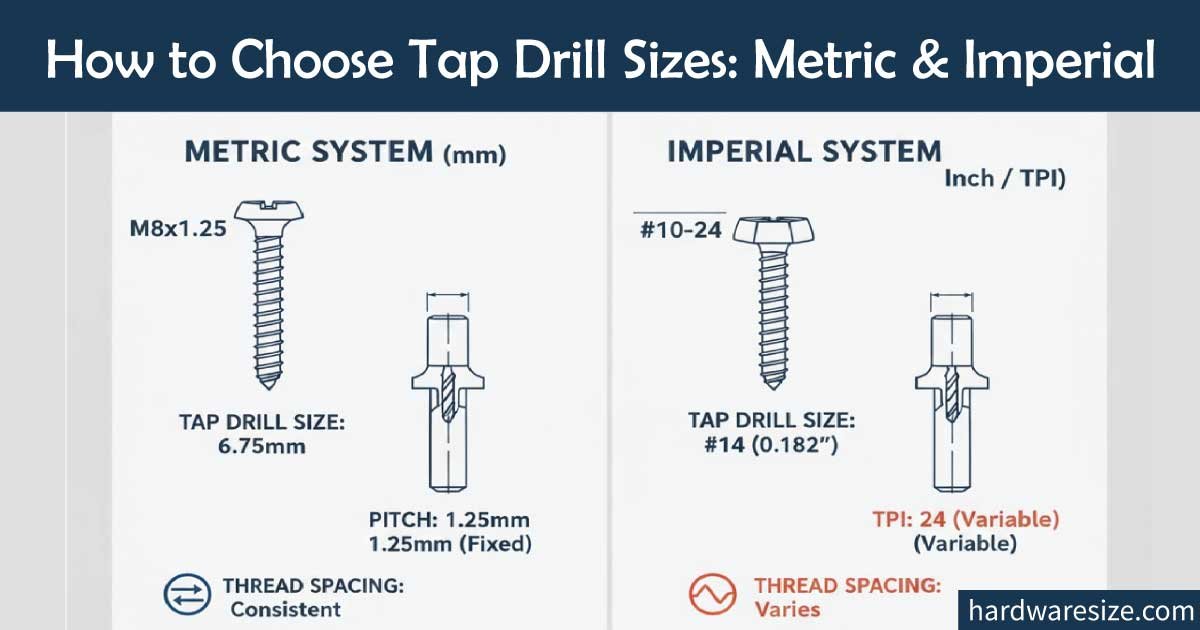
In threading holes, be it in mechanical work, or in a DIY project, or in a factory, it is important to make the right choice of tap drill size.
The size of tap drill defines the amount of the material that is removed before threading as well as maintaining strong and precise threads without harming the workpiece or the tap itself.
In this guide, we will walk you through everything you need to know about tap drill sizes, including metric and imperial standards, formulas, charts, and practical tips to make your work easier and more accurate.
What is a Tap Drill?
Tap drill Before threading, a hole is drilled beforehand to serve as a kind of starter hole to guide the tap to cut the threads without error.
The size of the tap is important–smaller, it will bind, dig or break; larger, and the threads will be loose or weak.
The size is determined by the diameter of the screw, as well as the spacing between threads, which is known as the pitch in metric measurement systems and threads per inch in imperial measurement systems.
Metric Tap Drill Sizes
The size of metric tap drills is based on the ISO metric system where the screw size and spacing between threads are measured in millimeters.
Metric systems are widespread across the globe particularly in the manufacturing and engineering sectors as well as in DIY projects with standardized fasteners.
Selecting the right metric tap drill size makes sure your bolts and screws are just the right fit as well as any threads that you cut are long-lasting and precise.
This is very relevant when dealing with metal, hard plastics or other materials in which thread strength is of importance.
How to Choose the Right Metric Tap Drill Size
The size of the metric tap drill used should be right in producing firm and perfect threads. It provides a secure fit of screws and prevents tap breakage.
Knowing the diameter of the screw and the thread pitch, you can select a drill bit that cuts the ideal hole, that is strong and precise to any project.
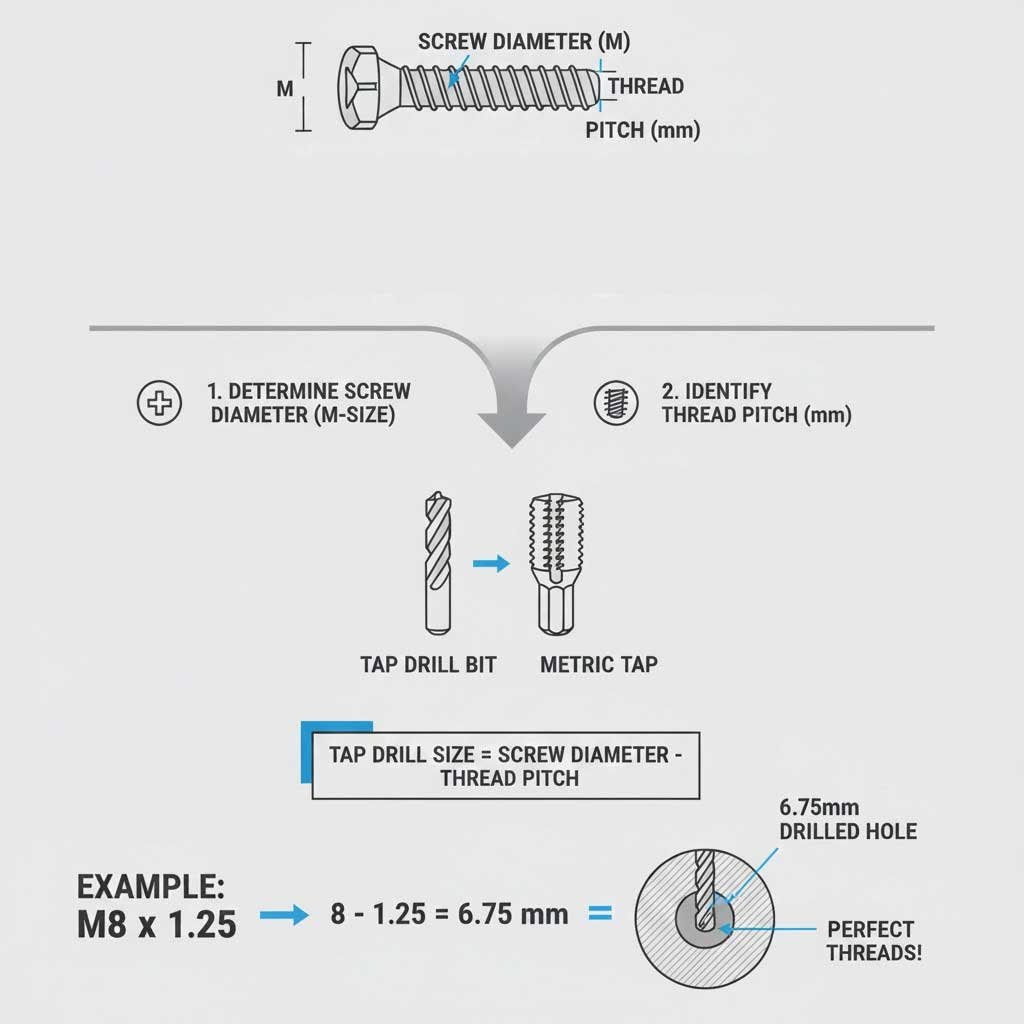
1. Understanding Screw Diameter
A screw has a diameter equal to the longest section of the screw. Being aware of this measure is the initial thing when selecting a tap drill.
A hole of similar diameter to the screw enables the tap to have threads and at the same time the connection is good and firm.
2. Knowing Thread Pitch
Thread pitch is determined as the distance between threads in the entire length of the screw. The spacing is measured in millimeters using metric screws.
The correct pitch of the thread will provide the tap with the ability to cut where it will make threads that will fit and not strip or lose their hold, this is critical to the strength and stability of the connection.
3. Choosing the Right Drill Size
The appropriate size of a tap drill is a little less than the outer screw diameter. This will enable the formation of threads completely and attaching them to the material.
The wrong drill size either too huge or too tiny may make the threads weak or may break the tap hence close measurements are important to achieve the correct outcome.
4. Ensuring Strong, Clean Threads
A tap drill should be of the correct size to form strong and durable threads. Larger holes create a risk that the threads may be loose or weak whereas smaller holes allow threads to bite into the material.
With a little thought (diameter and pitch), you will be able to produce the clean and precise threads that will be held firmly in place thus making your project safer and more professional.
Common Metric Tap Drill Sizes
It is easier and more precise to thread metric screws, provided that there is a reference to the tap drill size. The following table gives the popular screw sizes, thread pitch and recommended size of tap drill in millimeters.
In the case of less common bolts, a full metric tap drill chart is always a good idea to make sure that the threads are accurate and strong.
| Thread Size | Pitch | Tap Drill Size (mm) |
|---|---|---|
| M3 | 0.5 | 2.5 |
| M4 | 0.7 | 3.3 |
| M5 | 0.8 | 4.2 |
| M6 | 1.0 | 5.0 |
| M8 | 1.25 | 6.75 |
| M10 | 1.5 | 8.5 |
| M12 | 1.75 | 10.25 |
| M16 | 2.0 | 14.0 |
| M20 | 2.5 | 17.5 |
This chart is helpful for common bolts and screws. For less common thread sizes, always refer to a detailed metric tap drill chart.
Tips for Metric Tapping
Proper preparation makes metric tapping easier and ensures strong, clean threads. Follow these practical tips to get the best results:
Mark the spot: Use a center punch before drilling to keep the bit from wandering.
Lubricate the tap: Apply cutting oil for smoother cutting and less friction.
Work carefully with hard metals: Drill a little at a time, clearing chips often, to avoid overheating and breaking the tap.
Imperial Tap Drill Sizes
Imperial taps have measurements that are in inches with thread spacing being the Threads Per Inch (TPI). Choose the correct drill size is key for strong, accurate threads.
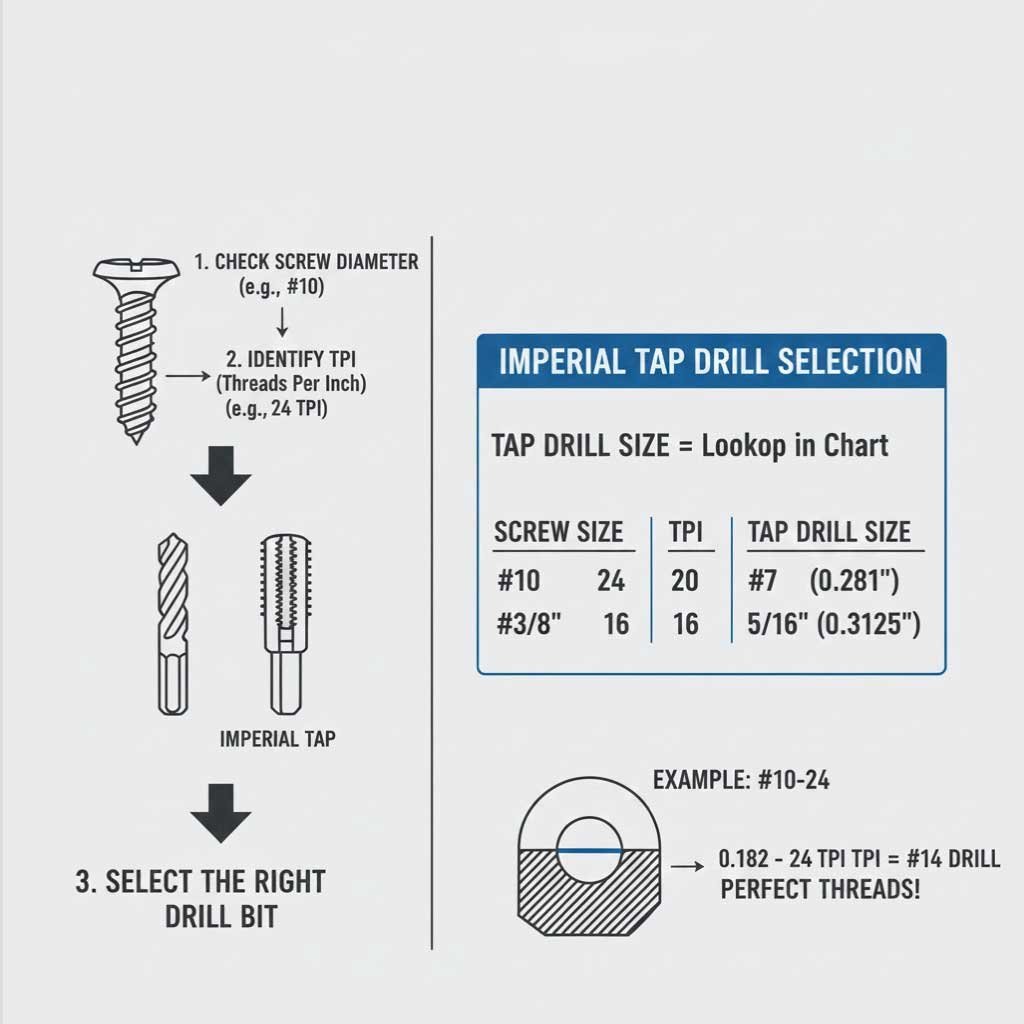
Check the screw diameter: Know the outer width of the screw before drilling.
Understand TPI: Threads per inch determine how close together the threads are.
Select the right drill bit: Use a slightly smaller hole than the screw diameter to allow the tap to form full, tight threads.
Common Imperial Tap Drill Sizes
When dealing with imperial screws it is important to use the right tap drill size.
Essential thread sizes, threads per inch (TPI), and suggested drill bit to use in tapping are provided in the following chart.
To ensure sturdy and accurate threads and secure attachments, a little smaller size of the holes is desired when using fine threads.
| Thread Size | TPI | Tap Drill Size (inches) | Drill Bit Number |
|---|---|---|---|
| #4-40 | 40 | 0.082 | #44 |
| #6-32 | 32 | 0.106 | #36 |
| #8-32 | 32 | 0.136 | #29 |
| #10-24 | 24 | 0.190 | F |
| 1/4″-20 | 20 | 0.200 | #7 |
| 5/16″-18 | 18 | 0.257 | #3 |
| 3/8″-16 | 16 | 0.312 | 5/16″ |
| 1/2″-13 | 13 | 0.375 | 3/8″ |
Imperial charts can also include UNC (coarse) and UNF (fine) threads. Fine threads need slightly smaller tap drills due to higher thread count per inch.
Why Tap Drill Sizes Differ Between Metric and Imperial
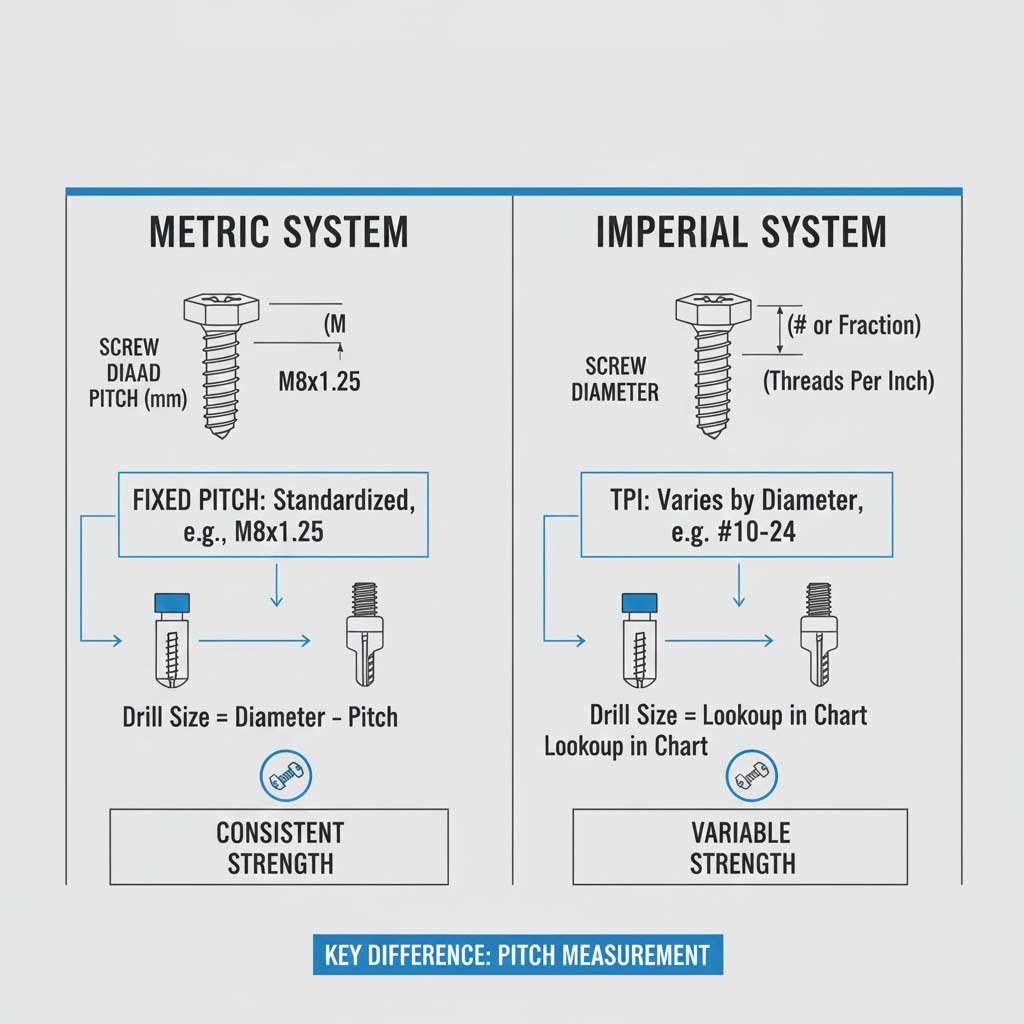
Metric and imperial threads have a difference in the measurement and calculation. Metric threads are quantified in millimeters having fixed pitches, and they are simple to compute.
Imperial threads are measured in inches and number of threads per inch (TPI) which needs a little more conversion.
It is also significant to select the appropriate system in order to obtain strong and durable threads and screws to fit well and safely.
-
Metric threads are measured in mm and have fixed pitches.
-
Imperial threads are measured in inches and use threads per inch (TPI).
-
Metric threads are simpler for calculations, while imperial threads require TPI conversion.
-
Using the correct system ensures thread strength, durability, and proper screw fit.
How to Read a Tap Drill Chart
Tap drill charts are necessary in determining the proper size of a drill to be used in threading.
They offer the size of screws used, the distance between threads and suggested drill bits.
Even some charts depict thread engagement, which assists you to make adjustments to various materials.
Learning charts helps to make correct and powerful threads and lessens errors when punching holes in metal, plastic, or wood.
-
Screw size (metric or imperial)
-
Thread pitch/TPI
-
Recommended hole size
-
Percentage of thread engagement (how tight the threads are)
-
Tip: For stronger threads in soft materials like aluminum, you can slightly undersize the hole for maximum thread engagement. For hard materials like steel, slightly oversize can prevent tap breakage.
Practical Tips for Tapping Holes
Tapping holes need attention and due technique. Clean strong threads require lubrication, slow tapping, proper alignment and regular removal of the chip.
Always check drill sizes by doubling beforehand. These tips can be used to avoid breakage of tap, get the threads right and make the process simpler, be it a small DIY project or a professional mechanical task.
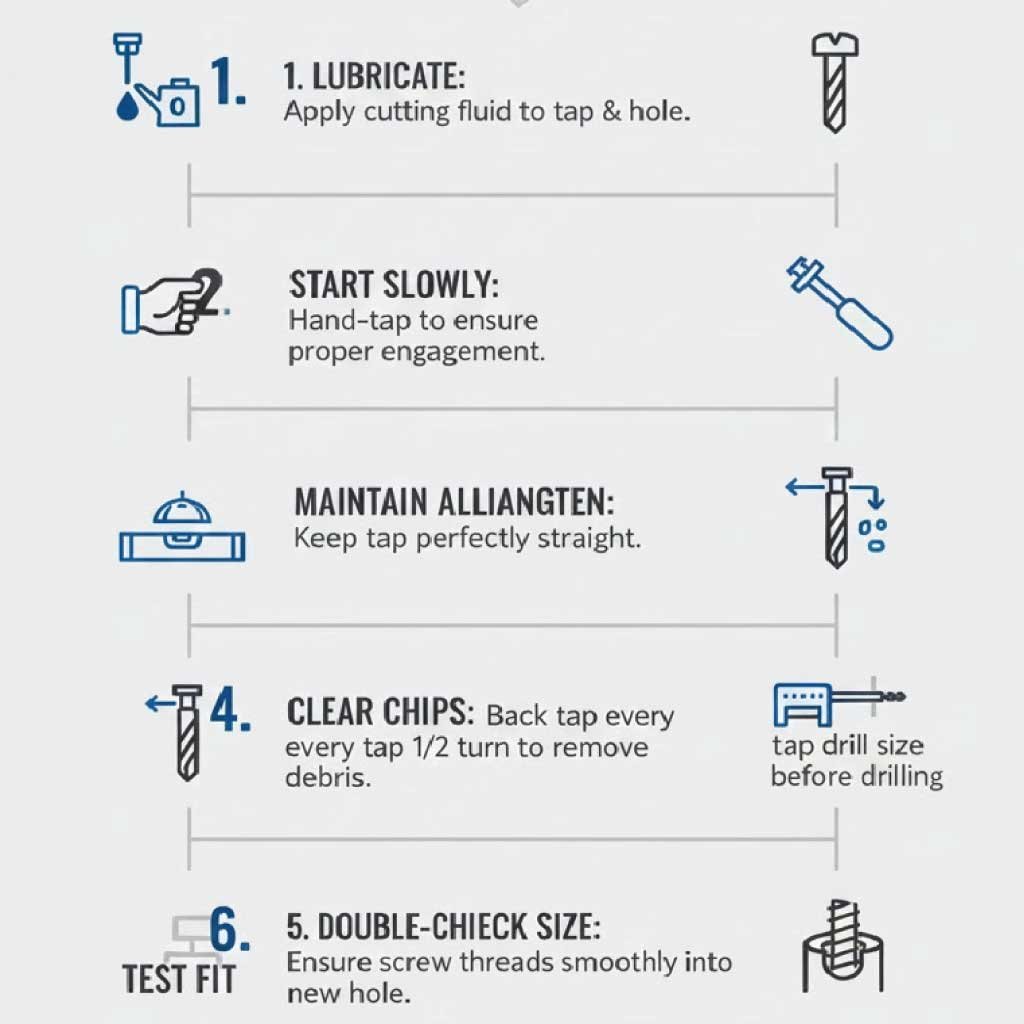
Lubrication is Key: Always use cutting oil on steel and harder metals. Lubrication reduces heat, friction, and wear on the tap.
Start Slowly: Begin tapping by hand before using machines. Hand tapping gives better control.
Correct Alignment: Ensure the tap is perpendicular to the surface. Even a 1–2 degree misalignment can ruin threads.
Clear Chips Frequently: Reverse the tap slightly every few turns to break chips and prevent binding.
Check Drill and Tap Sizes: Always double-check your tap drill size against a reliable chart before starting.
👉 Discover the Complete Drill & Drill Bit Guide covering all types, sizes, and uses. Learn how to choose the right drill bit, understand different drill types, and master proper drilling techniques. Read the full post to make your DIY and professional projects easier, safer, and more precise.
Tap Drill Chart Resources
Tap drill charts is time and error saving especially when dealing with metric and imperial threads. One can find numerous sources online, in print, and in the form of digital calculators.
The tools are used by machinists and DIY lovers in order to choose the appropriate size of drills, transformation of measurements and successful and solid threads of whatever project they are undertaking.
-
Pocket tap drill guides
-
PDF charts for quick reference
-
Online calculators that automatically convert metric to imperial and vice versa
Using charts prevents mistakes and saves time when working on mechanical or DIY projects.
When to Use a Pilot Hole
A pilot hole is a smaller hole that is pre-drilled prior to final tap drill size. It comes in handy particularly where large screws or bolts, hard metals such as stainless steel or cast iron, and long taps are involved and the accumulation of chips may be an issue.
Use of a pilot hole to aid the positioning of the tap, to stabilize the tap and relieve stress on the tap and the material, thus making threading easier, safe, and more precise.
Thread Engagement and Hole Strength
Thread engagement This is the percentage of threads of the screw that are considered contacting. The most appropriate tap drill size will produce a better thread and good connections.
In the majority of metals, the best strength is achieved with 75-80 per cent engagement. The softer metals, such as aluminum or brass, are advantaged by a slightly higher engagement whereas the harder metals, such as steel, might need a slightly lower engagement.
Tight threads strip easily, and loose threads make the connection weaker, as well as the overall connection.
Quick Conversion Between Metric and Imperial
Both metric and imperial fasteners may be found in most projects. Having fast equivalents of the two systems save time, assure the right fit and you can see the correct drill and tap sizes without confusion and errors.
| Metric | Imperial |
|---|---|
| M6 | 1/4″ |
| M8 | 5/16″ |
| M10 | 3/8″ |
| M12 | 1/2″ |
| M16 | 5/8″ |
These conversions help when working with mixed toolkits or imported materials.
Conclusion
A tap drill size chart is a valuable part of the arsenal of any person who can and will work with threaded fasteners, whether in woodworking and metalworking or in a DIY project.
Knowledge of the variations between metric and imperial sizes, choosing the right hole diameter, and proper use of charts will reduce breakages of taps, guarantee strong threads, save time and material as well as enhance the quality of the whole project.
Tapping holes is also accurate, efficient and stress-free with proper preparation as the threads are formed which hold firmly and have a lasting life.

Engineer Hassan is a Mechanical Engineer with over 16 years of hands-on experience in mechanical hardware, fasteners, bolts, screws, nuts, washers, and related mechanical components. He has extensive expertise in selecting, measuring, and installing hardware, ensuring accuracy, safety, and reliability in every project.
Through Hardware Size, he provides detailed size charts, installation guides, and technical tutorials, helping engineers, technicians, students, and DIY enthusiasts solve practical hardware problems with confidence.