
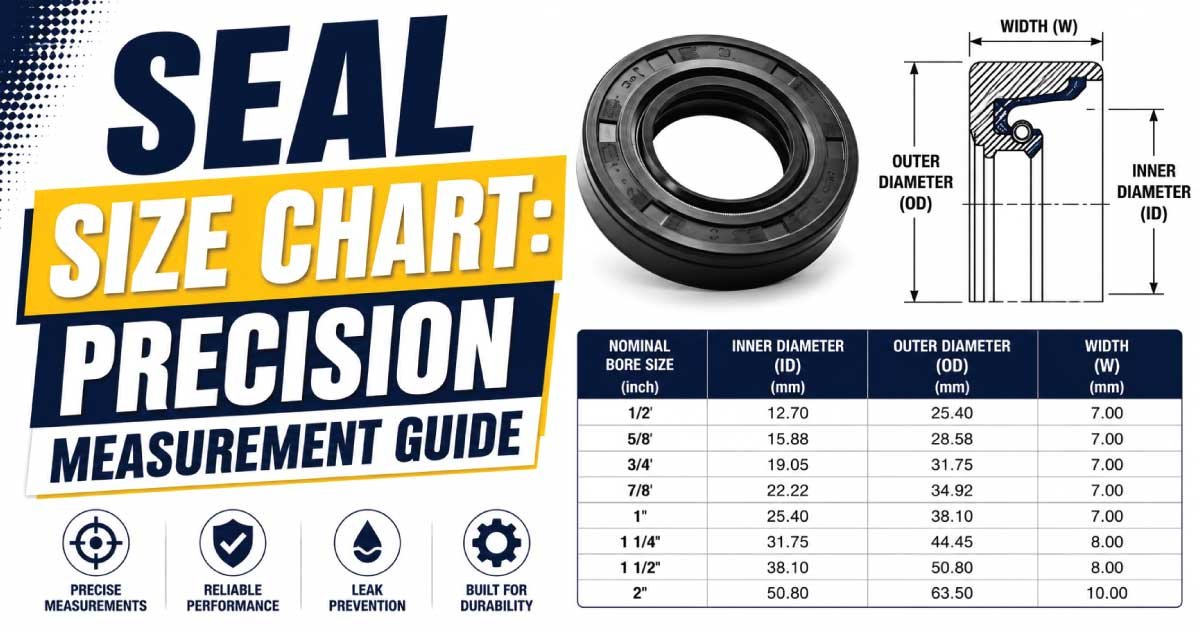
Seals are critical mechanical components used to prevent the leakage of liquids, gases, lubricants, and contaminants between moving or stationary parts. They are found in hydraulic cylinders, pneumatic systems, pumps, gearboxes, bearings, automotive engines, and industrial machinery.
Choosing the correct seal size ensures proper sealing performance, reduces friction, extends equipment life, and minimizes costly downtime.
This complete guide explains seal sizes, standard size charts, measurement methods, seal types, materials, and selection tips.
What Is a Mechanical Seal?
A mechanical seal is a precision-engineered component designed to close the gap between two mating surfaces. It prevents leakage while allowing rotating or reciprocating motion. Seals help maintain pressure, retain lubricants, and protect machinery from dirt, dust, moisture, and other contaminants. Properly sized seals improve equipment efficiency and reduce maintenance requirements across many industries.
Primary Functions
- Prevents fluid leakage
- Retains lubricants
- Blocks dust and contaminants
- Maintains operating pressure
- Reduces equipment wear
- Improves machine reliability
Common Types of Seals
Different applications require different seal designs depending on pressure, speed, temperature, and operating environment. Understanding the most common seal types helps ensure the correct choice for reliable sealing performance.
1. Oil Seal
Oil seals, also called rotary shaft seals, prevent lubricating oil from escaping while stopping dirt, water, and debris from entering rotating equipment.
Advantages
- Excellent oil retention
- Protects bearings
- Reduces contamination
- Long service life
- Suitable for rotating shafts
2. O-Ring Seal
O-rings are circular elastomer seals used in static and dynamic applications. Their simple design and low cost make them one of the most widely used sealing solutions.
Benefits
- Easy installation
- Cost-effective
- Excellent sealing performance
- Available in many materials
- Suitable for hydraulic and pneumatic systems
3. Hydraulic Seal
Hydraulic seals are designed to withstand high-pressure hydraulic systems while preventing internal and external fluid leakage.
Applications
- Hydraulic cylinders
- Excavators
- Press machines
- Industrial equipment
- Construction machinery
4. Mechanical Face Seal
Mechanical face seals use two precision-machined sealing faces that rotate against each other to prevent leakage in pumps, mixers, and compressors operating under demanding conditions.
Metric Seal Size Chart
The following chart lists common metric seal sizes used in industrial and automotive applications.
| Shaft Diameter (mm) | Outside Diameter (mm) | Seal Width (mm) |
|---|---|---|
| 10 | 22 | 7 |
| 12 | 24 | 7 |
| 15 | 28 | 7 |
| 20 | 35 | 7 |
| 25 | 40 | 7 |
| 30 | 47 | 7 |
| 35 | 52 | 7 |
| 40 | 62 | 8 |
| 45 | 65 | 8 |
| 50 | 72 | 8 |
| 55 | 80 | 10 |
| 60 | 85 | 10 |
| 65 | 90 | 10 |
| 70 | 95 | 10 |
| 75 | 100 | 10 |
Inch Seal Size Chart
Many automotive and industrial systems use inch-based seal sizes.
| Shaft Size (Inch) | Outside Diameter (Inch) | Width (Inch) |
|---|---|---|
| 1/2 | 1-1/8 | 1/4 |
| 5/8 | 1-1/4 | 1/4 |
| 3/4 | 1-3/8 | 1/4 |
| 7/8 | 1-1/2 | 1/4 |
| 1 | 1-5/8 | 1/4 |
| 1-1/4 | 2 | 3/8 |
| 1-1/2 | 2-1/4 | 3/8 |
| 1-3/4 | 2-1/2 | 3/8 |
| 2 | 3 | 1/2 |
| 2-1/2 | 3-1/2 | 1/2 |
Understanding Seal Dimensions
Seal dimensions determine how effectively the seal fits within its housing and around the shaft. Accurate measurements ensure proper sealing, minimize friction, and prevent premature wear. Even small dimensional errors can result in leakage, overheating, or equipment failure.
1. Inside Diameter (ID)
The inside diameter matches the shaft diameter. A correctly sized ID provides the proper sealing interference while allowing smooth shaft rotation without excessive friction or wear.
2. Outside Diameter (OD)
The outside diameter fits tightly inside the housing bore. A proper OD prevents the seal from rotating or shifting during operation while maintaining a secure fit.
3. Seal Width
Seal width, also called thickness, determines how much space the seal occupies inside the housing. The correct width ensures proper positioning and adequate sealing contact throughout operation.
How to Measure a Seal
Accurate measurements are essential when replacing an existing seal or selecting a new one. Digital calipers or micrometers provide the best accuracy for seal measurements.
Step 1: Measure the Shaft Diameter
Measure the shaft where the seal lip contacts the surface.
Tips
- Clean the shaft first
- Measure multiple locations
- Check for wear
- Record measurements carefully
Step 2: Measure the Housing Bore
Measure the inside diameter of the housing where the seal is installed.
Important considerations:
- Inspect for damage
- Measure at several points
- Verify roundness
- Compare with manufacturer specifications
Step 3: Measure Seal Width
Measure the overall thickness of the seal using a caliper. Ensure the replacement seal matches the original width to maintain proper positioning and sealing performance.
Common Seal Materials
Seal material selection affects durability, temperature resistance, chemical compatibility, and overall service life. Choosing the correct material is essential for reliable sealing performance.
Nitrile Rubber (NBR)
NBR is one of the most commonly used seal materials because it offers excellent resistance to petroleum-based oils and fuels.
Advantages
- Affordable
- Good wear resistance
- Oil resistant
- Easy availability
- Suitable for general industrial applications
Viton (FKM)
Viton seals provide exceptional resistance to heat, chemicals, and aggressive fluids, making them ideal for demanding industrial environments.
Benefits
- High-temperature resistance
- Excellent chemical resistance
- Long service life
- Low compression set
- Superior durability
Silicone Rubber
Silicone seals perform well across a wide temperature range and are commonly used in food processing, medical equipment, and low-pressure sealing applications.
Applications of Mechanical Seals
Seals are used in nearly every mechanical system where fluids, gases, or lubricants must be contained while preventing contamination from entering the equipment.
Automotive Industry
Automotive systems rely on seals to prevent oil, coolant, fuel, and transmission fluid leaks while protecting internal components.
Common Applications
- Engines
- Transmissions
- Wheel hubs
- Water pumps
- Steering systems
Industrial Machinery
Industrial equipment uses seals to maintain pressure, retain lubrication, and protect precision components from contamination.
Typical Applications
- Hydraulic cylinders
- Gearboxes
- Compressors
- Pumps
- Conveyor systems
- Electric motors
How to Choose the Correct Seal Size
Selecting the correct seal size is essential for preventing leaks, reducing friction, and ensuring reliable equipment performance. The seal must match the shaft diameter, housing bore, operating pressure, temperature, and fluid type. An incorrectly sized seal may wear prematurely, leak, or damage surrounding components. Always verify measurements and manufacturer specifications before selecting a replacement seal.
Selection Checklist
- Measure the shaft diameter accurately
- Measure the housing bore
- Verify seal width
- Identify the seal type
- Choose the correct material
- Check pressure requirements
- Consider operating temperature
- Verify shaft speed
- Ensure chemical compatibility
- Follow manufacturer recommendations
Seal Material Comparison
Different seal materials are designed to withstand specific temperatures, chemicals, and operating conditions. Selecting the proper material improves sealing performance and extends service life.
| Material | Temperature Range | Best Applications | Key Advantages |
|---|---|---|---|
| Nitrile (NBR) | -40°C to 120°C | Hydraulic oil, fuel | Economical and oil resistant |
| Viton (FKM) | -20°C to 200°C | High-temperature systems | Excellent chemical resistance |
| Silicone (VMQ) | -60°C to 230°C | Food and medical equipment | Wide temperature range |
| EPDM | -50°C to 150°C | Water and steam | Weather and ozone resistant |
| PTFE (Teflon) | -200°C to 260°C | Chemical processing | Low friction and chemical resistance |
| Polyurethane (PU) | -35°C to 100°C | Hydraulic cylinders | High wear resistance |
Seal Pressure and Temperature Ratings
Pressure and temperature directly affect seal performance and lifespan. Selecting a seal designed for the operating conditions helps prevent leakage, hardening, cracking, or rapid wear.
Pressure Considerations
Seal selection should account for:
- Operating pressure
- Pressure spikes
- Dynamic loads
- Hydraulic shock
- Vacuum conditions
Temperature Considerations
High or low temperatures can change seal flexibility and durability.
Factors include:
- Continuous operating temperature
- Peak temperature
- Heat generated by friction
- Environmental temperature
- Cooling conditions
Always choose a seal material rated for the actual operating environment.
📐 Explore Latest Size Guide 👉 Screwdriver Size Selection for All Screws
Common Seal Installation Mistakes
Improper installation is one of the leading causes of seal failure. Even a high-quality seal can leak if installed incorrectly or damaged during assembly.
Avoid these common mistakes:
- Installing the wrong seal size
- Damaging the sealing lip
- Using excessive installation force
- Installing the seal backwards
- Failing to lubricate the seal lip
- Dirty installation surfaces
- Scratched shaft surfaces
- Incorrect housing alignment
- Reusing damaged seals
- Ignoring manufacturer instructions
Advantages of Using the Correct Seal Size
A properly sized seal provides consistent sealing performance while protecting expensive equipment from leaks and contamination. It also reduces maintenance costs and extends component life.
Major benefits include:
- Leak-free operation
- Improved equipment reliability
- Reduced friction
- Longer service life
- Lower maintenance costs
- Better pressure retention
- Protection against contamination
- Improved energy efficiency
- Reduced downtime
- Increased equipment lifespan
Signs a Seal Needs Replacement
Mechanical seals gradually wear due to pressure, heat, friction, and contamination. Identifying these warning signs early helps prevent costly equipment failures.
Common symptoms include:
- Oil leakage
- Hydraulic fluid leakage
- Coolant leaks
- Excessive vibration
- Unusual noise
- Visible cracks
- Hardened rubber
- Torn sealing lip
- Shaft scoring
- Overheating
Replace damaged seals promptly to avoid further damage to shafts, bearings, and housings.
📐 Explore Latest Size Guide 👉 Micrometer Screw Gauge Reading Guide for Beginners
Seal Maintenance Tips
Routine maintenance helps maximize seal life and ensures reliable operation. Regular inspections identify wear before it leads to equipment failure.
Maintenance recommendations:
- Inspect seals regularly
- Keep sealing surfaces clean
- Lubricate when recommended
- Replace worn seals promptly
- Monitor operating temperature
- Check shaft condition
- Inspect housing surfaces
- Prevent contamination
- Store replacement seals correctly
- Follow maintenance schedules
Preventive maintenance reduces downtime and improves machine efficiency.
Seal Applications Across Industries
Mechanical seals are used in virtually every industry that requires reliable fluid containment and contamination control. Their versatility makes them essential for countless mechanical systems.
Hydraulic Systems
Hydraulic cylinders, pumps, valves, and motors depend on seals to maintain pressure and prevent hydraulic oil leakage during operation.
Pumps and Compressors
Mechanical face seals prevent liquid and gas leakage in centrifugal pumps, mixers, blowers, and compressors operating under demanding conditions.
Manufacturing Equipment
Industrial machinery uses seals to protect bearings, gearboxes, and rotating shafts from dust, moisture, and lubricant loss.
Marine Industry
Marine equipment relies on corrosion-resistant seals for propeller shafts, pumps, engines, and hydraulic steering systems exposed to seawater.
Food and Beverage Industry
Food-grade seals maintain hygienic conditions in processing equipment while resisting cleaning chemicals and temperature variations.
Last Thoughts
Selecting the correct seal size is essential for maintaining efficient, leak-free, and reliable mechanical systems. By understanding seal dimensions, materials, pressure ratings, temperature limits, and installation practices, you can confidently choose the right seal for automotive, hydraulic, industrial, marine, and manufacturing applications.
Using an accurate seal size chart, following proper installation procedures, and performing regular maintenance significantly improves equipment performance, reduces operating costs, minimizes downtime, and extends the service life of both the seal and the machinery it protects.
📐 Explore Latest Size Guide 👉 Bevel Gear Size Chart: Ultimate Guide to Gear Sizes
FAQs:
How do I determine the correct seal size?
Measure the shaft diameter, housing bore, and seal width using a digital caliper or micrometer. Compare these measurements with the manufacturer’s specifications or a standard seal size chart. Selecting the correct dimensions ensures a proper fit, prevents leakage, reduces wear, and provides reliable long-term sealing performance.
Which seal material is best for hydraulic systems?
Nitrile (NBR) is the most commonly used seal material for hydraulic systems because it offers excellent resistance to hydraulic oils and fuels. For high-temperature or chemically aggressive environments, Viton (FKM) and PTFE seals provide superior heat resistance, chemical compatibility, and longer service life in demanding applications.
What causes seal failure?
Seal failure can occur due to incorrect sizing, improper installation, excessive pressure, high operating temperatures, contamination, shaft damage, insufficient lubrication, chemical incompatibility, or normal wear. Regular inspection, proper maintenance, and selecting the correct seal material help prevent premature failure and costly equipment downtime.
Can I reuse a mechanical seal?
Reusing a mechanical seal is generally not recommended, especially if it has been in service. Even when it appears undamaged, the sealing faces may have experienced wear that reduces sealing efficiency. Installing a new seal helps ensure reliable performance, minimizes leakage, and extends equipment service life.
How long does a mechanical seal last?
The lifespan of a mechanical seal depends on operating pressure, temperature, shaft speed, fluid type, maintenance practices, and material quality. With proper installation and routine maintenance, many mechanical seals can provide several years of dependable service before replacement becomes necessary, although harsh conditions may shorten their lifespan.

Engineer Hassan is a Mechanical Engineer with 16+ years of hands-on experience in mechanical hardware, fasteners, and workshop tools. He focuses on size selection, thread identification, and measurement, helping users choose the correct components with accuracy and safety.