
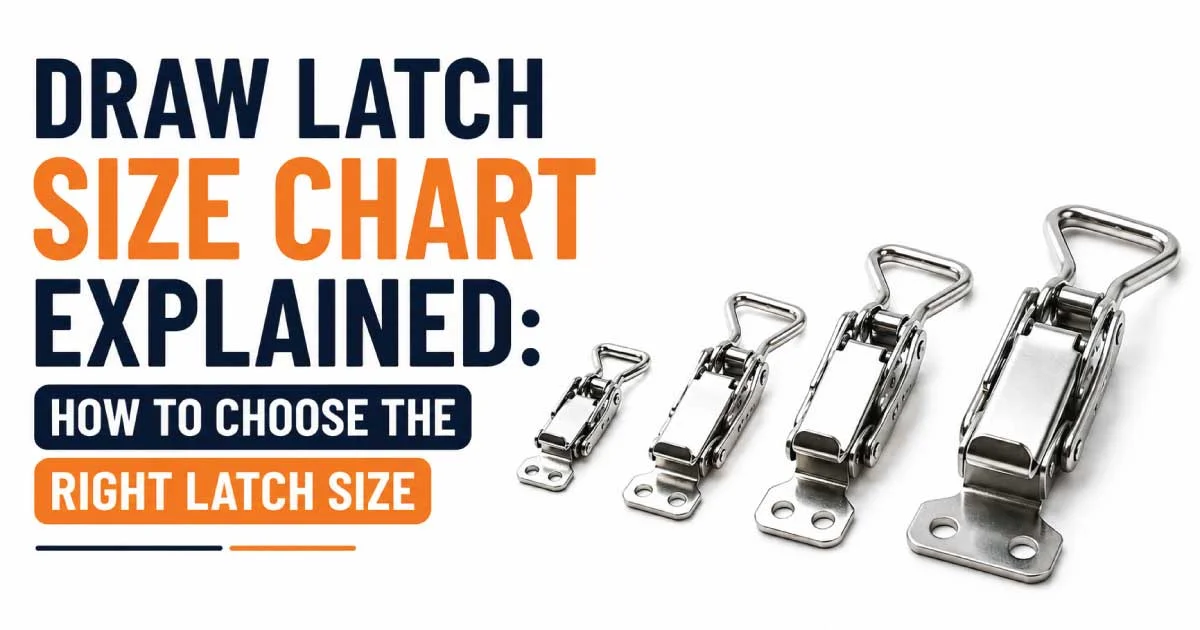
Choosing the correct draw latch size is one of the most important steps in ensuring a secure, durable, and functional closure system.
Whether you’re working on toolboxes, industrial cabinets, flight cases, trailers, electrical enclosures, or storage boxes, selecting the right latch size prevents misalignment, excessive wear, and unexpected failures.
A complete draw latch size chart serves as a reliable reference for matching latch dimensions with your project requirements.
Many people assume that all draw latches perform the same function, but size, material, load capacity, and mounting dimensions vary significantly between models.
Installing an incorrectly sized latch can lead to vibration issues, poor sealing, and reduced product lifespan. This guide explains everything you need to know about draw latch sizes, helping beginners and professionals make informed decisions.
What Is a Draw Latch?
A draw latch is a mechanical fastening device designed to pull two surfaces tightly together. Unlike ordinary locks, a draw latch applies consistent tension that keeps lids, doors, covers, or panels securely closed during movement, vibration, or environmental exposure.
Common applications include:
- Tool chests
- Industrial machinery
- Truck compartments
- Flight cases
- Electrical cabinets
- Agricultural equipment
- Marine storage boxes
- Medical equipment enclosures
The latch works by hooking onto a strike plate and tightening through leverage, creating a firm seal between two components.
Why Draw Latch Size Matters
The correct draw latch size directly affects performance, safety, and durability. Selecting a latch solely based on appearance often results in installation problems or premature failure. A properly sized latch distributes pressure evenly and maintains reliable tension over years of repeated use.
Benefits of choosing the correct size include:
- Better holding strength
- Improved vibration resistance
- Longer service life
- Easier installation
- Enhanced safety
- Proper sealing performance
- Reduced maintenance costs
Oversized latches may require unnecessary mounting space, while undersized models may fail under heavy loads.
Understanding the Draw Latch Size Chart
A draw latch size chart lists the physical dimensions and performance specifications of various latch models. Manufacturers use these charts to help buyers compare products before purchasing or installing them.
A standard draw latch size chart typically includes:
- Overall latch length
- Width
- Height
- Mounting hole spacing
- Hook length
- Adjustable range
- Material
- Load capacity
- Finish type
- Weight
Reading these specifications carefully ensures compatibility with existing equipment or new fabrication projects.
Key Measurements Included in a Draw Latch Size Chart
Before selecting a latch, it’s important to understand the measurements provided in manufacturer specifications. Each dimension influences installation accuracy and operational performance.
The most common measurements are:
- Overall length
- Closed length
- Open length
- Mounting plate width
- Base thickness
- Hook diameter
- Hole diameter
- Hole center spacing
- Adjustment length
- Handle height
Accurate measurements prevent alignment issues and simplify replacement of existing hardware.
Standard Draw Latch Size Categories
Manufacturers generally classify draw latches into several size groups based on application requirements. Although dimensions differ among brands, most products fall into predictable categories that simplify selection.
Mini Draw Latches
Mini draw latches are compact fastening solutions designed for lightweight equipment where space is limited. They provide secure closure without adding excessive weight or occupying valuable mounting area.
Typical features include:
- Length: 40–70 mm
- Light-duty applications
- Small carrying cases
- Medical devices
- Electronic enclosures
- Plastic containers
These latches are ideal for portable equipment requiring frequent opening and closing.
Small Draw Latches
Small draw latches offer slightly higher strength while maintaining a compact footprint. They are widely used in commercial equipment, tool organizers, and lightweight industrial enclosures.
Typical characteristics include:
- Length: 70–100 mm
- Moderate holding force
- Compact installation
- Stainless steel options
- Adjustable hook designs
- Easy replacement
Their versatility makes them one of the most commonly used latch sizes.
Medium Draw Latches
Medium-sized draw latches represent the balance between compactness and heavy-duty performance. They are suitable for applications requiring higher holding capacity without excessively large hardware.
Common specifications include:
- Length: 100–150 mm
- Medium load ratings
- Industrial cabinets
- Storage boxes
- Generator enclosures
- Vehicle compartments
These latches remain popular across manufacturing and transportation industries.
Large Draw Latches
Large draw latches are designed for demanding industrial environments where high clamping force and exceptional durability are required. Their reinforced construction allows them to withstand significant stress and vibration.
Typical applications include:
- Heavy machinery
- Trailer compartments
- Marine equipment
- Construction equipment
- Industrial doors
- Large storage containers
These latches typically measure between 150 and 220 mm in length.
Extra Heavy-Duty Draw Latches
Extra heavy-duty draw latches provide maximum holding force for specialized industrial applications. Their robust construction ensures secure closure even under extreme vibration, impact, or harsh environmental conditions.
Typical uses include:
- Military equipment
- Mining machinery
- Heavy transport vehicles
- Offshore equipment
- Industrial pressure enclosures
- Custom fabricated systems
These models often exceed 220 mm in overall length and feature reinforced components.
Complete Draw Latch Size Chart
The following chart provides a general reference for commonly available draw latch sizes. Actual dimensions may vary slightly depending on the manufacturer.
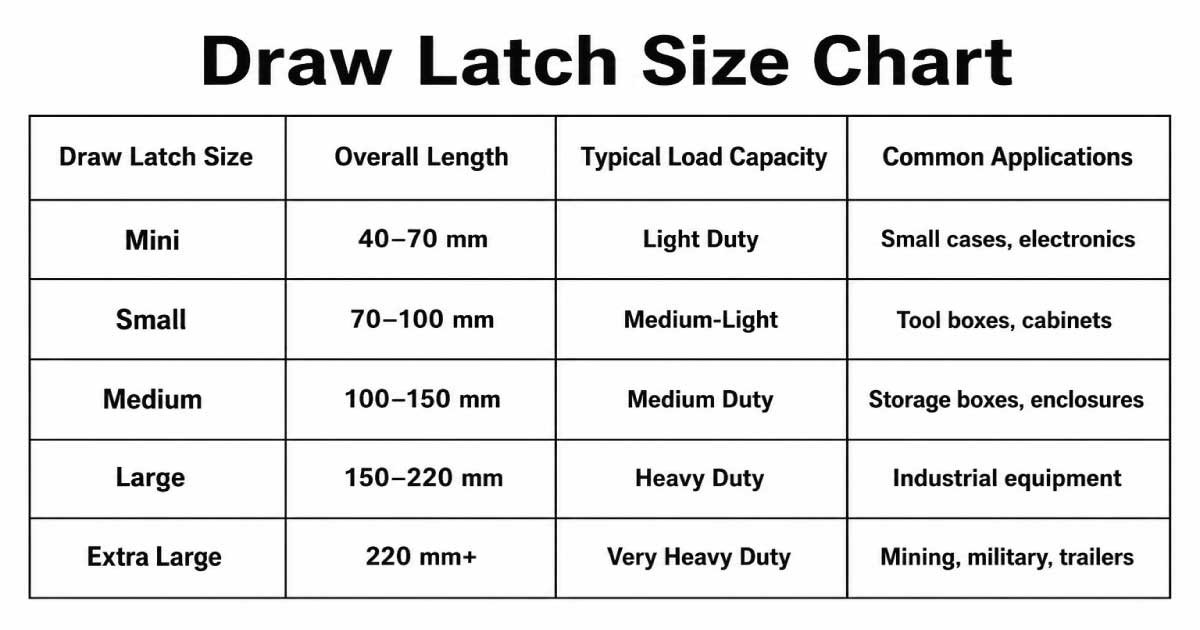
| Draw Latch Size | Overall Length | Typical Load Capacity | Common Applications |
|---|---|---|---|
| Mini | 40–70 mm | Light Duty | Small cases, electronics |
| Small | 70–100 mm | Medium-Light | Tool boxes, cabinets |
| Medium | 100–150 mm | Medium Duty | Storage boxes, enclosures |
| Large | 150–220 mm | Heavy Duty | Industrial equipment |
| Extra Large | 220 mm+ | Very Heavy Duty | Mining, military, trailers |
Draw Latch Size Chart PDF
This size chart provides a helpful starting point before reviewing manufacturer-specific specifications.
Materials Used in Draw Latches
Material selection significantly influences durability, corrosion resistance, and overall lifespan. Different environments require different materials to ensure reliable performance under varying operating conditions.
Popular materials include:
- Stainless steel
- Zinc-plated steel
- Mild steel
- Aluminum
- Brass
- Plastic composite
- Powder-coated steel
Each material offers unique advantages depending on moisture exposure, load requirements, and maintenance expectations.
Stainless Steel Draw Latches
Stainless steel remains one of the most popular materials because it combines strength with excellent corrosion resistance. It performs exceptionally well in outdoor and marine environments where moisture exposure is constant.
Advantages include:
- Rust resistance
- Long service life
- Attractive appearance
- High strength
- Minimal maintenance
- Weather resistance
- Food-grade options
Although more expensive than standard steel, stainless steel often provides greater long-term value.
Zinc-Plated Steel Draw Latches
Zinc-plated steel draw latches offer an economical balance between affordability and corrosion protection. The zinc coating shields the underlying steel from moisture, making these latches suitable for indoor and moderately exposed environments.
Key benefits include:
- Lower cost
- Good durability
- Decent corrosion resistance
- Easy availability
- Strong mechanical performance
- Wide range of sizes
They are commonly used in workshops, warehouses, and commercial storage equipment.
Factors to Consider Before Choosing a Draw Latch Size
Selecting the right draw latch involves more than matching physical dimensions. Several operational factors influence the ideal size and style for a specific application.
Important considerations include:
- Load capacity
- Environmental conditions
- Mounting space
- Material compatibility
- Frequency of use
- Required sealing pressure
- Safety requirements
- Corrosion exposure
- Vibration levels
- Installation method
Evaluating these factors ensures long-term reliability and optimal performance.
Also Read:
Load Capacity and Holding Strength
One of the most critical specifications in any draw latch size chart is load capacity. Every latch is engineered to withstand a specific amount of pulling force without permanent deformation or failure.
Choosing a latch with insufficient holding strength may result in:
- Accidental opening
- Seal failure
- Increased wear
- Component damage
- Reduced equipment safety
Always select a latch that exceeds your expected operating load for improved reliability.

Engineer Hassan is a Mechanical Engineer with 16+ years of hands-on experience in mechanical hardware, fasteners, and workshop tools. He focuses on size selection, thread identification, and measurement, helping users choose the correct components with accuracy and safety.