
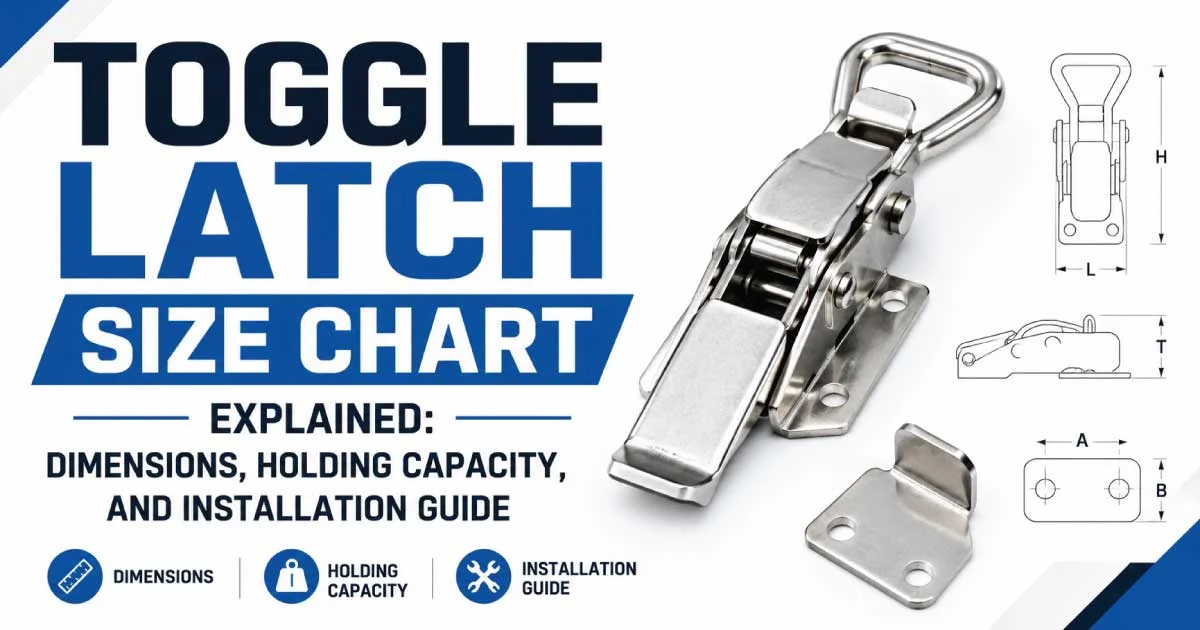
Toggle latches are among the most reliable fastening solutions used in industrial machinery, toolboxes, enclosures, transport equipment, cabinets, and heavy-duty applications.
Choosing the correct latch size is essential because an incorrectly sized latch can reduce safety, affect performance, and shorten the lifespan of equipment.
This guide explains everything you need to know about toggle latch size charts, measurements, applications, and selection methods.
What Is a Toggle Latch?
A toggle latch is a mechanical fastening device designed to securely hold two surfaces together using leverage. Once locked, it creates constant tension that keeps lids, doors, covers, or panels tightly closed. Unlike ordinary latches, toggle latches offer adjustable clamping force, making them suitable for applications requiring vibration resistance and repeated opening and closing.
Their simple yet effective mechanism has made them popular across manufacturing, automotive, aerospace, woodworking, agriculture, and household equipment.
Why a Toggle Latch Size Chart Matters
A toggle latch size chart helps users determine the correct latch dimensions before installation. Since toggle latches come in various lengths, widths, hook sizes, and holding capacities, selecting the proper size ensures secure fastening, smooth operation, and long-term durability. A size chart eliminates guesswork and helps buyers match latch specifications with their application requirements.
Proper sizing also prevents excessive stress on mounting surfaces while ensuring the latch closes with the correct amount of tension.
Benefits of Using a Size Chart
- Ensures accurate fit
- Improves equipment safety
- Prevents installation errors
- Reduces maintenance costs
- Increases latch lifespan
- Supports better load distribution
- Enhances operational efficiency
Understanding Toggle Latch Measurements
Before using any toggle latch size chart, it is important to understand the standard measurements manufacturers provide. Each dimension contributes to compatibility and performance. Knowing what these measurements represent allows buyers to compare products accurately and select the most appropriate latch for their specific installation requirements.
Common Toggle Latch Dimensions
The following measurements are commonly listed in product specifications:
- Overall length
- Body width
- Mounting hole spacing
- Hook length
- Hook diameter
- Base plate dimensions
- Closed height
- Open height
- Adjustable range
- Holding capacity
These dimensions ensure the latch fits correctly without interfering with surrounding components.
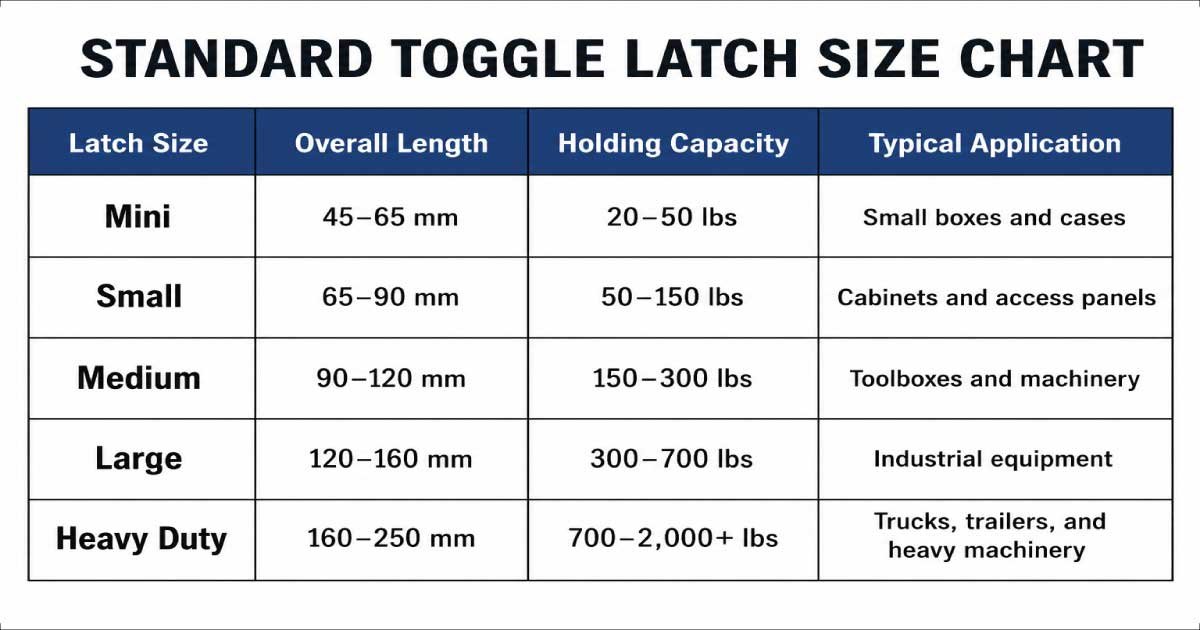
Standard Toggle Latch Size Chart
The following table provides general size references used by many manufacturers. Actual dimensions may vary slightly depending on brand and design.
| Latch Size | Overall Length | Holding Capacity | Typical Application |
|---|---|---|---|
| Mini | 45–65 mm | 20–50 lbs | Small boxes and cases |
| Small | 65–90 mm | 50–150 lbs | Cabinets and access panels |
| Medium | 90–120 mm | 150–300 lbs | Toolboxes and machinery |
| Large | 120–160 mm | 300–700 lbs | Industrial equipment |
| Heavy Duty | 160–250 mm | 700–2,000+ lbs | Trucks, trailers, and heavy machinery |
This chart serves as a general guideline rather than an exact manufacturing standard.
Toggle Latch Size Chart PDF
Choosing the correct toggle latch size is essential for ensuring secure fastening, reliable performance, and long-lasting durability. This standard toggle latch size chart compares common latch sizes, overall lengths, holding capacities, and typical applications. Use it as a quick reference to select the most suitable latch for cabinets, toolboxes, industrial equipment, trailers, and heavy-duty machinery.
📏 Essential Size Chart Guides 👉
Factors That Influence Toggle Latch Size Selection
Selecting the correct latch involves more than simply matching dimensions. Several operational and environmental factors determine whether a latch will perform reliably over time. Considering these variables helps prevent premature wear, accidental opening, and structural damage during regular use.
Key Selection Factors
- Weight of the door or lid
- Frequency of operation
- Required holding force
- Environmental conditions
- Exposure to vibration
- Available mounting space
- Material compatibility
- Safety requirements
Evaluating these aspects ensures the chosen latch delivers dependable performance under real-world operating conditions.
Holding Capacity vs. Physical Size
Many users mistakenly assume larger toggle latches always provide greater strength. While larger models often support higher loads, holding capacity primarily depends on latch design, materials, manufacturing quality, and locking geometry.
Therefore, always compare the rated holding capacity rather than relying solely on physical dimensions when choosing a toggle latch.
Manufacturers typically specify the maximum static holding force for each latch model, allowing buyers to select products that meet safety requirements.
Common Toggle Latch Materials
Material selection significantly influences latch durability, corrosion resistance, and overall performance. Different materials are designed for different environments, ranging from indoor cabinets to marine equipment and outdoor machinery. Choosing the appropriate material extends service life while minimizing maintenance and replacement costs.
Popular Materials Include
- Stainless steel
- Zinc-plated steel
- Carbon steel
- Aluminum
- Plastic composites
- Nickel-plated steel
- Powder-coated steel
Each material offers unique advantages depending on environmental exposure and load requirements.
How to Measure a Toggle Latch Correctly
Accurate measurements are essential when replacing an existing latch or installing a new one. Measuring several dimensions rather than only the overall length ensures compatibility with mounting holes, hook alignment, and closing tension. Proper measurement also reduces installation adjustments and improves long-term reliability.
Measurement Steps
- Measure overall latch length.
- Record mounting hole spacing.
- Measure hook length.
- Measure hook diameter.
- Measure closed height.
- Measure base plate dimensions.
- Check adjustment range.
- Verify holding capacity requirements.
These measurements should always be compared with the manufacturer’s specification sheet.
Applications of Different Toggle Latch Sizes
Different latch sizes are engineered for different tasks. Small latches work well for lightweight enclosures, while larger industrial models withstand substantial loads and constant vibration. Understanding typical applications simplifies the selection process and helps ensure reliable performance across various industries.
Small Toggle Latches
Commonly used for:
- Electrical enclosures
- Instrument cases
- Small cabinets
- Medical equipment
- Electronics boxes
Medium Toggle Latches
Frequently installed on:
- Toolboxes
- Machine guards
- Workshop storage
- Compressor covers
- Utility cabinets
Large Toggle Latches
Ideal for:
- Heavy machinery
- Industrial enclosures
- Agricultural equipment
- Commercial vehicles
- Generator housings
Importance of Adjustable Toggle Latches
Adjustable toggle latches allow users to modify clamping tension by changing hook length. This flexibility accommodates manufacturing tolerances, gasket compression, and material wear over time. Adjustable designs are especially valuable in industrial environments where secure sealing and consistent pressure are essential for optimal equipment performance.
Their adaptability makes them suitable for applications with varying closure requirements and repeated use.
Choosing the Right Mounting Configuration
Beyond latch size, mounting style plays a vital role in achieving a secure installation. Surface-mounted, recessed, and concealed configurations each offer unique advantages depending on space availability, accessibility, and aesthetic preferences. Matching the mounting configuration to the application improves both functionality and appearance.
Common Mounting Types
- Surface mount
- Recessed mount
- Weld-on mount
- Bolt-on mount
- Riveted installation
Selecting the appropriate mounting style simplifies installation while maximizing structural stability.

Engineer Hassan is a Mechanical Engineer with 16+ years of hands-on experience in mechanical hardware, fasteners, and workshop tools. He focuses on size selection, thread identification, and measurement, helping users choose the correct components with accuracy and safety.