
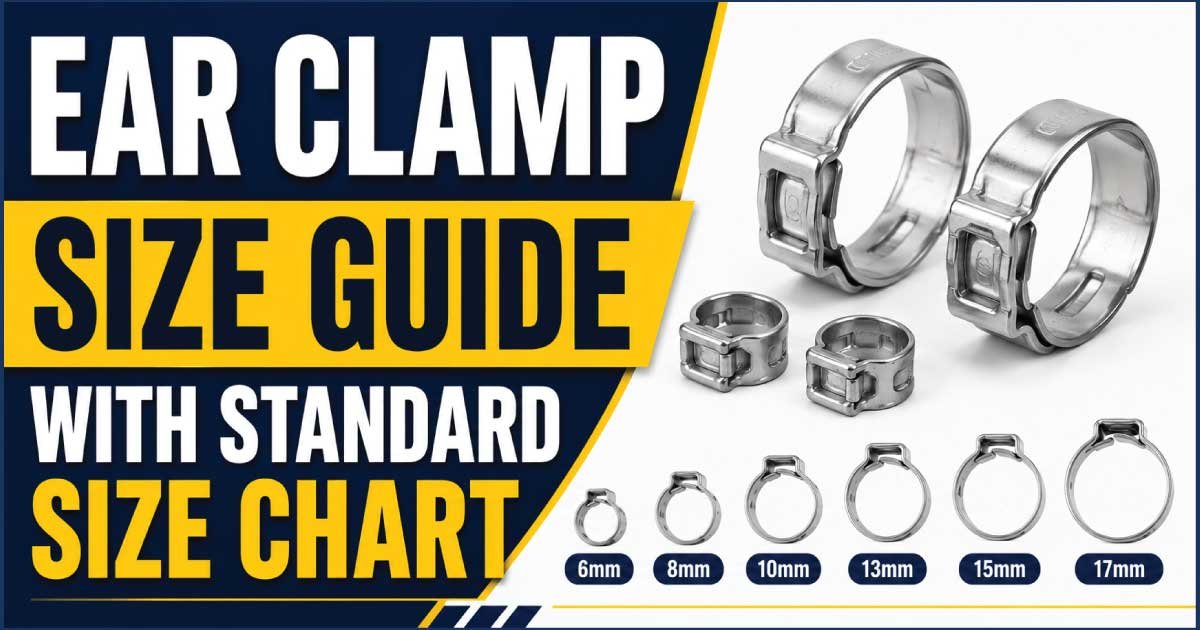
Ear clamps, also known as Oetiker clamps or pinch clamps, are one-piece metal clamps designed to create a secure, tamper-resistant seal around hoses, tubing, and pipes. Unlike worm-drive clamps, ear clamps provide uniform 360-degree clamping pressure and are tightened by compressing the “ear” with a special crimping tool. They are widely used in automotive fuel systems, cooling systems, plumbing, pneumatic equipment, food processing, and industrial applications.
Choosing the correct ear clamp size is essential for preventing leaks, maintaining consistent sealing pressure, and protecting the hose from damage. This guide provides a standard ear clamp size chart, explains how to measure ear clamps, discusses common materials, and offers practical tips for selecting the right size.
Standard Ear Clamp Size Chart
The following chart lists common ear clamp sizes based on hose outside diameter (OD).
| Ear Clamp Size | Hose Outside Diameter (OD) | Band Width | Material Thickness | Common Applications |
|---|---|---|---|---|
| 7 mm | 6–7 mm | 5 mm | 0.6 mm | Vacuum hoses |
| 8 mm | 7–8 mm | 5 mm | 0.6 mm | Fuel lines |
| 10 mm | 9–10 mm | 7 mm | 0.8 mm | Coolant hoses |
| 12 mm | 11–12 mm | 7 mm | 0.8 mm | Water tubing |
| 14 mm | 13–14 mm | 7 mm | 0.8 mm | Air hoses |
| 16 mm | 15–16 mm | 9 mm | 1.0 mm | Heater hoses |
| 18 mm | 17–18 mm | 9 mm | 1.0 mm | Radiator hoses |
| 21 mm | 20–21 mm | 9 mm | 1.0 mm | Automotive cooling systems |
| 25 mm | 24–25 mm | 10 mm | 1.2 mm | Industrial tubing |
| 30 mm | 29–30 mm | 10 mm | 1.2 mm | Heavy-duty hose connections |
These dimensions represent commonly available single-ear and double-ear clamps used in automotive, plumbing, and industrial applications.
Why Ear Clamp Size Matters
Using the proper ear clamp size ensures a reliable seal without damaging the hose. A clamp that is too small may overstress the hose or fail during installation, while an oversized clamp may not provide enough clamping force.
Benefits of selecting the correct size include:
- Leak-free hose connections
- Uniform 360-degree sealing pressure
- Better vibration resistance
- Longer hose lifespan
- Reduced maintenance
- Increased reliability
- Improved safety
How to Measure an Ear Clamp
Accurate measurements help ensure the correct clamp selection.
Follow these steps:
- Measure the hose outside diameter after installation.
- Measure the fitting diameter if replacing an existing clamp.
- Select a clamp that matches the hose OD.
- Check the clamp band width.
- Verify the ear height for proper crimping.
- Confirm the material thickness.
- Ensure the clamp provides adequate compression after crimping.
Using a digital caliper provides the most accurate measurements.
Also Read: Wrench Size Chart: Complete Wrench Sizes Guide
Common Materials Used for Ear Clamps
Different materials are available for various operating environments.
304 Stainless Steel
The most common choice for automotive, plumbing, and industrial applications due to its excellent corrosion resistance.
316 Stainless Steel
Ideal for marine environments, chemical processing, and food-grade applications where superior corrosion resistance is required.
Zinc-Plated Steel
An economical option suitable for indoor and light-duty applications.
How to Choose the Right Ear Clamp Size
When selecting an ear clamp, consider the following factors:
- Measure the hose outside diameter accurately.
- Select the proper clamp diameter.
- Choose corrosion-resistant materials for outdoor use.
- Match the band width to the application.
- Verify compatibility with the hose material.
- Consider operating pressure and temperature.
- Follow the equipment manufacturer’s recommendations.
Common Applications of Ear Clamps
Ear clamps are used in many industries because they provide a permanent and secure connection.
Typical applications include:
- Automotive fuel lines
- Cooling systems
- CV boot installations
- Air hoses
- Plumbing systems
- Beverage dispensing equipment
- Food processing machinery
- Pneumatic systems
- Marine engines
- Industrial tubing
Installation Tips
Proper installation ensures maximum sealing performance.
- Use a dedicated ear clamp crimping tool.
- Position the clamp behind the hose barb.
- Compress the ear evenly.
- Avoid over-crimping the clamp.
- Inspect the hose before installation.
- Verify the clamp is seated correctly.
- Replace clamps instead of reusing them.
Correct installation provides a permanent, leak-free connection.
Also Read: Nut Sizes and Types for Mechanical Projects
Common Mistakes to Avoid
Avoid these common ear clamp installation errors:
- Selecting the wrong clamp size
- Using incorrect crimping tools
- Over-crimping the ear
- Reusing old clamps
- Installing the clamp too close to the hose edge
- Ignoring corrosion resistance
- Failing to inspect the hose before installation
These mistakes can reduce sealing performance and shorten the lifespan of the hose assembly.
Benefits of Properly Sized Ear Clamps
Choosing the correct ear clamp offers several advantages.
- Uniform sealing pressure
- Strong vibration resistance
- Compact design
- Tamper-resistant connection
- Longer service life
- Lower maintenance requirements
- Reliable long-term performance
These benefits make ear clamps an excellent choice for permanent hose connections.
Maintenance Tips
Although ear clamps are designed for permanent installation, periodic inspections remain important.
- Inspect for corrosion.
- Check hoses for cracks or wear.
- Replace damaged clamps immediately.
- Inspect connections during routine maintenance.
- Clean dirt and debris around the clamp.
- Replace the clamp whenever the hose is replaced.
- Never attempt to reuse a removed ear clamp.
Regular inspections help maintain a safe and leak-free system.
Also Read: Drill & Drill Bit Size Chart, Types, Uses, Expert Guide
Frequently Asked Questions
1. How do I choose the correct ear clamp size?
Choose an ear clamp that matches the outside diameter of the hose after it is installed on the fitting. A properly sized clamp provides uniform 360-degree sealing pressure, prevents leaks, protects the hose from damage, and ensures a secure, long-lasting connection in demanding applications.
2. Can ear clamps be reused after removal?
No, ear clamps are designed for one-time use only. Removing an ear clamp permanently deforms the crimped ear, reducing its clamping force. Always install a new ear clamp when replacing a hose or performing maintenance to ensure a reliable, leak-free seal.
3. What material is best for ear clamps?
304 stainless steel is the most common choice for automotive, plumbing, and industrial applications because of its excellent corrosion resistance. 316 stainless steel is recommended for marine, food-processing, and chemical environments where maximum resistance to rust and harsh conditions is required.
4. Why are ear clamps used instead of worm-drive clamps?
Ear clamps provide even 360-degree clamping pressure around the hose, creating a permanent and tamper-resistant seal. They are less likely to loosen from vibration, making them an excellent choice for fuel lines, cooling systems, pneumatic equipment, and other applications requiring consistent sealing performance.
Conclusion
Choosing the correct ear clamp size is essential for creating secure, permanent, and leak-free hose connections in automotive, plumbing, industrial, and food-processing applications. By accurately measuring the hose outside diameter, selecting the appropriate clamp material, and using the proper crimping tool, you can achieve reliable sealing performance and long service life. Always refer to an ear clamp size chart before purchasing to ensure the best fit for your specific application.

Engineer Hassan is a Mechanical Engineer with 16+ years of hands-on experience in mechanical hardware, fasteners, and workshop tools. He focuses on size selection, thread identification, and measurement, helping users choose the correct components with accuracy and safety.