
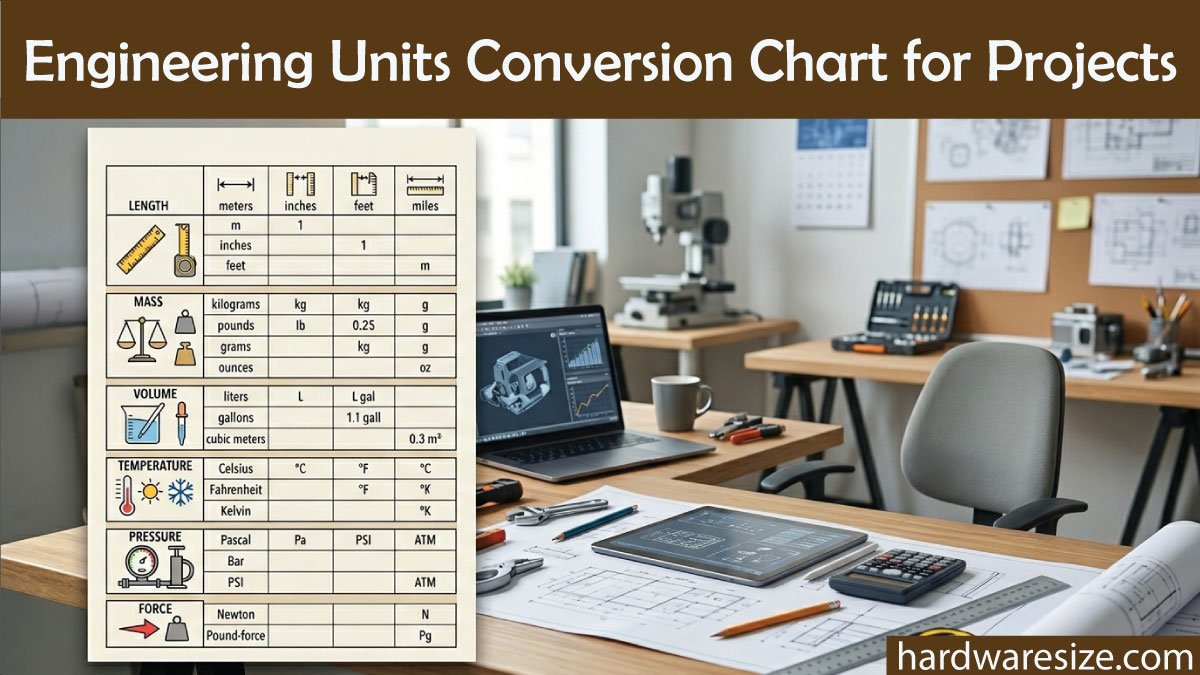
In every engineering project—whether it’s mechanical design, construction, or manufacturing—accurate unit conversion plays a critical role. A small mistake in converting units can lead to incorrect measurements, design failures, and costly rework.
👉 This complete guide will help you understand engineering units conversion charts, how they work, and how to use them effectively in real-world projects.
What Is an Engineering Units Conversion Chart?
An engineering units conversion chart is a structured reference that helps engineers, technicians, and students convert values from one unit to another quickly and accurately. It simplifies complex calculations and ensures consistency when working across different measurement systems in technical projects.
For example:
- Converting millimeters to inches
- Changing kilograms into pounds
- Converting pressure from bar to psi
Instead of memorizing every formula, engineers rely on conversion charts for quick reference and consistent results. These charts reduce human error, save time, and improve efficiency, especially when dealing with repetitive calculations in design, manufacturing, and fieldwork.
Why Unit Conversion Is Important in Engineering Projects
Engineering projects often involve international standards and multiple measurement systems. Without proper unit conversion, even a well-designed project can fail. Accurate conversions ensure compatibility between designs, materials, and manufacturing processes used in different regions or industries.
Key reasons why conversion matters:
- Ensures accurate design calculations
- Maintains consistency across teams
- Prevents costly manufacturing errors
- Supports global engineering standards
- Improves communication between engineers
👉 For example, if a drawing uses inches but manufacturing is done in millimeters, incorrect conversion can result in wrong part sizes. This can lead to assembly issues, increased costs, delays, and potential safety risks in critical engineering applications.
Understand Measurement Systems
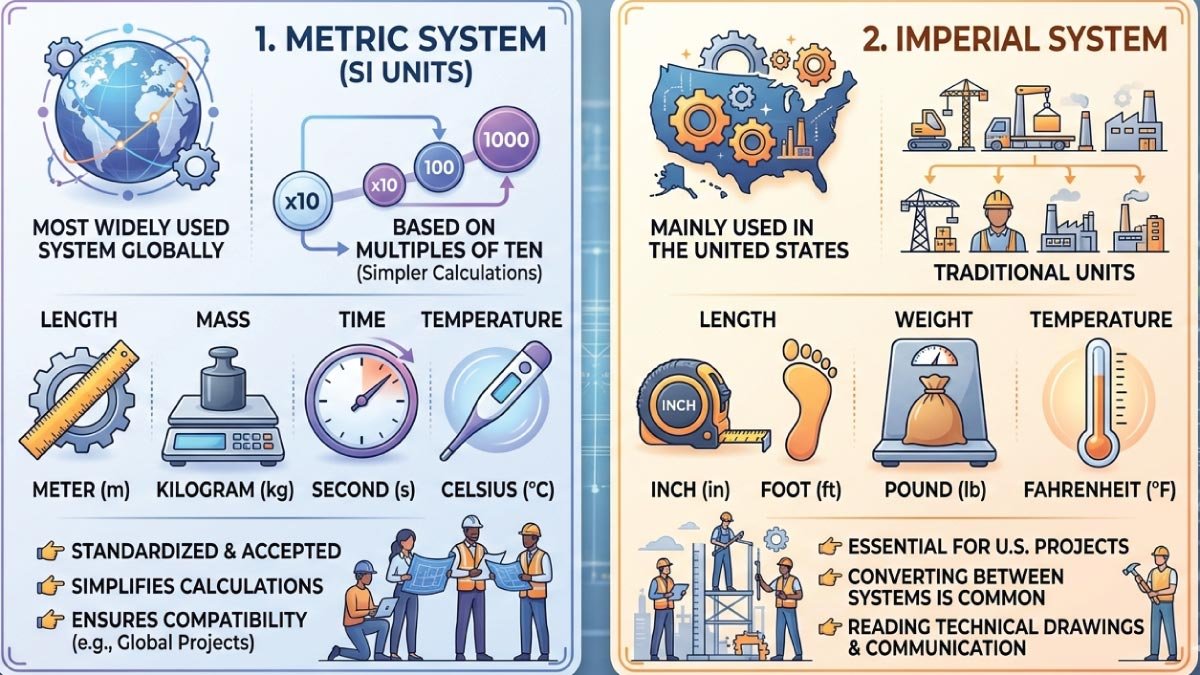
Before using a conversion chart, it’s important to understand the two main systems used in engineering. These systems form the foundation of all calculations, and knowing their differences helps engineers avoid confusion and maintain accuracy in projects.
1. Metric System (SI Units)
The metric system is the most widely used system globally. It is based on multiples of ten, making calculations simple and consistent. Engineers prefer SI units because they are standardized and widely accepted across industries and international projects.
Common SI units:
- Length → meter (m)
- Mass → kilogram (kg)
- Time → second (s)
- Temperature → Celsius (°C)
👉 Used in most countries and industries. It simplifies calculations, improves clarity, and ensures compatibility in global engineering collaborations, especially in manufacturing, construction, and scientific research.
2. Imperial System
The imperial system is mainly used in the United States. It is based on traditional units and is still widely applied in certain industries like construction, manufacturing, and mechanical design within the U.S. market.
Common units:
- Length → inch (in), foot (ft)
- Weight → pound (lb)
- Temperature → Fahrenheit (°F)
👉 Engineers often need to convert between SI and imperial units. Understanding both systems is essential for working on international projects, reading technical drawings, and ensuring accurate communication between global engineering teams.
Length Conversion Chart (Most Common in Projects)
Length is one of the most frequently used measurements in engineering. It plays a critical role in design, fabrication, machining, and construction. Accurate length conversion ensures that components fit correctly and meet design specifications without errors.
Metric to Imperial:
- 1 mm = 0.03937 inches
- 1 cm = 0.3937 inches
- 1 meter = 3.281 feet
- 1 kilometer = 0.621 miles
Imperial to Metric:
- 1 inch = 25.4 mm
- 1 foot = 0.3048 meters
- 1 yard = 0.9144 meters
- 1 mile = 1.609 km
👉 Used in machining, construction, piping, and fabrication. Even small errors in length conversion can cause misalignment, poor fitting, and costly rework, making accuracy extremely important in engineering projects.
Mass (Weight) Conversion Chart
Mass is essential for load calculations and material estimation. It helps engineers determine how much weight a structure or component can handle safely. Accurate mass conversion ensures proper material selection, transportation planning, and structural integrity in engineering projects.
Metric to Imperial:
- 1 gram = 0.035 ounces
- 1 kilogram = 2.205 pounds
- 1 metric ton = 1000 kg
Imperial to Metric:
- 1 pound = 0.4536 kg
- 1 ounce = 28.35 grams
- 1 US ton = 907 kg
👉 Proper mass conversion is critical in industries like construction, logistics, and manufacturing, where incorrect values can affect safety, cost, and overall project performance.
Temperature Conversion Chart
Temperature plays a major role in thermodynamics, HVAC systems, and manufacturing processes. It directly affects material properties, energy transfer, and system efficiency. Engineers must convert temperature units accurately to maintain proper operating conditions and avoid equipment failure.
Conversion formulas:
- °C to °F → (°C × 9/5) + 32
- °F to °C → (°F − 32) × 5/9
Important reference points:
- 0°C = 32°F (freezing point of water)
- 100°C = 212°F (boiling point of water)
👉 Accurate temperature conversion is essential in processes like heat treatment, refrigeration, and chemical reactions, where even small variations can significantly impact results and system performance.
Pressure Conversion Chart
Pressure is widely used in hydraulic systems, gas pipelines, and mechanical equipment. It determines how force is applied over an area and is critical for maintaining system safety, efficiency, and reliability in various engineering applications.
Common conversions:
- 1 bar = 100,000 Pascal (Pa)
- 1 atm = 101.325 kPa
- 1 psi = 6.895 kPa
Additional:
- 1 MPa = 10 bar
- 1 atm = 14.7 psi
👉 Critical for safety and system performance. Incorrect pressure conversion can lead to equipment failure, leaks, or even hazardous accidents in high-pressure systems.
Area Conversion Chart
Area is used in construction layouts and surface calculations. It helps engineers determine space requirements, material coverage, and structural dimensions. Accurate area conversion ensures proper planning and efficient use of materials in engineering and construction projects.
Common conversions:
- 1 square meter (m²) = 10.764 square feet (ft²)
- 1 square foot = 0.0929 m²
- 1 acre = 4046.86 m²
👉 Area conversion is especially important in flooring, land measurement, painting, and coating applications, where incorrect values can result in wasted materials or incomplete project coverage.
Volume Conversion Chart
Volume is important in tanks, fluids, and storage systems. It helps engineers measure capacity, flow, and storage requirements in various applications such as water systems, fuel tanks, and chemical processing units.
Common conversions:
- 1 liter = 1000 cubic centimeters (cm³)
- 1 cubic meter = 1000 liters
- 1 US gallon = 3.785 liters
👉 Accurate volume conversion ensures proper system design, prevents overflow or shortages, and supports efficient fluid handling in industrial and engineering environments.
Speed Conversion Chart
Speed is used in mechanical motion and vehicle systems. It helps engineers analyze movement, efficiency, and performance of machines, vehicles, and rotating components. Correct speed conversion is essential for ensuring proper system operation and safety.
Common conversions:
- 1 m/s = 3.6 km/h
- 1 km/h = 0.621 mph
- 1 mph = 1.609 km/h
👉 Speed conversion is widely used in automotive engineering, conveyor systems, and machinery operations, where incorrect values can lead to performance issues or mechanical failure.
Force Conversion Chart
Force is a key concept in mechanical and structural engineering. It defines how loads act on materials and structures, influencing strength, stability, and safety. Accurate force conversion is necessary for correct design and analysis.
Common conversions:
- 1 Newton (N) = 0.225 pound-force (lbf)
- 1 lbf = 4.448 N
👉 Used in load, stress, and structural calculations. Proper force conversion ensures that components can handle applied loads without failure, making it critical in construction, machinery design, and safety assessments.
Energy Conversion Chart
Energy is used in electrical and thermal engineering. It represents the capacity to perform work and is a fundamental concept in systems like power generation, heating, cooling, and fuel consumption. Accurate energy conversion ensures efficiency and proper system performance.
Common conversions:
- 1 Joule = 0.239 calories
- 1 kilowatt-hour (kWh) = 3.6 million Joules
- 1 BTU = 1055 Joules
👉 Energy conversion is essential in applications like electricity billing, thermal systems, and fuel efficiency calculations, where incorrect values can affect cost estimation and system design.
Power Conversion Chart
Power defines how quickly work is done. It measures the rate at which energy is transferred or converted in a system. Engineers use power calculations to evaluate machine performance, motor capacity, and energy efficiency in various applications.
Common conversions:
- 1 kilowatt (kW) = 1.341 horsepower (HP)
- 1 HP = 746 watts
👉 Important in motors, engines, and electrical systems. Accurate power conversion helps ensure proper equipment selection, prevents overload, and improves overall efficiency in mechanical and electrical engineering projects.
How to Use a Conversion Chart in Projects
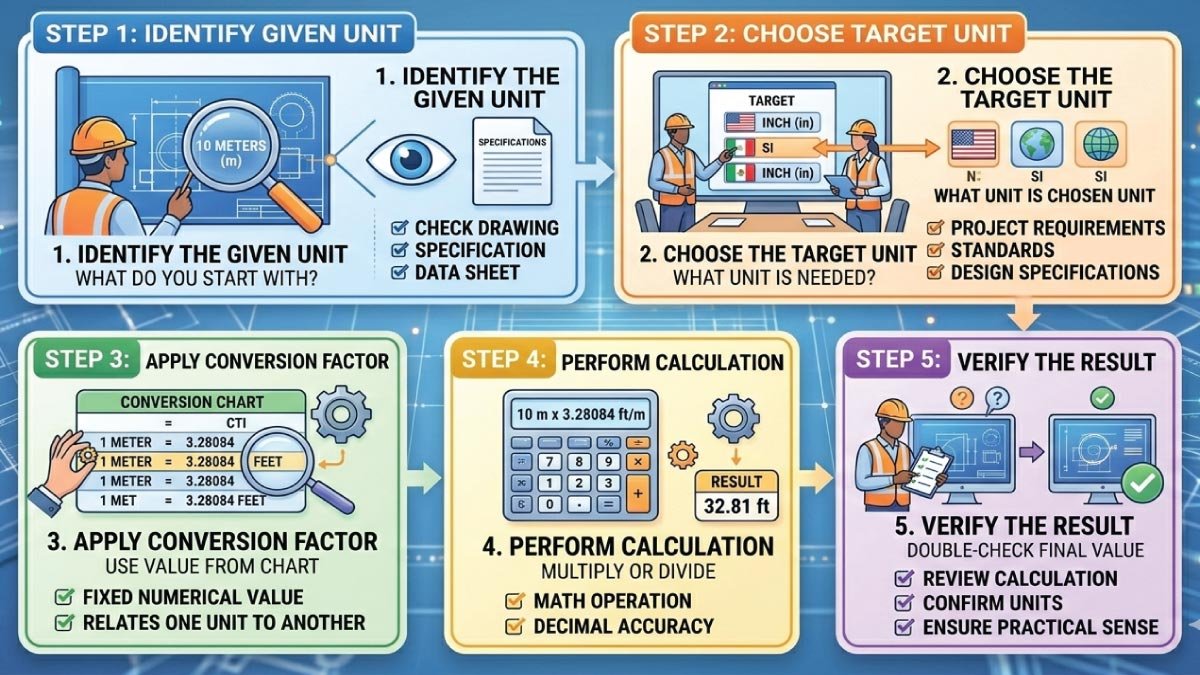
Using a conversion chart correctly is simple if you follow these steps. A systematic approach helps reduce errors, improves accuracy, and ensures consistency in engineering calculations, especially when working with multiple unit systems in real-world projects.
Step 1: Identify the Given Unit
Understand what unit you are starting with. Carefully check the measurement provided in the drawing, specification, or data sheet. Identifying the correct unit is crucial because using the wrong starting point can lead to completely incorrect results.
Step 2: Choose the Target Unit
Decide which unit you need for your calculation. This depends on project requirements, standards, or the system being used. Selecting the correct target unit ensures compatibility with design specifications, tools, and engineering calculations.
Step 3: Apply Conversion Factor
Use the correct value from the chart. Conversion factors are fixed numerical values that relate one unit to another. Applying the right factor ensures accurate transformation of values without changing the physical meaning of the measurement.
Step 4: Perform Calculation
Multiply or divide as needed. Carefully carry out the mathematical operation using the selected conversion factor. Always maintain proper decimal accuracy during calculations to avoid rounding errors that may affect engineering precision.
Step 5: Verify the Result
Always double-check your final value. Review the calculation, confirm the units, and ensure the result makes practical sense. Verification is essential in engineering to prevent costly mistakes, rework, or safety issues in real-world applications.
Practical Examples
Example 1: Length Conversion
Convert 250 mm to inches
👉 250 × 0.03937 = 9.8425 inches
Example 2: Weight Conversion
Convert 75 kg to pounds
👉 75 × 2.205 = 165.37 lb
Example 3: Pressure Conversion
Convert 5 bar to psi
👉 5 × 14.5 ≈ 72.5 psi
Common Mistakes in Unit Conversion
Unit conversion errors are common in engineering, especially when dealing with multiple measurement systems. These mistakes can lead to inaccurate calculations, poor design outcomes, and costly project failures if not identified and corrected early in the process.
Avoid these common errors:
- Mixing SI and imperial units
- Using incorrect conversion factors
- Ignoring decimal places
- Not verifying results
- Rounding too early
👉 Even small mistakes can lead to major engineering problems.
Tips for Accurate Unit Conversion
Accurate unit conversion is essential for achieving precise results in engineering work. By following simple best practices and developing consistent habits, engineers and students can minimize errors, improve efficiency, and ensure reliable outcomes in calculations and project execution.
To improve your accuracy and efficiency:
- Keep a conversion chart handy
- Use digital tools or calculators
- Memorize common conversions
- Always double-check critical values
- Use consistent units throughout the project
Applications of Unit Conversion
Unit conversion is essential across engineering and technical fields, ensuring accurate calculations and seamless collaboration. It is applied in design, manufacturing, construction, HVAC, automotive, aerospace, and electrical projects, helping engineers work efficiently while maintaining precision and global standards.
1- Mechanical Design and Manufacturing
Unit conversion is widely used in mechanical design and manufacturing to ensure components are produced with accurate dimensions. Engineers frequently convert between metric and imperial units when working with machines, tools, and international standards to maintain precision and compatibility.
2- Civil Construction Projects
In civil construction projects, unit conversion helps engineers and contractors manage measurements for land, materials, and structures. Accurate conversions ensure proper alignment, structural stability, and compliance with building standards across different regions using varying measurement systems.
3- HVAC Systems
Heating, ventilation, and air conditioning systems rely heavily on unit conversion for temperature, pressure, and airflow calculations. Engineers must convert values accurately to maintain system efficiency, ensure proper performance, and avoid equipment failure in residential and industrial applications.
4- Automotive Engineering
Automotive engineers use unit conversion when designing engines, speed systems, and fuel efficiency calculations. Converting between units like kilometers, miles, and horsepower ensures vehicles meet performance standards and function correctly in different markets worldwide.
5- Aerospace Applications
In aerospace engineering, unit conversion is critical for calculations involving speed, altitude, pressure, and fuel consumption. Even minor errors can have serious consequences, making accurate conversion essential for safety, performance, and reliability in aircraft systems.
6- Electrical System Design
Electrical engineers use unit conversion for voltage, current, power, and energy calculations. Accurate conversions help ensure system efficiency, proper component selection, and safe operation in power generation, distribution, and electronic device design.
👉 It is a fundamental skill in every technical field.
Benefits of Using a Conversion Chart
Using a conversion chart enhances accuracy, efficiency, and consistency in engineering projects. It reduces calculation errors, saves time, improves collaboration among teams, and ensures reliable results, making it an indispensable tool for students, technicians, and professional engineers alike.
1- Faster Calculations
Using a conversion chart allows engineers to perform calculations quickly without memorizing complex formulas. It saves time during design, analysis, and fieldwork, especially when working with multiple unit systems in fast-paced engineering environments.
2- Reduced Errors
Conversion charts help minimize human errors by providing verified values for calculations. Instead of relying on memory, engineers can refer to accurate data, reducing the chances of mistakes that could impact project quality and safety.
3- Better Consistency
Using a standard conversion chart ensures consistency across all calculations within a project. This helps teams maintain uniform measurements, avoid confusion, and ensure that all components and systems align with the same unit standards.
4- Easy Reference for Teams
Conversion charts serve as a quick and accessible reference for engineers, technicians, and students. They improve collaboration by ensuring everyone uses the same values, making communication clearer and reducing misunderstandings in technical work.
5- Improved Productivity
With faster calculations and fewer errors, conversion charts significantly improve productivity. Engineers can focus more on design and problem-solving instead of spending time verifying unit conversions, leading to more efficient project completion.
Final Thoughts
Understanding and using an engineering units conversion chart is crucial for accuracy, efficiency, and success in any engineering project.
It helps bridge the gap between metric and imperial systems, ensuring designs and calculations are implemented correctly.
By learning key conversions, practicing regularly, and relying on accurate tools, engineers can minimize errors and improve productivity. Over time, using unit conversion becomes second nature, allowing projects to proceed smoothly while maintaining precision, consistency, and professional standards in all technical work.
Also Read: 🔧 What Is an Allen Key & How to Measure Its Size Correctly – This post explains everything about Allen keys, their types, and how to measure them accurately. Whether you’re a DIY enthusiast or an engineer, learn step-by-step tips to choose the right size. Read the full guide now!

Engineer Hassan is a Mechanical Engineer with 16+ years of hands-on experience in mechanical hardware, fasteners, and workshop tools. He focuses on size selection, thread identification, and measurement, helping users choose the correct components with accuracy and safety.