
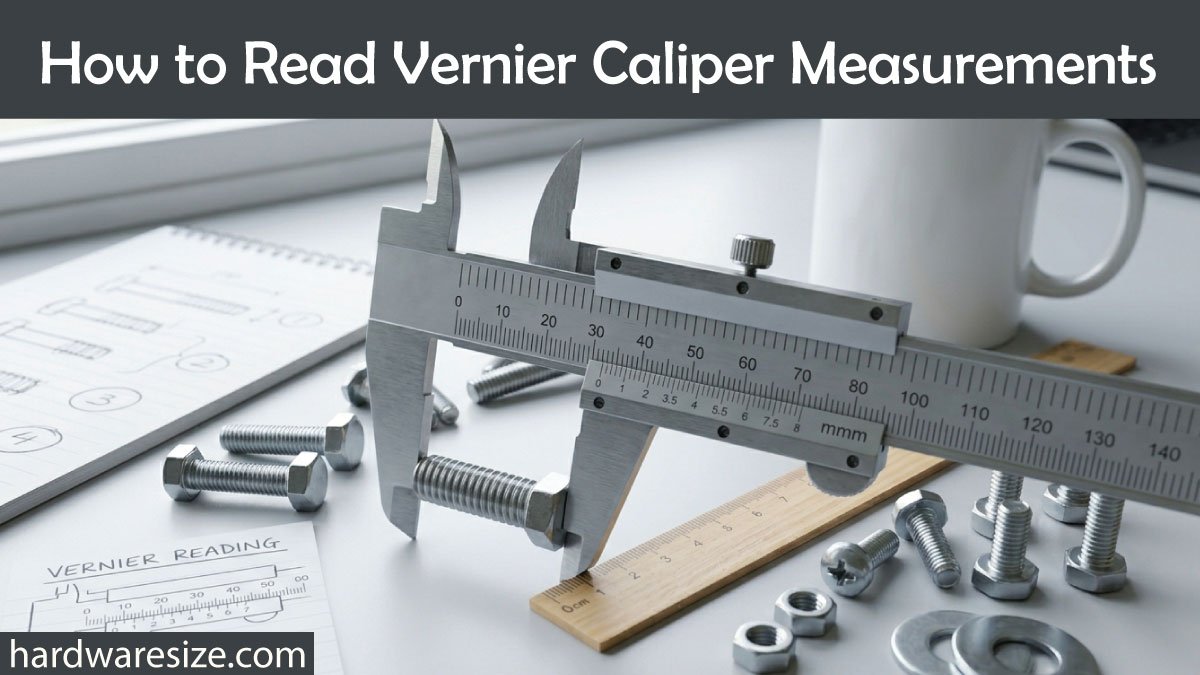
Measuring small dimensions with accuracy is a fundamental skill in engineering, machining, and even DIY work. One of the most reliable tools for this purpose is the vernier caliper. If you have ever looked at one and felt confused by its scales, you are not alone.
This easy guide will walk you through how to read vernier caliper measurements step by step, using simple language and practical examples. By the end, you will be able to measure like a pro.
What Is a Vernier Caliper?
A vernier caliper is a highly accurate and versatile measuring tool commonly used in engineering, machining, and workshop applications. It allows users to take precise measurements of different types of dimensions with ease and reliability.
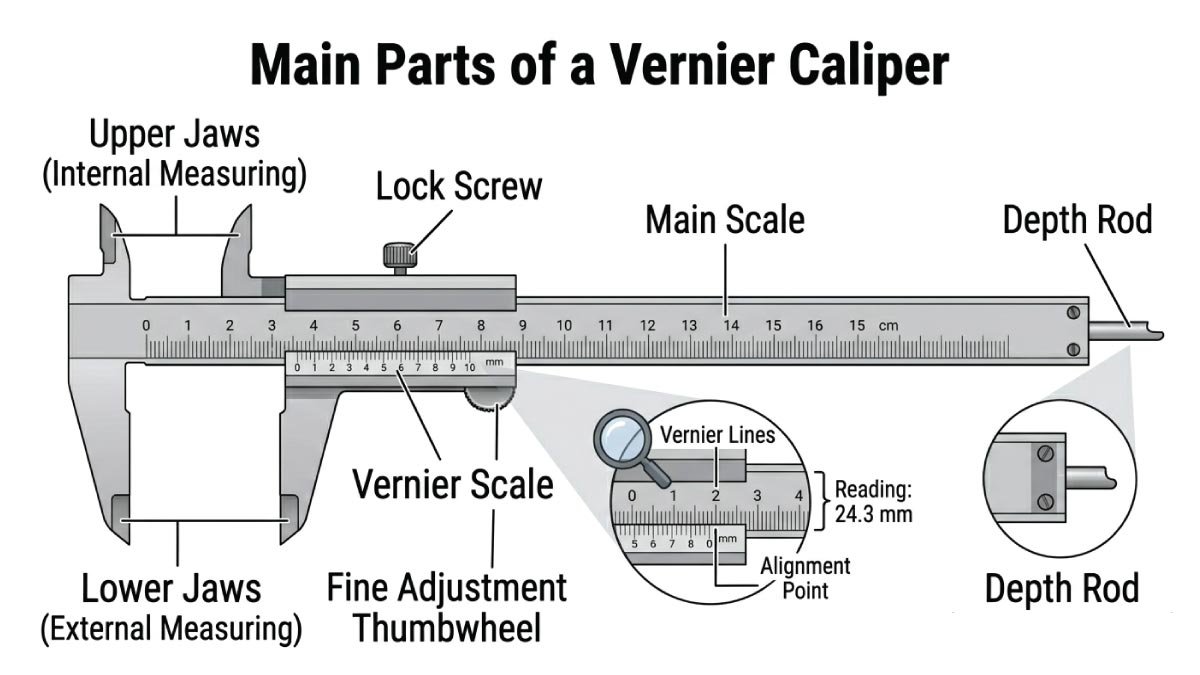
A vernier caliper is a precision measuring instrument used to measure:
- External dimensions (like the diameter of a rod)
- Internal dimensions (like hole diameter)
- Depth (like the depth of a slot)
It provides much higher accuracy than a regular ruler, often up to 0.02 mm or 0.001 inch.
Why Vernier Caliper Reading Is Important
Accurate reading of a vernier caliper is essential in engineering and workshop tasks where precision directly affects performance and safety. Proper measurement skills help maintain quality, ensure compatibility of parts, and reduce errors during manufacturing or repair work.
Understand how to read a vernier caliper correctly helps you:
- Achieve high precision measurements
- Avoid costly mistakes in machining
- Ensure proper fitting of parts
- Improve your technical skills
Even a small reading error can lead to poor fitting or mechanical failure.
Step-by-Step: How to Read Vernier Caliper
Reading a vernier caliper becomes easy when you follow a proper step-by-step method. Each step ensures accuracy and helps avoid common measurement mistakes in engineering, machining, and DIY projects.
Step 1: Check Zero Error
Before starting any measurement, always close the jaws completely and observe the zero position. Check whether the zero of the main scale perfectly aligns with the zero of the vernier scale. If they do not match, a zero error is present, which must be added or subtracted from the final reading.
Step 2: Measure the Object
Place the object carefully between the jaws of the caliper. Ensure it is held firmly but without applying excessive pressure, as this can affect accuracy. Gently close the jaws and use the lock screw if needed to hold the position steady before taking the reading for precise measurement.
Step 3: Read the Main Scale
Now observe where the zero mark of the vernier scale lies on the main scale. Note the value just before this zero point. This value is your main scale reading. It represents the whole number portion of the measurement and forms the base of the final result.
Step 4: Read the Vernier Scale
Next, look for the line on the vernier scale that perfectly aligns with any line on the main scale. Identify this matching division carefully. Multiply this vernier scale reading by the least count of the caliper. This gives the fractional part of the total measurement.
Step 5: Add Both Readings
Finally, combine both values to get the exact measurement. Add the main scale reading and the vernier scale reading together. If there is any zero error, adjust the final result accordingly. This gives you a highly accurate measurement of the object using the vernier caliper.
What Is Least Count?
The least count of a vernier caliper represents the smallest possible measurement it can accurately detect. It defines the precision level of the instrument and plays a key role in ensuring correct and reliable readings in engineering and mechanical work.
The least count (LC) is the smallest measurement the caliper can read.
Formula:
Least Count = Value of 1 Main Scale Division ÷ Number of Vernier Divisions
Example:
1 main scale division = 1 mm
Vernier has 50 divisions
👉 Least Count = 1 ÷ 50 = 0.02 mm
Practical Example (Easy)
Let’s say:
Main scale reading = 25 mm
10th vernier division aligns
Least count = 0.02 mm
👉 Vernier reading = 10 × 0.02 = 0.20 mm
👉 Final Measurement = 25 + 0.20 = 25.20 mm
Types of Vernier Calipers
Vernier calipers come in different types depending on the measurement system and technology used. Each type is designed for specific applications, but all serve the same purpose: providing accurate linear measurements in engineering, machining, and technical work.
1. Metric Vernier Caliper
The metric vernier caliper is the most commonly used type in most countries. It measures in millimeters (mm) and sometimes includes centimeter markings. It is widely used in workshops, manufacturing, and engineering because of its simplicity and compatibility with standard metric systems.
2. Imperial Vernier Caliper
The imperial vernier caliper measures in inches and fractions of an inch. It is mainly used in the United States and older mechanical systems. This type is helpful when working with imperial drawings or components designed under inch-based measurement standards.
3. Digital Vernier Caliper
The digital vernier caliper displays measurements on an electronic screen, making readings faster and easier. It reduces human reading errors and often allows switching between metric and imperial units. However, it requires batteries and may not function if the battery dies.
Common Mistakes to Avoid
Even though a vernier caliper is a precise tool, small mistakes can lead to inaccurate readings. Understanding these common errors helps improve measurement accuracy and ensures reliable results in every project.
❌ Not Checking Zero Error
One of the most common mistakes is skipping the zero error check. Always close the jaws before measuring and ensure both scales align properly. Ignoring this step can lead to consistently incorrect readings in all measurements.
❌ Reading the Wrong Scale
Vernier calipers may have both metric and imperial scales. Mixing them up can result in major errors. Always confirm whether you are reading millimeters or inches before taking any measurement to avoid confusion and incorrect results.
❌ Parallax Error
Parallax error occurs when you read the scale from an angle instead of looking straight at it. This can distort the reading. Always position your eye directly in line with the scale to ensure accurate and clear measurement results.
❌ Too Much Pressure
Applying excessive force while measuring can damage the object or slightly compress it, leading to incorrect readings. The jaws should touch the object gently, just enough to hold it in place without altering its actual dimensions.
❌ Ignoring Least Count
The least count is the smallest value a vernier caliper can measure. Ignoring it or multiplying it incorrectly can lead to wrong results. Always apply the correct least count to the vernier scale reading for precise final measurement.
🔧 Mechanical Measurement Tools and Their Sizes explains essential tools like vernier calipers, micrometers, rulers, and gauges used in engineering for accurate measurements. It covers standard size ranges, applications, and selection tips, helping users achieve precision in mechanical work, improve accuracy, and ensure reliable results in manufacturing, maintenance, and DIY projects.
Tips for Accurate Measurement
Accurate measurement with a vernier caliper depends on proper handling and good technique. Small mistakes in usage can affect the final reading, so following basic tips ensures better precision and reliability.
- Clean the jaws before use
- Use proper lighting
- Hold the caliper steady
- Measure twice for confirmation
- Practice with known objects
Accuracy improves with practice.
Vernier Caliper Reading Formula
To make the measurement process simple and accurate, a standard formula is used for all types of vernier calipers. This formula combines the main scale reading with the fine measurement obtained from the vernier scale, ensuring precise final results.
To simplify everything:
👉 Final Reading = Main Scale Reading + (Vernier Division × Least Count)
This formula works for all vernier calipers.
How to Read Vernier Caliper in Inches
Reading a vernier caliper in inches follows the same basic principle as metric measurements, but the scale is divided into inches and fractional parts instead of millimeters. The main scale gives the whole inch reading, while the vernier scale helps measure smaller fractions for higher accuracy.
The process is the same, but:
- Main scale is in inches
- Vernier divisions represent fractions of inches
Example:
- Least count may be 0.001 inch
Just follow the same steps.
How to Handle Zero Error
Zero error occurs when the caliper does not show zero reading even when the jaws are fully closed. This must be corrected to ensure accurate measurement results.
Positive Zero Error
- Vernier zero is to the right
- Subtract error from final reading
Negative Zero Error
- Vernier zero is to the left
- Add error to final reading
🔩 How to Measure Fasteners Without Specialized Tools explains simple ways to identify bolt and screw size using basic items like a ruler, coins, or visual comparison. It helps determine diameter, length, and thread pitch approximately when tools are not available, making repair work easier, faster, and more practical in everyday situations.
Applications of Vernier Caliper
Vernier calipers are widely used in many technical and industrial fields where precise measurement is required. They help engineers, technicians, and craftsmen measure small dimensions accurately, making them an essential tool in both professional and practical applications.
1- Mechanical Engineering
In mechanical engineering, vernier calipers are used to measure machine parts, shafts, and components with high precision. They ensure correct fitting and alignment during design, manufacturing, and assembly processes, helping maintain performance and safety in mechanical systems.
2- Manufacturing Industries
In manufacturing industries, vernier calipers are used for quality control and inspection of produced parts. They help verify that each component meets exact specifications, reducing defects and ensuring consistency in mass production environments.
3- Automotive Repair
In automotive workshops, vernier calipers are used to measure engine parts, brake components, and other mechanical elements. Accurate measurements are important for proper fitting, maintenance, and replacement of vehicle parts, ensuring safe and efficient performance.
4- Metalworking
In metalworking, vernier calipers help measure thickness, diameter, and depth of metal pieces. They are essential for cutting, shaping, and machining tasks where precision is required to achieve accurate dimensions and high-quality finishing.
5- DIY Projects
For DIY enthusiasts, vernier calipers are useful in home-based repair and crafting projects. They help in measuring small objects accurately, ensuring better fitting and professional-level results even in simple household or hobby tasks.
Benefits of Learning Vernier Caliper Reading
Learning how to read a vernier caliper correctly is a valuable technical skill that improves accuracy and understanding in measurement tasks. It is widely used in engineering, machining, and technical fields where precision is important.
1- Better Technical Knowledge
Understanding vernier calipers improves your overall knowledge of measurement systems and mechanical tools. It helps you grasp how precision instruments work, making it easier to handle advanced engineering tools in the future.
2- Confidence in Measurements
When you know how to use a vernier caliper properly, you become more confident in taking measurements. This reduces hesitation and allows you to work more independently in technical and workshop environments.
3- Improved Job Skills
Vernier caliper reading is an important skill in many technical jobs. Learning it improves your employability and makes you more capable in fields like engineering, manufacturing, and maintenance work.
4- Reduced Errors in Projects
Accurate measurement reduces the chances of mistakes in design and assembly. By using a vernier caliper correctly, you can avoid fitting issues, material wastage, and costly errors in your projects.
5- Professional-Level Accuracy
This skill allows you to achieve professional-grade precision in your work. Whether in industry or personal projects, accurate measurements ensure high-quality results and better performance of mechanical components.
Quick Practice Exercise
Try this simple example to understand vernier caliper reading more clearly. This type of practice helps you build confidence and improve accuracy in real measurements.
Given values:
Main scale reading = 18 mm
Vernier alignment = 15
Least count = 0.02 mm
👉 Vernier reading = 15 × 0.02 = 0.30 mm
👉 Final answer = 18.30 mm
Practice a few times, and it becomes very easy.
Final Thoughts
Learning how to read vernier caliper measurements may feel challenging at the beginning, but with consistent practice it becomes simple and highly useful in real applications. Understanding how the main scale and vernier scale work together is the key to accuracy.
By focusing on correct reading techniques, practicing regularly with different objects, and avoiding common mistakes like parallax error or wrong alignment, you can quickly improve your skills.
Over time, you will gain confidence and be able to take precise, professional-level measurements in engineering, machining, and everyday technical work with ease and reliability in real projects.
📊 Engineering Units Conversion Chart for Projects is a practical reference that helps engineers quickly convert between length, mass, pressure, temperature, and other key units. It reduces calculation errors, improves accuracy in design work, and ensures consistency across global engineering standards, making project planning and execution more efficient and reliable.
FAQs:
What is a vernier caliper used for?
A vernier caliper is a precision measuring instrument used to measure internal dimensions, external dimensions, and depth of objects. It is commonly used in engineering, machining, and workshops where accurate measurement is required. It provides more precise results than a standard ruler for small or detailed components applications and tools.
What is the least count of a vernier caliper?
Least count is the smallest measurement value a vernier caliper can accurately read. It represents the precision of the instrument and is calculated using main scale and vernier scale divisions. Common least counts in metric calipers are 0.02 mm or 0.01 mm depending on design and quality and calibration standards.
How do you read a vernier caliper easily?
To read a vernier caliper, first note the main scale reading just before the zero of vernier scale. Then find the aligned vernier division. Multiply that by least count and add both values. The result gives the final measurement with high accuracy for engineering and mechanical applications step by step.
What causes errors in vernier caliper readings?
Errors in vernier caliper readings occur due to zero error, parallax error, dirt on measuring jaws, excessive measuring pressure, and improper alignment of the object. These mistakes reduce accuracy. Proper cleaning, correct eye position, and careful handling help minimize errors and ensure reliable and precise measurements in practice always needed.
Is digital caliper better than vernier caliper?
Digital calipers are easier to read because they show instant values on a screen, while vernier calipers require manual reading. However, vernier calipers are more durable and do not depend on batteries. Both instruments provide accurate measurements when used correctly in engineering, machining, and workshop environments and quality control processes.
What is zero error in vernier caliper?
Zero error occurs when a vernier caliper does not read zero correctly when the jaws are fully closed. It leads to systematic measurement errors. It can be positive or negative and must be adjusted or corrected before taking measurements to ensure accurate and reliable results in precise engineering work only.
How to maintain a vernier caliper?
Proper maintenance of a vernier caliper includes keeping it clean, storing it in a protective case, avoiding rust, and ensuring no dust or oil accumulates on the scale or jaws. Regular calibration and careful handling improve accuracy and extend the tool’s lifespan in workshops and engineering environments over long term.

Engineer Hassan is a Mechanical Engineer with 16+ years of hands-on experience in mechanical hardware, fasteners, and workshop tools. He focuses on size selection, thread identification, and measurement, helping users choose the correct components with accuracy and safety.