
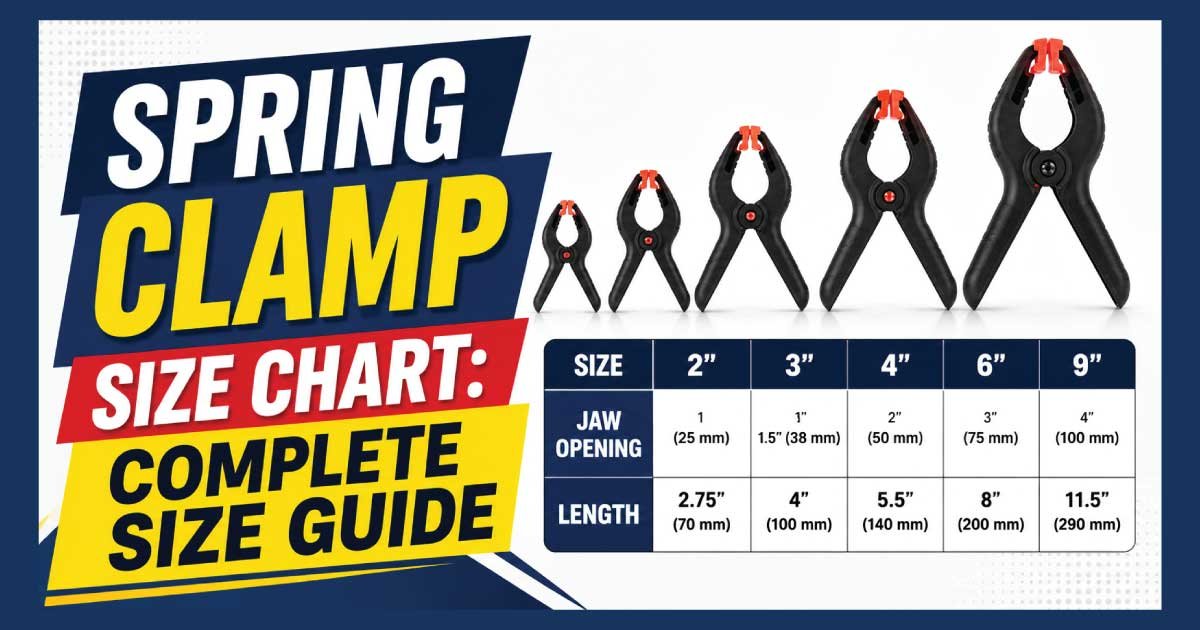
Spring clamps are versatile fastening devices that use spring tension to securely hold hoses, tubing, cables, pipes, and lightweight materials in place. Unlike worm-drive clamps, spring clamps automatically adjust to changes in temperature and pressure, maintaining consistent clamping force as hoses expand and contract. They are widely used in automotive cooling systems, fuel lines, plumbing, HVAC equipment, and industrial machinery.
Selecting the correct spring clamp size is essential for preventing leaks, ensuring a secure grip, and extending the service life of both the clamp and the hose. This guide provides a standard spring clamp size chart, explains how to measure spring clamps, discusses common materials, and offers practical tips for choosing the right size.
Standard Spring Clamp Size Chart
The following chart lists common spring clamp sizes based on hose outside diameter (OD).
| Clamp Size | Hose Outside Diameter (OD) | Clamp Width | Wire Thickness | Common Applications |
|---|---|---|---|---|
| 1/4″ | 6–8 mm | 8 mm | 1.0 mm | Vacuum lines |
| 5/16″ | 8–10 mm | 8 mm | 1.0 mm | Fuel hoses |
| 3/8″ | 10–12 mm | 8 mm | 1.2 mm | Coolant hoses |
| 1/2″ | 12–14 mm | 9 mm | 1.2 mm | Heater hoses |
| 5/8″ | 14–16 mm | 9 mm | 1.5 mm | Water lines |
| 3/4″ | 16–20 mm | 10 mm | 1.5 mm | Radiator hoses |
| 1″ | 22–26 mm | 12 mm | 1.8 mm | Air intake hoses |
| 1-1/4″ | 28–32 mm | 12 mm | 2.0 mm | Industrial tubing |
| 1-1/2″ | 34–38 mm | 15 mm | 2.2 mm | Large coolant hoses |
| 2″ | 48–52 mm | 18 mm | 2.5 mm | Heavy-duty industrial hoses |
These sizes represent common spring clamps used in automotive, plumbing, and industrial applications.
Why Spring Clamp Size Matters
Using the correct spring clamp size ensures a reliable seal while preventing damage to the hose. A clamp that is too small may overstress the hose or be difficult to install, while an oversized clamp may not provide enough clamping force.
Benefits of choosing the proper size include:
- Leak-free connections
- Constant clamping pressure
- Better resistance to vibration
- Longer hose lifespan
- Reduced maintenance
- Improved system reliability
- Increased operational safety
How to Measure a Spring Clamp
Accurate measurements help ensure the correct clamp selection.
Follow these steps:
- Measure the hose outside diameter after it is installed on the fitting.
- Measure the clamp’s inside diameter in its relaxed position.
- Check the clamp width.
- Measure the wire thickness.
- Verify the clamp’s expansion range.
- Ensure compatibility with the hose material.
- Select a clamp that provides firm but not excessive tension.
Measuring the hose while mounted on the fitting provides the most accurate results.
Also Read: Needle Bearing Size Chart: Complete Guide
Common Materials Used for Spring Clamps
Spring clamps are manufactured using different materials for various environments.
Spring Steel: Provides excellent elasticity and consistent clamping force for automotive and industrial applications.
Stainless Steel: Offers outstanding corrosion resistance, making it suitable for marine, chemical, and outdoor installations.
Zinc-Coated Steel: An economical option with moderate corrosion resistance for general-purpose applications.
Heat-Treated Steel: Designed for high-temperature and heavy-duty applications requiring increased strength.
How to Choose the Right Spring Clamp Size
When selecting a spring clamp, consider the following factors:
- Measure the hose outside diameter accurately.
- Select a clamp with the correct tension.
- Consider operating temperature.
- Choose corrosion-resistant materials for outdoor use.
- Verify compatibility with the hose material.
- Match the clamp width to the application.
- Follow the equipment manufacturer’s recommendations.
Also Read: Hook Latch Size Chart: Complete Sizes Guide
Common Applications of Spring Clamps
Spring clamps are used in a wide variety of industries.
Typical applications include:
- Automotive cooling systems
- Fuel lines
- Radiator hoses
- HVAC equipment
- Plumbing systems
- Irrigation systems
- Marine engines
- Industrial machinery
- Air intake systems
- Chemical transfer hoses
Installation Tips
Proper installation improves sealing performance and extends clamp life.
- Use spring clamp pliers for safe installation.
- Position the clamp behind the hose barb.
- Ensure the clamp sits evenly around the hose.
- Avoid overstretching the clamp.
- Inspect the hose for damage before installation.
- Verify the clamp is fully seated.
- Replace weakened or deformed clamps immediately.
Correct installation helps maintain consistent sealing pressure.
Common Mistakes to Avoid
Avoid these common spring clamp installation errors:
- Selecting the wrong clamp size
- Reusing worn or weakened clamps
- Overstretching the clamp during installation
- Positioning the clamp incorrectly
- Ignoring signs of corrosion
- Using damaged installation tools
- Failing to inspect the hose before installation
These mistakes can reduce sealing performance and shorten the lifespan of the hose assembly.
Benefits of Properly Sized Spring Clamps
Choosing the correct spring clamp provides several advantages.
- Constant clamping force
- Better leak prevention
- Excellent vibration resistance
- Longer hose service life
- Reduced maintenance costs
- Improved system efficiency
- Reliable long-term performance
These benefits make spring clamps an excellent choice for applications involving temperature changes and vibration.
Also Read: Perfect Bolt Selection Guide for Mechanical Projects
Maintenance Tips
Regular maintenance helps keep spring clamps functioning properly.
- Inspect clamps for corrosion.
- Check for loss of spring tension.
- Replace bent or damaged clamps.
- Clean dirt and debris from the clamp.
- Inspect hoses for cracks or wear.
- Replace clamps showing excessive fatigue.
- Include clamps in routine equipment inspections.
Proper maintenance extends the lifespan of both the clamp and the hose.
Conclusion
Choosing the correct spring clamp size is essential for creating secure, leak-free hose connections in automotive, plumbing, HVAC, marine, and industrial applications.
By accurately measuring the hose outside diameter, selecting the appropriate clamp material, and following proper installation procedures, you can ensure dependable performance and long-lasting durability.
Always refer to a spring clamp size chart before purchasing to achieve the best fit and maintain reliable sealing under changing temperatures and operating conditions.
Frequently Asked Questions
1. How do I choose the correct spring clamp size?
Select a spring clamp that matches the outside diameter of the hose after it is installed on the fitting. A properly sized clamp provides consistent clamping pressure without damaging the hose, ensuring a secure, leak-free connection and reliable performance under changing temperatures and operating conditions.
2. What are spring clamps used for?
Spring clamps are commonly used in automotive cooling systems, fuel lines, plumbing, HVAC equipment, irrigation systems, marine engines, and industrial machinery. Their self-adjusting design maintains constant tension, making them ideal for applications where hoses expand and contract due to temperature changes.
3. Can spring clamps be reused?
Yes, spring clamps can be reused if they retain their original spring tension and show no signs of corrosion, cracks, bending, or deformation. Before reinstalling, inspect the clamp carefully. Replace any weakened or damaged clamp to ensure a secure seal and dependable long-term performance.
4. What material is best for spring clamps?
Stainless steel spring clamps offer excellent corrosion resistance and are ideal for marine, outdoor, and high-moisture environments. Spring steel provides strong and consistent clamping force for automotive and industrial use, while zinc-coated steel is a cost-effective option for general-purpose indoor applications.
5. Why are spring clamps better for temperature changes?
Spring clamps automatically adjust their clamping force as hoses expand and contract with temperature changes. This constant tension helps maintain a reliable seal, reduces the risk of leaks, minimizes hose wear, and improves the overall durability and performance of the hose connection over time.

Engineer Hassan is a Mechanical Engineer with 16+ years of hands-on experience in mechanical hardware, fasteners, and workshop tools. He focuses on size selection, thread identification, and measurement, helping users choose the correct components with accuracy and safety.