
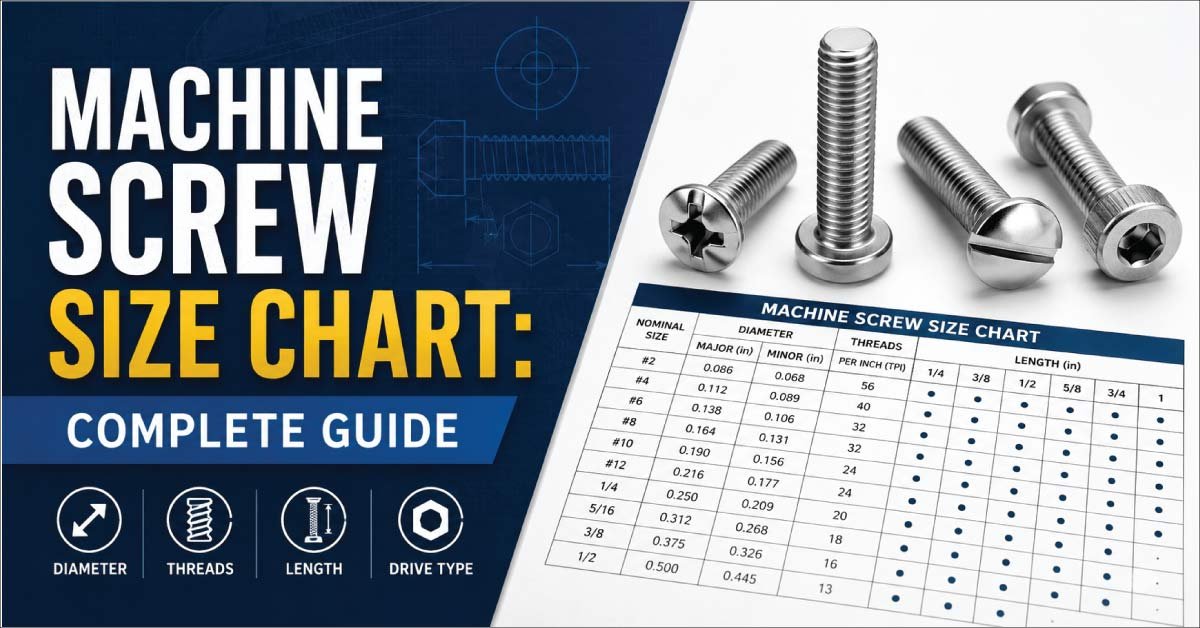
Machine screws are one of the most commonly used fasteners in mechanical, industrial, automotive, and electronic applications. They are designed to work with threaded holes or nuts and provide strong, precise fastening for metal parts, machinery, equipment, and appliances.
Understanding a machine screw size chart helps you select the correct screw diameter, thread pitch, and length for your project. Using the wrong size may cause loose fittings, stripped threads, or damaged components.
In this guide, you will learn everything about machine screw sizes, measurements, thread systems, and standard charts in simple language.
What Is a Machine Screw?
A machine screw is a fully threaded fastener designed to create strong and precise connections between metal parts, plastic components, or threaded assemblies. These screws are commonly installed into tapped holes or secured with nuts. Unlike wood screws, machine screws use finer and more accurate threads for reliable fastening in industrial and mechanical applications.
A machine screw is a threaded fastener designed for use with:
- Tapped holes
- Nuts
- Threaded machine parts
Unlike wood screws, machine screws usually have finer threads and are made for metal-to-metal fastening.
They are widely used in:
- Electronics
- Machinery
- Automotive parts
- Industrial equipment
- Appliances
- Metal fabrication
Why Machine Screw Sizes Matter
Choosing the correct machine screw size is essential for achieving proper fit, durability, and long-term mechanical performance. The wrong size can lead to loose connections, stripped threads, vibration problems, or damaged components. Correct sizing also improves safety and ensures that parts remain securely fastened under different operating conditions.
1. Improves Fastening Strength
Using the correct machine screw size creates a stronger and more stable joint between connected parts. Properly matched screws distribute load evenly and reduce the risk of loosening under pressure or vibration. This is especially important in machinery, automotive assemblies, and industrial equipment where secure fastening is critical. Correct sizing provides a secure and stable connection.
2. Prevents Thread Damage
Selecting the wrong thread diameter or pitch can damage internal threads and reduce fastening reliability. Over-tightening mismatched screws may strip the threads completely, making repairs difficult and expensive. Proper machine screw sizing helps maintain thread integrity and ensures smooth installation without damaging components. Wrong thread size or pitch can strip internal threads.
3. Increases Safety
Correct machine screw sizes help reduce mechanical failures caused by loose or weak fasteners. In high-vibration environments, properly sized screws stay tighter and provide better holding power. This improves equipment safety, reduces maintenance issues, and minimizes the chances of accidents caused by failed connections. Proper screws reduce vibration loosening and mechanical failure.
4. Ensures Compatibility
Machine screws must precisely match threaded holes, nuts, and components to function correctly. Different systems such as metric and imperial sizes are not always interchangeable. Using compatible screw sizes ensures smoother assembly, proper alignment, and reliable fastening performance in mechanical and industrial applications.
Understand The Machine Screw Sizes
Machine screw sizes are identified by three main measurements: diameter, thread pitch, and screw length. These measurements help determine the correct screw for a specific application. Understanding size markings makes it easier to choose compatible fasteners for machinery, electronics, automotive work, and industrial assemblies.
Machine screw sizes are usually defined by:
- Diameter
- Thread pitch
- Length
Example:
- #8-32 × 1″
- M6 × 20mm
The first part represents the diameter and thread system, while the second part represents the screw length.
Standard Imperial Machine Screw Size Chart
Imperial machine screws use gauge sizes and thread counts.
| Screw Size | Major Diameter | Threads Per Inch (TPI) | Common Use |
|---|---|---|---|
| #2-56 | 0.086″ | 56 | Electronics |
| #4-40 | 0.112″ | 40 | Small hardware |
| #6-32 | 0.138″ | 32 | General machinery |
| #8-32 | 0.164″ | 32 | Equipment assembly |
| #10-24 | 0.190″ | 24 | Heavy fastening |
| #10-32 | 0.190″ | 32 | Precision machinery |
| 1/4″-20 | 0.250″ | 20 | Industrial use |
| 5/16″-18 | 0.312″ | 18 | Structural equipment |
| 3/8″-16 | 0.375″ | 16 | Heavy-duty machinery |
Standard Metric Machine Screw Size Chart
Metric machine screws use millimeters for diameter and thread pitch.
| Metric Size | Diameter | Standard Pitch | Common Applications |
|---|---|---|---|
| M2 | 2mm | 0.4mm | Electronics |
| M3 | 3mm | 0.5mm | Computer hardware |
| M4 | 4mm | 0.7mm | Appliances |
| M5 | 5mm | 0.8mm | Automotive parts |
| M6 | 6mm | 1.0mm | Machinery |
| M8 | 8mm | 1.25mm | Industrial equipment |
| M10 | 10mm | 1.5mm | Structural fastening |
| M12 | 12mm | 1.75mm | Heavy machinery |
Machine Screw Length Chart
Machine screw lengths vary depending on the application.
| Length | Typical Applications |
|---|---|
| 1/4″ | Electronics |
| 1/2″ | Thin metal sheets |
| 3/4″ | Panels and brackets |
| 1″ | Machinery assembly |
| 1-1/2″ | Equipment frames |
| 2″ | Heavy-duty fastening |
| 3″ | Structural machinery |
Machine Screw Thread Types
Thread type is one of the most important factors when selecting a machine screw because it affects strength, installation speed, vibration resistance, and compatibility with materials. Different thread styles are designed for different applications, so understanding thread types helps you choose the correct screw for machinery, automotive work, industrial equipment, and precision assemblies.
1. Coarse Thread
Coarse thread machine screws have wider spacing between threads, making them easier and faster to install. They are commonly used in softer materials because the deeper threads provide better grip and reduce the risk of stripping. Coarse threads also perform well in environments where quick assembly and durability are important.
Advantages:
- Faster installation
- Better for softer materials
- Resistant to thread stripping
Examples:
- #10-24
- 1/4″-20
2. Fine Thread
Fine thread machine screws have more threads per inch, creating a tighter and stronger connection. These screws are commonly used in precision equipment, automotive parts, and applications exposed to vibration. Fine threads allow more accurate adjustments and provide improved holding power compared to coarse thread screws.
Advantages:
- Better holding strength
- More precise adjustment
- Better vibration resistance
Examples:
- #10-32
- 1/4″-28
UNC vs UNF Machine Screws
Imperial machine screws are mainly categorized into UNC and UNF thread standards. Both systems use the same diameter measurements but differ in thread spacing. Choosing between UNC and UNF depends on the application, required strength, installation speed, and the level of precision needed in the assembly.
Imperial machine screws usually follow two thread standards.
1. UNC (Unified National Coarse)
UNC machine screws use coarse threads that are easier to install and less likely to cross-thread. They are widely used in general-purpose applications such as construction, maintenance, and industrial machinery where quick assembly and durability are more important than precision adjustments.
- Coarser threads
- Easier assembly
- Common in construction and general machinery
2. UNF (Unified National Fine)
UNF machine screws use finer threads that provide greater holding strength and improved vibration resistance. These screws are preferred for automotive systems, aerospace parts, and precision mechanical equipment where tighter fastening accuracy and stronger thread engagement are required.
- Finer threads
- Higher strength
- Better for precision equipment
How to Read Machine Screw Sizes
Machine screw size labels may look confusing at first, but they follow a simple measurement format. These markings help identify the screw diameter, thread pitch, and length. Understanding how to read machine screw sizes makes it easier to select compatible fasteners for machinery, automotive parts, electronics, and industrial equipment.
Example 1: #8-32 × 1″
This is a common imperial machine screw size format used in the United States and other inch-based systems. The numbers provide important information about the screw diameter, thread count, and overall length. Learning this format helps prevent mismatched screws and threading problems during installation.
- #8 = screw diameter
- 32 = threads per inch
- 1″ = screw length
Example 2: M6 × 20mm
This is a metric machine screw size format commonly used worldwide in machinery, automotive systems, and industrial applications. Metric screws are generally easier to understand because the measurements are given directly in millimeters for both diameter and length.
- M6 = 6mm diameter
- 20mm = screw length
Common Machine Screw Head Types
Machine screw head types are designed for different installation methods, appearances, and fastening requirements. Choosing the correct head style improves tool compatibility, torque control, and overall performance. Some heads are made for flush finishes, while others are better for high-strength fastening or precision mechanical applications.
1. Flat Head
Flat head machine screws are designed to sit flush with the material surface after installation. Their countersunk shape creates a smooth and clean finish, making them ideal for applications where protruding screw heads are not desired, such as metal panels, furniture, electronics, and finished surfaces.
2. Pan Head
Pan head machine screws have a slightly rounded top with a broad bearing surface underneath. This design provides good holding strength and distributes pressure evenly across the material. Pan heads are commonly used in machinery, electrical devices, sheet metal work, and general fastening applications.
3. Round Head
Round head machine screws feature a fully rounded top that provides a decorative and traditional appearance. These screws are often selected when the screw head remains visible after installation. They are commonly used in decorative hardware, light-duty equipment, and older mechanical assemblies.
4. Hex Head
Hex head machine screws are designed for applications that require higher tightening torque and stronger fastening force. They can be installed using wrenches or sockets, making them suitable for heavy-duty machinery, automotive systems, industrial equipment, and structural fastening applications.
5. Socket Head
Socket head machine screws use an internal hex drive that is tightened with an Allen key or hex wrench. They provide excellent torque transfer and are commonly used in precision machinery, automotive assemblies, industrial equipment, and tight spaces where external wrench access is limited.
Common Drive Types
Machine screw drive types determine which tool is used for installation and how effectively torque is transferred during tightening. Choosing the correct drive style improves grip, reduces slipping, and helps prevent screw head damage. Different drive systems are designed for specific industrial, mechanical, and household applications.
1. Phillips Drive
Phillips drive machine screws use a cross-shaped recess that allows easier centering of the screwdriver during installation. This design is widely used because it supports quick assembly and is commonly found in electronics, appliances, machinery, and general fastening applications.
2. Slotted Drive
Slotted drive screws feature a single straight slot across the screw head and are one of the oldest drive designs. Although simple in appearance, they are still used in light-duty applications, decorative hardware, and traditional mechanical assemblies.
3. Torx Drive
Torx drive machine screws use a star-shaped pattern that provides improved grip and better torque transfer. This design reduces screwdriver slipping and minimizes head damage, making Torx screws popular in automotive systems, machinery, and precision equipment.
4. Hex Socket
Hex socket machine screws contain an internal hexagonal recess that is tightened using an Allen wrench or hex key. These screws are ideal for high-torque applications and are commonly used in industrial machinery, bicycles, automotive parts, and mechanical assemblies.
Machine Screw Materials
The material of a machine screw affects its strength, corrosion resistance, appearance, and durability. Different materials are selected depending on environmental conditions and application requirements. Choosing the correct screw material helps improve performance, lifespan, and reliability in industrial and mechanical systems. Material selection affects durability and corrosion resistance.
1. Stainless Steel Machine Screws
Stainless steel machine screws are widely used because they provide excellent corrosion resistance and long service life. They perform well in humid, wet, or outdoor environments where ordinary steel screws may rust. These screws are common in marine, construction, food processing, and outdoor equipment applications.
Benefits:
- Rust resistant
- Long-lasting
- Ideal for outdoor environments
2. Carbon Steel Screws
Carbon steel machine screws are known for their high strength and affordability. They are commonly used in industrial machinery, automotive systems, and general manufacturing applications where strong fastening performance is required. Protective coatings are often added to improve corrosion resistance.
Benefits:
- High strength
- Affordable
- Common industrial use
3. Brass Machine Screws
Brass machine screws are valued for their corrosion resistance, attractive appearance, and electrical conductivity. They are frequently used in decorative hardware, electrical components, plumbing fixtures, and applications where a polished or non-magnetic fastener is preferred.
Benefits:
- Corrosion resistant
- Decorative appearance
- Electrical conductivity
Machine Screw Clearance Hole Chart
Clearance holes allow screws to pass through materials without threading into them.
| Screw Size | Close Fit | Normal Fit |
|---|---|---|
| #4 | 1/8″ | 9/64″ |
| #6 | 9/64″ | 5/32″ |
| #8 | 11/64″ | 3/16″ |
| #10 | 13/64″ | 7/32″ |
| 1/4″ | 17/64″ | 9/32″ |
Machine Screw Tap Drill Size Chart
Tap drill sizes are used before creating internal threads.
| Screw Size | Tap Drill Size |
|---|---|
| #4-40 | #43 Drill |
| #6-32 | #36 Drill |
| #8-32 | #29 Drill |
| #10-24 | #25 Drill |
| 1/4″-20 | #7 Drill |
Metric to Imperial Machine Screw Conversion
| Metric Size | Closest Imperial Size |
|---|---|
| M3 | #4 |
| M4 | #8 |
| M5 | #10 |
| M6 | 1/4″ |
| M8 | 5/16″ |
| M10 | 3/8″ |
Common Uses of Machine Screws
Machine screws are widely used in industries that require strong, accurate, and reusable fastening. Their fine threads and precise sizing make them suitable for metal parts, threaded holes, and mechanical assemblies. Different industries use machine screws for equipment installation, maintenance, manufacturing, and structural connections.
1. Electronics
Machine screws are commonly used in electronics because they provide secure fastening for small and delicate components. Their precise threading allows easy assembly and removal without damaging sensitive parts. They are widely used in consumer electronics, electrical equipment, and compact mechanical devices.
Used for:
- Computers
- Circuit boards
- Small appliances
2. Automotive
In automotive applications, machine screws are used to fasten both interior and mechanical components securely. They help hold parts together under vibration and movement while allowing easier maintenance and replacement. Automotive-grade machine screws are designed for durability and long-term performance.
Used for:
- Interior panels
- Engine components
- Brackets
3. Industrial Machinery
Industrial machinery relies heavily on machine screws for assembling and securing equipment components. These screws provide reliable fastening strength in high-load and vibration-prone environments. They are commonly used in manufacturing plants, heavy equipment, mechanical systems, and industrial maintenance work.
Used for:
- Equipment assembly
- Machine guards
- Structural fastening
4. Furniture
Machine screws are often used in metal furniture, adjustable frames, and modular assemblies because they provide strong and removable connections. They are commonly found in office furniture, shelving systems, cabinets, and equipment stands where repeated assembly and disassembly may be required. Used in metal furniture and adjustable assemblies.
👉 External vs Internal Thread Size Explained for Beginners helps you understand the difference between male and female threads, thread sizing basics, and proper fastener matching. Learn how bolts, nuts, and threaded holes work together in mechanical applications. Read the full guide to avoid thread fitting and fastening mistakes.
How to Choose the Right Machine Screw
Selecting the correct machine screw is important for ensuring strong fastening, long-term durability, and proper thread compatibility. The right screw depends on thread type, length, material, and load requirements. Choosing carefully helps prevent installation problems, mechanical failure, and damage to connected components.
1. Match Thread Type
Always match the screw thread type with the threaded hole or nut before installation. Using incorrect thread pitch or mixing metric and imperial systems can damage threads and weaken the connection. Proper thread matching ensures smooth installation, stronger fastening, and better long-term reliability in mechanical assemblies.
2. Select Proper Length
Choosing the correct screw length is essential for secure fastening without damaging components. A machine screw should engage enough threads for strength while avoiding excessive protrusion on the opposite side. Proper screw length improves stability, appearance, and overall assembly performance. The screw should fully engage the threads without excessive protrusion.
3. Consider Material
Machine screw material should be selected based on the working environment and application requirements. Stainless steel works best for wet or outdoor conditions, while carbon steel provides high strength for industrial use. Choosing the right material improves durability, corrosion resistance, and long-term performance. Outdoor or wet environments need corrosion-resistant screws.
4. Check Load Requirements
Heavy-duty applications require machine screws with larger diameters and stronger materials to handle higher stress and vibration. Using undersized screws may lead to loosening or breakage under load. Proper load consideration improves safety and ensures reliable fastening performance in demanding environments. Heavy loads require larger diameters and stronger materials.
Common Machine Screw Problems
Machine screws can experience several common problems if they are installed incorrectly or used in unsuitable conditions. Issues such as stripped threads, corrosion, and loose fasteners can weaken connections and reduce equipment reliability. Understanding these problems helps improve installation quality and maintenance practices.
1. Stripped Threads
Stripped threads occur when excessive force damages the internal or external threads during installation. This problem is often caused by over-tightening, incorrect screw size, or mismatched thread pitch. Damaged threads reduce holding strength and may require expensive repairs or component replacement. Usually caused by over-tightening or incorrect thread matching.
2. Loose Fasteners
Machine screws may loosen over time due to constant vibration, movement, or improper installation. Loose fasteners can create safety risks and reduce equipment performance. Using proper tightening methods, washers, or thread-locking compounds helps prevent screws from backing out during operation.
3. Corrosion
Corrosion develops when machine screws are exposed to moisture, chemicals, or outdoor environments without proper protective coatings. Rust weakens the fastener and reduces its lifespan. Selecting corrosion-resistant materials such as stainless steel helps maintain strength and durability in harsh conditions. Using non-coated screws outdoors may cause rusting.
4. Cross-Threading
Cross-threading happens when a screw is inserted at the wrong angle, causing thread damage during tightening. This problem can make installation difficult and permanently damage threaded holes or nuts. Careful alignment during installation helps prevent thread misalignment and fastening failure. Incorrect alignment damages threads during installation.
Tips for Installing Machine Screws
Proper installation techniques improve machine screw performance, reduce damage, and increase fastening reliability. Using the correct tools and following basic installation practices helps create stronger and safer connections in mechanical, industrial, and automotive applications.
- Use the correct screwdriver or wrench
- Avoid over-tightening
- Use washers when needed
- Apply thread locker for vibration resistance
- Match screw and nut thread types carefully
- Keep screws organized by size
Final Thoughts
Understanding machine screw sizes is essential for accurate and safe fastening in mechanical and industrial work. A proper machine screw size chart helps you select the right diameter, thread pitch, and screw length for any application.
Whether you work with electronics, automotive parts, industrial machinery, or DIY repairs, knowing how to read machine screw sizes improves fastening strength, prevents thread damage, and ensures professional results.
👉 How to Match Bolt and Nut Size Correctly: Basic Guide explains how to correctly pair bolt diameter, thread pitch, and nut size for a secure fit. Learn easy steps to avoid mismatches, stripped threads, and loose connections. Read the full guide to improve accuracy in mechanical fastening work.
FAQs:
What is a machine screw used for?
Machine screws are commonly used to fasten metal components, machinery parts, electronics, appliances, and industrial equipment. They create strong and precise connections by fitting into threaded holes or nuts. These screws are widely used in automotive systems, manufacturing, construction, and mechanical assemblies where secure and reusable fastening is required.
What do #8-32 and #10-24 mean?
Machine screw labels like #8-32 and #10-24 describe the screw diameter and thread count. The first number indicates the screw size or diameter, while the second number shows the number of threads per inch. These measurements help users select compatible screws, nuts, and threaded holes for proper fastening performance.
Are machine screws stronger than wood screws?
Machine screws are generally stronger than wood screws for metal fastening applications because they use finer threads and fit into threaded holes or nuts. They provide better holding strength, improved vibration resistance, and more precise fastening. Wood screws are mainly designed for gripping wood materials rather than metal assemblies.
What is the difference between metric and imperial machine screws?
Metric machine screws are measured in millimeters for diameter and length, while imperial machine screws use inches and threads per inch measurements. Metric screws are identified with labels like M6 × 20mm, while imperial screws use formats such as #8-32 × 1″. Both systems are widely used worldwide.
Can machine screws be used without nuts?
Yes, machine screws can be used without nuts when they are installed into tapped or threaded holes. In many machines and metal assemblies, the internal threads are already built into the component itself. This allows the screw to fasten securely without requiring a separate nut for support.
What is the most common machine screw size?
Some of the most common machine screw sizes are #6-32 and #8-32 because they are widely used in electronics, appliances, machinery, and general industrial applications. These sizes provide a good balance between strength and compact design, making them suitable for both light-duty and medium-duty fastening tasks.

Engineer Hassan is a Mechanical Engineer with 16+ years of hands-on experience in mechanical hardware, fasteners, and workshop tools. He focuses on size selection, thread identification, and measurement, helping users choose the correct components with accuracy and safety.