
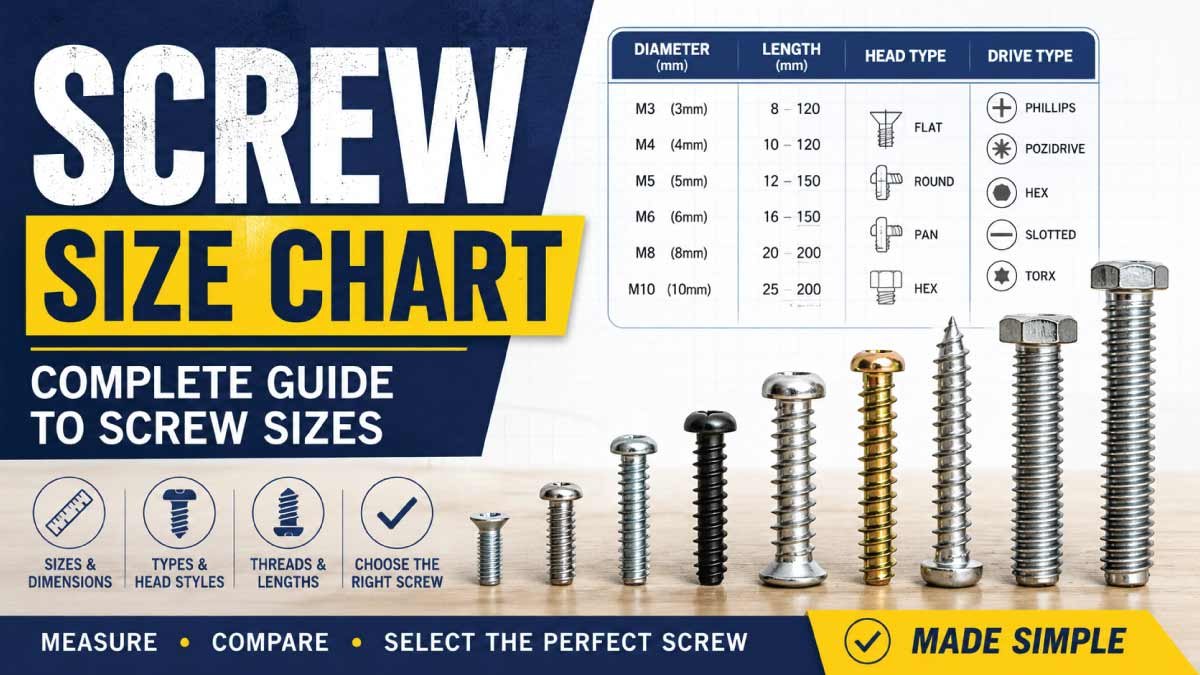
Choosing the correct screw size is important in woodworking, construction, metalworking, DIY projects, and machinery repair. Using the wrong screw can cause weak joints, stripped holes, damaged materials, or unsafe structures. That is why understanding a screw size chart helps beginners and professionals make accurate decisions.
In this complete guide, you will learn about screw sizes, screw measurements, metric and imperial systems, common screw types, and how to read a screw size chart easily.
What Is a Screw Size Chart?
A screw size chart is a useful engineering and hardware reference guide that explains standard screw dimensions in a clear and organized way. It helps users understand different screw measurements so they can choose the right fastener for specific materials and applications without confusion or trial and error.
A screw size chart is a reference table that shows standard screw dimensions, including:
- Screw diameter
- Thread size
- Length
- Head size
- Pilot hole size
- Metric or imperial measurements
These charts help users quickly select the correct screw for wood, metal, plastic, drywall, and mechanical applications.
Why Screw Sizes Matter
Using the correct screw size is essential in construction, mechanical work, and DIY projects because it directly affects the strength, durability, and reliability of the joint. Even a small mismatch in size can lead to weak connections, safety risks, or damaged materials over time.
Using the correct screw size provides several advantages:
1. Stronger Fastening
The right screw ensures a tight and stable connection between two materials. It grips properly inside the material, preventing movement, wobbling, or loosening over time. This creates a long-lasting and reliable joint that can handle load and stress effectively.
2. Better Safety
When screw sizes are incorrect, joints can weaken and fail under pressure. This may lead to accidents or structural breakdowns, especially in machinery or construction. Proper screw selection helps maintain stability and ensures the overall safety of the structure or equipment.
3. Prevents Material Damage
Using oversized screws can split wood, crack plastic, or distort thin metal sheets. On the other hand, undersized screws may not hold properly. Choosing the correct size protects the material surface and maintains its strength and appearance during installation.
4. Easier Installation
When screw and drill sizes are properly matched, installation becomes faster, smoother, and more accurate. It reduces the need for force, prevents stripping of threads, and helps achieve a clean, professional finish with less effort and fewer mistakes.
Understand The Screw Size Measurements
Screw size measurements are used to clearly define the physical dimensions of a screw so users can select the correct fastener for different materials and applications. These measurements help avoid confusion between metric and imperial systems and ensure proper fitting, strength, and performance in any project.
Screw sizes are usually identified using two main measurements:
- Diameter
- Length
For example:
- #8 × 2″
- M6 × 20mm
The first number represents the diameter, while the second represents the screw length.
Imperial Screw Size Chart
Imperial screws are commonly used in the USA, Canada, and older machinery systems.
| Screw Size | Diameter (Inches) | Common Uses |
|---|---|---|
| #2 | 0.086″ | Small electronics |
| #4 | 0.112″ | Hinges and hardware |
| #6 | 0.138″ | Light woodworking |
| #8 | 0.164″ | General wood screws |
| #10 | 0.190″ | Decking and framing |
| #12 | 0.216″ | Heavy-duty fastening |
| #14 | 0.242″ | Construction work |
Metric Screw Size Chart
Metric screws use millimeters for both diameter and length.
| Metric Size | Diameter (mm) | Common Applications |
|---|---|---|
| M2 | 2mm | Electronics |
| M3 | 3mm | Small machinery |
| M4 | 4mm | Appliances |
| M5 | 5mm | Automotive parts |
| M6 | 6mm | General mechanical work |
| M8 | 8mm | Heavy equipment |
| M10 | 10mm | Structural fastening |
| M12 | 12mm | Industrial applications |
Screw Length Chart
Screw length is measured from the underside of the head to the tip for most screws.
| Length | Typical Use |
|---|---|
| 1/4″ | Electronics |
| 1/2″ | Thin materials |
| 3/4″ | Small wood projects |
| 1″ | Furniture assembly |
| 1-1/2″ | Cabinet work |
| 2″ | General construction |
| 3″ | Framing and decking |
| 4″ | Structural fastening |
Common Types of Screws
Different screw types are designed for different materials and applications, and each type has a specific thread design, strength level, and usage purpose. Choosing the correct screw type is important for achieving a strong hold, preventing damage, and ensuring long-term durability in construction, woodworking, and mechanical work.
1. Wood Screws
Wood screws are specially designed with coarse threads that provide a strong grip inside wooden materials. Their sharp tips make them easy to drive into wood without excessive force, ensuring a tight and secure connection between wooden parts.
Common uses:
- Furniture
- Cabinets
- Decking
- DIY woodworking
2. Machine Screws
Machine screws are designed to be used with pre-threaded holes or with nuts for secure fastening. They provide a precise and strong connection, making them ideal for mechanical and industrial applications where accuracy is important.
Common uses:
- Machinery
- Electronics
- Automotive parts
3. Sheet Metal Screws
Sheet metal screws are engineered to cut through thin metal sheets and create a secure hold. Their sharp threads allow them to grip metal surfaces effectively without the need for pre-threading in many cases.
Common uses:
- HVAC systems
- Roofing
- Metal fabrication
4. Drywall Screws
Drywall screws are specifically made for attaching drywall sheets to wooden or metal studs. They have a sharp point and strong threads that ensure the drywall stays firmly in place without cracking or loosening over time.
5. Self-Tapping Screws
Self-tapping screws are designed to create their own threads as they are driven into materials. This eliminates the need for pre-drilling in many applications, making installation faster and more efficient while still providing a strong hold.
How to Read Screw Sizes
Understanding screw labels is simple once you know the basic format used in both imperial and metric systems. These markings tell you the diameter and length of the screw, helping you choose the correct fastener for the right application and avoid fitting mistakes during installation.
Example 1: #8 × 2″
- #8 = screw diameter
- 2″ = screw length
Example 2: M6 × 20mm
- M6 = 6mm diameter
- 20mm = screw length
Screw Gauge Size Explained
Imperial screws use gauge numbers instead of direct diameter measurements.
Higher gauge numbers mean larger screw diameters.
| Gauge | Diameter |
|---|---|
| #4 | 0.112″ |
| #6 | 0.138″ |
| #8 | 0.164″ |
| #10 | 0.190″ |
| #12 | 0.216″ |
Metric vs Imperial Screw Sizes
Many users get confused between metric and imperial screw systems because both measure diameter and length differently. Understanding the difference is important for selecting the correct screw, especially when working on international projects or mixing tools and materials from different regions.
1. Metric Screws
- Measured in millimeters
- Used internationally
- Easier conversions
Metric screws follow a simple system where sizes are clearly marked in millimeters, making them easier to understand and calculate. They are widely used in engineering, manufacturing, and most countries outside the United States.
2. Imperial Screws
- Measured in inches
- Common in the USA
- Uses gauge numbers
Imperial screws use inch-based measurements and often include gauge numbers like #6, #8, or #10. This system is more traditional and still widely used in construction and hardware markets in the United States.
Screw Head Types
Screw head types determine how a screw is driven, its holding strength, and the final appearance of the installation. Different head designs are used for different applications, tools, and material requirements. Choosing the right screw head improves grip, reduces slipping, and ensures a cleaner, more professional finish in construction and repair work.
1. Flat Head
Flat head screws are designed to sit flush with or slightly below the surface of the material. This creates a smooth, clean finish with no protruding head. They are commonly used in woodworking and cabinetry where appearance and surface level consistency are important for both aesthetics and safety.
2. Round Head
Round head screws have a domed, visible top that sits above the surface after installation. They are often used in applications where the screw head is not a concern for appearance or where added holding strength is needed. These screws are also common in decorative and light-duty fastening work.
3. Pan Head
Pan head screws feature a slightly rounded top with a wide surface area, providing strong clamping force. They are widely used in sheet metal, electrical panels, and machine assemblies. Their design allows better load distribution, making them suitable for applications where a secure and stable hold is required.
4. Hex Head
Hex head screws are designed for high-torque applications and are tightened using a wrench or socket tool. Their six-sided shape provides excellent grip and prevents slipping during installation. These screws are commonly used in construction, automotive, and heavy machinery where strong fastening and durability are essential.
5. Phillips Head
Phillips head screws have a cross-shaped slot that allows the screwdriver to self-center during use. This design improves grip and reduces the chance of slipping compared to flat heads. They are widely used in household appliances, electronics, and general assembly work due to their ease of installation and availability.
6. Torx Head
Torx head screws feature a star-shaped design that provides superior grip and reduces cam-out (slipping). This allows higher torque application without damaging the screw head. They are commonly used in automotive, electronics, and precision engineering applications where strong, secure, and reliable fastening is required.
Also Read:
Screw Thread Types
Thread types determine how well a screw grips a material and how strong and stable the connection will be. Different thread designs are used depending on whether the material is soft or hard.
Coarse Threads
- Better for wood
- Faster installation
- Strong grip in soft materials
Coarse threads are widely used in woodworking because they hold tightly in softer materials and allow quick driving without stripping.
Fine Threads
- Better for metal
- Stronger clamping force
- More precise fastening
Fine threads are ideal for metal applications where precision and strong clamping force are required for secure mechanical joints.
Pilot Hole Size Chart
Drilling the correct pilot hole prevents material splitting and improves screw grip.
| Screw Size | Softwood Pilot Hole | Hardwood Pilot Hole |
|---|---|---|
| #4 | 1/16″ | 3/32″ |
| #6 | 3/32″ | 7/64″ |
| #8 | 1/8″ | 9/64″ |
| #10 | 9/64″ | 5/32″ |
| #12 | 5/32″ | 3/16″ |
How to Choose the Right Screw Size
Selecting the right screw size is essential for creating strong, reliable, and long-lasting joints in any project. The correct choice depends on material type, thickness, load, and environment. Using the wrong screw can cause weak fastening, structural damage, or early failure, so careful selection ensures safety and durability in construction and repair work.
1. Material Type
Different materials require different screw types to ensure proper grip and holding strength. Wood, metal, drywall, and plastic all respond differently to fastening. For example, wood screws have deeper threads, while metal screws are finer. Choosing the correct screw design for the material improves stability, prevents slipping, and ensures a secure and long-lasting connection.
2. Thickness of Material
The thickness of the material plays a major role in selecting screw length. A screw must be long enough to hold both pieces firmly together without being too long to damage or pass through the surface. Proper penetration ensures strong grip, better stability, and reduces the risk of loosening over time.
3. Load Requirements
Load requirements determine the strength and size of the screw needed for a joint. Heavy loads require thicker and longer screws to handle pressure and prevent failure. Light-duty applications can use smaller screws. Understanding weight distribution helps ensure safety, durability, and long-term performance of the assembled structure or component.
4. Indoor or Outdoor Use
The environment where screws are used affects their durability and resistance to corrosion. Indoor screws do not face harsh conditions, but outdoor applications require protection against moisture, rust, and temperature changes. Stainless steel or coated screws are ideal for outdoor use, ensuring long-lasting performance and preventing damage caused by weather exposure.
Also Read:
Stainless Steel vs Zinc Screws
Different screw materials offer different levels of strength, durability, and corrosion resistance. Choosing the right coating or material ensures longer life and better performance.
Stainless Steel Screws
- Rust resistant
- Long-lasting
- Good for outdoor use
Stainless steel screws are ideal for environments exposed to moisture, rain, or humidity because they resist corrosion and maintain strength over time.
Zinc-Plated Screws
- Affordable
- Good indoor protection
- Common in general hardware
Zinc-plated screws are widely used for indoor applications where moisture exposure is limited, offering basic corrosion resistance at a lower cost.
Common Screw Problems
Improper screw selection or incorrect installation can cause several issues that affect strength, safety, and durability. These problems often happen during DIY work or construction when the wrong size, type, or technique is used. Understanding these common screw failures helps prevent damage and ensures stronger, more reliable fastening results.
1. Stripped Screws
Stripped screws happen when the screw head becomes damaged and the driver can no longer grip it properly. This is usually caused by using the wrong screwdriver size, applying excessive force, or over-tightening. Once stripped, removing the screw becomes difficult and may require special tools or extraction methods.
2. Loose Fastening
Loose fastening occurs when screws are too short, too thin, or not suitable for the load. Over time, vibration or pressure can cause the joint to weaken and move. This leads to reduced stability and possible failure of the assembly, especially in furniture, machinery, or structural applications where strength is important.
3. Cracked Wood
Cracked wood is a common issue when screws are inserted without a pilot hole or when they are placed too close to the edge. The pressure from the screw forces the wood fibers apart, causing splits. This weakens the material and can damage the entire structure, especially in delicate woodworking projects.
4. Rusting
Rusting occurs when screws made of untreated or low-quality metal are exposed to moisture or outdoor conditions. Without protective coating, corrosion develops over time, weakening the screw and reducing its holding strength. This can eventually lead to joint failure, especially in outdoor furniture, roofing, or humid environments.
Screw Size Conversion Chart
| Metric Size | Approximate Imperial Size |
|---|---|
| M3 | #4 |
| M4 | #8 |
| M5 | #10 |
| M6 | 1/4″ |
| M8 | 5/16″ |
| M10 | 3/8″ |
Also Read:
Best Applications for Different Screw Sizes
Different screw sizes are designed for different levels of strength, load capacity, and precision. Choosing the correct size ensures better performance, safety, and durability in any project, whether it is small electronics work or heavy construction tasks.
1. Small Screws
Small screws are designed for delicate and precision-based applications where fine control and minimal material damage are required.
Best for:
- Electronics
- Toys
- Precision work
Small screws are commonly used in lightweight assemblies where components are thin or fragile. They provide accurate fastening without splitting or damaging sensitive materials, making them ideal for detailed mechanical or electronic devices.
2. Medium Screws
Medium screws are the most commonly used type in everyday applications. They offer a balanced combination of strength and versatility for general household and woodworking tasks.
Best for:
- Furniture
- Cabinets
- Household repairs
These screws are strong enough to hold medium-weight materials securely while still being easy to install. They are widely used in home improvement, carpentry, and general repair work due to their adaptability.
3. Large Screws
Large screws are designed for heavy-duty applications where high strength and deep penetration are required to support structural loads.
Best for:
- Construction
- Decking
- Structural framing
Large screws provide maximum holding power and are commonly used in building structures, outdoor decking, and framing projects where safety and load-bearing capacity are critical.
Final Thoughts
Understanding screw sizes is essential for safe and accurate fastening. Whether you are working on woodworking, metal fabrication, automotive repair, or home improvement projects, using a proper screw size chart helps you avoid mistakes and improve durability.
By learning screw diameter, thread type, length, and material compatibility, you can confidently choose the right screws for any project.
Also Read:
FAQs:
What Do Screw Sizes Mean?
Screw sizes indicate two main measurements: diameter and length. The diameter refers to the thickness of the screw shaft, while the length shows how far the screw extends from head to tip. These measurements help ensure proper fit, strength, and compatibility with different materials and applications in construction and repair work.
What Is the Most Common Screw Size?
The most commonly used screw size in general woodworking and household repairs is the #8 screw. It offers a balanced combination of strength and versatility, making it suitable for furniture, light construction, and DIY projects. Its popularity comes from being strong enough for many tasks while still easy to work with.
Are Metric and Imperial Screws Interchangeable?
Metric and imperial screws are not interchangeable because they use different measurement systems and thread standards. Metric screws are measured in millimeters, while imperial screws use gauge numbers and inches. Their thread patterns do not match, so forcing them together can damage both the screw and the material being fastened.
How Do I Measure Screw Size?
To measure screw size, first determine the diameter by measuring the width of the threaded shaft. Then measure the length from the underside of the screw head to the tip. Accurate measurement ensures you select the correct screw for your material, preventing weak fastening, damage, or improper fitting during use.
What Screw Size Is Best for Wood?
For woodworking projects, screw sizes like #6, #8, and #10 are commonly used depending on the application. Smaller screws work well for lightweight joints, while larger ones provide stronger holding power for heavy-duty wood connections. Choosing the right size improves grip, reduces splitting, and ensures long-lasting structural strength.
What Does M6 Screw Mean?
An M6 screw refers to a metric screw with a nominal diameter of 6 millimeters. The “M” stands for metric, and the number indicates the screw’s thickness. M6 screws are widely used in machinery, automotive, and construction applications where precise and standardized fastening is required for secure assembly.

Engineer Hassan is a Mechanical Engineer with 16+ years of hands-on experience in mechanical hardware, fasteners, and workshop tools. He focuses on size selection, thread identification, and measurement, helping users choose the correct components with accuracy and safety.