
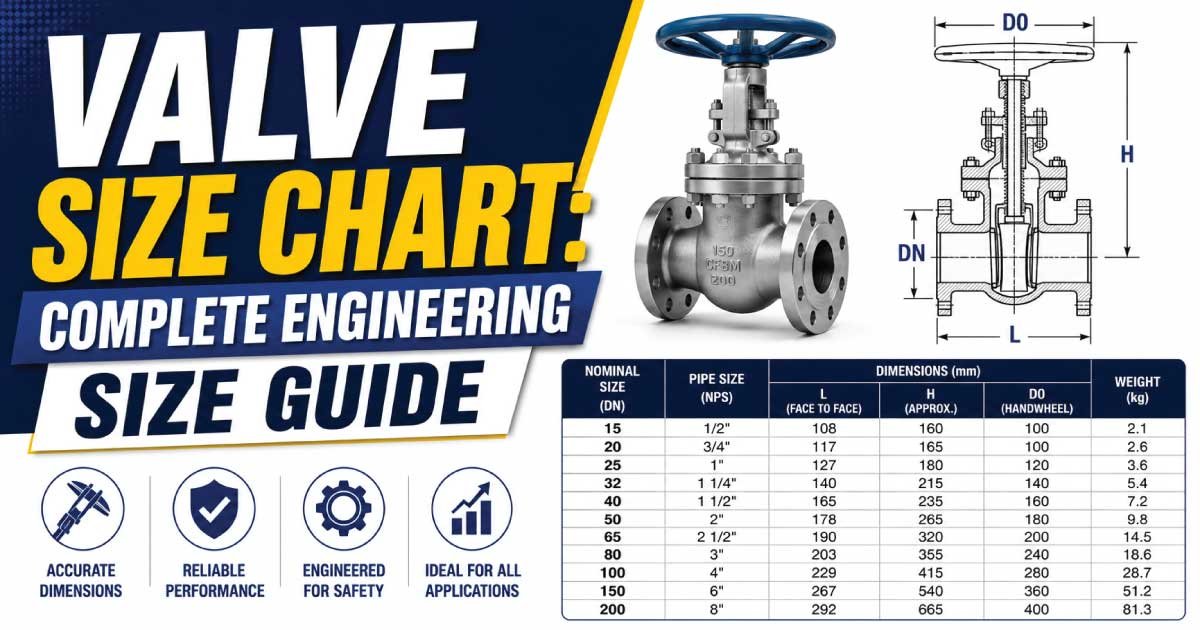
Valves are essential flow-control devices used in piping systems to regulate, start, stop, or direct the flow of liquids, gases, steam, and other media.
They are widely used in industrial plants, water supply systems, oil and gas pipelines, HVAC installations, power generation, and chemical processing.
Choosing the correct valve size ensures efficient flow, minimizes pressure loss, improves system performance, and extends equipment lifespan. This complete guide explains valve sizes, standard size charts, measurement methods, common valve types, materials, and selection tips.
What Is a Valve?
A valve is a mechanical device that controls the flow and pressure of fluids by opening, closing, or partially obstructing a passageway. Different valve designs are available to suit various applications, including isolation, throttling, pressure regulation, and flow direction control. Proper valve sizing is crucial for achieving efficient system operation and preventing unnecessary pressure drops or flow restrictions.
Primary Functions
- Controls fluid flow
- Stops or starts flow
- Regulates system pressure
- Prevents backflow
- Directs fluid movement
- Protects piping equipment
Common Types of Valves
Various valve designs are available depending on the application, operating pressure, temperature, and type of fluid. Understanding the most common valve types helps ensure proper selection for safe and efficient operation.
1. Gate Valve
Gate valves use a sliding gate or wedge to completely stop or allow fluid flow. They are designed primarily for fully open or fully closed service rather than flow regulation.
Advantages
- Minimal pressure drop
- Full-port flow
- Reliable shutoff
- Suitable for large pipelines
- Long service life
2. Ball Valve
Ball valves use a rotating ball with a drilled hole to control flow. A simple quarter-turn operation makes them one of the most popular valve types in industrial and residential systems.
Benefits
- Quick operation
- Excellent sealing
- Low maintenance
- High durability
- Suitable for liquids and gases
3. Butterfly Valve
Butterfly valves use a rotating disc positioned within the pipe to regulate flow. Their lightweight design makes them ideal for large-diameter piping systems where space and weight are important.
Applications
- Water treatment plants
- HVAC systems
- Fire protection systems
- Chemical processing
- Irrigation systems
4. Globe Valve
Globe valves are designed for precise flow regulation. Their internal structure allows accurate throttling, making them suitable for applications requiring frequent flow adjustments.
Valve Size Chart (Nominal Pipe Size – NPS)
The following chart lists common valve sizes used in ANSI and ASME piping systems.
| Nominal Pipe Size (NPS) | Approximate Outside Diameter (in) | Typical Applications |
|---|---|---|
| 1/2″ | 0.84 | Residential plumbing |
| 3/4″ | 1.05 | Water supply |
| 1″ | 1.32 | Commercial piping |
| 1-1/4″ | 1.66 | HVAC systems |
| 1-1/2″ | 1.90 | Industrial piping |
| 2″ | 2.38 | Water distribution |
| 3″ | 3.50 | Process piping |
| 4″ | 4.50 | Manufacturing plants |
| 6″ | 6.63 | Municipal systems |
| 8″ | 8.63 | Large industrial pipelines |
| 10″ | 10.75 | Oil and gas |
| 12″ | 12.75 | Power plants |
Metric Valve Size Chart (DN)
Metric valve sizes are commonly specified using Diameter Nominal (DN).
| DN Size | Approximate Pipe Diameter (mm) | Typical Applications |
|---|---|---|
| DN15 | 21.3 | Domestic plumbing |
| DN20 | 26.9 | Water systems |
| DN25 | 33.7 | Commercial buildings |
| DN32 | 42.4 | HVAC |
| DN40 | 48.3 | Industrial piping |
| DN50 | 60.3 | Water treatment |
| DN65 | 76.1 | Chemical plants |
| DN80 | 88.9 | Manufacturing |
| DN100 | 114.3 | Process industries |
| DN150 | 168.3 | Oil and gas |
| DN200 | 219.1 | Power generation |
| DN250 | 273.0 | Municipal water supply |
Understanding Valve Dimensions
Valve dimensions determine whether a valve fits properly into a piping system while maintaining the required flow capacity and pressure rating. Understanding these measurements helps prevent installation problems and ensures efficient system operation.
1. Nominal Pipe Size (NPS or DN)
The nominal pipe size identifies the pipe diameter that the valve is designed to fit. Although it serves as a standard designation, it does not always represent the pipe’s exact outside diameter. Standard valve charts should always be used for verification.
2. End Connection Size
Valve end connections determine how the valve attaches to the piping system. Common connection types include threaded, flanged, socket weld, butt weld, and grooved ends.
3. Face-to-Face Length
Face-to-face length is the distance between the two connecting ends of the valve. This dimension is standardized to ensure compatibility with existing piping layouts during installation or replacement.
How to Measure a Valve
Accurate valve measurements are necessary when replacing an existing valve or designing a new piping system. Proper measurements ensure compatibility with the pipe, flanges, and surrounding equipment.
Step 1: Measure Pipe Size
Measure the outside diameter of the connecting pipe and compare it with standard NPS or DN charts.
Measurement Tips
- Use a digital caliper
- Measure a clean pipe section
- Verify multiple locations
- Record dimensions accurately
Step 2: Measure Face-to-Face Length
Measure the distance between the valve’s two connection faces. This dimension helps identify the valve standard and ensures proper fit within the piping system.
Step 3: Identify Connection Type
Determine whether the valve uses threaded, flanged, welded, or grooved connections. Matching the connection style simplifies installation and prevents compatibility issues.
Common Valve Materials
Valve material selection depends on pressure, temperature, corrosion resistance, and the type of fluid flowing through the system. Choosing the correct material significantly improves durability and operational reliability.
Cast Iron Valves
Cast iron valves are commonly used in low-pressure water systems because they are economical and provide sufficient strength for general service.
Advantages
- Affordable
- Good durability
- Easy machining
- Suitable for water systems
- Widely available
Carbon Steel Valves
Carbon steel valves offer excellent mechanical strength and are widely used in industrial piping, steam systems, and oil and gas applications.
Benefits
- High strength
- Good pressure resistance
- Cost-effective
- Suitable for high temperatures
- Excellent durability
Stainless Steel Valves
Stainless steel valves provide outstanding corrosion resistance and are widely used in chemical processing, food manufacturing, pharmaceutical production, and marine applications where hygiene and durability are important.
Applications of Valves
Valves are used in virtually every piping system because they regulate fluid flow, isolate equipment, and protect systems from excessive pressure and reverse flow.
Oil and Gas Industry
Valves control crude oil, natural gas, and refined products throughout production, transportation, and refining facilities.
Common Applications
- Refineries
- Pipelines
- Offshore platforms
- Storage terminals
- Processing plants
Water Supply and Treatment
Municipal water systems rely on valves to control water distribution, filtration, pressure regulation, and maintenance operations.
Typical Uses
- Water treatment plants
- Pump stations
- Distribution pipelines
- Irrigation systems
- Wastewater facilities
How to Choose the Correct Valve Size
Selecting the correct valve size is essential for maintaining proper flow, minimizing pressure loss, and ensuring efficient system operation. A valve that is too small can restrict flow and increase energy consumption, while an oversized valve may reduce flow control accuracy and increase installation costs. Always consider the pipe size, flow rate, pressure rating, temperature, and application before selecting a valve.
Selection Checklist
- Measure the pipe size (NPS or DN)
- Calculate the required flow rate
- Verify the pressure rating
- Check the operating temperature
- Select the correct valve type
- Match the end connection
- Choose the appropriate valve material
- Consider the fluid type
- Verify industry standards
- Follow manufacturer specifications
📐 Explore Latest Size Guide 👉 Socket Wrench Sizes and Their Applications
Valve Pressure Classes
Valve pressure class indicates the maximum pressure a valve can safely withstand under specified operating temperatures. Higher pressure classes are designed with stronger bodies and thicker walls for demanding industrial applications.
Common ANSI Pressure Classes
The most commonly used pressure classes include:
- Class 125
- Class 150
- Class 300
- Class 600
- Class 900
- Class 1500
- Class 2500
Higher pressure ratings are commonly used in oil refineries, steam systems, chemical plants, and high-pressure processing facilities.
Valve End Connection Types
Valves are manufactured with different connection styles to suit various piping systems. Selecting the correct connection type simplifies installation and ensures a secure, leak-free joint.
1. Threaded Ends
Threaded valves are commonly used in small-diameter piping systems and residential plumbing because they are easy to install and remove.
Advantages
- Simple installation
- No welding required
- Low installation cost
- Easy maintenance
- Suitable for small pipelines
2. Flanged Ends
Flanged valves use bolted flanges and gaskets to create strong, removable connections. They are commonly found in medium- and large-diameter industrial piping systems.
3. Butt Weld Ends
Butt weld valves are permanently welded to the pipeline, providing excellent strength and leak resistance for high-pressure and high-temperature applications.
4. Socket Weld Ends
Socket weld valves are commonly used in small-bore, high-pressure piping systems where strong and compact welded connections are required.
Valve Material Comparison
Selecting the proper valve material improves durability, corrosion resistance, and overall system performance.
| Material | Best Applications | Main Advantages |
|---|---|---|
| Cast Iron | Water systems | Economical and durable |
| Carbon Steel | Steam and industrial piping | High strength |
| Stainless Steel | Chemical and food industries | Excellent corrosion resistance |
| Brass | Plumbing systems | Easy machining and corrosion resistance |
| Bronze | Marine applications | Good seawater resistance |
| PVC | Water treatment | Lightweight and corrosion resistant |
Common Valve Installation Mistakes
Improper valve installation can lead to leakage, poor flow control, and premature equipment failure. Following recommended installation procedures helps maximize valve performance.
Avoid these common mistakes:
- Choosing the wrong valve size
- Installing the valve backwards
- Incorrect bolt tightening
- Poor pipe alignment
- Ignoring flow direction arrows
- Using incompatible materials
- Overtightening threaded connections
- Installing damaged gaskets
- Contaminated piping during installation
- Skipping pressure testing
📐 Explore Latest Size Guide 👉 Pliers Size Guide for Accurate Work (Complete Guide)
Valve Maintenance Tips
Routine maintenance helps ensure long service life and reliable valve operation. Regular inspections identify wear before major failures occur.
Maintenance recommendations include:
- Inspect for leaks
- Operate valves periodically
- Lubricate moving parts
- Tighten loose fasteners
- Replace worn seals
- Check packing glands
- Remove corrosion
- Verify operating pressure
- Clean internal components
- Schedule preventive maintenance
Regular maintenance minimizes downtime and improves system reliability.
Advantages of Using the Correct Valve Size
Proper valve sizing improves flow efficiency while reducing energy consumption and maintenance costs. Correctly sized valves also improve control accuracy and equipment protection.
Major benefits include:
- Improved flow control
- Reduced pressure loss
- Better energy efficiency
- Longer equipment life
- Lower maintenance costs
- Reliable shutoff performance
- Reduced system vibration
- Improved operational safety
- Better pressure regulation
- Increased system reliability
Signs a Valve Needs Replacement
Valves experience wear from pressure, corrosion, erosion, and repeated operation. Recognizing early warning signs helps prevent unexpected failures.
Common warning signs include:
- Persistent leakage
- Difficult valve operation
- Corroded valve body
- Cracked housing
- Damaged stem
- Excessive vibration
- Internal leakage
- Worn seats
- Reduced flow performance
- Frequent maintenance requirements
Replacing damaged valves promptly helps maintain safe and efficient operation.
Applications of Valves Across Industries
Valves are essential components in nearly every industry where fluids or gases are transported, controlled, or isolated.
Chemical Processing Plants
Chemical plants use corrosion-resistant valves to regulate the flow of acids, solvents, gases, and other aggressive chemicals while maintaining safe operating conditions.
Power Generation
Power stations rely on valves for steam control, cooling water systems, boilers, condensers, and turbine operations under high-pressure and high-temperature conditions.
Marine Industry
Marine vessels use bronze and stainless steel valves in seawater systems, ballast lines, fuel systems, and engine cooling circuits because of their corrosion resistance.
Food and Beverage Industry
Food-grade stainless steel valves provide hygienic flow control in dairy plants, beverage production, pharmaceutical manufacturing, and food processing facilities.
📐 Explore Latest Size Guide 👉 Shaft Size Chart: Easy Guide to Standard Dimensions
Wrapping Up On Valve Size
Selecting the correct valve size is essential for maintaining efficient flow control, reducing pressure losses, and ensuring long-term reliability in piping systems.
By understanding valve dimensions, pressure classes, connection types, materials, and industry standards, engineers and maintenance professionals can confidently choose the right valve for any application.
Using accurate valve size charts, following proper installation procedures, and performing routine maintenance significantly improves system performance, extends equipment lifespan, reduces operating costs, and enhances safety across industries such as oil and gas, water treatment, chemical processing, power generation, manufacturing, HVAC, and marine engineering.
FAQs:
How do I determine the correct valve size?
Determine the correct valve size by measuring the pipe diameter, calculating the required flow rate, verifying the operating pressure and temperature, and comparing these values with standard valve size charts. Proper valve sizing ensures efficient flow control, minimizes pressure loss, and provides reliable, long-term system performance.
What is the difference between NPS and DN valve sizes?
NPS (Nominal Pipe Size) is the inch-based sizing system widely used in North America, while DN (Diameter Nominal) is the metric designation used internationally. Although the numbering differs, both systems identify compatible pipe and valve sizes rather than the exact physical dimensions of the components.
Which valve type is most commonly used?
Ball valves are among the most commonly used valve types because they offer quick quarter-turn operation, excellent sealing performance, low maintenance requirements, and long service life. They are widely used in residential plumbing, commercial installations, and industrial systems for reliable on-off flow control.
Can I install a larger valve than the pipe size?
Installing a valve larger than the pipe size is generally not recommended unless the piping system is specifically designed with reducers or expanders. Oversized valves can reduce flow control accuracy, increase installation costs, and negatively affect overall system efficiency and operational performance.
How long does an industrial valve last?
The lifespan of an industrial valve depends on factors such as material quality, operating pressure, temperature, fluid type, maintenance practices, and application conditions. When properly selected, installed, and maintained, high-quality industrial valves can provide reliable service for 15 to 30 years or more.

Engineer Hassan is a Mechanical Engineer with 16+ years of hands-on experience in mechanical hardware, fasteners, and workshop tools. He focuses on size selection, thread identification, and measurement, helping users choose the correct components with accuracy and safety.