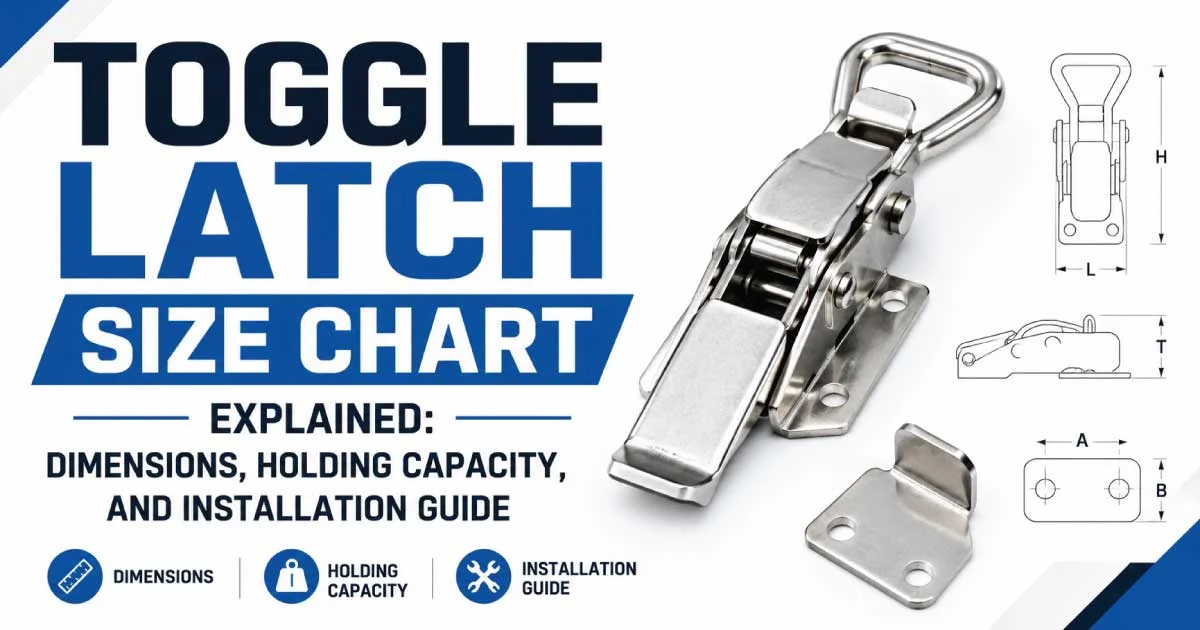
Toggle Latch Size Chart: Standard Sizes Guide

Toggle latches are among the most reliable fastening solutions used in industrial machinery, toolboxes, enclosures, transport equipment, cabinets, and heavy-duty applications.

Choosing the correct latch size is essential because an incorrectly sized latch can reduce safety, affect performance, and shorten the lifespan of equipment.

This guide explains everything you need to know about toggle latch size charts, measurements, applications, and selection methods.


What Is a Toggle Latch?

A toggle latch is a mechanical fastening device designed to securely hold two surfaces together using leverage. Once locked, it creates constant tension that keeps lids, doors, covers, or panels tightly closed. Unlike ordinary latches, toggle latches offer adjustable clamping force, making them suitable for applications requiring vibration resistance and repeated opening and closing.

Their simple yet effective mechanism has made them popular across manufacturing, automotive, aerospace, woodworking, agriculture, and household equipment.


Why a Toggle Latch Size Chart Matters

A toggle latch size chart helps users determine the correct latch dimensions before installation. Since toggle latches come in various lengths, widths, hook sizes, and holding capacities, selecting the proper size ensures secure fastening, smooth operation, and long-term durability. A size chart eliminates guesswork and helps buyers match latch specifications with their application requirements.

Proper sizing also prevents excessive stress on mounting surfaces while ensuring the latch closes with the correct amount of tension.

Benefits of Using a Size Chart

  • Ensures accurate fit
  • Improves equipment safety
  • Prevents installation errors
  • Reduces maintenance costs
  • Increases latch lifespan
  • Supports better load distribution
  • Enhances operational efficiency

Understanding Toggle Latch Measurements

Before using any toggle latch size chart, it is important to understand the standard measurements manufacturers provide. Each dimension contributes to compatibility and performance. Knowing what these measurements represent allows buyers to compare products accurately and select the most appropriate latch for their specific installation requirements.

Common Toggle Latch Dimensions

The following measurements are commonly listed in product specifications:

  • Overall length
  • Body width
  • Mounting hole spacing
  • Hook length
  • Hook diameter
  • Base plate dimensions
  • Closed height
  • Open height
  • Adjustable range
  • Holding capacity

These dimensions ensure the latch fits correctly without interfering with surrounding components.


Standard Toggle Latch Size Chart

The following table provides general size references used by many manufacturers. Actual dimensions may vary slightly depending on brand and design.
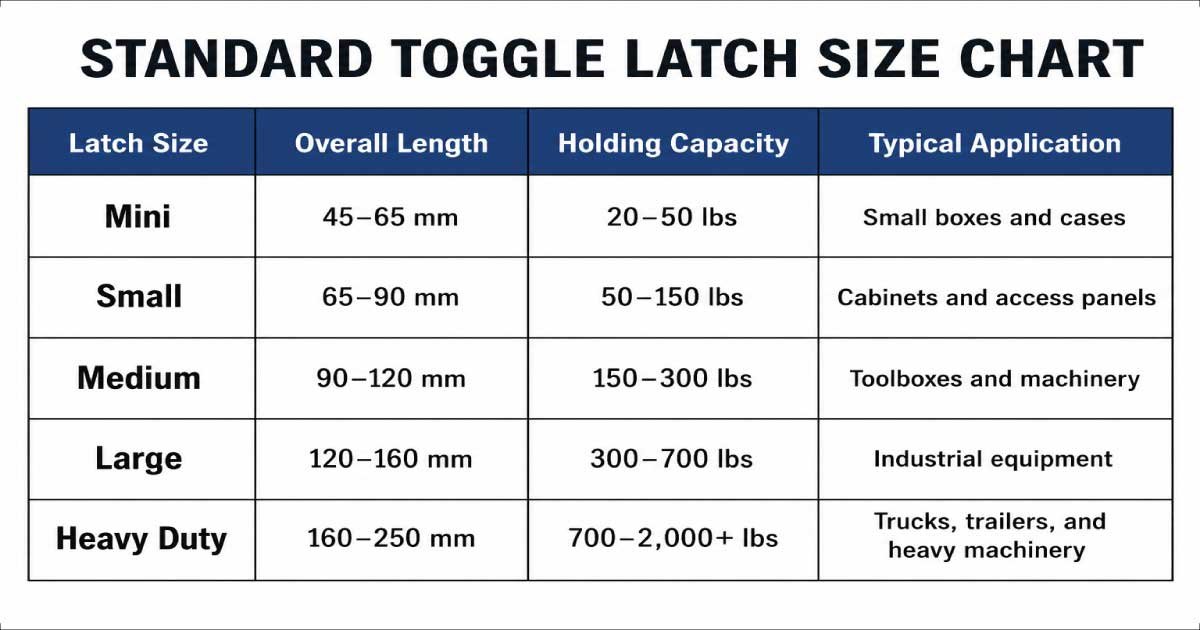
Standard Toggle Latch Size Chart

Latch Size Overall Length Holding Capacity Typical Application
Mini 45–65 mm 20–50 lbs Small boxes and cases
Small 65–90 mm 50–150 lbs Cabinets and access panels
Medium 90–120 mm 150–300 lbs Toolboxes and machinery
Large 120–160 mm 300–700 lbs Industrial equipment
Heavy Duty 160–250 mm 700–2,000+ lbs Trucks, trailers, and heavy machinery

This chart serves as a general guideline rather than an exact manufacturing standard.

Toggle Latch Size Chart PDF

Choosing the correct toggle latch size is essential for ensuring secure fastening, reliable performance, and long-lasting durability. This standard toggle latch size chart compares common latch sizes, overall lengths, holding capacities, and typical applications. Use it as a quick reference to select the most suitable latch for cabinets, toolboxes, industrial equipment, trailers, and heavy-duty machinery.

Standard_Toggle_Latch_Size_Chart

📏 Essential Size Chart Guides 👉


Factors That Influence Toggle Latch Size Selection

Selecting the correct latch involves more than simply matching dimensions. Several operational and environmental factors determine whether a latch will perform reliably over time. Considering these variables helps prevent premature wear, accidental opening, and structural damage during regular use.

Key Selection Factors

  • Weight of the door or lid
  • Frequency of operation
  • Required holding force
  • Environmental conditions
  • Exposure to vibration
  • Available mounting space
  • Material compatibility
  • Safety requirements

Evaluating these aspects ensures the chosen latch delivers dependable performance under real-world operating conditions.


Holding Capacity vs. Physical Size

Many users mistakenly assume larger toggle latches always provide greater strength. While larger models often support higher loads, holding capacity primarily depends on latch design, materials, manufacturing quality, and locking geometry.

Therefore, always compare the rated holding capacity rather than relying solely on physical dimensions when choosing a toggle latch.

Manufacturers typically specify the maximum static holding force for each latch model, allowing buyers to select products that meet safety requirements.


Common Toggle Latch Materials

Material selection significantly influences latch durability, corrosion resistance, and overall performance. Different materials are designed for different environments, ranging from indoor cabinets to marine equipment and outdoor machinery. Choosing the appropriate material extends service life while minimizing maintenance and replacement costs.

Popular Materials Include

  • Stainless steel
  • Zinc-plated steel
  • Carbon steel
  • Aluminum
  • Plastic composites
  • Nickel-plated steel
  • Powder-coated steel

Each material offers unique advantages depending on environmental exposure and load requirements.


How to Measure a Toggle Latch Correctly

Accurate measurements are essential when replacing an existing latch or installing a new one. Measuring several dimensions rather than only the overall length ensures compatibility with mounting holes, hook alignment, and closing tension. Proper measurement also reduces installation adjustments and improves long-term reliability.

Measurement Steps

  1. Measure overall latch length.
  2. Record mounting hole spacing.
  3. Measure hook length.
  4. Measure hook diameter.
  5. Measure closed height.
  6. Measure base plate dimensions.
  7. Check adjustment range.
  8. Verify holding capacity requirements.

These measurements should always be compared with the manufacturer’s specification sheet.


Applications of Different Toggle Latch Sizes

Different latch sizes are engineered for different tasks. Small latches work well for lightweight enclosures, while larger industrial models withstand substantial loads and constant vibration. Understanding typical applications simplifies the selection process and helps ensure reliable performance across various industries.

Small Toggle Latches

Commonly used for:

  • Electrical enclosures
  • Instrument cases
  • Small cabinets
  • Medical equipment
  • Electronics boxes

Medium Toggle Latches

Frequently installed on:

  • Toolboxes
  • Machine guards
  • Workshop storage
  • Compressor covers
  • Utility cabinets

Large Toggle Latches

Ideal for:

  • Heavy machinery
  • Industrial enclosures
  • Agricultural equipment
  • Commercial vehicles
  • Generator housings

Importance of Adjustable Toggle Latches

Adjustable toggle latches allow users to modify clamping tension by changing hook length. This flexibility accommodates manufacturing tolerances, gasket compression, and material wear over time. Adjustable designs are especially valuable in industrial environments where secure sealing and consistent pressure are essential for optimal equipment performance.

Their adaptability makes them suitable for applications with varying closure requirements and repeated use.


Choosing the Right Mounting Configuration

Beyond latch size, mounting style plays a vital role in achieving a secure installation. Surface-mounted, recessed, and concealed configurations each offer unique advantages depending on space availability, accessibility, and aesthetic preferences. Matching the mounting configuration to the application improves both functionality and appearance.

Common Mounting Types

  • Surface mount
  • Recessed mount
  • Weld-on mount
  • Bolt-on mount
  • Riveted installation

Selecting the appropriate mounting style simplifies installation while maximizing structural stability.


Installation Tips for Toggle Latches

Installing a toggle latch correctly is just as important as selecting the proper size. Even the highest-quality latch can fail if it is poorly aligned or mounted on an unstable surface. Careful installation ensures smooth operation, maintains consistent clamping pressure, and extends the service life of both the latch and the equipment.

Best Installation Practices

  • Mark mounting holes accurately.
  • Use corrosion-resistant fasteners.
  • Ensure proper latch alignment.
  • Tighten hardware evenly.
  • Test the closing mechanism several times.
  • Avoid over-tightening mounting screws.
  • Confirm the hook engages securely.
  • Inspect the latch after installation.

Common Toggle Latch Size Mistakes to Avoid

Many installation problems occur because users focus only on the latch’s overall dimensions while ignoring other critical specifications. Overlooking holding capacity, hook adjustment, or mounting hole spacing can result in poor performance, excessive wear, and unexpected latch failure during operation.

Frequent Selection Errors

  • Choosing a latch based only on appearance.
  • Ignoring holding capacity ratings.
  • Incorrect hook length selection.
  • Forgetting mounting clearance.
  • Using indoor latches outdoors.
  • Installing mismatched strike plates.
  • Skipping alignment checks.
  • Selecting non-adjustable latches when adjustment is required.

Avoiding these mistakes improves reliability and minimizes future maintenance.

Also Read:


How Environmental Conditions Affect Latch Size Selection

The operating environment significantly influences latch performance. Temperature fluctuations, moisture, chemicals, dust, and vibration all affect how a latch functions over time. Choosing the appropriate size and material for the environment helps prevent corrosion, loosening, and premature component failure.

Environmental Factors to Consider

  • High humidity
  • Saltwater exposure
  • Chemical contact
  • Dust accumulation
  • UV radiation
  • Freezing temperatures
  • High heat
  • Constant vibration

Selecting a latch specifically designed for these conditions ensures dependable long-term operation.


Toggle Latch Load Ratings Explained

Load ratings indicate the maximum force a toggle latch can safely withstand under normal operating conditions. Manufacturers test latches using standardized methods to determine their holding capacity. Understanding these ratings helps users select a latch that provides sufficient safety without unnecessarily increasing size or installation costs.

Always choose a latch with a holding capacity exceeding the expected operational load.

Typical Holding Capacity Categories

Category Holding Capacity Typical Use
Light Duty Up to 50 lbs Small enclosures
Standard Duty 50–150 lbs Cabinets and cases
Medium Duty 150–300 lbs Toolboxes and equipment
Heavy Duty 300–700 lbs Industrial machinery
Extra Heavy Duty 700–2,000+ lbs Trailers and transport equipment

Also Read:


Choosing Between Adjustable and Fixed Toggle Latches

Both adjustable and fixed toggle latches have advantages depending on the application. Adjustable models offer flexibility for changing tolerances, while fixed latches provide simplicity and consistent positioning. Understanding their differences helps users choose the most practical solution for long-term performance.

Adjustable Toggle Latches

Advantages include:

  • Fine tension adjustment
  • Better gasket compression
  • Easier replacement
  • Greater installation flexibility
  • Compensation for wear over time

Fixed Toggle Latches

Advantages include:

  • Lower maintenance
  • Simpler installation
  • Consistent positioning
  • Fewer moving components
  • Cost-effective design

Industries That Use Toggle Latches

Toggle latches are widely used because of their strength, reliability, and ease of operation. Different industries depend on various latch sizes to secure equipment, improve workplace safety, and protect valuable components from vibration, dust, and accidental opening during transport or daily operation.

Major Industries

  • Automotive manufacturing
  • Aerospace engineering
  • Marine equipment
  • Agricultural machinery
  • Construction equipment
  • Medical devices
  • Electrical enclosures
  • Telecommunications
  • Food processing
  • Industrial automation

Each industry selects latch sizes according to operational demands and safety standards.

Also Read:


Maintenance Tips for Longer Latch Life

Routine maintenance keeps toggle latches operating smoothly and reduces the likelihood of unexpected failures. Regular inspections also help identify worn components before they cause operational problems. Proper care extends the lifespan of the latch while maintaining secure and reliable fastening.

Maintenance Checklist

  • Clean accumulated dirt regularly.
  • Lubricate moving joints.
  • Inspect mounting hardware.
  • Check for corrosion.
  • Replace worn springs.
  • Tighten loose fasteners.
  • Test locking performance.
  • Verify proper alignment.

Preventive maintenance is especially important for equipment exposed to harsh environments or frequent use.


How to Replace an Existing Toggle Latch

Replacing a toggle latch becomes straightforward when accurate measurements are available. Matching the original latch dimensions, mounting pattern, and holding capacity minimizes installation adjustments and ensures reliable performance. Always compare manufacturer specifications before purchasing a replacement.

Replacement Steps

  1. Remove the old latch.
  2. Measure all mounting dimensions.
  3. Compare specifications.
  4. Select the correct holding capacity.
  5. Install the replacement latch.
  6. Align the hook properly.
  7. Tighten all fasteners.
  8. Test the locking mechanism.

Replacing a worn latch before failure helps avoid equipment downtime and costly repairs.


Signs You Need a Larger Toggle Latch

Certain warning signs indicate that the installed latch may be undersized for the application. Recognizing these issues early allows users to upgrade before equipment damage or safety problems occur.

Common Warning Signs

  • Difficult closing action
  • Latch pops open unexpectedly
  • Excessive vibration
  • Bent hook assembly
  • Loose mounting hardware
  • Cracked mounting surface
  • Poor gasket compression
  • Frequent latch adjustments

If multiple symptoms appear, consider selecting a larger latch with a higher holding capacity.


Benefits of Selecting the Correct Toggle Latch Size

Proper sizing offers more than a secure closure. It contributes to equipment reliability, workplace safety, and lower operating costs. A well-matched latch performs consistently while reducing wear on connected components and minimizing maintenance requirements.

Key Advantages

  • Improved equipment safety
  • Longer service life
  • Reduced maintenance expenses
  • Better vibration resistance
  • Enhanced sealing performance
  • Reliable locking action
  • Faster installation
  • Lower replacement frequency

Investing time in selecting the correct latch size often results in significant long-term savings.


Final Thoughts

Selecting the correct toggle latch starts with understanding important factors such as size charts, holding capacity, mounting dimensions, and environmental conditions. These details help users choose a latch that provides the right fit, strength, and performance for their specific application.

Careful measurement and comparison of manufacturer specifications are essential for achieving reliable results. Considering factors such as operating conditions, load requirements, and frequency of use ensures the toggle latch can perform effectively over time while maintaining safety and durability.

Whether securing a small electrical enclosure or heavy industrial equipment, the right toggle latch size provides dependable clamping force and reduces the risk of failure. Proper selection helps minimize maintenance needs, improve efficiency, and extend the service life of both the latch and the equipment.


Frequently Asked Questions About Toggle Latch Size Charts

Can I Replace a Small Toggle Latch with a Larger One?

Yes. A larger toggle latch can replace a smaller one if there is enough mounting space and the latch properly aligns with the existing hook, catch, or strike plate. Before upgrading, check mounting dimensions, hole spacing, and load requirements to ensure proper fit and reliable operation.

Are Toggle Latch Sizes Standardized?

No. While toggle latches are often grouped into general size categories, exact measurements vary between manufacturers and models. Dimensions such as mounting hole spacing, overall length, hook size, and holding capacity can differ significantly. Always review the manufacturer’s specifications rather than relying only on size labels or descriptions.

How Much Holding Capacity Do I Need?

Choose a toggle latch with a holding capacity higher than the maximum expected load of your application. Allowing an additional safety margin helps the latch handle vibration, impact, repeated opening and closing, and unexpected stress without reducing performance or risking premature failure during operation.

Do Stainless Steel Toggle Latches Last Longer?

Yes, stainless steel toggle latches generally provide better durability in outdoor, marine, and corrosive environments. They offer improved resistance to rust, moisture, and chemical exposure compared with standard steel options. This makes them a lower-maintenance choice for applications where long service life and reliable performance are important.