
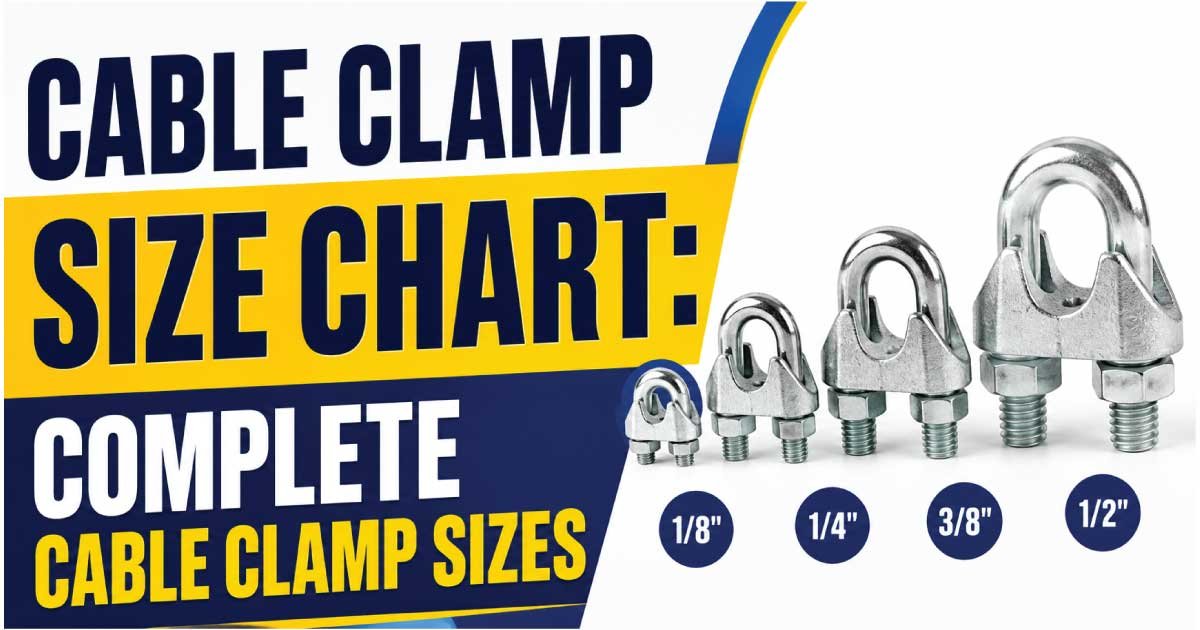
Cable clamps are essential fastening devices used to secure electrical cables, wire ropes, hoses, tubing, and conduit in residential, commercial, automotive, and industrial applications. They help organize cables, reduce movement, prevent wear, and improve safety. Choosing the correct cable clamp size ensures a secure fit without crushing or damaging the cable.
This guide includes a standard cable clamp size chart, explains how to measure cable clamps, discusses common materials, and provides practical tips for selecting the right clamp for your project.
Standard Cable Clamp Size Chart
The table below shows common cable clamp sizes based on cable outside diameter.
| Cable Diameter | Clamp Size | Mounting Hole | Strap Width | Common Applications |
|---|---|---|---|---|
| 1/8″ (3 mm) | 1/8″ | 4 mm | 8 mm | Small electrical wires |
| 3/16″ (5 mm) | 3/16″ | 4 mm | 10 mm | Audio and communication cables |
| 1/4″ (6 mm) | 1/4″ | 5 mm | 12 mm | Household electrical wiring |
| 5/16″ (8 mm) | 5/16″ | 5 mm | 13 mm | Automotive wiring |
| 3/8″ (10 mm) | 3/8″ | 6 mm | 15 mm | Control cables |
| 1/2″ (12 mm) | 1/2″ | 6 mm | 18 mm | Flexible conduit |
| 5/8″ (16 mm) | 5/8″ | 8 mm | 20 mm | Hydraulic hoses |
| 3/4″ (19 mm) | 3/4″ | 8 mm | 22 mm | Industrial cables |
| 1″ (25 mm) | 1″ | 10 mm | 25 mm | Heavy electrical cables |
| 1-1/4″ (32 mm) | 1-1/4″ | 10 mm | 30 mm | Large conduit and hose |
These dimensions represent commonly available cable clamp sizes used in electrical and mechanical installations.
Why Cable Clamp Size Matters
Selecting the proper cable clamp size is essential for protecting cables and maintaining a neat installation. A clamp that is too small can compress and damage the cable insulation, while an oversized clamp may allow the cable to move excessively.
Benefits of using the correct cable clamp include:
- Better cable protection
- Improved cable organization
- Reduced vibration
- Longer cable life
- Increased installation safety
- Easier maintenance
- Professional appearance
How to Measure a Cable Clamp
Accurate measurements help ensure you purchase the correct clamp.
Follow these steps:
- Measure the outside diameter of the cable.
- Measure the inside diameter of the clamp.
- Check the mounting hole diameter.
- Measure the strap width.
- Measure the overall clamp length.
- Verify the thickness of the clamp material.
- Match the clamp size to the cable diameter.
Using a digital caliper provides the most accurate measurements.
Common Materials Used for Cable Clamps
Cable clamps are manufactured from various materials depending on the application.
Stainless Steel: Highly resistant to corrosion, making it ideal for marine, outdoor, and industrial environments.
Galvanized Steel: Offers excellent durability and rust resistance for general-purpose applications.
Nylon: Lightweight, non-conductive, and resistant to chemicals, making it popular for electrical installations.
Rubber-Coated Steel: Provides extra cushioning, reduces vibration, and protects cable insulation from abrasion.
Plastic (PVC): Commonly used for light-duty indoor cable management where moisture exposure is minimal.
Also Read: Allen Key Size Chart: Expert Sizing Guide & Dimensions
How to Choose the Right Cable Clamp Size
Several factors should be considered before selecting a cable clamp.
- Measure the cable’s outside diameter accurately.
- Consider the cable insulation thickness.
- Select corrosion-resistant materials for outdoor use.
- Choose rubber-lined clamps for vibration-prone installations.
- Match the mounting hole to the fastener size.
- Ensure adequate load capacity for heavy cables.
- Follow manufacturer recommendations for specialized applications.
Common Applications of Cable Clamps
Cable clamps are widely used across multiple industries.
Typical applications include:
- Electrical wiring
- Automotive wiring harnesses
- Marine installations
- HVAC systems
- Industrial machinery
- Solar panel wiring
- Telecommunications
- Data cable management
- Hydraulic hose routing
- Home improvement projects
Installation Tips
Proper installation improves both cable protection and clamp performance.
- Do not overtighten the mounting screw.
- Leave enough clearance to avoid crushing the cable.
- Space clamps evenly along the cable run.
- Use corrosion-resistant fasteners outdoors.
- Install clamps on clean, solid mounting surfaces.
- Inspect cable movement after installation.
- Replace damaged clamps immediately.
Correct installation extends the lifespan of both the cable and the clamp.
Also Read: Tension Bolt Size Chart: Professional Sizing Guide
Common Mistakes to Avoid
Avoid these common errors when installing cable clamps.
- Choosing a clamp that is too small
- Using oversized clamps
- Overtightening fasteners
- Ignoring environmental conditions
- Mixing incompatible materials
- Installing clamps too far apart
- Reusing damaged clamps
Proper sizing and installation reduce maintenance and improve long-term reliability.
Benefits of Properly Sized Cable Clamps
Using the correct cable clamp offers several advantages.
- Better cable support
- Reduced vibration damage
- Longer service life
- Improved workplace safety
- Cleaner cable routing
- Lower maintenance costs
- More reliable system performance
These benefits make proper clamp selection an important part of any cable installation.
Maintenance Tips
Regular maintenance keeps cable clamp installations secure.
- Inspect clamps for corrosion.
- Tighten loose mounting screws.
- Replace cracked plastic clamps.
- Check rubber linings for wear.
- Clean dirt and debris from the installation.
- Inspect cables for abrasion.
- Replace damaged hardware promptly.
Routine inspections help prevent cable damage and unexpected failures.
Conclusion
Selecting the correct cable clamp size is essential for protecting cables, improving organization, and ensuring long-term reliability.
By measuring the cable diameter accurately, choosing the appropriate clamp material, and following proper installation practices, you can create a secure and professional cable management system.
Whether you are working on electrical wiring, automotive systems, industrial machinery, or home improvement projects, the right cable clamp size ensures dependable performance and extended cable life.
Also Read: Plow Bolt Size Chart: Expert Guide for Proper Selection
Frequently Asked Questions
How do I choose the correct cable clamp size?
Choose a cable clamp that matches the outside diameter of the cable or hose. A properly sized clamp holds the cable securely without compressing or damaging its insulation. Measuring the cable accurately before purchasing helps ensure a safe, reliable, and long-lasting installation.
What is the best material for cable clamps?
The best material depends on the application. Stainless steel is ideal for outdoor and marine environments, galvanized steel suits general-purpose use, nylon is excellent for electrical installations, and rubber-coated clamps help reduce vibration while protecting cables from abrasion and wear.
Can I use a cable clamp that is slightly larger than the cable?
A slightly larger cable clamp may be acceptable if it still provides adequate support, but excessive clearance can allow the cable to move or vibrate. For the best performance, always select a clamp that closely matches the cable’s outside diameter and application requirements.
How far apart should cable clamps be installed?
The spacing between cable clamps depends on the cable size, weight, and installation environment. Heavy cables generally require closer support than lightweight cables. Following the cable manufacturer’s recommendations helps prevent sagging, excessive movement, and unnecessary stress on the cable and mounting hardware.
Are cable clamps suitable for outdoor use?
Yes, cable clamps can be used outdoors when made from weather-resistant materials such as stainless steel, galvanized steel, or UV-resistant nylon. Choosing corrosion-resistant hardware and inspecting the installation regularly helps ensure reliable performance in harsh environmental conditions over many years.
Can cable clamps be reused after removal?
Cable clamps can be reused if they remain in good condition and show no signs of cracking, corrosion, deformation, or excessive wear. However, any damaged clamp should be replaced immediately to maintain proper cable support, prevent insulation damage, and ensure long-term installation safety.
Why is proper cable clamp installation important?
Proper cable clamp installation protects cables from vibration, abrasion, and excessive movement while maintaining a clean and organized routing system. Correct spacing, appropriate tightening, and using the right clamp size improve safety, reduce maintenance requirements, and extend the service life of both the cable and the clamp.

Engineer Hassan is a Mechanical Engineer with 16+ years of hands-on experience in mechanical hardware, fasteners, and workshop tools. He focuses on size selection, thread identification, and measurement, helping users choose the correct components with accuracy and safety.