
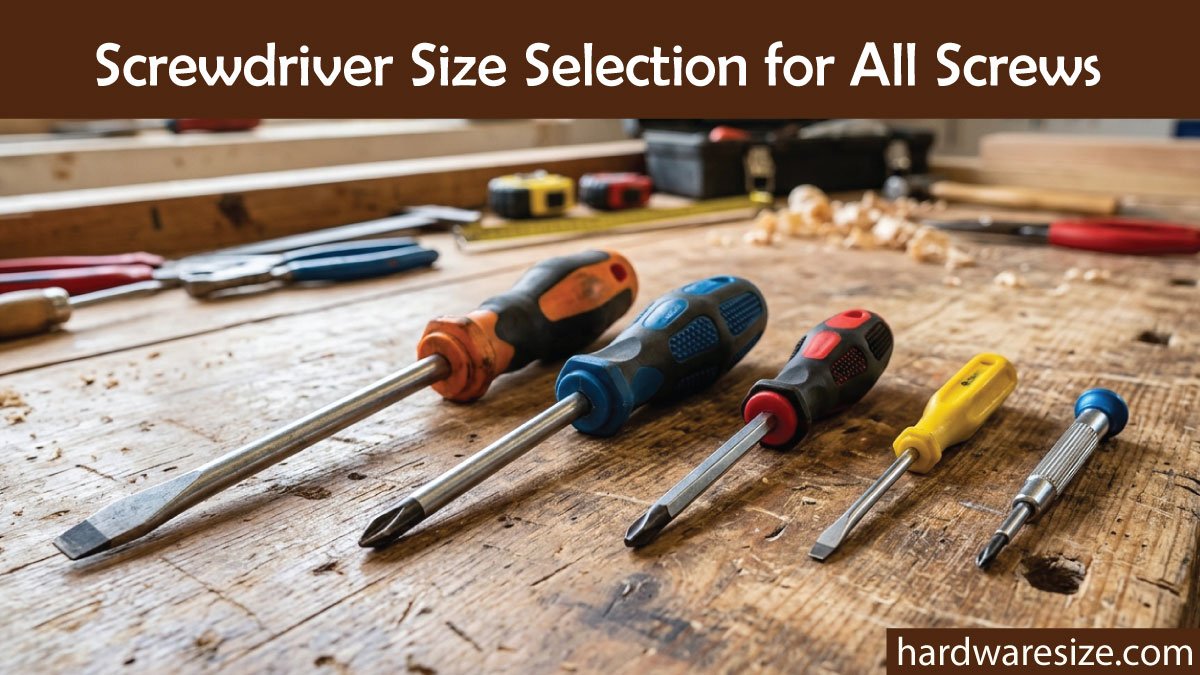
Choose the correct screwdriver size is a fundamental skill in every repair, assembly, and DIY project, yet it is often ignored until problems appear. Whether you are working on electronics, furniture, automotive repairs, or industrial machinery, using the wrong screwdriver can easily lead to stripped screws, damaged tools, poor grip, and safety risks. That’s why understand the screwdriver types, tip sizes, and proper selection is essential for achieving accurate and professional results.
In this complete screwdriver size guide, you will learn how to identify different screwdriver heads and sizes, match them with the correct screw type, and avoid common mistakes that can damage both your tools and materials. You will also explore a detailed screwdriver size chart, learn about Phillips, flathead, Torx, Hex, Pozidriv, and Robertson screwdrivers, and understand which size is best for each application.
By mastering screwdriver size selection, you can improve precision, efficiency, and safety in every task while ensuring long-lasting performance of both screws and tools.
What Is Screwdriver Size?
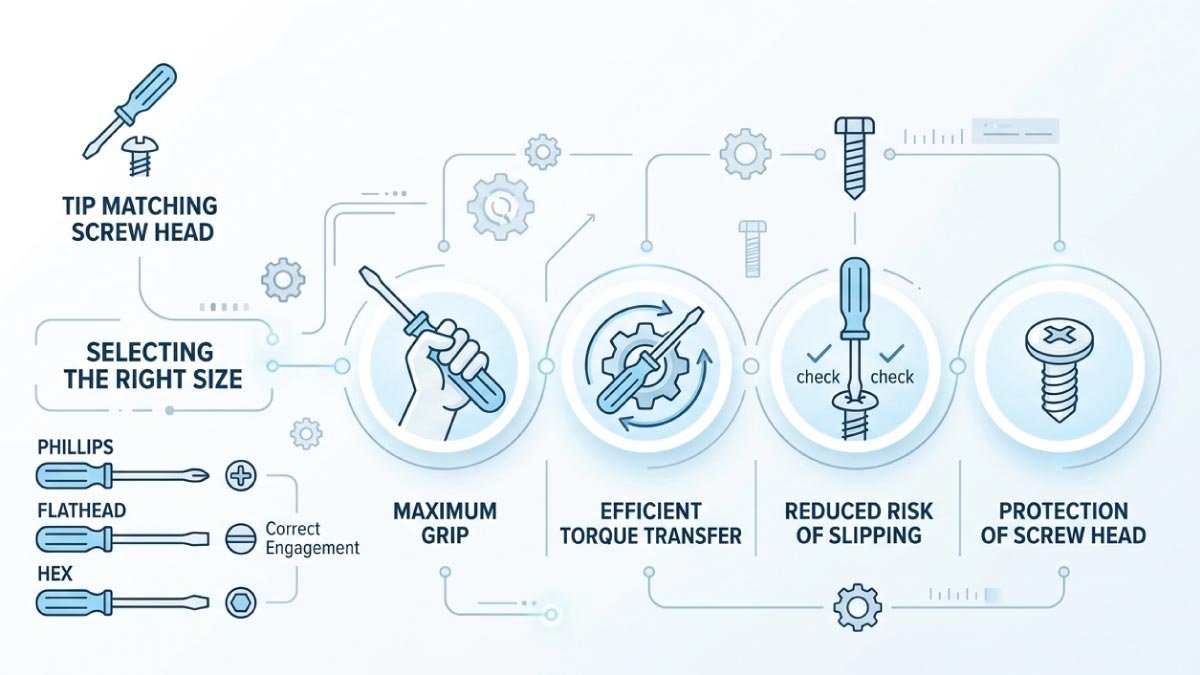
Screwdriver size refers to the tip dimensions and design that fit a specific screw head type. Each screw requires a correctly matched driver to ensure proper engagement and control. Using the right size improves grip, prevents damage, and allows smooth turning during fastening or loosening tasks.
A properly sized screwdriver ensures:
- Maximum grip
- Efficient torque transfer
- Reduced risk of slipping
- Protection of screw head
Each screw type requires a matching screwdriver tip for safe and effective use.
Why Choosing the Right Screwdriver Size Matters
Selecting the correct screwdriver size is essential for achieving accurate, safe, and efficient work. When the tool fits the screw properly, it reduces errors and improves overall control. This not only protects the material being worked on but also increases the lifespan of both the screw and the tool.
Key Benefits:
- Prevents stripping of screw heads
- Improves work efficiency
- Reduces hand fatigue
- Protects tools from wear
- Ensures a professional finish
A mismatched screwdriver can damage both the screw and the surface.
Common Types of Screwdrivers and Their Sizes
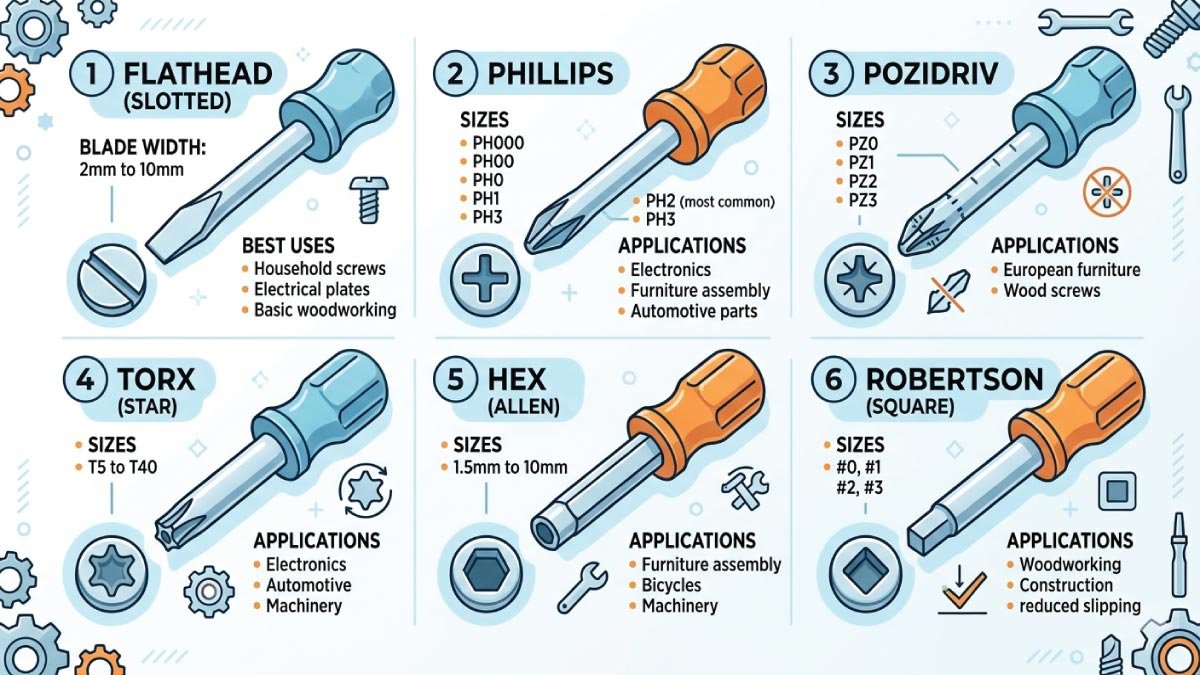
Different screw heads are designed to work with specific screwdriver types. Using the correct type and size improves grip, prevents damage, and ensures smooth operation. Each design is optimized for a particular application, from electronics to heavy machinery, making proper selection very important.
1. Flathead (Slotted) Screwdrivers
Flathead screwdrivers have a simple straight, flat blade that fits into a single slot in the screw head. They are one of the oldest and most basic screwdriver types, still widely used for light-duty tasks and simple assemblies where precision is not critical.
Common Sizes:
2 mm to 10 mm (blade width)
Best Uses:
- Simple household screws
- Electrical plates
- Basic woodworking
Tip: The blade should fully fill the slot without leaving gaps.
2. Phillips Screwdrivers
Phillips screwdrivers feature a cross-shaped tip designed to provide better grip and reduce slipping during tightening. They are commonly used in modern manufacturing and assembly work because they allow controlled torque and self-centering action on the screw head.
Common Sizes:
PH000 (very small)
PH00
PH0
PH1
PH2 (most common)
PH3 (large screws)
Applications:
- Electronics
- Furniture assembly
- Automotive parts
Tip: PH2 is the most commonly used size for general work.
3. Pozidriv Screwdrivers
Pozidriv screwdrivers look similar to Phillips but include extra grooves that provide better grip and reduce cam-out. They are widely used in European manufacturing and are designed for higher torque applications compared to standard Phillips drivers.
Common Sizes:
PZ0
PZ1
PZ2
PZ3
Applications:
- European furniture
- Wood screws
Note: Do not mix Phillips and Pozidriv—they are not fully compatible.
4. Torx Screwdrivers (Star Type)
Torx screwdrivers have a star-shaped tip designed for maximum torque transfer and reduced slipping. They are commonly used in precision engineering and automotive industries where strong grip and controlled force are required.
Common Sizes:
T5 to T40
Applications:
- Electronics
- Automotive
- Machinery
Tip: Torx screws are resistant to slipping, making them ideal for precision work.
5. Hex (Allen) Drivers
Hex drivers fit into internal hexagonal screw heads and are widely used for compact and strong fastening systems. They provide excellent torque control and are commonly used in furniture and mechanical assemblies where tight fastening is required.
Common Sizes:
1.5 mm to 10 mm
Applications:
- Furniture assembly
- Bicycles
- Machinery
6. Robertson (Square) Screwdrivers
Robertson screwdrivers feature a square-shaped tip that fits securely into matching screw heads. They are known for excellent grip and reduced slipping, making them highly reliable in construction and woodworking applications.
Common Sizes:
#0, #1, #2, #3
Applications:
- Woodworking
- Construction
Screwdriver Size Chart (Quick Reference)
A screwdriver size chart helps users quickly match the correct screwdriver type with its corresponding screw head. It is especially useful in workshops, DIY projects, and industrial work where multiple screw types are used. This reference makes selection faster, reduces errors, and improves efficiency during assembly and repair tasks.
| Screw Type | Common Sizes | Typical Use |
|---|---|---|
| Flathead | 2–10 mm | General use |
| Phillips | PH000–PH3 | Electronics, furniture |
| Pozidriv | PZ0–PZ3 | Wood screws |
| Torx | T5–T40 | Automotive, electronics |
| Hex | 1.5–10 mm | Machinery, furniture |
| Robertson | #0–#3 | Construction |
How to Choose the Right Screwdriver Size
Choosing the correct screwdriver size is very important for preventing damage to screws and ensuring efficient work. The right fit improves grip, reduces slipping, and helps you apply proper torque. A mismatch in size can strip the screw head or damage the tool, leading to poor results and frustration.
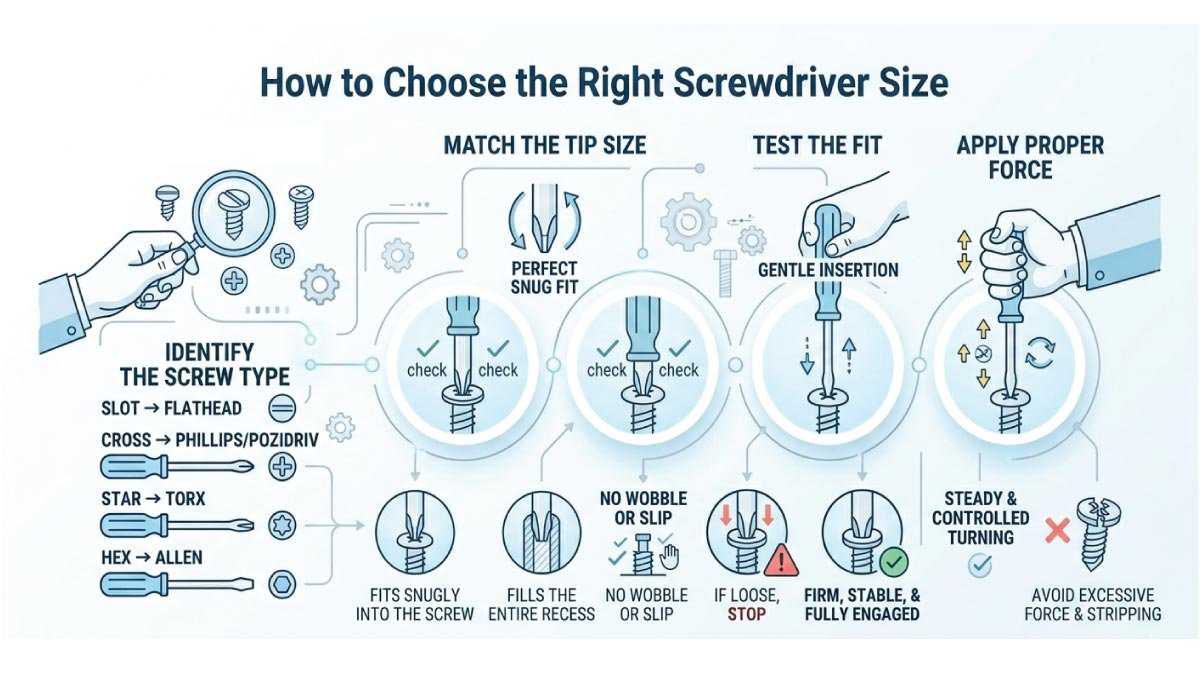
Step 1: Identify the Screw Type
Start by carefully checking the screw head design, as different screws require different screwdriver types. Identifying the correct type ensures better compatibility and prevents damage during use. Using the wrong screwdriver can lead to slipping, stripped heads, or difficulty in loosening or tightening the screw properly.
- Slot → Flathead
- Cross → Phillips/Pozidriv
- Star → Torx
- Hex → Allen
Step 2: Match the Tip Size
After identifying the screw type, selecting the correct tip size is essential for a secure fit. The screwdriver tip should match the screw recess perfectly to avoid slipping and ensure maximum torque transfer. A properly matched size improves control and reduces wear on both the tool and screw.
- Fit snugly into the screw
- Fill the entire recess
- Not wobble or slip
Step 3: Test the Fit
Before applying full force, always test the screwdriver fit inside the screw head. Insert it gently and apply light pressure to check stability. If the tool moves loosely or slips out, it is the wrong size. A correct fit should feel firm, stable, and fully engaged in the screw head.
Step 4: Apply Proper Force
Once the correct fit is confirmed, apply steady and controlled pressure while turning the screwdriver. Avoid using excessive force, as this can damage the screw head or the tool itself. Proper force ensures smooth operation, better control, and reduces the risk of slipping or stripping the screw during work.
Also Read: 👉 Pliers Size Guide for Accurate Work (Complete Guide) helps you choose the right pliers size for different tasks in engineering and repair work. Learn how proper sizing improves grip, control, and safety. Read the full post to master selection techniques and achieve more precise, efficient results in every project.
Tips for Perfect Screwdriver Selection
Choosing the right screwdriver is important for accuracy, safety, and efficiency. A proper selection ensures the screwdriver fits the screw head perfectly, reducing the risk of damage. It also improves control during tightening or loosening tasks, especially in delicate or high-torque applications where precision matters most.
- Always use the exact matching size
- Keep multiple sizes in your toolkit
- Avoid using worn-out screwdriver tips
- Clean screw heads before use
- Use magnetic tips for small screws
Common Mistakes to Avoid
Many screwdriver problems occur due to incorrect usage rather than tool quality. Using the wrong size or type can easily damage screws and reduce productivity. Avoiding these mistakes helps maintain tool performance and ensures cleaner, more professional results in both simple and complex projects.
- Using the wrong screwdriver type
- Using a too-small or too-large tip
- Mixing Phillips and Pozidriv
- Applying too much force
- Using damaged tools
These mistakes can strip screws and reduce efficiency.
Screwdriver Size for Different Applications
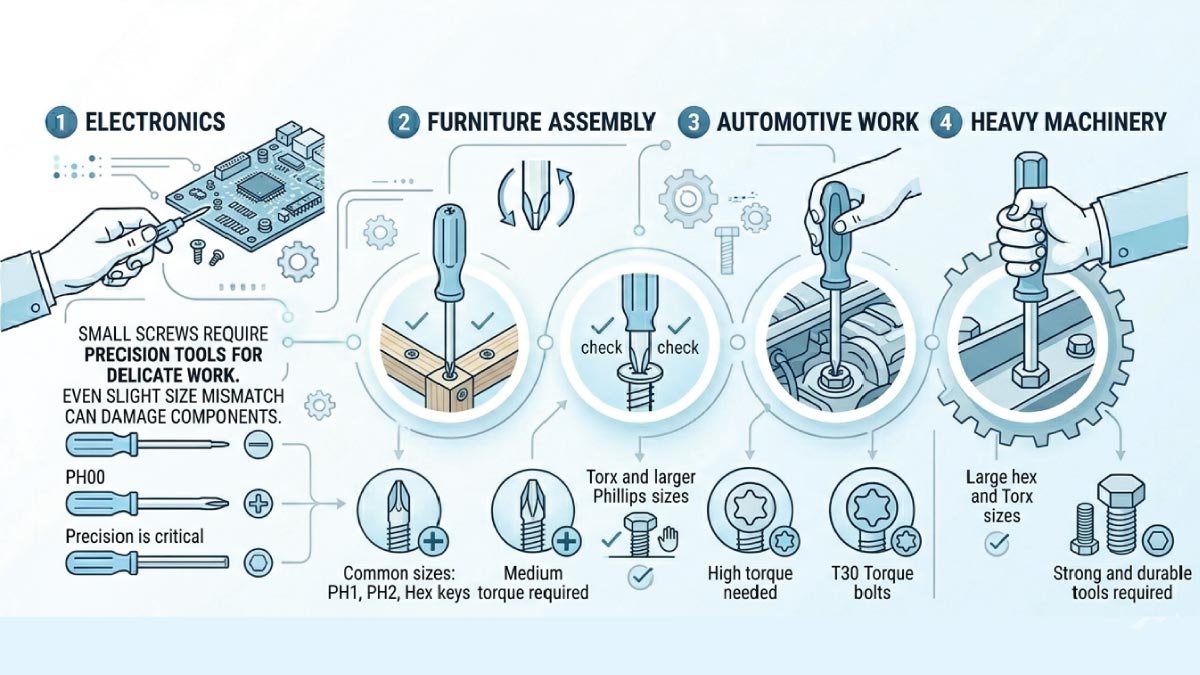
Different applications require different screwdriver sizes and types based on precision and torque needs. Selecting the right size improves performance and prevents damage to both the tool and the material. Each field has its own standard sizes that are commonly used for best results.
1. Electronics”
Small screws require precision tools for delicate work. Even slight size mismatch can damage components.
- Use small sizes like PH000, PH00
- Precision is critical
2. Furniture Assembly:
Medium-sized screwdrivers are commonly used for stability and moderate torque needs.
- Common sizes: PH1, PH2, Hex keys
- Medium torque required
3. Automotive Work:
Requires strong tools that can handle higher torque and durable fastening systems.
- Torx and larger Phillips sizes
- High torque needed
4. Heavy Machinery
Uses heavy-duty screwdrivers designed for strength and reliability under pressure.
- Large hex and Torx sizes
- Strong and durable tools required
Also Read: 👉 Socket Wrench Sizes and Their Applications helps you understand different socket sizes and where each one is used in real mechanical work. Learn how correct sizing improves efficiency, safety, and performance. Read the full post to boost your tool knowledge and handle every fastening task with confidence and accuracy.
Manual vs Electric Screwdrivers
Both manual and electric screwdrivers are useful, but each serves different purposes. Manual tools provide better control, while electric ones improve speed and efficiency. Choosing the right type depends on the task complexity and precision requirements.
1. Manual Screwdrivers
Manual screwdrivers are ideal for tasks requiring control and accuracy. They allow users to feel resistance and adjust force easily, making them perfect for delicate or precision-based work.
- Better control
- Ideal for delicate work
2. Electric Screwdrivers
Electric screwdrivers are designed for speed and repetitive tasks. They save time and reduce effort, especially in large-scale assembly or production work.
- Faster operation
- Suitable for repetitive tasks
Tip: Always set correct torque when using electric tools.
Maintenance Tips for Screwdrivers
Proper maintenance keeps screwdrivers in good working condition and extends their lifespan. Regular care prevents rust, wear, and damage to the tip, ensuring consistent performance over time. Well-maintained tools also improve safety and efficiency during use.
- Keep tips clean and rust-free
- Store in a dry place
- Replace worn-out tools
- Avoid using screwdrivers as pry tools
Proper maintenance increases tool lifespan and performance.
How Screw Size Affects Screwdriver Selection
Screw size plays a major role in selecting the correct screwdriver. A proper match ensures better grip, reduces slipping, and prevents damage. Using the wrong size can strip the screw head and make installation or removal difficult.
- Small screws → small tips (PH000, T5)
- Medium screws → PH1, PH2
- Large screws → PH3, T30+
Matching both type and size ensures a perfect fit.
When to Use Specialized Screwdrivers
Specialized screwdrivers are required for unique or high-precision tasks where standard tools are not suitable. They are designed for specific screw types that need extra security or accuracy in professional applications.
Use specialized tools when:
- Working with security screws
- Handling precision electronics
- Dealing with unique fasteners
Examples include tamper-proof Torx and micro screwdrivers.
Final Thoughts
Selecting the correct screwdriver size for all screws is essential for safe, efficient, and professional work. By understanding different screwdriver types, sizes, and applications, you can avoid common mistakes and improve your results.
Always take a moment to match the right tool with the screw. This small step can save time, prevent damage, and ensure long-lasting performance in any project.
Also Read: 👉 Complete Guide to Adjustable Spanner Sizes explains how to choose the right spanner size for different nuts and bolts in mechanical work. Learn practical sizing tips, proper usage, and common mistakes to avoid. Read the full post to improve your tool handling skills and work more efficiently with confidence.

Engineer Hassan is a Mechanical Engineer with 16+ years of hands-on experience in mechanical hardware, fasteners, and workshop tools. He focuses on size selection, thread identification, and measurement, helping users choose the correct components with accuracy and safety.