
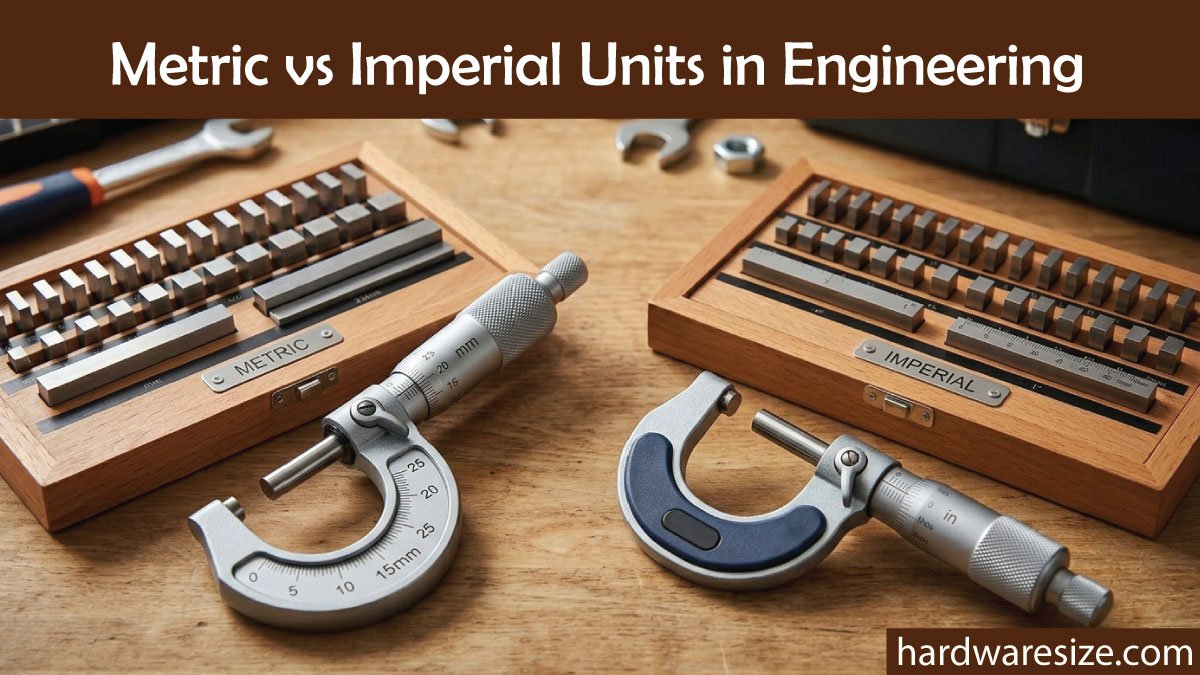
Understanding measurement systems is one of the most important skills in engineering. Whether you are designing a machine, reading technical drawings, or working in a workshop, knowing the difference between metric and imperial units can save time, prevent errors, and improve accuracy.
In this simple guide, you will learn how metric and imperial units work, their differences, conversions, advantages, and real-world uses—all explained in an easy and practical way.
What Are Measurement Units in Engineering?
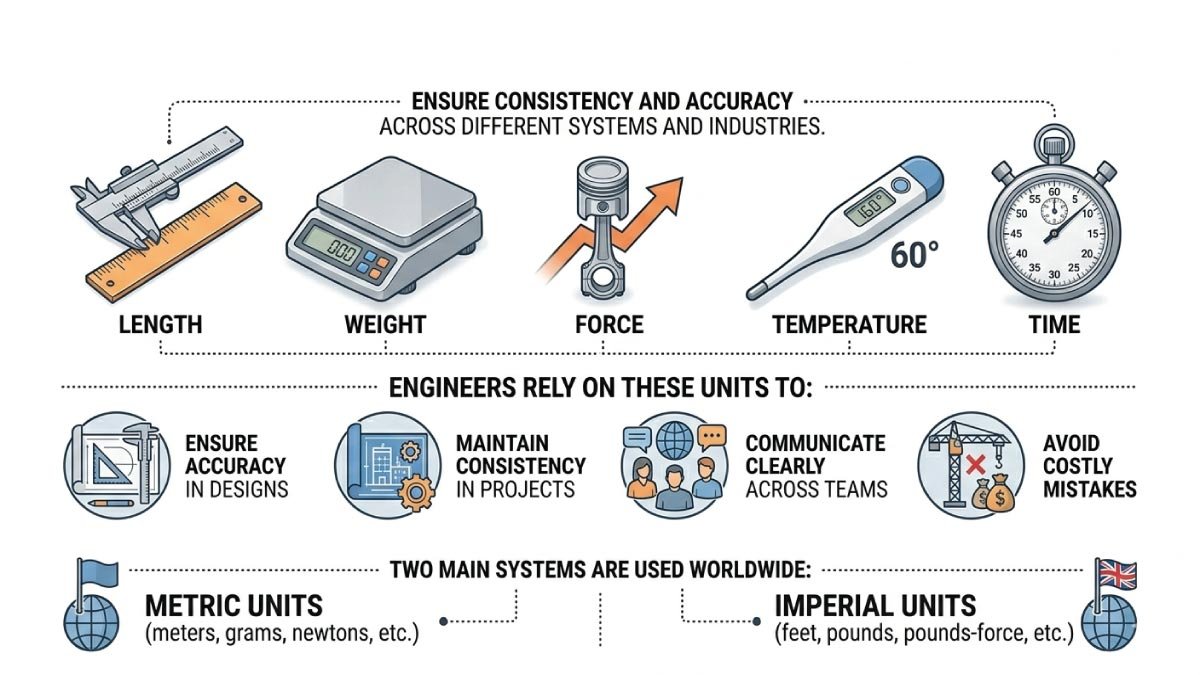
Measurement units are standardized quantities used to define physical properties such as length, weight, force, temperature, and time. In engineering, these units ensure that every design, calculation, and manufacturing process follows a consistent and accurate standard across different systems and industries.
Engineers rely on these units to:
- Ensure accuracy in designs
- Maintain consistency in projects
- Communicate clearly across teams
- Avoid costly mistakes
Two main systems are used worldwide: metric units and imperial units.
What Is the Metric System?
The metric system is a decimal-based measurement system widely used in engineering, science, and manufacturing. It is part of the International System of Units (SI) and is designed for simplicity and universal standardization across countries and industries.
Common Metric Units:
- Length: millimeter (mm), centimeter (cm), meter (m)
- Mass: gram (g), kilogram (kg)
- Force: newton (N)
- Temperature: Celsius (°C)
Key Feature:
The metric system is based on multiples of 10, making calculations simple, fast, and highly consistent in technical work.
What Is the Imperial System?
The imperial system, also known as the US customary system, is a measurement system primarily used in the United States and a few other regions. It is based on historical units rather than a decimal structure, which makes conversions more complex compared to the metric system.
Common Imperial Units:
- Length: inch (in), foot (ft), yard (yd)
- Weight: pound (lb)
- Force: pound-force (lbf)
- Temperature: Fahrenheit (°F)
Unlike the metric system, imperial units do not follow a simple decimal structure, making calculations less straightforward.
Key Differences Between Metric and Imperial Units
Understanding the differences between these two systems helps engineers avoid errors in design, manufacturing, and measurement conversions. Each system has its own structure, usage, and level of simplicity depending on the region and industry requirements.
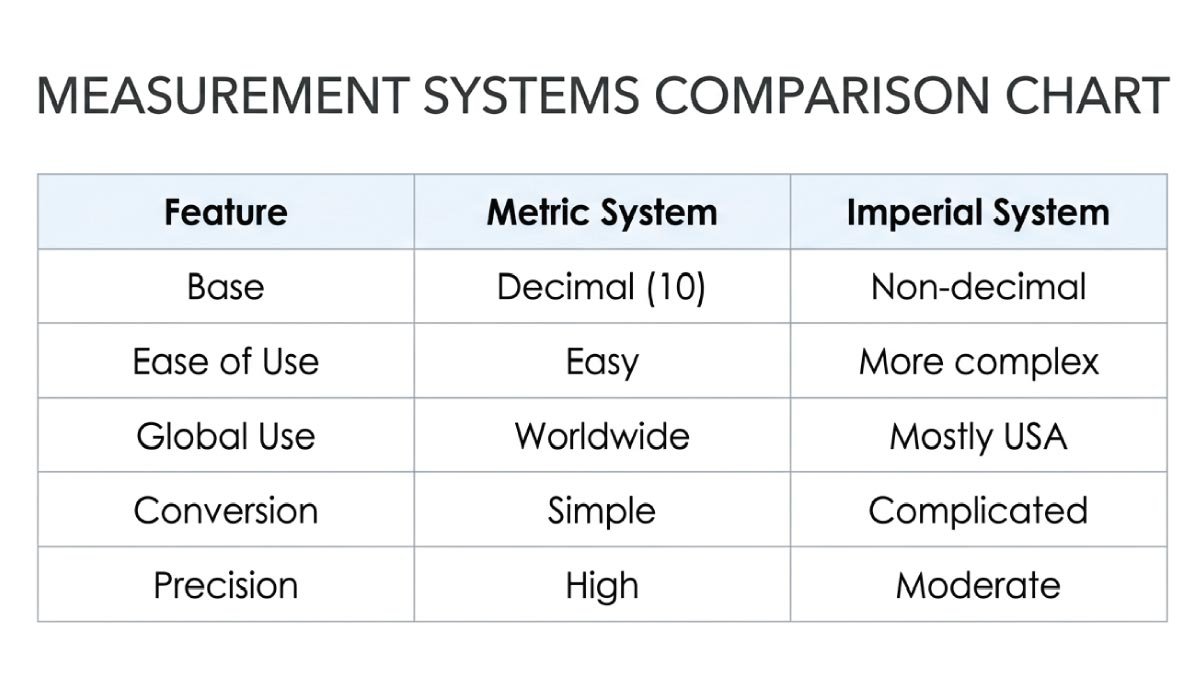
| Feature | Metric System | Imperial System |
|---|---|---|
| Base | Decimal (10) | Non-decimal |
| Ease of Use | Easy | More complex |
| Global Use | Worldwide | Mostly USA |
| Conversion | Simple | Complicated |
| Precision | High | Moderate |
Metric units are generally preferred in modern engineering due to simplicity and accuracy.
Common Unit Conversions
Unit conversion is a daily requirement in engineering work, especially when dealing with international standards, drawings, or equipment specifications. Understanding basic conversion values helps ensure accuracy and prevents costly measurement errors during design or production.
Length Conversions:
- 1 inch = 25.4 mm
- 1 foot = 304.8 mm
- 1 meter = 39.37 inches
Weight Conversions:
- 1 kg = 2.20462 lb
- 1 lb = 0.4536 kg
Temperature Conversion:
C=59(F−32)C = \frac{5}{9}(F – 32)
This formula is used to convert Fahrenheit (F) into Celsius (C) in engineering and scientific applications.
Why Metric System Is Preferred in Engineering
Most engineers prefer the metric system because it offers simplicity, accuracy, and global standardization. It is designed on a base-10 structure, which makes calculations easier and reduces the chances of mistakes during design, measurement, and manufacturing processes. This system is widely accepted in scientific and industrial fields worldwide.
Advantages:
- Easy calculations (base 10)
- Standardized worldwide
- High precision
- Less chance of error
- Compatible with scientific formulas
That’s why industries like manufacturing, aerospace, and automotive mostly use metric units.
Why Imperial Units Are Still Used
Despite being more complex, the imperial system is still widely used in certain countries and industries, especially where historical standards are deeply established. Many tools, machines, and engineering drawings are still based on imperial measurements, making it necessary for professionals to understand and use both systems when required.
Reasons:
- Legacy systems in the USA
- Construction and carpentry standards
- Familiarity among workers
- Existing tools and drawings
Engineers often need to work with both systems, especially in international projects.
Applications in Engineering
Retaining rings and measurement systems like metric and imperial units are widely used across different branches of engineering. Each field depends on accurate sizing and standards to ensure safety, compatibility, and performance of mechanical and structural systems. Understanding these applications helps in selecting the correct components and measurement approach.
1. Mechanical Engineering
In mechanical engineering, metric measurements are commonly used for machine parts, tolerances, and precision assemblies. Metric units provide high accuracy, especially in modern design and manufacturing. Imperial units are still found in older equipment and legacy tools, where original specifications were based on inches and traditional measurement systems.
2. Civil Engineering
Civil engineering primarily uses metric measurements for structural design, road construction, and infrastructure planning. Metric units ensure consistency in large-scale projects and international standards. However, imperial units are still used in certain regions, especially in the United States, where construction practices often rely on feet and inches.
3. Manufacturing
In manufacturing, metric units dominate modern production systems, especially in CNC machines and precision tools. They allow high accuracy and easier standardization across global industries. Imperial measurements are still present in older machinery, where components were originally designed using traditional inch-based systems.
4. Automotive Industry
The automotive industry mainly uses metric measurements in modern vehicles for parts, assembly, and engineering design. This ensures compatibility across global manufacturers. However, imperial units can still be found in some older engines and components, particularly in legacy systems and region-specific vehicle designs.
Common Mistakes When Using Units
Using measurement units incorrectly in engineering can lead to serious design flaws, production errors, and even equipment failure. These mistakes often happen due to confusion between unit systems or ignoring proper conversion rules. Careful attention to unit labels and calculations is essential for safe and accurate engineering work.
Mistakes to Avoid:
- Confusing mm with inches
- Incorrect conversions
- Using wrong units in calculations
- Ignoring unit labels in drawings
Even a small mistake can cause major engineering failures.
Famous Engineering Failure Due to Unit Error
One of the most well-known examples is the Mars Climate Orbiter loss.
The spacecraft was lost because one team used imperial units while another used metric units. This mismatch caused navigation errors, leading to mission failure.
This highlights how critical unit consistency is in engineering.
👉 How to Calculate Bolt Load Capacity Safely explains step-by-step methods to determine safe load limits, ensuring strong and reliable mechanical joints. Learn key formulas, safety factors, and practical tips. Read the full guide to improve accuracy, prevent failures, and enhance your engineering and workshop knowledge with confidence.
How to Convert Units Easily
Converting units is an essential skill in engineering, design, and everyday technical work. It helps ensure accuracy when working with different measurement systems like metric and imperial. With the right approach, unit conversion becomes quick, simple, and error-free.
Tips for Easy Conversion:
- Use conversion charts
- Memorize key values (like 1 inch = 25.4 mm)
- Use calculators or apps
- Double-check your results
Practicing conversions regularly makes the process faster and more accurate.
Tools for Unit Conversion
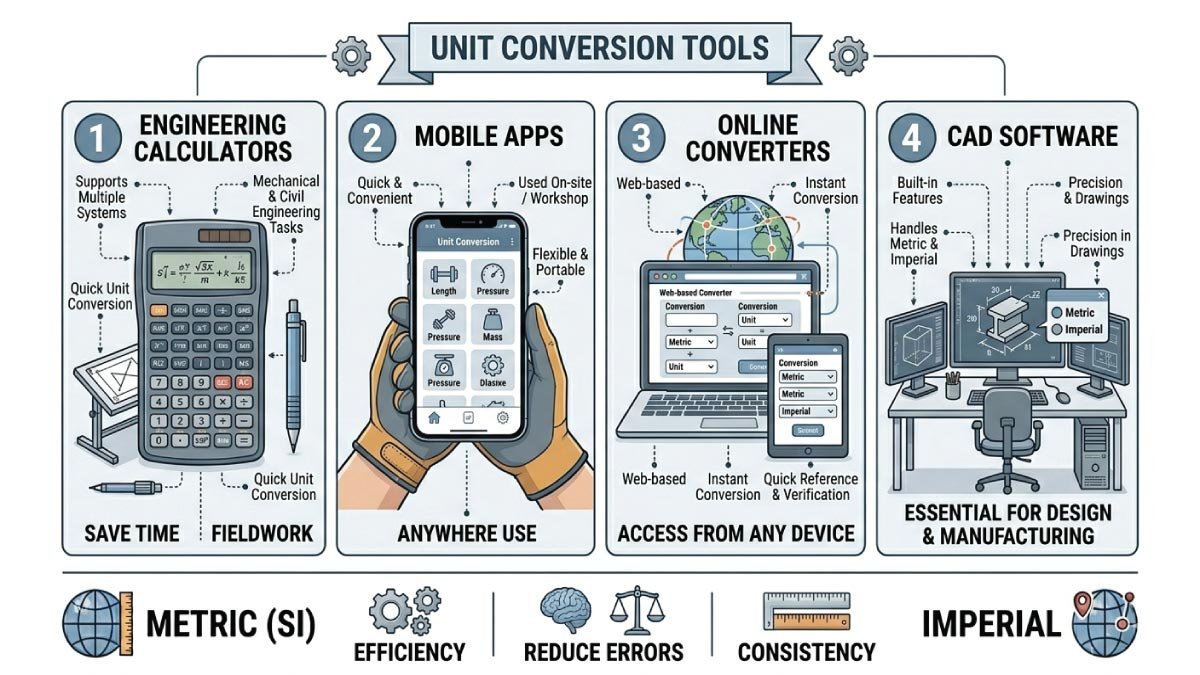
Modern engineering and technical work relies on fast and accurate unit conversion tools. These tools help reduce manual calculation errors, improve efficiency, and ensure consistency across different measurement systems like metric and imperial. They are especially useful in design, manufacturing, and large-scale engineering projects.
1- Engineering Calculators
Engineering calculators are specialized devices or software designed to handle complex unit conversions and calculations. They support multiple measurement systems and are widely used in mechanical and civil engineering tasks. These calculators reduce human error, save time, and allow quick conversion of units during design, analysis, and fieldwork operations.
2- Mobile Apps
Mobile apps provide quick and convenient unit conversion solutions directly on smartphones. They are widely used by engineers, students, and technicians for instant calculations on-site or in workshops. These apps often support multiple categories like length, pressure, and mass, making them highly flexible and easy to use anywhere.
3- Online Converters
Online converters are web-based tools that allow instant unit conversions without installation. They are accessible from any device with an internet connection and support a wide range of engineering units. These tools are especially helpful for quick reference, learning, and verifying complex conversions during design and documentation work.
4- CAD Software
CAD software (Computer-Aided Design) includes built-in unit conversion features that automatically handle metric and imperial systems. It ensures precision in technical drawings and engineering models. Designers can switch units easily, reducing errors and improving workflow efficiency. This makes CAD tools essential in modern engineering and manufacturing industries.
👉 How to Measure Fasteners Without Specialized Tools shows simple methods to measure bolts, screws, and nuts using basic tools. Learn practical techniques for accurate results without expensive equipment. Read the full guide to improve your DIY skills, reduce errors, and handle fastener measurements with confidence in any situation.
Metric vs Imperial in Engineering Drawings
Engineering drawings can be created using either metric or imperial measurement systems depending on the country, industry standards, or project requirements. These drawings provide detailed dimensions for manufacturing and assembly, so understanding the unit system is critical before starting any work. Misreading units can lead to serious design and production errors.
Metric Drawings:
- Dimensions in mm or meters
- Used in most countries
Imperial Drawings:
- Dimensions in inches or feet
- Common in the USA
Always check the unit system before starting work.
Advantages of Learning Both Systems
Knowing both metric and imperial systems gives engineers a major advantage in global industries. Many projects involve international collaboration, so being able to understand both measurement systems improves communication, accuracy, and adaptability. It also helps reduce errors when working with mixed-standard designs or imported machinery.
Benefits:
- Work on global projects
- Understand all types of drawings
- Avoid conversion errors
- Improve job opportunities
It’s an essential skill in today’s engineering world.
Quick Comparison Summary
A quick comparison helps highlight the key differences between metric and imperial systems used in engineering. While the metric system is widely adopted for its simplicity and consistency, the imperial system is still used in specific regions and industries. Understanding both allows engineers to work efficiently across different standards.
| Aspect | Metric | Imperial |
|---|---|---|
| Simplicity | High | Low |
| Usage | Global | Limited |
| Conversion | Easy | Complex |
| Accuracy | High | Moderate |
Pro Tips for Engineers
Following good measurement practices is essential for accuracy, safety, and efficiency in engineering work. Small habits can make a big difference in preventing costly mistakes and improving overall project quality. These pro tips help engineers maintain consistency and precision in daily calculations and design tasks.
Key Tips:
- Always mention units in calculations
- Stick to one system per project
- Double-check conversions
- Use metric for precision work
- Keep a conversion chart handy
By following these simple practices, engineers can reduce errors, improve workflow, and ensure more reliable results in technical projects.
Final Thoughts
Understanding metric vs imperial units in engineering is not just a basic skill—it’s essential for accuracy, safety, and success.
While the metric system is widely preferred for its simplicity and precision, the imperial system is still relevant in many industries. Learning both systems ensures you can work confidently in any environment.
Mastering unit conversions and avoiding common mistakes will help you become a more skilled and reliable engineer.
👉 How to Read Vernier Caliper Measurements (Easy Guide) teaches you step-by-step methods to read measurements accurately and avoid common mistakes. Learn main scale, vernier scale, and precise calculation techniques. Read the full guide to improve accuracy, build confidence, and master professional measurement skills for engineering and workshop tasks.
FAQs:
What is the difference between metric and imperial units?
The metric system is based on units like millimeters, centimeters, and meters, while the imperial system uses inches, feet, and yards. Metric is decimal-based and easier for calculations, whereas imperial is still used mainly in the US and a few other regions.
Why is the metric system preferred in engineering?
The metric system is preferred because it is simple, consistent, and based on powers of ten. This makes calculations easier, reduces conversion errors, and improves accuracy in engineering design, manufacturing, and scientific measurements compared to the imperial system.
Where is the imperial system still used?
The imperial system is mainly used in the United States and a few industries like construction, aviation, and manufacturing. Some older engineering drawings and tools also use imperial units, so engineers often need to understand both systems for compatibility.
How do you convert metric to imperial units?
Conversion is done using standard formulas, such as 1 inch = 25.4 mm and 1 foot = 0.3048 meters. Engineers often use conversion charts or digital tools to ensure accuracy and avoid mistakes when switching between metric and imperial systems.
Which system is more accurate in engineering?
Both systems can be accurate, but the metric system is generally more precise due to its decimal structure. It reduces rounding errors and simplifies calculations, making it the preferred choice in most scientific and engineering applications worldwide.
What are the advantages of the metric system?
The metric system offers simplicity, easy conversions, and universal standardization. It improves communication in global engineering projects, reduces errors, and makes calculations faster. Its decimal-based structure also makes it easier to learn and apply in technical fields.
Why do engineers need to learn both systems?
Engineers need both systems because different countries, industries, and equipment may use different units. Understanding both ensures smooth collaboration, accurate measurements, and the ability to work with international designs, drawings, and technical specifications without confusion.
What is the main challenge when using metric and imperial systems together?
The biggest challenge is conversion errors between units, which can lead to design mistakes, manufacturing defects, or safety issues. Engineers must carefully convert values using accurate formulas or tools to ensure consistency when working with mixed-unit drawings or international projects.
Which industries mostly use metric and imperial systems today?
Most industries worldwide, such as automotive, manufacturing, and science, use the metric system. However, construction, aviation, and some engineering sectors in the United States still use imperial units. Because of this, professionals often need to understand both systems for practical work.

Engineer Hassan is a Mechanical Engineer with 16+ years of hands-on experience in mechanical hardware, fasteners, and workshop tools. He focuses on size selection, thread identification, and measurement, helping users choose the correct components with accuracy and safety.