
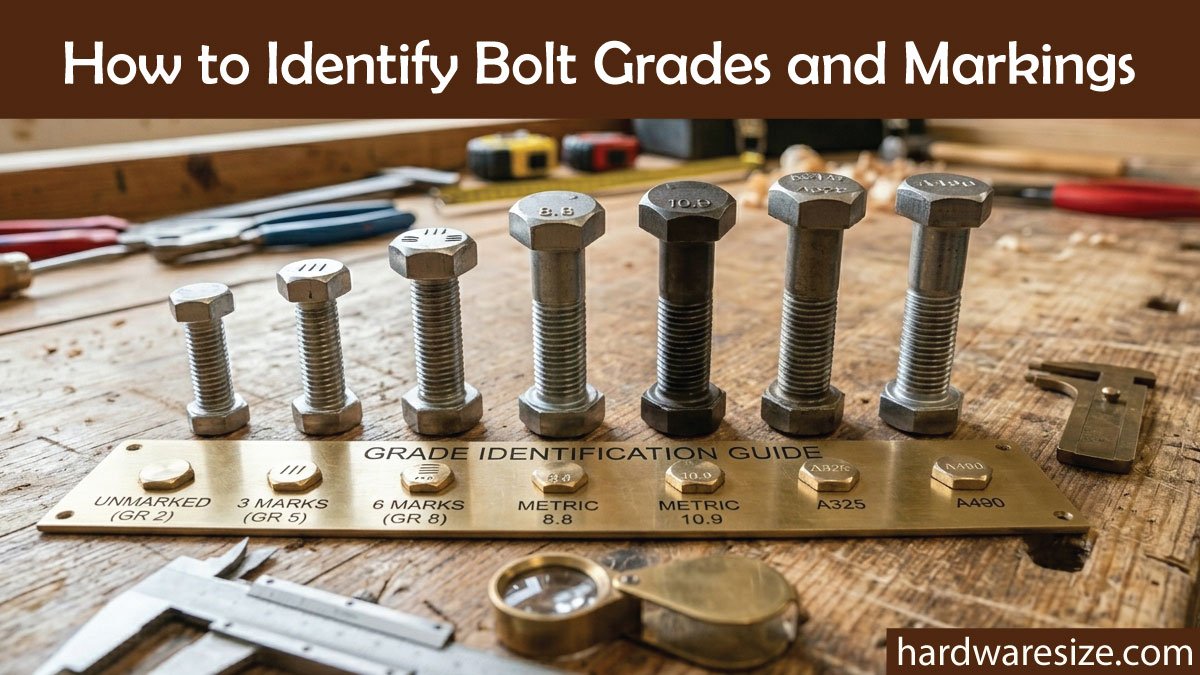
What Are Bolt Grades?
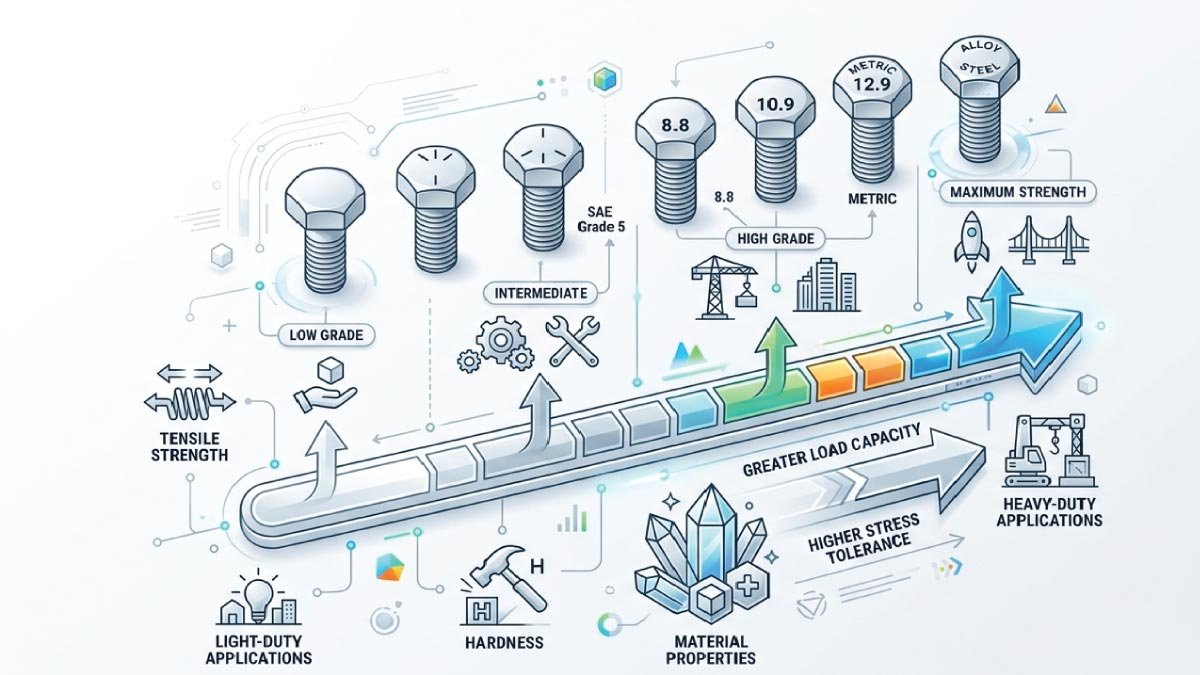
Bolt grades indicate the strength, hardness, and material properties of a bolt. These grades are standardized and help users quickly identify how much load a bolt can handle.
Higher-grade bolts are stronger and can withstand greater stress, while lower-grade bolts are suitable for light-duty applications.
Why Bolt Identification Is Important
Correct bolt identification is essential because bolts are used in critical structures, machinery, and vehicles where safety and performance matter. Each bolt grade has a specific strength level, and using the wrong one can lead to serious mechanical failure, equipment damage, or safety hazards under load.
Key Reasons:
- Prevent structural failure
- Ensure safety in machinery and vehicles
- Maintain proper load capacity
- Avoid over-tightening or breakage
Using the correct grade improves both performance and durability, ensuring long-term reliability in any assembly.
Where to Find Bolt Markings
Bolt markings are usually stamped or engraved on the head of the bolt, making them easy to identify during inspection or installation. These markings help users determine the strength grade, manufacturer, and material type, which are important for selecting the right bolt for a specific application.
Common markings include:
- Lines (radial marks)
- Numbers
- Manufacturer symbols
Each marking system represents a specific grading standard that defines the bolt’s strength and usage capability.
Types of Bolt Grading Systems
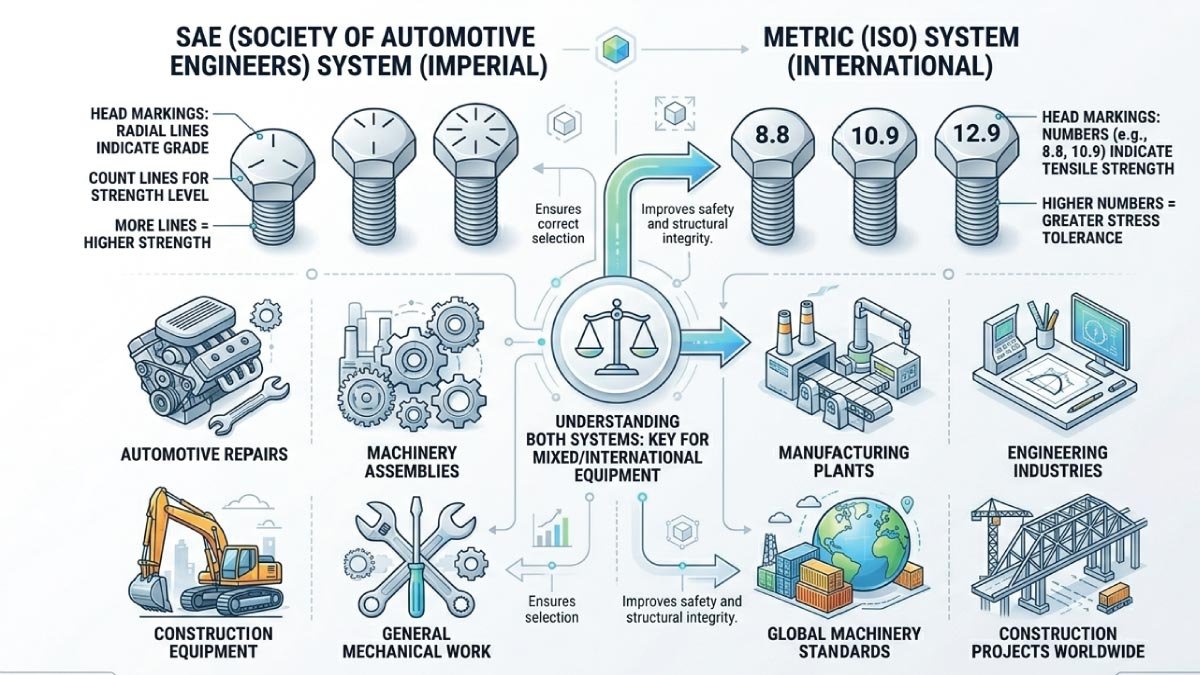
Bolt grading systems are used to identify the strength, durability, and load-bearing capacity of bolts. These markings help engineers and technicians select the correct fastener for different applications. Globally, two main systems are used to classify bolt strength: SAE (imperial system) and Metric (ISO system). Understanding both is essential for safe and accurate mechanical work.
1. SAE (Society of Automotive Engineers) System
The SAE grading system is widely used in the United States and is based on radial line markings on the bolt head. These lines indicate the strength grade of the bolt, helping users quickly identify its load capacity. More radial lines generally mean higher strength, making selection easier for automotive and industrial applications.
SAE bolts are commonly used in:
- Automotive repairs
- Machinery assemblies
- Construction equipment
- General mechanical work
This system is simple and visual, allowing quick identification without needing additional tools or references.
2. Metric (ISO) System
The Metric or ISO grading system is used internationally and relies on numbers stamped directly on the bolt head. These numbers represent the tensile strength of the bolt, such as 8.8, 10.9, or 12.9. Higher numbers indicate stronger bolts capable of handling greater stress and pressure.
This system is widely used in:
- Engineering industries
- Manufacturing plants
- Global machinery standards
- Construction projects worldwide
The metric system provides more precise strength classification, making it ideal for modern engineering applications.
Understand the both SAE and Metric bolt grading systems is essential when working with mixed or international equipment. It ensures correct fastener selection, improves safety, and helps maintain structural integrity across different types of mechanical and industrial assemblies.
SAE Bolt Grades and Markings
SAE bolt grades are identified by the number of radial lines on the bolt head. These markings help determine the strength and intended use of the bolt. Understanding SAE grades is important in mechanical, automotive, and construction work where correct fastening strength is required for safety and reliability.
1. Grade 2 (No Markings)
This is the lowest strength category with no visible lines on the bolt head. It is designed for light-duty applications where minimal stress is involved and high strength is not required.
- No lines on the head
- Low strength
- Used in light-duty applications
2. Grade 5 (3 Radial Lines)
Grade 5 bolts offer medium strength and are commonly used in automotive and general mechanical applications. They provide a good balance between strength and flexibility.
- Medium strength
- Common in automotive applications
3. Grade 8 (6 Radial Lines)
Grade 8 bolts are high-strength fasteners designed for demanding environments. They are used where heavy loads, vibration, and stress are present.
- High strength
- Used in heavy-duty and high-stress environments
Quick Identification Tip:
Count the lines on the bolt head and add 2 to determine the grade.
Example:
6 lines → Grade 8
Metric Bolt Grades and Markings
Metric bolts use a numerical grading system such as 8.8, 10.9, and 12.9 instead of lines. These numbers represent the mechanical strength properties of the bolt, making it easier to identify performance levels in engineering and industrial applications.
What Do These Numbers Mean?
The first number represents the tensile strength in hundreds of MPa, while the second number shows the yield strength ratio. This system provides a clear indication of how much load the bolt can safely handle.
Common Metric Grades:
8.8
This is a medium-strength bolt used for general-purpose applications where moderate load resistance is required.
- Medium strength
- General-purpose use
10.9
A high-strength bolt commonly used in automotive and machinery applications where durability is important.
- High strength
- Automotive and machinery
12.9
This is a very high-strength bolt used in heavy-duty industrial environments where maximum load capacity is required.
- Very high strength
- Heavy-duty industrial applications
Visual Identification of Bolt Markings
Bolt markings provide a quick way to distinguish between SAE and metric systems. These differences help engineers, technicians, and workers select the correct fastener for specific applications, ensuring safety and compatibility.
SAE vs Metric Bolts
| Feature | SAE Bolts | Metric Bolts |
|---|---|---|
| Marking Type | Lines | Numbers |
| Example | 3 lines = Grade 5 | 8.8 |
| Region | USA | Worldwide |
This simple difference makes it easy to distinguish between the two systems.
Also Read: 👉 Metric vs Imperial Units in Engineering (Simple Guide) helps you quickly understand measurement systems used in real engineering work. Learn differences, conversions, and practical uses in easy steps. Read the full post to master both systems and improve accuracy in your projects and technical understanding today now explore more insights
Understand Bolt Strength
Bolt strength is one of the most important factors when selecting fasteners for any mechanical or structural application. It determines how much load a bolt can safely handle without failing. Choosing the correct strength grade ensures safety, reliability, and long-term performance under different working conditions.
1. Tensile Strength:
Tensile strength refers to the maximum amount of pulling force a bolt can withstand before it breaks. It is a key indicator of how strong the bolt is under direct load or stress.
2. Yield Strength:
Yield strength is the point at which a bolt begins to permanently deform. Beyond this limit, the bolt will not return to its original shape even if the load is removed.
Higher-grade bolts have higher tensile and yield strength, making them suitable for demanding applications.
Common Applications of Different Bolt Grades
Different bolt grades are used in various industries depending on the level of strength required. Selecting the correct grade ensures proper performance and prevents mechanical failure in real-world applications.
1. Grade 2 / Low Strength
These bolts are designed for light-duty tasks where high load resistance is not necessary. They are commonly used in simple assemblies and non-critical applications.
- Furniture
- Light fixtures
- Non-critical applications
2. Grade 5 / Medium Strength
Grade 5 bolts provide a balanced combination of strength and flexibility. They are widely used in automotive and construction industries where moderate stress is involved.
- Automotive parts
- Machinery
- General construction
3. Grade 8 / High Strength
Grade 8 bolts are high-performance fasteners designed for heavy loads and extreme conditions. They are used in environments where safety and durability are critical.
- Heavy equipment
- Structural applications
- High-stress environments
How to Identify Bolt Grades Step-by-Step
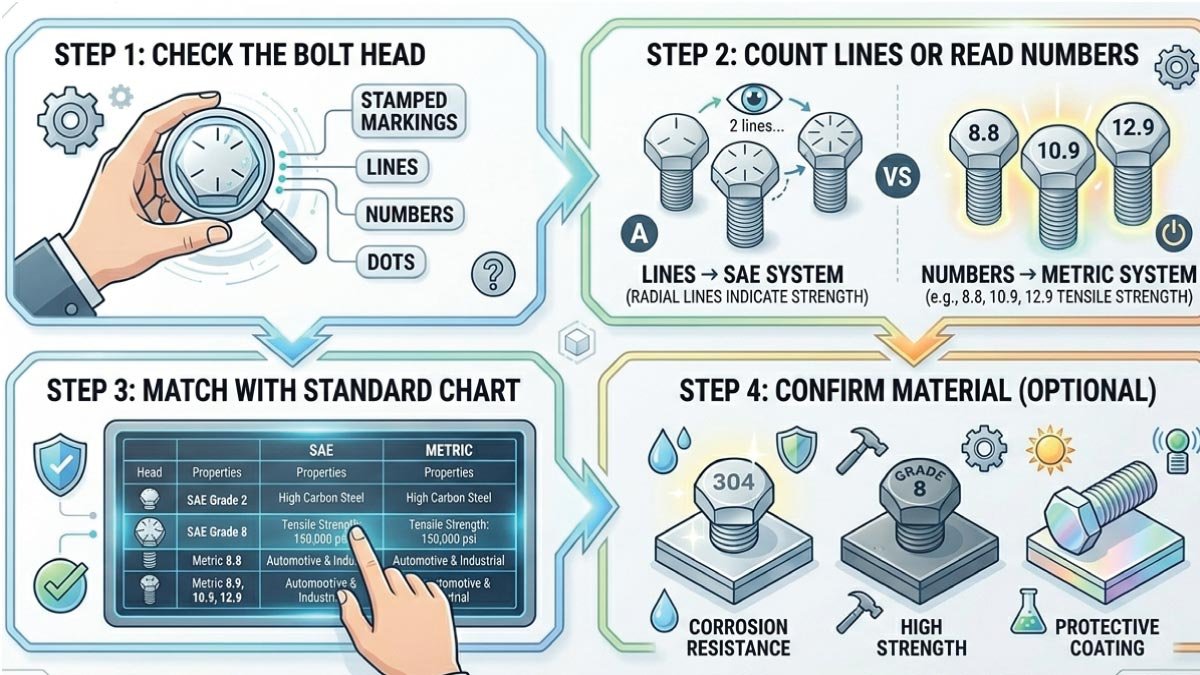
Identifying bolt grades correctly is important for ensuring safety, strength, and proper performance in any mechanical or structural application. By following a simple step-by-step process, you can quickly determine the grade and suitability of a bolt without confusion or guesswork.
Step 1: Check the Bolt Head
Start by carefully inspecting the top surface of the bolt head. Manufacturers usually stamp clear markings such as lines, dots, or numbers. These markings are the first clue in identifying the bolt grade and help you determine which grading system the bolt belongs to.
Step 2: Count Lines or Read Numbers
Once you locate the markings, interpret them based on the system used. Different systems use different identification methods, so understanding both is essential for correct grading.
- Lines → SAE system (radial lines indicate strength level)
- Numbers → Metric system (e.g., 8.8, 10.9, 12.9 represent tensile strength)
Step 3: Match with Standard Chart
After identifying the markings, compare them with a standard bolt grade chart. This helps you determine the exact strength rating, material properties, and suitable applications of the bolt. Using a chart ensures accuracy and prevents incorrect selection in critical assemblies.
Step 4: Confirm Material (Optional)
If required, also check the bolt material for additional assurance. Bolts may be made of stainless steel, carbon steel, or have special coatings like zinc plating. This step helps confirm corrosion resistance, durability, and suitability for specific environmental conditions.
Bolt Marking Symbols and Manufacturer Codes
In addition to grade markings, many bolts include manufacturer symbols, logos, or identification codes stamped on the head. These markings are used for quality control and traceability, ensuring the bolt meets industry standards and regulatory requirements.
While these symbols do not directly indicate strength grade, they confirm the manufacturer’s authenticity and compliance with recognized standards. This helps users verify product reliability and maintain safety in engineering and construction applications.
Also Read: 👉 How to Read Vernier Caliper Measurements (Easy Guide) shows you a simple way to understand precise measuring tools used in engineering and workshops. Learn step-by-step reading methods, avoid common errors, and improve accuracy. Read the full guide to master measurements and boost your practical skills today.
Bolt Grades vs Bolt Sizes
Bolt grade and bolt size are two completely different factors, but both are equally important when selecting the right fastener. Many beginners confuse them, which can lead to incorrect selection and potential failure in assemblies. Understanding the difference helps ensure both strength and proper fitting in any application.
1. Size = Diameter and length
This refers to the physical dimensions of the bolt, including how thick and long it is. It determines whether the bolt will fit properly into the hole or assembly.
2. Grade = Strength and material
This indicates how much load the bolt can handle and the type of material it is made from. Higher grades mean stronger and more durable bolts.
Both must be correct for safe and effective use.
When to Use High-Grade Bolts
High-grade bolts are designed for demanding applications where strength, safety, and reliability are critical. They are not always necessary for simple tasks, but in heavy-duty environments, they play an essential role in preventing structural failure and ensuring long-term durability under stress.
Use high-grade bolts when:
- The load is heavy
- Safety is critical
- There is vibration or movement
- The environment is demanding
Avoid using high-grade bolts unnecessarily, as they can be more expensive and harder to work with.
Maintenance and Inspection Tips
Regular maintenance and inspection of bolts are essential for ensuring safety and performance over time. Even high-quality bolts can fail if they are not properly checked or maintained. Routine care helps detect early signs of damage and prevents unexpected breakdowns in mechanical systems.
- Regularly check bolts for wear
- Replace corroded bolts
- Tighten bolts to proper torque
- Avoid reusing damaged bolts
Proper maintenance ensures long-term safety and performance.
Final Thoughts
Understanding bolt grades and markings is an essential skill for engineers, technicians, and DIY users. It helps ensure that the correct fasteners are used in every application, improving both safety and performance. Knowledge of SAE and metric systems makes bolt selection easier and more accurate.
By correctly identifying markings, understanding strength levels, and choosing the right grade, you can build stronger and more reliable assemblies. Always inspect bolts carefully before use, as proper selection and attention to detail can prevent serious failures and improve the overall quality of your work.
FAQs:
What do bolt grade markings mean?
Bolt grade markings show the strength and material quality of a bolt. They are usually stamped on the bolt head as lines or numbers. Higher numbers or more lines indicate stronger bolts, helping users choose the right bolt for safety and load requirements in different applications.
How can I read SAE bolt grades?
SAE bolts use radial lines on the head to show grade. The more lines, the stronger the bolt. For example, Grade 2 has no lines, Grade 5 has three, and Grade 8 has six. These markings help quickly identify strength levels for proper usage.
How are metric bolt grades identified?
Metric bolts use numbers like 8.8, 10.9, or 12.9 stamped on the head. These numbers indicate tensile strength and yield strength. The higher the numbers, the stronger the bolt. This system is widely used in automotive and industrial engineering applications.
Why is it important to identify bolt grades correctly?
Correct identification ensures safety, durability, and performance. Using a weak bolt in high-load applications can lead to failure or accidents. Knowing the grade helps match the bolt to the required load, vibration level, and environmental conditions for reliable results.
Can bolt markings fade over time?
Yes, bolt markings can wear off due to rust, corrosion, or repeated use. This makes identification difficult. In such cases, tools like calipers, thread gauges, or reference charts can help estimate the bolt grade, but replacing unclear bolts is always safer.
What tools help in identifying bolt grades?
Common tools include thread gauges, calipers, and bolt identification charts. These tools help measure size, thread pitch, and compare markings accurately. In professional settings, digital measuring tools are also used for faster and more precise bolt grade identification.

Engineer Hassan is a Mechanical Engineer with 16+ years of hands-on experience in mechanical hardware, fasteners, and workshop tools. He focuses on size selection, thread identification, and measurement, helping users choose the correct components with accuracy and safety.