
Eye nuts are threaded lifting fasteners designed with a circular ring-shaped head that allows ropes, cables, chains, hooks, and lifting slings to be attached securely. They are widely used in construction, rigging, material handling, marine applications, machinery installation, and industrial lifting operations. Selecting the correct eye nut size is essential for ensuring safe lifting, proper load distribution, and reliable performance.
This guide provides a standard eye nut size chart, explains how to measure eye nuts, discusses common materials, and offers practical tips for choosing the right size for your lifting or anchoring application.
Standard Eye Nut Size Chart
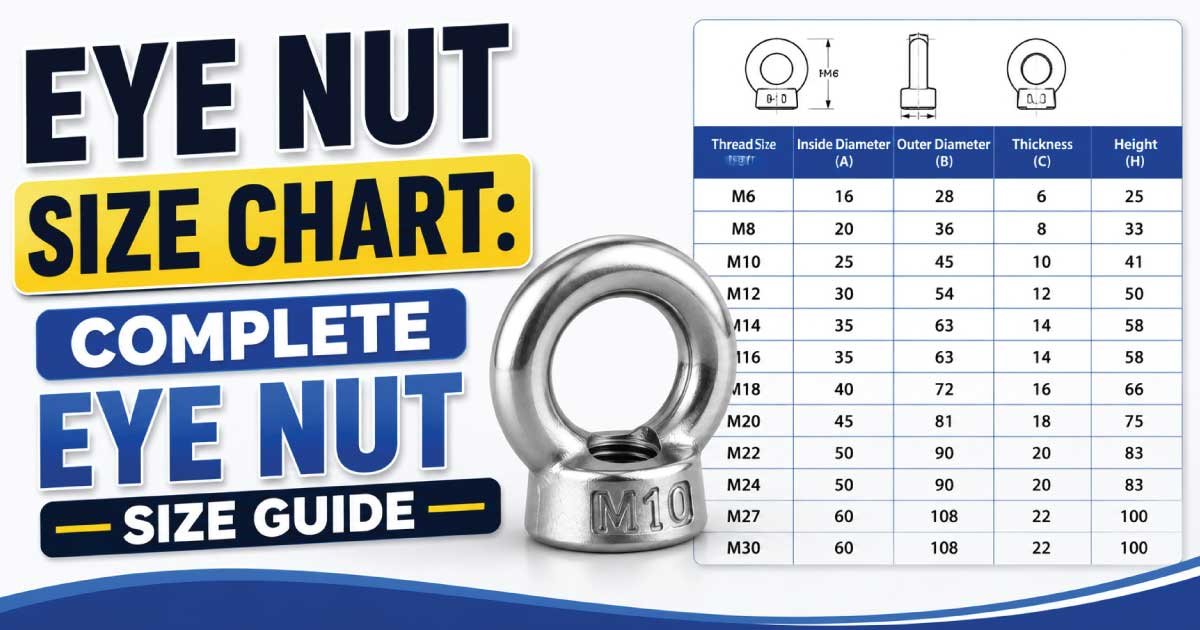
The following chart lists common metric eye nut sizes and their typical dimensions.
| Thread Size | Inside Eye Diameter | Outside Eye Diameter | Overall Height | Approx. Working Load Limit* |
|---|---|---|---|---|
| M6 | 20 mm | 36 mm | 28 mm | 0.08 Ton |
| M8 | 20 mm | 36 mm | 36 mm | 0.14 Ton |
| M10 | 25 mm | 45 mm | 45 mm | 0.23 Ton |
| M12 | 30 mm | 54 mm | 53 mm | 0.34 Ton |
| M16 | 35 mm | 63 mm | 62 mm | 0.70 Ton |
| M20 | 40 mm | 72 mm | 71 mm | 1.20 Ton |
| M24 | 50 mm | 90 mm | 90 mm | 1.80 Ton |
| M30 | 65 mm | 108 mm | 109 mm | 3.20 Ton |
| M36 | 75 mm | 126 mm | 128 mm | 4.60 Ton |
| M42 | 85 mm | 144 mm | 147 mm | 6.30 Ton |
*Working load limits vary by manufacturer, material, and lifting angle.
Imperial Eye Nut Size Chart
| Thread Size | Inside Eye Diameter | Outside Eye Diameter | Approx. Working Load Limit |
|---|---|---|---|
| 1/4″-20 | 0.75″ | 1.25″ | 200 lbs |
| 5/16″-18 | 0.88″ | 1.38″ | 300 lbs |
| 3/8″-16 | 1.00″ | 1.50″ | 500 lbs |
| 1/2″-13 | 1.25″ | 2.00″ | 1,200 lbs |
| 5/8″-11 | 1.50″ | 2.25″ | 2,200 lbs |
| 3/4″-10 | 1.75″ | 2.75″ | 3,500 lbs |
| 1″-8 | 2.25″ | 3.50″ | 6,000 lbs |
Why Eye Nut Size Matters
Selecting the proper eye nut size is critical for safety and lifting performance. An undersized eye nut can fail under load, while an oversized eye nut may not fit the threaded attachment point correctly.
Benefits of choosing the correct eye nut size include:
- Improved lifting safety
- Proper load distribution
- Reduced equipment damage
- Better lifting stability
- Increased service life
- Compliance with lifting standards
- Reliable performance under load
How to Measure an Eye Nut
Accurate measurements help ensure the correct replacement or installation.
Follow these steps:
- Measure the thread diameter.
- Determine the thread pitch.
- Measure the inside eye diameter.
- Measure the outside eye diameter.
- Check the overall height.
- Verify the load rating.
- Confirm compatibility with the threaded stud or bolt.
Using a thread gauge and caliper provides the most accurate measurements.
Common Materials Used for Eye Nuts
Eye nuts are manufactured from various materials depending on the application.
Forged Carbon Steel
Provides high strength and is commonly used for lifting and rigging applications.
Stainless Steel
Offers excellent corrosion resistance for marine, outdoor, and chemical environments.
Alloy Steel
Used in heavy-duty industrial lifting where maximum strength is required.
Galvanized Steel
Provides corrosion protection while maintaining good load capacity.
Also Read: Drill Types Explained: Corded vs Cordless Guide
How to Choose the Right Eye Nut Size
Several factors should be considered when selecting an eye nut.
- Determine the maximum load weight.
- Match the thread size exactly.
- Consider lifting angles.
- Select the appropriate material.
- Check environmental conditions.
- Verify working load limits.
- Follow applicable lifting regulations.
Always choose an eye nut with a load rating exceeding the intended load.
Common Applications of Eye Nuts
Eye nuts are widely used across numerous industries.
Typical applications include:
- Machinery lifting
- Construction rigging
- Material handling
- Marine equipment
- Industrial maintenance
- Overhead lifting systems
- Temporary anchoring points
- Factory installations
- Hoisting operations
- Structural assemblies
Installation Tips
Proper installation is essential for safe operation.
- Ensure threads are clean.
- Fully engage the threaded connection.
- Tighten securely against the mounting surface.
- Align the eye with the load direction.
- Avoid side loading whenever possible.
- Inspect before each use.
- Follow manufacturer torque recommendations.
Correct installation maximizes lifting safety and performance.
Common Mistakes to Avoid
Avoid these common eye nut selection and installation errors:
- Using the wrong thread size
- Exceeding the load rating
- Ignoring lifting angles
- Installing on damaged threads
- Using corroded hardware
- Applying side loads improperly
- Failing to inspect before lifting
These mistakes can significantly increase the risk of lifting failure.
Benefits of Properly Sized Eye Nuts
Using the correct eye nut size provides several advantages.
- Safer lifting operations
- Better load control
- Increased durability
- Reduced maintenance costs
- Improved equipment protection
- Greater reliability
- Longer service life
These benefits make proper eye nut selection critical for lifting applications.
Also Read: Drill Bit Types for Wood, Metal & Concrete
Maintenance Tips
Routine inspection helps maintain safe lifting performance.
- Inspect for cracks and deformation.
- Check threads for wear.
- Remove rust and corrosion.
- Replace damaged eye nuts immediately.
- Verify load markings remain visible.
- Store in a dry environment.
- Conduct regular lifting equipment inspections.
Proper maintenance extends the lifespan of lifting hardware and improves workplace safety.
Conclusion
Choosing the correct eye nut size is essential for safe and efficient lifting operations. By accurately measuring thread size, verifying load requirements, selecting the proper material, and following correct installation procedures, you can ensure reliable performance and maximum safety.
Whether used in construction, industrial maintenance, marine environments, or material handling systems, the right eye nut size provides dependable lifting support and long-term durability. Always consult an eye nut size chart and manufacturer specifications before selecting lifting hardware.
Also Read: Complete Nut Guide: Types, Sizes, Uses & Materials
FAQs:
1. How do I choose the correct eye nut size?
Choose an eye nut with the exact thread size and pitch required for the mounting stud or bolt. It should also have a working load limit greater than the intended load. Proper sizing ensures safe lifting, secure attachment, and reliable performance while reducing the risk of equipment failure.
2. What material is best for eye nuts?
Forged carbon steel is commonly used for general lifting because of its high strength. Stainless steel is ideal for marine and corrosive environments, while alloy steel is preferred for heavy-duty industrial lifting applications that require maximum durability and load capacity.
3. Can eye nuts be used for angled lifting?
Yes, some eye nuts are designed for angled lifting, but their working load limit decreases as the lifting angle increases. Always check the manufacturer’s specifications and never exceed the rated capacity. Proper alignment with the load helps maximize safety and lifting performance.
4. How often should eye nuts be inspected?
Eye nuts should be inspected before every lifting operation and during routine equipment maintenance. Check for cracks, thread damage, corrosion, deformation, and worn load markings. Replace any damaged eye nut immediately to maintain safe lifting conditions and prevent unexpected equipment failure.
5. Can I reuse an eye nut after heavy lifting?
Yes, an eye nut can be reused if it passes a thorough inspection and shows no signs of cracks, bent threads, corrosion, deformation, or excessive wear. If there is any visible damage or uncertainty about its condition, replace it immediately to ensure safe lifting operations.
6. Why is choosing the correct eye nut size important?
Selecting the correct eye nut size ensures proper thread engagement, safe load distribution, and reliable lifting performance. An undersized or incorrectly threaded eye nut can fail under load, while the right size improves safety, protects equipment, extends service life, and helps meet lifting standards.

Engineer Hassan is a Mechanical Engineer with 16+ years of hands-on experience in mechanical hardware, fasteners, and workshop tools. He focuses on size selection, thread identification, and measurement, helping users choose the correct components with accuracy and safety.