
Selecting the correct pinion gear size is one of the most important decisions when building, repairing, or upgrading a drivetrain.
Whether you are working on a vehicle differential, RC car, industrial machinery, or gear transmission system, understanding pinion gear sizing helps improve efficiency, durability, and overall performance.
This comprehensive guide explains everything you need to know about pinion gear size charts, gear ratios, measurements, and selection methods.
What Is a Pinion Gear?
A pinion gear is the smaller gear in a gear set that meshes with a larger gear, commonly called the ring gear. It transfers rotational force while changing speed, torque, or direction depending on the gear arrangement.
Pinion gears are widely used in automobiles, motorcycles, industrial machines, robotics, agricultural equipment, and remote-controlled vehicles because they provide reliable power transmission and smooth mechanical operation.
Why Pinion Gear Size Matters
Choosing the correct pinion gear size directly affects torque output, acceleration, fuel efficiency, operating temperature, and component lifespan.
A mismatched pinion gear can increase wear, create excessive noise, reduce efficiency, and even damage the entire drivetrain.
Proper sizing ensures smooth engagement between gears while maintaining optimal mechanical performance under varying load conditions.
Benefits of Correct Pinion Gear Size
- Improves power transmission efficiency
- Increases component lifespan
- Reduces gear noise
- Prevents premature wear
- Enhances acceleration
- Improves towing performance
- Maintains proper gear mesh
- Reduces maintenance costs
Understanding Pinion Gear Size Charts
A pinion gear size chart provides standardized measurements that help users select compatible gears for specific applications.
These charts usually include the number of teeth, gear diameter, shaft size, pressure angle, module or diametral pitch, and recommended mating gear specifications.
Using a chart eliminates guesswork and helps ensure proper gear alignment.
Main Components Listed in a Pinion Gear Size Chart
Every pinion gear chart includes several technical specifications. Understanding each measurement helps ensure compatibility with the ring gear and surrounding drivetrain components. Even a small difference in one specification can affect gear engagement, efficiency, and durability during continuous operation under heavy mechanical loads.
Common Specifications Include
- Number of teeth
- Outside diameter
- Pitch diameter
- Bore diameter
- Shaft size
- Face width
- Pressure angle
- Module
- Diametral pitch
- Material type
Pinion Gear Size Chart Example
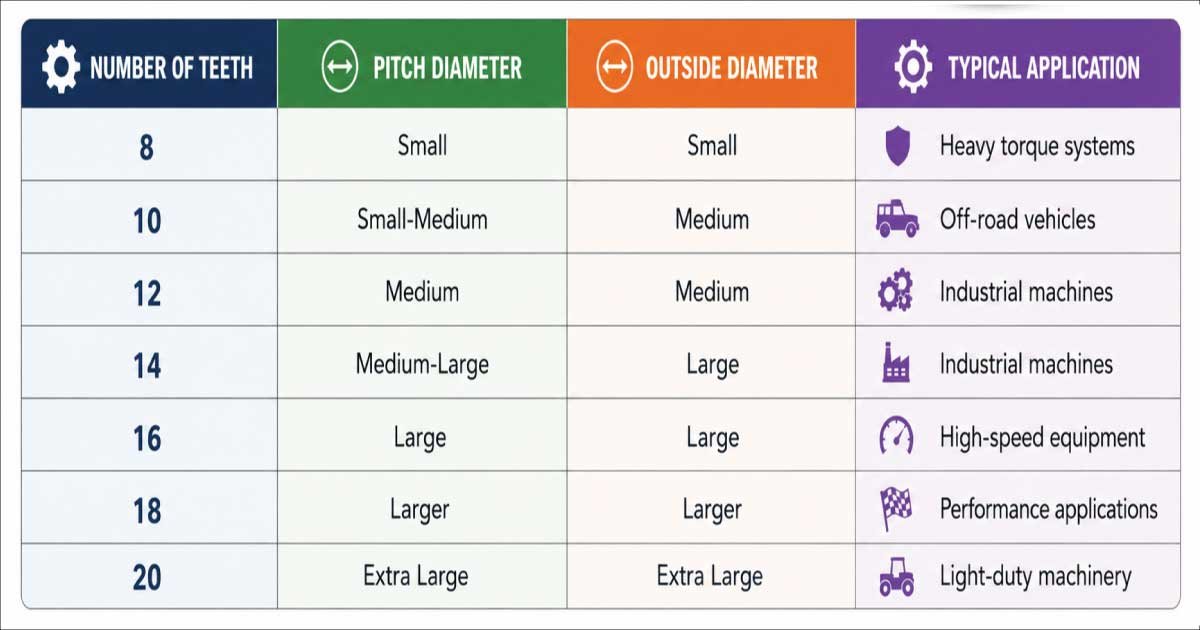
The following chart shows common pinion gear sizes used in various automotive and industrial applications.
| Number of Teeth | Pitch Diameter | Outside Diameter | Typical Application |
|---|---|---|---|
| 8 | Small | Small | Heavy torque systems |
| 10 | Small-Medium | Medium | Off-road vehicles |
| 12 | Medium | Medium | Passenger vehicles |
| 14 | Medium-Large | Large | Industrial machines |
| 16 | Large | Large | High-speed equipment |
| 18 | Larger | Larger | Performance applications |
| 20 | Extra Large | Extra Large | Light-duty machinery |
Pinion Gear Size Chart PDF
The Gear Size Chart is a quick reference guide that helps you compare common gear sizes based on the number of teeth, pitch diameter, outside diameter, and typical applications. It simplifies gear selection for automotive, industrial, and machinery projects, making it easier to choose the right gear for your specific requirements.
How Pinion Gear Teeth Affect Performance
The number of teeth on a pinion gear significantly changes drivetrain characteristics. Smaller pinion gears generally increase torque but reduce top speed, while larger pinion gears improve speed at the expense of pulling power. Selecting the proper tooth count depends entirely on your intended application and operating conditions.
Smaller Pinion Gear
- Higher torque
- Better hill climbing
- Faster acceleration
- Lower top speed
- Increased pulling power
Larger Pinion Gear
- Higher top speed
- Lower torque
- Better highway efficiency
- Reduced engine RPM
- Improved fuel economy
Pinion Gear Measurement Terms Explained
Understanding measurement terminology makes reading a gear size chart much easier. Manufacturers use standardized engineering dimensions so users can accurately compare gears across different brands and applications. Learning these basic measurements helps prevent ordering incorrect replacement parts and minimizes installation issues.
Pitch Diameter
The pitch diameter represents the theoretical diameter where two gears mesh together. It is one of the most critical measurements because it determines the gear ratio and ensures proper engagement between mating gears.
Outside Diameter
Outside diameter measures the full distance across the gear from one outer tooth tip to the opposite tooth tip. This measurement helps determine available installation space and gear compatibility.
Face Width
Face width refers to the thickness of the gear teeth along the shaft. Wider gears distribute loads more effectively and generally provide greater durability in heavy-duty applications.
Bore Size
The bore is the hole located in the center of the pinion gear. It must precisely match the shaft diameter to ensure secure installation and prevent slippage during operation.
What Is Gear Ratio?
The gear ratio represents the relationship between the number of teeth on the ring gear and the pinion gear. It determines how many times the driveshaft rotates before the wheels complete one revolution. Higher gear ratios produce more torque, while lower ratios emphasize speed and fuel economy.
Gear Ratio Formula
Gear Ratio = Ring Gear Teeth ÷ Pinion Gear Teeth
Example:
- Ring Gear Teeth = 41
- Pinion Gear Teeth = 11
Gear Ratio = 41 ÷ 11 = 3.73:1
This means the driveshaft rotates approximately 3.73 times for every single wheel revolution.
How to Read a Pinion Gear Size Chart
Reading a pinion gear size chart becomes straightforward once you understand the listed specifications. Begin by identifying your application, then compare tooth count, pitch diameter, module, pressure angle, and bore size. Finally, confirm compatibility with the mating ring gear before making a purchase or installation decision.
Common Materials Used for Pinion Gears
Pinion gears are manufactured using different materials depending on the required strength, durability, and operating environment. Material selection affects wear resistance, noise levels, heat tolerance, and maintenance requirements. High-quality materials generally provide longer service life under demanding operating conditions.
Popular Materials
- Hardened steel
- Alloy steel
- Stainless steel
- Brass
- Bronze
- Nylon
- Engineering plastic
- Powder metal
Applications of Pinion Gears
Pinion gears play an essential role in countless mechanical systems where rotational motion must be transferred efficiently. Their compact design and reliable performance make them suitable for both high-speed and heavy-duty environments across numerous industries.
Common Uses
- Automotive differentials
- Electric vehicles
- RC cars
- Industrial gearboxes
- Agricultural machinery
- Robotics
- Conveyor systems
- Mining equipment
- Marine propulsion systems
- Manufacturing machinery
Signs You Need a New Pinion Gear
Pinion gears gradually wear over time due to continuous friction and heavy mechanical loads. Recognizing early warning signs helps prevent expensive drivetrain damage and unexpected equipment failure. Regular inspections can identify wear before it becomes a serious mechanical problem.
Common Symptoms
- Grinding noises
- Whining during acceleration
- Excessive vibration
- Uneven gear wear
- Metal particles in lubricant
- Overheating gearbox
- Reduced performance
- Visible chipped teeth
How to Choose the Correct Pinion Gear Size
Selecting the right pinion gear requires more than matching the number of teeth. You must evaluate gear ratio requirements, shaft diameter, module or diametral pitch, pressure angle, material quality, and intended operating conditions. Considering all these factors together ensures smooth operation, maximum efficiency, and long service life for the entire drivetrain system.
Factors to Consider
- Vehicle or machine application
- Required gear ratio
- Number of teeth
- Shaft diameter
- Bore size
- Module or diametral pitch
- Pressure angle
- Gear material
- Load capacity
- Operating speed
Module vs. Diametral Pitch Explained
Module and diametral pitch both describe the size of gear teeth, but different regions use different measurement standards. Metric gear systems typically use module values, while imperial systems commonly use diametral pitch. Mixing these standards results in poor gear engagement, excessive wear, and possible mechanical failure.
Module (Metric System)
Module measures the size of each tooth in millimeters. Larger module values indicate larger and stronger gear teeth capable of handling heavier loads in industrial and automotive applications.
Diametral Pitch (Imperial System)
Diametral pitch represents the number of teeth per inch of pitch diameter. Higher diametral pitch numbers indicate smaller teeth, while lower numbers indicate larger teeth suitable for greater torque transmission.
Also Read:
Pressure Angle and Why It Matters
The pressure angle determines how force transfers between meshing gears. Modern gear systems commonly use 20-degree or 14.5-degree pressure angles. Both gears must share the same pressure angle to achieve smooth engagement, minimize friction, reduce noise, and prevent premature gear tooth damage.
Common Pressure Angles
- 14.5°
- 20°
- 25° (specialized applications)
How to Measure a Pinion Gear
Accurate measurements are essential before replacing or upgrading a pinion gear. Using precision measuring tools helps identify the exact gear specifications and prevents compatibility issues. Always measure multiple dimensions to verify the replacement gear matches the original manufacturer’s design.
Tools Required
- Digital caliper
- Vernier caliper
- Micrometer
- Gear tooth gauge
- Steel ruler
- Dial indicator
Measurements to Record
- Tooth count
- Outside diameter
- Bore diameter
- Face width
- Shaft diameter
- Pressure angle
- Module or diametral pitch
Also Read:
Pinion Gear Installation Tips
Proper installation is just as important as choosing the correct gear. Even a high-quality pinion gear can fail prematurely if installed incorrectly. Following manufacturer specifications for preload, backlash, lubrication, and torque ensures reliable performance and extends component lifespan.
Installation Best Practices
- Clean all components thoroughly.
- Inspect bearings before installation.
- Replace worn seals.
- Set correct backlash.
- Verify gear tooth contact pattern.
- Use recommended torque values.
- Lubricate all moving parts.
- Rotate gears manually before operation.
Common Pinion Gear Problems
Pinion gears experience wear due to heavy loads, poor lubrication, incorrect installation, or contamination. Identifying problems early prevents expensive repairs and minimizes equipment downtime. Regular maintenance and inspections significantly improve drivetrain reliability and overall performance.
Typical Problems
- Excessive gear noise
- Chipped gear teeth
- Tooth pitting
- Gear scoring
- Bearing failure
- Overheating
- Improper backlash
- Lubrication failure
Also Read:
How to Prevent Pinion Gear Wear
Preventive maintenance greatly extends the life of pinion gears and associated drivetrain components. Following simple maintenance practices reduces friction, minimizes heat generation, and helps maintain consistent gear performance under both normal and demanding operating conditions.
Maintenance Tips
- Change lubricant regularly.
- Inspect gears for wear.
- Check bearing condition.
- Maintain proper backlash.
- Avoid overloading.
- Replace damaged seals.
- Use manufacturer-approved lubricants.
- Keep contaminants out of the gearbox.
Automotive Pinion Gear Applications
In automobiles, pinion gears work with the ring gear inside the differential to transfer power from the driveshaft to the axle shafts. Different gear ratios affect acceleration, towing capacity, fuel economy, and engine RPM, allowing manufacturers to optimize vehicles for various driving conditions.
Common Automotive Uses
- Passenger cars
- Pickup trucks
- SUVs
- Racing vehicles
- Off-road vehicles
- Electric vehicles
- Heavy-duty trucks
Industrial Pinion Gear Applications
Industrial equipment relies on pinion gears for accurate and efficient power transmission. Manufacturing plants, conveyor systems, mining operations, and agricultural machinery all depend on properly sized gears to maintain productivity, reduce downtime, and ensure reliable long-term operation.
Industrial Equipment Examples
- Conveyor systems
- Gear reducers
- Crushers
- Mixers
- Pumps
- Compressors
- Packaging machines
- Textile equipment
RC Car Pinion Gear Size Guide
Pinion gear selection dramatically changes the performance of radio-controlled vehicles. Hobbyists frequently adjust gear sizes to balance acceleration, motor temperature, and maximum speed based on track conditions and driving style. Careful testing helps determine the optimal combination for each setup.
Smaller Pinion
- Faster acceleration
- More torque
- Lower motor temperature
- Better climbing ability
Larger Pinion
- Higher top speed
- Increased motor load
- Greater heat generation
- Better straight-line performance
Common Pinion Gear Size Mistakes
Many gear failures occur because of simple selection or installation errors. Avoiding these common mistakes improves reliability, prevents unnecessary expenses, and ensures smooth operation throughout the life of the drivetrain or machinery.
Mistakes to Avoid
- Choosing the wrong gear ratio
- Mixing incompatible pressure angles
- Ignoring bore size
- Incorrect backlash adjustment
- Poor lubrication
- Reusing worn bearings
- Installing damaged gears
- Overtightening fasteners
Advantages of Using the Correct Pinion Gear
A properly selected pinion gear delivers numerous performance benefits across automotive, industrial, and recreational applications. Matching gear specifications correctly improves efficiency while reducing maintenance costs and extending the lifespan of related drivetrain components.
Major Benefits
- Better acceleration
- Improved efficiency
- Reduced noise
- Longer gear life
- Lower maintenance costs
- Improved reliability
- Better fuel economy
- Smoother operation
Expert Tips for Buying a Pinion Gear
Buying the correct pinion gear involves balancing performance, durability, and compatibility. Selecting quality components from trusted manufacturers reduces long-term maintenance costs and ensures dependable operation under a wide range of operating conditions.
Buying Checklist
- Verify gear ratio.
- Count gear teeth accurately.
- Match pressure angle.
- Confirm module or diametral pitch.
- Check bore diameter.
- Select high-quality material.
- Purchase from reputable manufacturers.
- Review warranty information.
Final Thoughts
Understanding a pinion gear size chart is essential for selecting the correct gear for automotive, industrial, and recreational applications. By evaluating important factors such as tooth count, pitch diameter, gear ratio, module, pressure angle, and material specifications, you can ensure proper compatibility and efficient power transmission.
Accurate gear selection helps improve drivetrain performance, reduce component wear, and increase the overall reliability of mechanical systems. Careful measurement and proper installation are crucial for achieving smooth operation while preventing alignment issues and premature failures.
With regular maintenance and a clear understanding of gear specifications, users can maximize equipment performance and extend service life. Making informed pinion gear choices provides long-term value, reduces repair costs, and ensures dependable operation for both professional and personal applications.

Engineer Hassan is a Mechanical Engineer with 16+ years of hands-on experience in mechanical hardware, fasteners, and workshop tools. He focuses on size selection, thread identification, and measurement, helping users choose the correct components with accuracy and safety.