
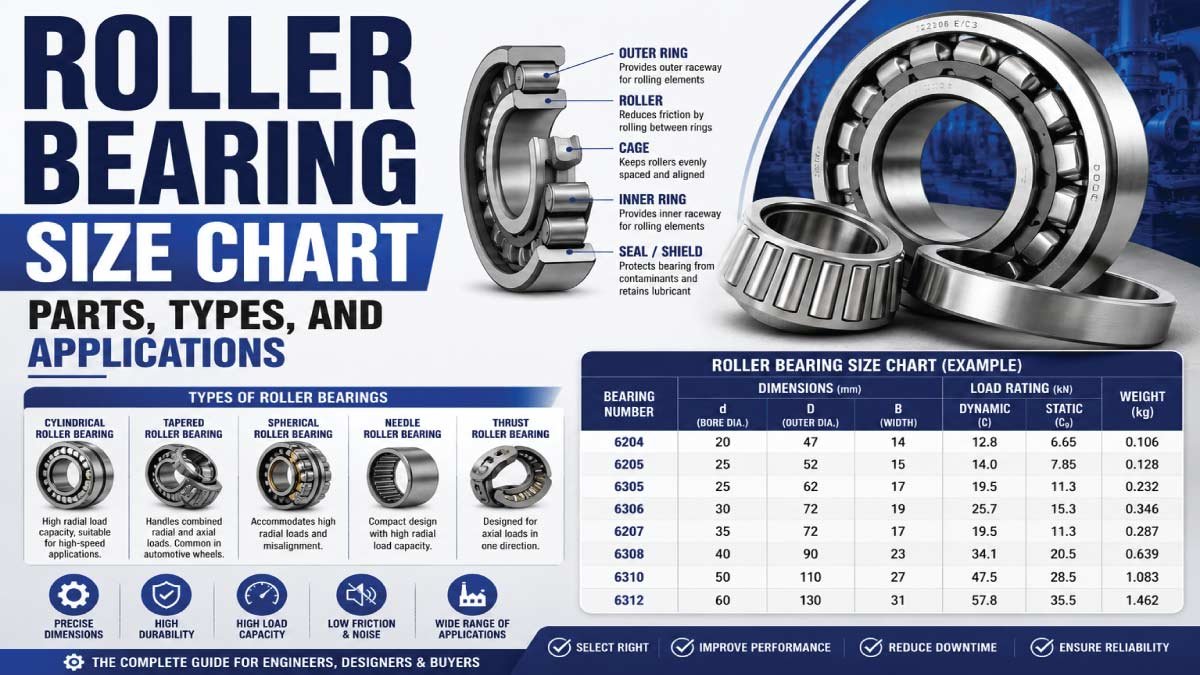
Roller bearings are essential mechanical components used in industrial machinery, automotive systems, heavy equipment, conveyors, gearboxes, and rotating assemblies. They are designed to reduce friction and support radial and axial loads while allowing smooth rotational movement.
Understanding a roller bearing size chart helps engineers, mechanics, technicians, and equipment operators choose the correct bearing for performance, durability, and safety.
This detailed guide explains roller bearing dimensions, bearing numbering systems, types, load ratings, and selection methods in simple language.
What Is a Roller Bearing?
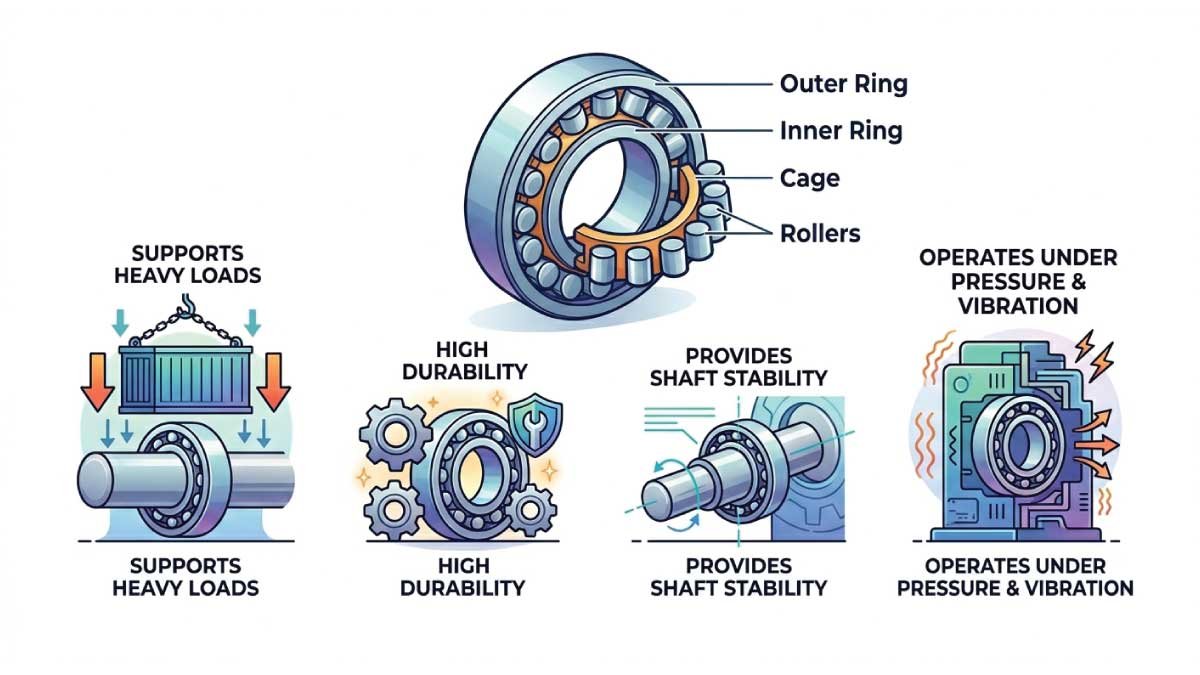
A roller bearing is a type of rolling-element bearing that uses cylindrical, tapered, spherical, or needle-shaped rollers instead of balls to reduce friction between moving parts.
Roller bearings are commonly used when:
- Heavy loads must be supported
- High durability is required
- Rotating shafts need stability
- Machines operate under pressure or vibration
Main Parts of a Roller Bearing
A roller bearing is made up of several important components that work together to reduce friction and support smooth rotational movement. These parts help machines handle heavy loads, improve efficiency, and increase the lifespan of rotating equipment in industrial applications.
1. Inner Ring
The inner ring is mounted directly on the rotating shaft and moves together with it during operation. It provides a smooth raceway surface for the rollers, helping reduce friction while supporting accurate and stable rotational movement inside the bearing assembly.
2. Outer Ring
The outer ring is installed inside the machine housing or support frame and usually remains stationary. It forms the outer raceway for the rollers and helps the bearing carry radial and axial loads while maintaining proper alignment and smooth operation.
3. Rollers
Rollers are the rolling elements located between the inner and outer rings. Their purpose is to reduce friction by replacing sliding motion with rolling contact. Different roller shapes are designed to handle various load capacities and operating conditions efficiently.
4. Cage
The cage is responsible for keeping the rollers evenly spaced inside the bearing assembly. It prevents direct contact between rollers, reduces friction and heat generation, and helps maintain smooth, stable, and quiet bearing performance during continuous operation.
Types of Roller Bearings
Different roller bearing types are designed for specific operating conditions, including varying load capacities, rotational speeds, and alignment requirements. Each type has a unique roller shape and internal design that improves machine efficiency, reduces friction, and increases durability in industrial, automotive, and heavy-duty applications.
1. Cylindrical Roller Bearings
Cylindrical roller bearings use straight cylindrical rollers that provide a larger contact area between the rollers and raceways. This design allows them to support heavy radial loads while maintaining low friction during high-speed operation. They are widely used in machinery that requires strength, precision, and smooth rotational performance.
Features
- High radial load support
- Suitable for high-speed applications
- Low friction
Applications
- Electric motors
- Gearboxes
- Pumps
- Compressors
2. Tapered Roller Bearings
Tapered roller bearings are designed with cone-shaped rollers and raceways that enable them to handle both radial and axial loads simultaneously. Their strong construction provides excellent stability and durability under heavy operating conditions. These bearings are commonly used in automotive and industrial systems where combined load handling is essential.
Features
- Supports combined loads
- Excellent durability
- High load capacity
Applications
- Wheel hubs
- Automotive axles
- Heavy machinery
3. Spherical Roller Bearings
Spherical roller bearings contain barrel-shaped rollers that allow the bearing to compensate for shaft misalignment and deflection. They are highly durable and capable of carrying heavy loads even in harsh environments. Their shock-resistant design makes them ideal for demanding industrial equipment operating under vibration and impact conditions.
Features
- Handles shaft misalignment
- Suitable for heavy loads
- Shock-resistant
Applications
- Mining equipment
- Crushers
- Conveyors
- Industrial fans
4. Needle Roller Bearings
Needle roller bearings use long, thin cylindrical rollers with a small diameter compared to their length. This compact design allows them to fit into limited spaces while still supporting high load capacities. They are commonly used in automotive and mechanical systems where space-saving and efficient performance are important requirements.
Features
- Compact design
- High load capacity
- Ideal for limited spaces
Applications
- Transmissions
- Power tools
- Automotive systems
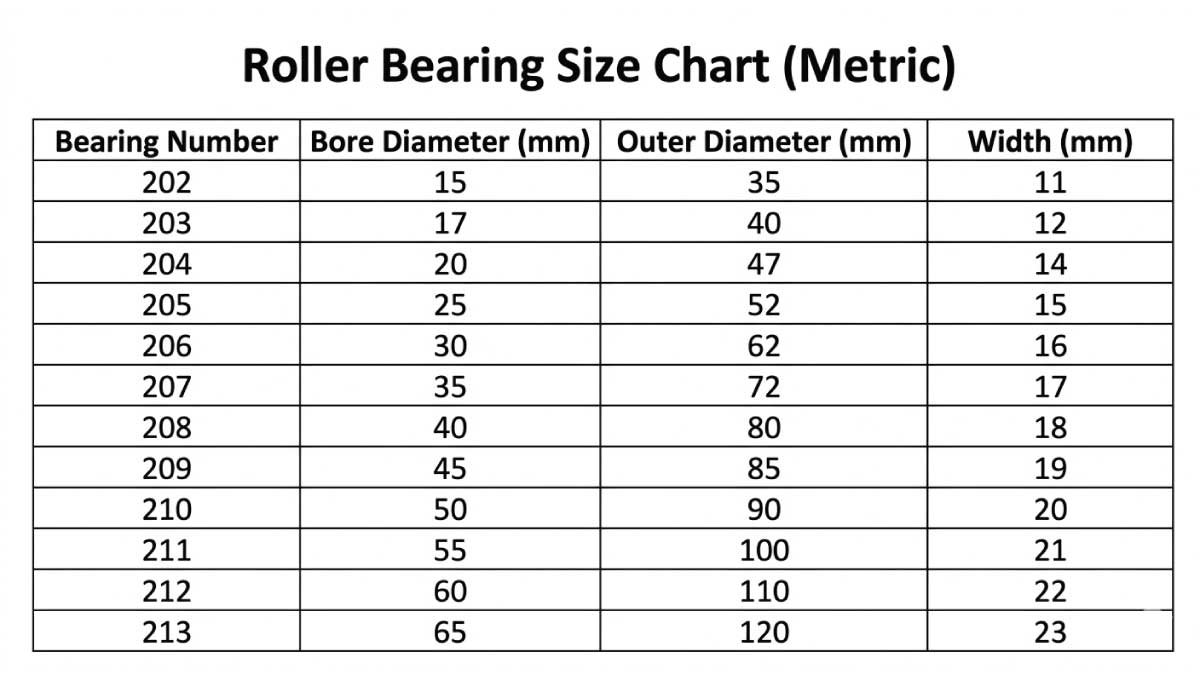
Roller Bearing Size Chart (Metric)
The following chart shows common metric roller bearing sizes used in industrial machinery, automotive systems, electric motors, and rotating equipment. These dimensions help users select the correct bearing based on shaft diameter, load requirements, and available installation space for smooth and efficient machine operation.
| Bearing Number | Bore Diameter (mm) | Outer Diameter (mm) | Width (mm) |
|---|---|---|---|
| 202 | 15 | 35 | 11 |
| 203 | 17 | 40 | 12 |
| 204 | 20 | 47 | 14 |
| 205 | 25 | 52 | 15 |
| 206 | 30 | 62 | 16 |
| 207 | 35 | 72 | 17 |
| 208 | 40 | 80 | 18 |
| 209 | 45 | 85 | 19 |
| 210 | 50 | 90 | 20 |
| 211 | 55 | 100 | 21 |
| 212 | 60 | 110 | 22 |
| 213 | 65 | 120 | 23 |
Tapered Roller Bearing Size Chart
This tapered roller bearing size chart includes commonly used bearing dimensions for applications that require support for both radial and axial loads. These bearings are widely used in wheel hubs, automotive axles, heavy equipment, and industrial machinery due to their high durability and load-carrying performance.
| Bearing Number | Bore (mm) | Outer Diameter (mm) | Width (mm) |
|---|---|---|---|
| 30202 | 15 | 35 | 11.75 |
| 30203 | 17 | 40 | 13.25 |
| 30204 | 20 | 47 | 15.25 |
| 30205 | 25 | 52 | 16.25 |
| 30206 | 30 | 62 | 17.25 |
| 30207 | 35 | 72 | 18.25 |
| 30208 | 40 | 80 | 19.75 |
| 30209 | 45 | 85 | 20.75 |
| 30210 | 50 | 90 | 21.75 |
Needle Roller Bearing Size Chart
The following needle roller bearing chart shows standard sizes commonly used in compact mechanical assemblies. Needle bearings feature thin cylindrical rollers that provide high load capacity while occupying minimal space, making them suitable for transmissions, power tools, automotive systems, and small industrial machines.
| Bearing Number | Bore (mm) | Outer Diameter (mm) | Width (mm) |
|---|---|---|---|
| NK10/12 | 10 | 17 | 12 |
| NK12/12 | 12 | 19 | 12 |
| NK15/16 | 15 | 23 | 16 |
| NK17/16 | 17 | 25 | 16 |
| NK20/20 | 20 | 28 | 20 |
| NK25/20 | 25 | 33 | 20 |
| NK30/20 | 30 | 40 | 20 |
| NK35/30 | 35 | 45 | 30 |
Roller Bearing Size Chart Image
Roller Bearing Size Chart PDF
Roller Bearing Size Chart PDF is a complete reference guide showing standard roller bearing dimensions in an easy-to-download format. It includes bore size, outer diameter, and width details for quick selection. This PDF helps engineers, mechanics, and buyers accurately choose roller bearings for industrial machines, automotive systems, and maintenance work.
You May Also Like Our Latest Guide:
Roller Bearing Dimensions Explained
Understanding roller bearing dimensions is important when selecting, replacing, or maintaining bearings in mechanical systems. Correct bearing dimensions ensure proper shaft fitting, smooth rotation, reduced vibration, and longer equipment life. The three main bearing dimensions are bore diameter, outer diameter, and bearing width.
1. Bore Diameter (d)
The bore diameter is the inside diameter of the bearing and is one of the most important dimensions during bearing selection. It determines the shaft size that the bearing can fit onto. A correct bore size ensures proper mounting, smooth rotation, and stable machine performance without excessive looseness or friction.
Example:
A 25 mm bore fits a 25 mm shaft.
2. Outer Diameter (D)
The outer diameter refers to the outside measurement of the bearing that fits into the machine housing or bearing seat. Selecting the correct outer diameter is essential for proper alignment and secure installation. An incorrect outer diameter may cause vibration, misalignment, or premature bearing failure during operation.
3. Width (B)
The width, also called bearing thickness, measures the distance between the two side faces of the bearing. Wider bearings usually provide greater load-carrying capacity and improved stability. Bearing width is especially important in heavy-duty applications where machines experience high radial or axial loads continuously.
Roller Bearing Numbering System
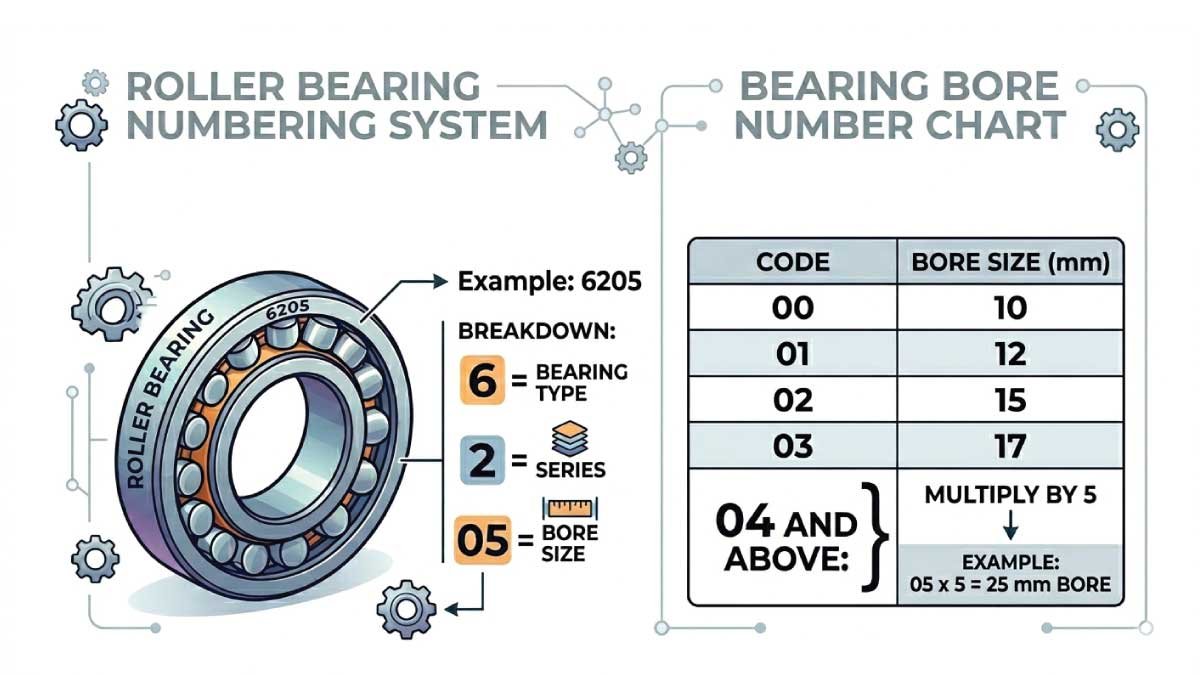
Most roller bearings follow a standardized international numbering system that identifies the bearing type, series, and bore size. This numbering method helps users quickly understand bearing dimensions and specifications without checking detailed catalogs, making selection and replacement easier in industrial and automotive applications.
Example: 6205
Breakdown
- 6 = Bearing type
- 2 = Series
- 05 = Bore size
Bearing Bore Number Chart
The last two digits of many bearing numbers indicate the bore size. Small bore codes have fixed standard sizes, while larger codes are calculated by multiplying the number by five. This system helps engineers and technicians quickly determine shaft compatibility when selecting bearings.
- 00 = 10 mm
- 01 = 12 mm
- 02 = 15 mm
- 03 = 17 mm
- 04 and above: Multiply by 5
Example
- 05 × 5 = 25 mm bore
You May Also Like Our Latest Guide:
Roller Bearing Load Types
Roller bearings are designed to support different types of loads depending on the machine application and operating conditions. Understanding load types helps in selecting the correct bearing for better performance, improved durability, and smooth rotational movement in industrial equipment.
1. Radial Load
A radial load is a force applied perpendicular to the shaft or bearing axis. This is the most common load type in rotating machinery. Cylindrical roller bearings are specially designed to handle heavy radial loads with high efficiency and stability.
2. Axial Load
An axial load is a force applied parallel to the shaft axis, also known as thrust load. Tapered roller bearings are commonly used for axial load applications because they can support heavy thrust forces while maintaining smooth and accurate rotation.
3. Combined Load
Combined load occurs when both radial and axial forces act on the bearing at the same time. Many industrial machines operate under combined loading conditions. Spherical roller bearings and tapered roller bearings are ideal choices for handling these complex load combinations efficiently.
Roller Bearing Clearance Types
Bearing clearance refers to the internal gap between the rolling elements and the inner and outer rings of a bearing. This clearance is important because it affects heat generation, vibration, speed capability, and load distribution during operation. Selecting the correct clearance type ensures smooth performance and longer bearing life.
| Clearance Type | Description |
|---|---|
| C2 | Less than normal clearance |
| CN | Standard clearance |
| C3 | Greater than normal |
| C4 | High clearance |
| C5 | Extra-high clearance |
Higher clearance is often used in:
- High-temperature environments
- High-speed machinery
Roller Bearing Tolerance Classes
Tolerance classes define the precision level and dimensional accuracy of roller bearings. Higher precision classes ensure tighter manufacturing control, smoother rotation, reduced vibration, and better performance in sensitive machinery such as machine tools and precision instruments.
| Class | Accuracy Level |
|---|---|
| P0 | Standard |
| P6 | Higher precision |
| P5 | Precision machinery |
| P4 | High precision |
| P2 | Ultra precision |
You May Also Like Our Latest Guide:
How to Choose the Correct Roller Bearing Size
Selecting the correct roller bearing size is important for smooth performance, long service life, and reliable machine operation. A wrong selection can cause vibration, overheating, or early failure, so each factor must be carefully evaluated before installation.
1. Determine Shaft Size
The first step is to match the bearing bore diameter with the shaft diameter. A proper fit ensures correct alignment and smooth rotation without slipping or excessive tightness. Even a small mismatch can reduce efficiency and increase wear on both the shaft and bearing.
2. Check Load Requirements
Load conditions decide the strength and type of bearing required. Heavy loads need stronger and larger bearings that can distribute pressure evenly. Roller type selection also matters because different designs handle radial and axial loads differently, improving durability under continuous stress.
3. Consider Operating Speed
Speed is a key factor in bearing selection. High-speed machines require precision bearings with low friction to reduce heat generation and ensure stable rotation. Poor speed matching can lead to overheating, noise, and reduced bearing life in fast-moving applications.
4. Evaluate Temperature Conditions
Temperature affects lubrication and internal clearance of bearings. In high-temperature environments, bearings may expand or lose lubrication efficiency. To handle this, special heat-resistant grease or increased clearance bearings are used to maintain smooth operation and avoid performance issues.
5. Consider Environmental Conditions
The surrounding environment directly impacts bearing life and performance. Dust, moisture, and chemicals can damage internal components if not protected. In such cases, sealed bearings or corrosion-resistant materials like stainless steel are preferred to ensure long-lasting and reliable operation.
Signs of Roller Bearing Failure
Identifying early signs of roller bearing failure is very important to avoid unexpected machine breakdowns and costly repairs. When bearings start to wear out or operate under improper conditions, they show clear symptoms that should not be ignored. Early detection helps improve safety, performance, and equipment life.
1. Excessive Noise
Unusual noise is one of the most common signs of bearing failure. Grinding, rattling, or squeaking sounds usually indicate internal wear, surface damage, or lack of lubrication. A healthy bearing operates smoothly and quietly, so any change in sound should be investigated immediately.
2. Overheating
Overheating occurs when a bearing is working under stress or not properly lubricated. It can also happen due to excessive load or misalignment of components. High temperatures reduce lubrication efficiency and can quickly damage the bearing, leading to complete failure if not addressed in time.
Common causes of overheating:
- Poor lubrication
- Overloading
- Misalignment
3. Vibration
Excessive vibration during operation is another clear warning sign of bearing problems. It often indicates uneven wear, damaged rollers, or incorrect installation. Continuous vibration can also affect surrounding machine components and reduce overall system stability and performance.
Possible causes of vibration:
- Damaged rollers
- Improper installation
4. Surface Damage
Surface damage such as pitting, flaking, or corrosion significantly reduces bearing efficiency. These issues often develop due to contamination, moisture exposure, or poor lubrication. Once the surface is damaged, the bearing loses smooth contact between rolling elements, leading to faster wear and reduced service life.
Difference Between Ball Bearings and Roller Bearings
Ball bearings and roller bearings are both widely used in mechanical systems, but they are designed for different performance requirements. The main difference lies in the shape of their rolling elements, which directly affects load capacity, speed capability, and overall application suitability.
| Feature | Ball Bearing | Roller Bearing |
|---|---|---|
| Rolling Element | Balls | Rollers |
| Load Capacity | Moderate | High |
| Speed Capability | Higher | Moderate |
| Friction | Lower | Slightly higher |
| Best Use | High speed | Heavy loads |
Conclusion
A roller bearing size chart is essential for selecting the correct bearing for industrial, automotive, and mechanical applications. Understanding bearing dimensions, numbering systems, load types, and materials helps ensure long-lasting performance and equipment reliability.
When choosing a roller bearing, always consider:
- Bore size
- Outer diameter
- Width
- Load capacity
- Speed requirements
- Operating environment
Using the correct bearing size and type improves machine efficiency, reduces maintenance costs, and prevents premature equipment failure.

Engineer Hassan is a Mechanical Engineer with 16+ years of hands-on experience in mechanical hardware, fasteners, and workshop tools. He focuses on size selection, thread identification, and measurement, helping users choose the correct components with accuracy and safety.