
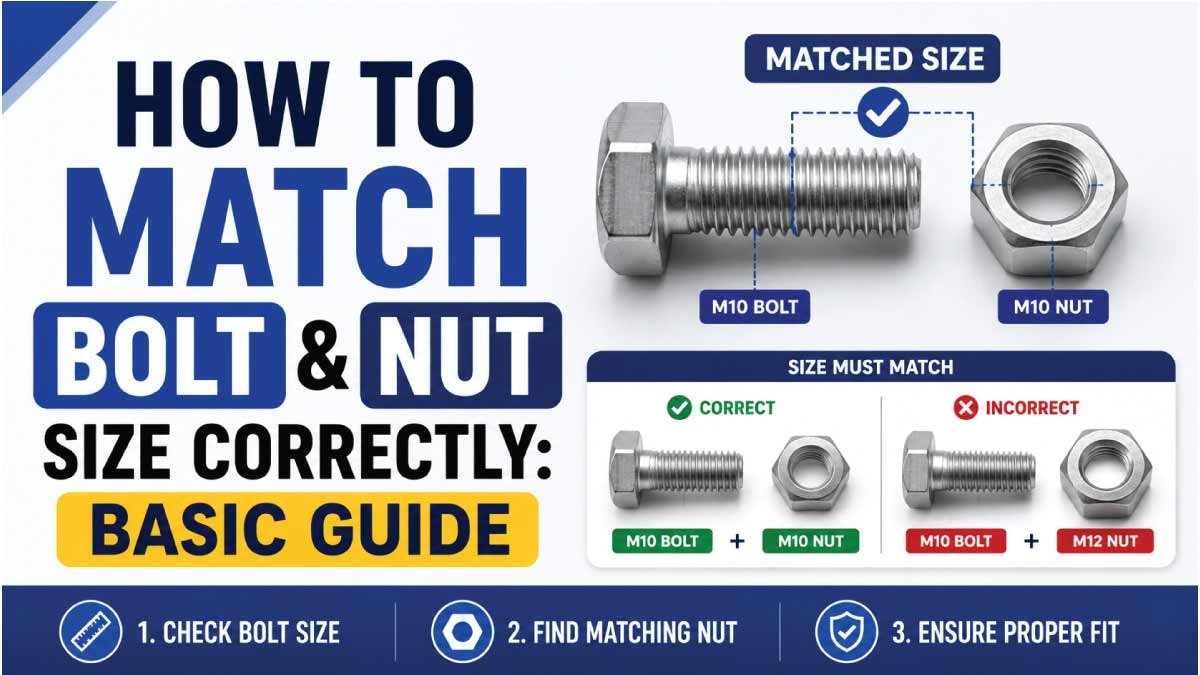
Matching bolt and nut size correctly is one of the most important skills in mechanical work, construction, and even simple DIY repairs. A small mismatch can lead to loose fittings, stripped threads, or complete joint failure.
Many beginners think that “same size label” means compatibility, but in reality, bolt and nut matching depends on thread type, diameter, pitch, and system (metric or imperial).
In this guide, you will learn step-by-step how to match bolt and nut sizes correctly without making common mistakes.
Why Correct Bolt and Nut Matching Matters
A bolt and nut system only works properly when both components are perfectly compatible in size, thread type, and pitch. If even one factor is mismatched, the connection becomes weak and unreliable. Correct matching ensures strong fastening, safety, and long-term durability in mechanical and structural applications.
If bolt and nut are not matched correctly, you may face:
- Loose connections that vibrate open
- Stripped or damaged threads
- Unsafe mechanical joints
- Machine failure in heavy applications
- Wasted time and material
For example, using an M8 bolt with an incorrect thread pitch nut may look fine initially, but it will not tighten properly and can fail under load.
Understand The Bolt and Nut Basics
Before matching bolt and nut sizes correctly, it is important to understand the basic structure of how they work together. A bolt and nut connection is one of the most common fastening systems used in mechanical, automotive, and construction work. Proper understanding ensures accurate fitting and strong, reliable joints.
1. Bolt
A bolt is a mechanical fastener that has external threads on its surface. It is used to join two or more parts together by passing through holes and tightening with a nut. Bolts provide strong clamping force and are widely used in machines, structures, and equipment assemblies. A bolt is a fastener with external threads used to hold parts together.
2. Nut
A nut is a small but essential fastening component that has internal threads. It is designed to fit onto a bolt and tighten the connection. Nuts help lock the bolt in place and ensure the joint remains secure under pressure, vibration, or load conditions. A nut is a small component with internal threads that fits onto a bolt.
3. Both Must Share the Same
For a bolt and nut to work properly, they must be fully compatible in key specifications. Even a slight mismatch can cause improper fitting, thread damage, or weak connections. Correct matching ensures smooth tightening and strong mechanical performance.
- Diameter
- Thread pitch
- Thread type
Key Factors for Matching Bolt and Nut Size
Matching bolt and nut size correctly depends on a few critical mechanical factors. If any one of these is incorrect, the parts will not fit properly or may fail under load. Understanding these key points helps ensure strong, safe, and reliable fastening in all mechanical applications.
1. Bolt Diameter (Most Important Factor)
The first and most important factor is the bolt diameter. This refers to the thickness of the bolt body and must match the nut’s internal size exactly. Even a small mismatch in diameter will prevent proper fitting or create a loose and unsafe connection.
Common examples:
- M6 bolt → 6 mm diameter
- M8 bolt → 8 mm diameter
- M10 bolt → 10 mm diameter
👉 The nut must always match this diameter exactly. If the diameter is wrong, the nut will either not fit or will be loose.
2. Thread Pitch (Very Critical)
Thread pitch is the distance between two consecutive threads on a bolt. It determines how tightly the bolt and nut will engage. Even if the diameter is correct, an incorrect thread pitch will prevent proper tightening and can damage the threads.
There are two main types:
- Coarse thread (standard, widely used)
- Fine thread (closer threads, more precise)
Example:
- M10 x 1.5 → standard pitch
- M10 x 1.25 → fine pitch
👉 Even if diameter matches, wrong pitch will prevent proper tightening.
3. Metric vs Imperial System
Another major factor is the measurement system used. Mixing metric and imperial systems is a very common beginner mistake and always leads to incompatibility between bolts and nuts.
Metric System:
- M6, M8, M10, etc.
- Measured in millimeters
Imperial System:
- 1/4″, 3/8″, 1/2″, etc.
- Measured in inches
👉 Never mix metric and imperial bolts and nuts.
4. Thread Type Compatibility
Thread type refers to the design standard of the threads. Even if size and diameter seem similar, different thread standards will not fit together properly. Ensuring correct thread type compatibility is essential for smooth engagement and strong fastening.
Common types:
- Metric ISO threads
- UNC (Unified Coarse Thread)
- UNF (Unified Fine Thread)
Example:
- UNC bolt needs UNC nut
- Metric bolt needs metric nut
Step-by-Step Method to Match Bolt and Nut Correctly
Matching bolt and nut size correctly becomes easy when you follow a proper step-by-step method. Each step helps confirm compatibility between the fasteners and prevents fitting issues, damaged threads, or unsafe connections. This process is commonly used in workshops, mechanical repair, and industrial applications.
Step 1: Identify Bolt Size
The first step is to identify the exact bolt size. You can check the markings printed on the bolt head or measure the diameter using a Vernier caliper. Correct diameter identification is important because the nut must match the bolt size exactly. Check markings on bolt or measure diameter using caliper.
Step 2: Check Thread Pitch
After confirming the diameter, check the thread pitch carefully. Thread pitch is the distance between threads and determines how the nut engages with the bolt. You can use a thread gauge or compare the threads with a standard reference chart. Use thread gauge or compare with known standard.
Step 3: Confirm System Type
Now determine whether the fastener belongs to the metric or imperial system. Mixing these systems is a common mistake and usually causes poor fitting. Always ensure both bolt and nut belong to the same measurement standard. Decide whether it is metric or imperial.
Step 4: Select Matching Nut
Choose a nut that perfectly matches the bolt specifications. The diameter, thread pitch, and thread system must all be identical to ensure smooth tightening and a strong mechanical connection.
Choose a nut with:
- Same diameter
- Same thread pitch
- Same thread system
Step 5: Test Fit (Important Step)
Before tightening with tools, always test the fit by hand. The nut should rotate smoothly without force or resistance. If it feels tight or difficult, stop immediately because incorrect threading can damage both components. Thread nut by hand first. It should rotate smoothly without force.
👉 Explore Bolt Size Chart: Complete Guide to Standard Bolt Sizes with easy explanations of metric and imperial bolts. Learn diameter, length, thread types, and correct selection methods. Read the full post for accurate sizing tips and practical engineering guidance.
How to Check If Bolt and Nut Are Matched Correctly
After selecting a bolt and nut, it is important to verify that both parts are properly matched. A correct fit ensures strong fastening, smooth tightening, and safe mechanical performance. Checking compatibility before full tightening helps prevent thread damage, loosening, and fitting problems during use.
A correct match will show:
- ✔ Smooth hand tightening
- ✔ No resistance during threading
- ✔ No wobbling or looseness
- ✔ Full engagement of threads
If you feel resistance or skipping threads, stop immediately.
Common Mistakes Beginners Make
Many beginners make simple mistakes while matching bolts and nuts, which often leads to damaged threads, loose fittings, or incorrect assembly. Understanding these common errors helps improve fastening accuracy, prevents mechanical problems, and ensures stronger and safer connections in repair, workshop, and engineering applications.
1. Assuming Same Diameter Means Compatibility
Many people think that if the diameter matches, the nut will automatically fit the bolt. However, diameter alone is not enough because thread pitch and thread type must also match perfectly for proper engagement and safe tightening. Diameter alone is not enough.
2. Mixing Metric and Imperial Fasteners
Mixing metric and imperial fasteners is one of the most common beginner mistakes. Although some sizes may look similar, their thread standards and measurements are completely different, causing immediate mismatch and poor fitting between the bolt and nut. This causes immediate mismatch.
3. Ignoring Thread Pitch
Thread pitch plays a major role in compatibility. Even a small difference between thread pitches can stop proper tightening and damage the threads. Always confirm pitch carefully before using any nut with a bolt. Even small pitch difference breaks compatibility.
4. Forcing the Nut
If a nut does not rotate smoothly by hand, forcing it with tools can permanently damage both internal and external threads. This may make the fasteners unusable and weaken the overall mechanical connection. Forcing damages threads permanently.
5. Using Worn or Damaged Threads
Old or damaged fasteners may appear correct in size but often fail to fit properly. Worn threads reduce holding strength and can cause loose or unsafe connections, especially in machines or high-load applications. Old fasteners may not match properly even if size is correct.
Tools That Help in Matching Bolt and Nut Sizes
Using the right measuring and identification tools makes bolt and nut matching much easier and more accurate. These tools help identify diameter, thread pitch, and compatibility correctly, reducing mistakes and preventing thread damage during mechanical assembly, repair work, and fastening applications.
1. Vernier Caliper
A Vernier caliper is one of the most useful tools for measuring bolt diameter accurately. It helps determine the exact outer dimension of the bolt, ensuring that the selected nut matches correctly for a proper and secure fit.
2. Thread Gauge
A thread gauge is specially designed to identify thread pitch quickly and accurately. It helps compare thread spacing on bolts and nuts, making it easier to find compatible fasteners and avoid thread mismatch problems.
3. Nut & Bolt Size Charts
Nut and bolt size charts provide quick reference information for standard fastener dimensions. These charts help users identify compatible sizes, thread types, and common standards without manually checking every measurement.
4. Visual Comparison Tools
Visual comparison tools help match unknown or unmarked fasteners by comparing them with known samples. They are especially useful for beginners who may not have advanced measuring equipment or experience identifying thread systems. Helps match unknown fasteners.
👉 Learn What Is a Vernier Caliper in this complete beginner guide. Understand its parts, working principle, and accurate measurement methods for engineering and DIY use. Read the full post for step-by-step explanations, practical examples, and essential measurement tips.
Example
Understanding a real example makes bolt and nut matching much easier for beginners. Correct matching requires the same diameter, thread pitch, and measurement system. Even if the size looks similar, a small difference in pitch or system can prevent proper tightening and damage the fasteners.
If you have:
- Bolt: M10 x 1.5
You must use:
- Nut: M10 x 1.5
If you try:
- M10 x 1.25 nut → It will not fit properly
- 3/8″ nut → Completely incompatible
Why Proper Matching Improves Safety
Proper bolt and nut matching is essential for creating strong and reliable mechanical connections. Correctly matched fasteners distribute load evenly, reduce stress on threads, and prevent loosening during operation. This improves overall safety, durability, and performance in mechanical, automotive, and structural applications.
Correct bolt and nut pairing ensures:
- Strong mechanical joints
- Better load distribution
- Reduced vibration failure
- Longer equipment life
- Safer structures
This is especially important in automotive, construction, and machinery work.
Final Thoughts
Matching bolt and nut size correctly is more than simply choosing parts with the same label. It requires understanding important factors like diameter, thread pitch, and thread system compatibility. Even small mismatches can lead to poor fitting, damaged threads, and unsafe mechanical connections.
Once you understand these basics, you can easily avoid fitting problems and improve your mechanical accuracy.
👉 Learn How to Identify Bolt Grades and Markings Easily with this simple guide. Understand strength classes, head markings, material grades, and safety ratings. Read the full post for clear explanations and practical tips to choose the right bolts confidently.
FAQs:
1. How to match bolt and nut?
To match a bolt and nut correctly, both must have the same diameter, thread pitch, and thread type. For example, an M10 bolt should use an M10 nut with the same pitch. Incorrect matching can damage threads, loosen connections, or reduce strength in mechanical applications.
2. How to choose bolt and nut size?
Choose bolt and nut size based on load requirements, hole diameter, material thickness, and thread type. Measure the bolt diameter and thread pitch carefully. Always ensure the nut matches the bolt size exactly for safe fastening and proper performance in construction or machinery work.
3. Is M10 the same as 10mm?
M10 means the bolt has a nominal thread diameter of 10 millimeters. While it is close to 10mm, the actual outside diameter may vary slightly because of thread design. M10 specifically refers to a metric threaded fastener, not just a plain 10mm rod.
4. How do I know what size nut I need for my bolt?
To find the correct nut size, check the bolt diameter and thread pitch. A bolt marked M8 needs an M8 nut with matching thread spacing. You can also use a thread gauge or compare threads manually to ensure the nut fits smoothly without forcing.
5. What does M8, M10, M12 mean?
M8, M10, and M12 are metric bolt sizes where the number represents the thread diameter in millimeters. M8 means 8mm diameter, M10 means 10mm, and M12 means 12mm. These markings help identify the correct nut, drill size, and application requirements.
6. How to calculate bolt and nut size?
Bolt and nut size is calculated by measuring the bolt diameter, thread pitch, and length. Use a caliper to measure the outside diameter and a thread gauge for pitch. Matching these dimensions helps identify the correct nut size and ensures accurate fastening performance.
7. What does m8x1.25 bolt mean?
An M8×1.25 bolt has an 8mm thread diameter and a thread pitch of 1.25mm. The pitch means the distance between threads is 1.25 millimeters. This is a common metric bolt size used in automotive, machinery, and general engineering applications.
8. Is an M12 bolt 12 mm?
Yes, an M12 bolt has a nominal thread diameter of 12 millimeters. The “M” stands for metric, while “12” represents the approximate outside diameter of the threaded section. M12 bolts are commonly used in heavy-duty construction and mechanical applications.
9. What does M10 1.5 bolt mean?
An M10×1.5 bolt means the bolt has a 10mm diameter with a 1.5mm thread pitch. The pitch indicates the distance between adjacent threads. This is the standard coarse thread pitch for many M10 bolts used in industrial and automotive assemblies.
10. What is the 3 thread rule?
The 3 thread rule means at least three full threads of a bolt should engage inside a nut for secure fastening. Proper thread engagement improves strength, prevents loosening, and ensures the connection can safely handle vibration and mechanical loads during operation.
11. How to tell if bolt is M6 or M8?
Measure the outside thread diameter using a caliper. An M6 bolt measures about 6mm, while an M8 bolt measures around 8mm. You can also compare nut fitment or check markings on the bolt head to identify the correct metric size accurately.

Engineer Hassan is a Mechanical Engineer with 16+ years of hands-on experience in mechanical hardware, fasteners, and workshop tools. He focuses on size selection, thread identification, and measurement, helping users choose the correct components with accuracy and safety.