
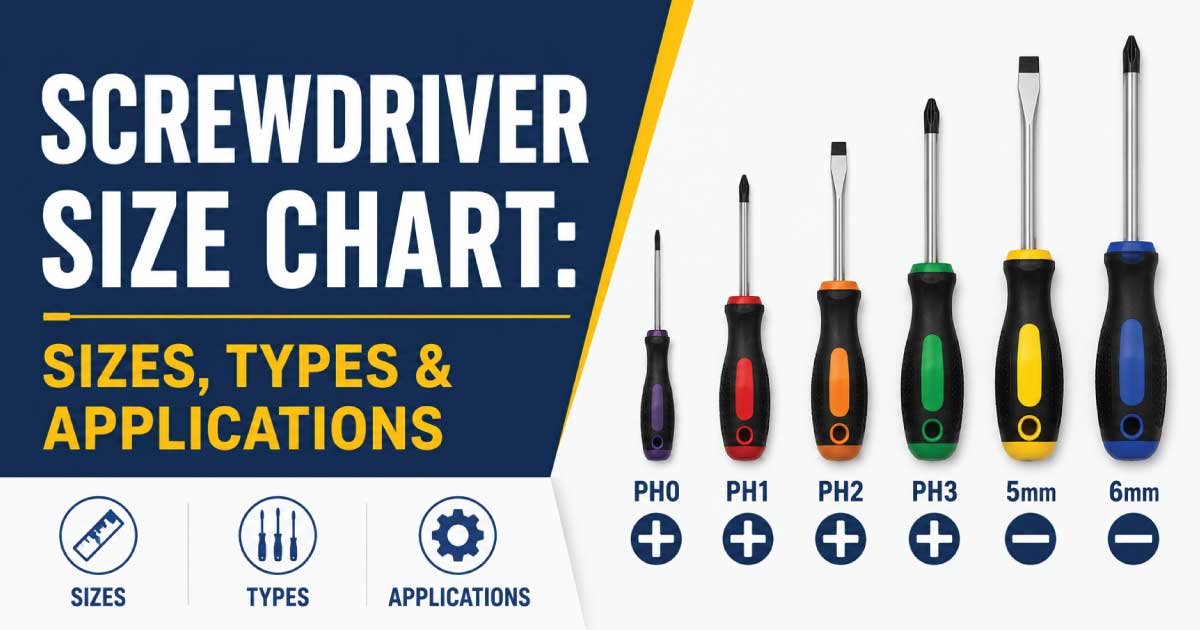
Screwdrivers are among the most commonly used hand tools in homes, workshops, construction sites, and automotive garages. Whether you’re assembling furniture, repairing electronics, or working on machinery, using the correct screwdriver size is essential for preventing screw damage and ensuring efficient work.
This complete guide explains screwdriver sizes, size charts, tip types, measurement systems, and how to choose the right screwdriver for any project.
What Is a Screwdriver?
A screwdriver is a basic hand or power tool used to tighten or loosen screws in a wide range of applications. It typically consists of three main parts: a handle for grip and control, a shaft for reach and strength, and a tip that fits into the screw head. The tip design must match the screw type to ensure proper engagement and effective torque transfer.
Screwdrivers are available in many sizes and tip styles because screws themselves vary in shape, size, and purpose. Using the correct screwdriver ensures better control, reduces damage to screws, and improves overall work efficiency in both professional and DIY tasks.
Common Uses of Screwdrivers
Screwdrivers are essential tools used in almost every repair, assembly, and maintenance task. Their versatility makes them one of the most commonly used tools in homes, workshops, and industries.
- Furniture assembly
- Electronics repair
- Automotive maintenance
- Construction work
- Household repairs
- Machinery maintenance
- Woodworking projects
Choosing the correct screwdriver size improves grip, reduces slipping, and protects screw heads from stripping. Proper tool selection also makes work faster, safer, and more precise, especially when dealing with delicate or high-torque applications.
Understand The Screwdriver Sizes
Screwdriver sizes are not defined by a single measurement. Instead, they are determined by several factors that ensure proper fit and efficient performance. Choosing the right size is important because it improves grip, prevents damage to screws, and allows better control during tightening or loosening tasks. Since screws vary widely in design and application, screwdrivers must also be available in different sizes and configurations.
Screwdriver sizing depends on multiple physical and functional characteristics that work together to match specific screw types and applications.
1. Tip Type
The tip type refers to the shape of the screwdriver end that fits into the screw head. Common tip types include flathead, Phillips, Torx, and hex. Each type is designed for a specific screw design, and using the correct tip type ensures proper engagement and reduces the risk of slipping or stripping the screw.
2. Tip Width
Tip width determines how well the screwdriver fits into the screw slot or recess. If the tip is too narrow or too wide, it can damage the screw head or reduce torque efficiency. A properly matched tip width ensures maximum contact and stable driving force during use.
3. Tip Thickness
Tip thickness is important for flathead screwdrivers, where the blade must fit securely into the screw slot. A thicker or thinner-than-required tip can cause poor grip or damage the screw head. Proper thickness ensures stability and prevents the screwdriver from wobbling during operation.
4. Shaft Length
Shaft length affects reach and accessibility. Longer shafts are useful for deep or hard-to-reach screws, while shorter shafts provide better control in tight spaces. Choosing the correct length improves comfort and efficiency depending on the working environment.
5. Screw Size Compatibility
Screw size compatibility ensures that the screwdriver matches the physical dimensions of the screw being used. Different screw sizes require different screwdriver sizes to apply torque effectively without damaging the fastener. Matching the correct size improves performance and extends the life of both tools and screws.
Different screw types require different screwdriver designs and sizes, making proper selection essential for safe, accurate, and efficient work.
Flat Head (Slotted) Screwdriver Size Chart
Flat-head screwdrivers have a single straight blade designed to fit a slot in the screw head.
| Screwdriver Size | Tip Width | Common Applications |
|---|---|---|
| 1.5 mm | Extra Small | Eyeglasses and electronics |
| 2 mm | Small | Precision devices |
| 3 mm | Small | Electronics repair |
| 4 mm | Medium | Household items |
| 5 mm | Medium | Furniture assembly |
| 6 mm | Large | General construction |
| 8 mm | Heavy Duty | Machinery and industrial use |
| 10 mm | Extra Large | Heavy equipment |
Common Uses
- Electrical work
- Cabinet hardware
- Small appliances
- Machinery maintenance
Phillips Screwdriver Size Chart
Phillips screwdrivers feature a cross-shaped tip and are among the most common screwdriver types worldwide.
| Phillips Size | Designation | Typical Screw Size |
|---|---|---|
| PH000 | Extra Small | Electronics |
| PH00 | Very Small | Watches and phones |
| PH0 | Small | Small appliances |
| PH1 | Medium Small | Household screws |
| PH2 | Standard | Most common applications |
| PH3 | Large | Construction and automotive |
| PH4 | Extra Large | Heavy-duty equipment |
Most Common Phillips Size
PH2 is the most widely used screwdriver size for:
- Furniture
- Household repairs
- Automotive work
- Construction projects
Pozidriv Screwdriver Size Chart
Pozidriv screwdrivers resemble Phillips drivers but offer improved torque transfer and reduced cam-out.
| Pozidriv Size | Common Applications |
|---|---|
| PZ0 | Small electronics |
| PZ1 | Light-duty assembly |
| PZ2 | Furniture and woodworking |
| PZ3 | Construction work |
| PZ4 | Heavy-duty fastening |
Advantages of Pozidriv
- Better grip
- Higher torque capacity
- Reduced screw head damage
- Longer tool life
Torx Screwdriver Size Chart
Torx screwdrivers use a six-point star-shaped design.
| Torx Size | Measurement (Approx.) |
|---|---|
| T1 | 0.81 mm |
| T2 | 0.93 mm |
| T3 | 1.10 mm |
| T4 | 1.28 mm |
| T5 | 1.42 mm |
| T6 | 1.70 mm |
| T7 | 1.99 mm |
| T8 | 2.31 mm |
| T9 | 2.50 mm |
| T10 | 2.74 mm |
| T15 | 3.27 mm |
| T20 | 3.86 mm |
| T25 | 4.43 mm |
| T30 | 5.52 mm |
| T40 | 6.65 mm |
| T50 | 8.83 mm |
Common Uses
- Electronics
- Automotive manufacturing
- Computer assembly
- Security hardware
Hex (Allen) Driver Size Chart
Hex drivers are designed for hexagonal socket screws.
| Hex Size | Metric Equivalent |
|---|---|
| 1/16″ | 1.59 mm |
| 5/64″ | 1.98 mm |
| 3/32″ | 2.38 mm |
| 1/8″ | 3.18 mm |
| 5/32″ | 3.97 mm |
| 3/16″ | 4.76 mm |
| 1/4″ | 6.35 mm |
| 5/16″ | 7.94 mm |
| 3/8″ | 9.53 mm |
Common Applications
- Bicycles
- Furniture assembly
- Industrial equipment
- Machine tools
Robertson (Square) Screwdriver Size Chart
Robertson screwdrivers use a square-shaped tip and are popular in woodworking and construction.
| Robertson Size | Color Code | Common Use |
|---|---|---|
| #0 | Orange | Small screws |
| #1 | Green | General assembly |
| #2 | Red | Construction |
| #3 | Black | Heavy-duty work |
| #4 | Brown | Industrial applications |
Benefits
- Excellent grip
- Reduced slipping
- Faster installation
- Better torque transfer
Screwdriver Shaft Length Chart
Besides tip size, shaft length also affects accessibility.
| Shaft Length | Typical Application |
|---|---|
| 2″ (50 mm) | Tight spaces |
| 3″ (75 mm) | Electronics |
| 4″ (100 mm) | General repairs |
| 6″ (150 mm) | Standard household work |
| 8″ (200 mm) | Deep access applications |
| 12″ (300 mm) | Hard-to-reach fasteners |
Longer shafts provide better reach but may reduce control in confined spaces.
👉 What Is a Torque Wrench? Sizes, Types and Uses Explained helps you understand how this essential tool ensures accurate tightening for bolts and nuts. Read the full guide to learn sizes, types, and proper applications. Discover how a Torque Wrench improves safety, precision, and performance in mechanical and automotive work.
Types of Screwdrivers
Different screw heads are designed for different applications, so each requires a specific screwdriver type for proper fit and performance. Using the correct screwdriver ensures better grip, reduces the chance of stripping the screw, and improves efficiency during repair or assembly work. Below are the most common types of screwdrivers and their uses.
1. Flat Head Screwdriver
Flat head screwdrivers feature a straight, flat blade tip that fits into slotted screws. They are one of the oldest and simplest screwdriver types, commonly used in basic repair tasks. Although simple in design, they require careful alignment to avoid slipping during use.
Best For
- Slotted screws
- Electrical work
- Vintage hardware
2. Phillips Screwdriver
Phillips screwdrivers have a cross-shaped tip designed to provide better grip and torque compared to flat head types. The design allows the screwdriver to self-center in the screw head, making it easier to use and reducing slippage during tightening.
Best For
- Furniture assembly
- Household repairs
- Automotive work
3. Pozidriv Screwdriver
The Pozidriv screwdriver is an improved version of the Phillips design, offering better torque transfer and reduced cam-out (slipping). It features additional ribs between the cross shape, allowing a more secure fit in compatible screws.
Best For
- Construction projects
- Woodworking
- High-torque applications
4. Torx Screwdriver
Torx screwdrivers have a six-point star-shaped tip designed for maximum grip and torque control. This design minimizes wear and prevents stripping, making it ideal for precision and high-performance applications.
Best For
- Electronics
- Automotive manufacturing
- Security devices
5. Hex Driver
Hex drivers are used for hexagonal socket screws and provide strong torque transfer with minimal risk of damage. They are widely used in mechanical and structural applications where a secure and stable connection is required.
Best For
- Machinery
- Bicycles
- Furniture
6. Robertson Screwdriver
Robertson screwdrivers feature a square-shaped tip that fits tightly into square-drive screws. This design offers excellent grip and reduces the chances of slipping, making it popular in woodworking and construction applications.
Best For
- Deck construction
- Woodworking
- Industrial assembly
How to Measure Screwdriver Size
If the size marking on a screwdriver is missing or worn out, you can still determine its size using simple measurement methods. Proper identification is important because the correct screwdriver size ensures a secure fit, prevents damage to screw heads, and improves working efficiency. Different screwdriver types require slightly different measurement approaches based on their tip design.
1. Measure Tip Width
For flat-head screwdrivers, the most important measurement is the blade width. This determines how well the screwdriver fits into slotted screws. A properly matched width ensures full contact with the screw head and reduces the risk of slipping or stripping.
Steps:
- Use a digital caliper.
- Measure the width of the blade.
- Record the dimension in millimeters.
2. Measure Tip Diameter
For screwdrivers like Phillips, Torx, and Robertson, the tip does not rely on width but on overall size and geometry. Measuring the widest part of the tip helps identify the correct screwdriver size. This measurement can then be compared with manufacturer size charts to determine the exact match.
Steps:
- Measure the widest portion of the tip.
- Compare with manufacturer size charts.
3. Measure Shaft Length
Shaft length is also an important factor, especially when working in deep or hard-to-reach areas. While it does not affect compatibility with screw types, it determines accessibility and ease of use in different working conditions.
Steps:
- Measure from the handle to the screwdriver tip.
- Use this measurement to determine reach and accessibility.
Accurate measurement ensures you select the right screwdriver for the task, improving precision, safety, and overall performance during repair or assembly work.
👉 Needle Nose Pliers Size Chart helps you understand different sizes, types, and practical uses for precision gripping, bending, and electrical work. Read the full guide to learn how to choose the right Needle Nose Pliers for your task, improve accuracy, and make your work easier, safer, and more efficient.
How to Choose the Right Screwdriver Size
Selecting the correct screwdriver size is essential for safe, accurate, and efficient fastening. The right tool ensures proper engagement with the screw head, reduces wear on both the screw and the tool, and improves overall control during work. Since screws vary in size, shape, and application, choosing the correct screwdriver involves matching several key factors.
1. Match the Screw Head Exactly
The screwdriver tip must fully fit into the screw recess without looseness or forced pressure. A proper fit allows even torque distribution and prevents slipping during tightening or loosening. If the fit is incorrect, it can quickly damage both the screw and the tool.
A loose fit can cause:
- Stripped screws
- Tool slippage
- Damage to materials
2. Consider Torque Requirements
Different screw sizes require different levels of torque, and the screwdriver must match the job’s strength requirements. Smaller screws used in delicate applications need precision drivers, while larger screws require stronger tools for proper tightening without damage.
Examples:
- Electronics: PH000 to PH0
- Furniture: PH1 to PH2
- Construction: PH2 to PH3
- Heavy equipment: PH4 and larger
3. Choose the Correct Tip Type
Using the correct tip type is just as important as selecting the correct size. Each screw head design requires a matching screwdriver tip, and forcing the wrong type can permanently damage the fastener or reduce its holding strength.
Examples:
- Phillips screws require Phillips drivers.
- Torx screws require Torx drivers.
- Hex screws require Allen drivers.
Using the wrong type can permanently damage the screw and make removal extremely difficult.
4. Consider Access Requirements
The working environment also plays an important role in screwdriver selection. Tight or recessed areas require compact tools, while deeper fasteners need longer reach tools. Choosing the right design improves comfort and reduces effort during use.
Use:
- Stubby screwdrivers for tight spaces
- Standard screwdrivers for general work
- Long-reach screwdrivers for recessed fasteners
Selecting the right screwdriver size and type ensures better performance, longer tool life, and safer working conditions in all types of repair and assembly tasks.
Most Common Screwdriver Sizes
Some screwdriver sizes are used more frequently than others because they fit the most common screws found in electronics, furniture, automotive work, and construction. Keeping these standard sizes in your toolkit ensures you are prepared for most everyday repair and maintenance tasks.
1. Common Phillips Sizes
Phillips screwdrivers are among the most widely used types in household and industrial applications. These sizes are designed to match different screw head dimensions, providing better grip and torque control.
- PH1
- PH2
- PH3
2. Common Torx Sizes
Torx screwdrivers are popular in automotive, electronics, and machinery applications because they reduce cam-out and provide strong torque transfer. These sizes are frequently used in modern equipment and precision assemblies.
- T10
- T15
- T20
- T25
3. Common Flat Sizes
Flat (slotted) screwdrivers are still widely used in older equipment, electrical fittings, and basic household repairs. These sizes are typically defined by blade width and are suitable for light to medium-duty tasks.
- 3 mm
- 5 mm
- 6 mm
4. Common Hex Sizes
Hex screwdrivers (Allen drivers) are commonly used in furniture assembly, bicycles, and mechanical systems. These sizes provide strong engagement with hex socket screws and are essential for many assembly and repair jobs.
- 3 mm
- 4 mm
- 5 mm
- 6 mm
These commonly used sizes cover a large percentage of household, automotive, and industrial applications, making them essential components of any basic or professional screwdriver set.
Common Screwdriver Size Mistakes
Using screwdrivers incorrectly or selecting the wrong size can quickly lead to damaged screws, broken tools, and inefficient work. Many of these issues are avoidable by paying attention to proper fit, tool condition, and correct usage techniques. Understanding these common mistakes helps improve safety, accuracy, and tool life.
1. Using a Small Driver on a Large Screw
One of the most frequent mistakes is using a screwdriver that is too small for the screw head. A poor fit reduces grip and makes it difficult to apply proper torque, often causing the tool to slip during use. This can quickly damage the screw head and make it harder to remove or tighten. This often causes stripping and slipping.
2. Using the Wrong Tip Type
Each screw type is designed for a specific screwdriver tip, and using the wrong one can lead to serious damage. For example, trying to use a flat-head screwdriver on a Phillips screw will not provide proper engagement and may ruin the screw head or tool. Forcing a flat-head screwdriver into a Phillips screw can damage both the tool and fastener.
3. Applying Excessive Force
Applying too much force when a screw is tight or stuck is another common mistake. Instead of forcing the screwdriver, it is important to first confirm the correct size and type. If the screw is still difficult to turn, additional methods such as lubrication or improved leverage should be used.
If a screw is difficult to turn:
- Verify the correct size.
- Use penetrating oil if needed.
- Consider a larger handle for better leverage.
4. Ignoring Wear
Using worn or damaged screwdrivers reduces accuracy and increases the risk of slipping. Over time, screwdriver tips can become rounded, bent, or cracked, making them unsafe and ineffective. Regular inspection and timely replacement are essential for maintaining performance and safety.
Replace drivers that show:
- Rounded edges
- Bent tips
- Cracks
- Excessive wear
Avoiding these common mistakes ensures better control, longer tool life, and safer, more efficient fastening in all types of repair and assembly work.
👉 Hacksaw Size Chart, Blade Sizes, Types and Uses helps you understand different hacksaw frame sizes, blade TPI (teeth per inch), and the right blade for metal, plastic, and pipe cutting. Read the full guide to learn how to choose the perfect hacksaw for smooth, accurate, and efficient cutting in every project.
Benefits of Using the Correct Screwdriver Size
Choosing the proper screwdriver size is essential for achieving safe, accurate, and efficient fastening. When the tool fits the screw correctly, it improves control, reduces damage, and ensures smoother operation. Whether for household repairs or professional mechanical work, correct screwdriver selection directly improves results and reduces effort.
1. Improved Safety
Using the correct screwdriver size significantly improves safety during work. A properly fitted tool reduces the chance of slipping, which can otherwise lead to hand injuries or damage to surrounding materials. Better grip and stability also allow more controlled force application, especially when working with tight or resistant screws. Reduces slipping and hand injuries.
2. Better Fastener Protection
Correct screwdriver sizing helps protect screws from damage such as stripping or rounding. When the tip fully engages the screw head, force is distributed evenly, preventing deformation. This is especially important when working with delicate components or expensive hardware that must remain intact for reuse. Prevents stripping and rounding.
3. Increased Efficiency
Using the right size screwdriver makes both installation and removal tasks faster and easier. There is less need for repeated adjustments or repositioning, which saves time and effort. Proper fit also reduces frustration and allows smoother workflow in both simple and complex repair tasks. Makes installation and removal easier.
4. Longer Tool Life
Correct screwdriver usage reduces unnecessary stress on the tool itself. When the size matches the screw properly, the tip experiences less wear and deformation over time. This helps extend the lifespan of the screwdriver and maintains consistent performance across repeated use. Reduces wear on screwdriver tips.
5. Better Torque Transfer
A properly sized screwdriver ensures that torque is transferred efficiently from the handle to the fastener. This allows screws to be tightened or loosened correctly without slippage or energy loss. Proper torque application is especially important in mechanical and structural applications where secure fastening is critical. Allows fasteners to be tightened correctly.
Final Thoughts
Understanding screwdriver sizes is essential for anyone working with furniture, electronics, vehicles, machinery, or construction projects. A reliable screwdriver size chart helps you quickly identify the correct driver, avoid damaging screws, and work more efficiently. Whether you’re a DIY enthusiast, technician, or professional tradesperson, having the right screwdriver size for the job improves safety, accuracy, and overall productivity.
FAQs:
What is the most common screwdriver size?
PH2 is the most commonly used screwdriver size for household and automotive applications. It fits many medium screws used in furniture, electronics, and vehicles. This size offers strong grip and torque control, making it essential in most screwdriver sets for general repair and maintenance work in daily life.
What does PH2 mean?
PH stands for Phillips, which is a cross-shaped screw design. The number 2 indicates the tip size and depth. PH2 is larger than PH0 or PH1 and is designed for medium screws. It provides better grip and torque, reducing slipping during tightening or loosening of screws in various applications.
Are Torx screwdrivers better than Phillips?
Torx screwdrivers are often better than Phillips because they provide improved torque transfer and reduce cam-out. Their star-shaped design allows better grip on the screw head, minimizing damage. They are commonly used in electronics, automotive, and machinery where precision and strong fastening performance are required for safety and durability.
Can I use a flat-head screwdriver on a Phillips screw?
It is not recommended to use a flat-head screwdriver on a Phillips screw. The shapes do not match properly, which can easily damage the screw head. This may lead to slipping, stripping, or loss of grip. Always use the correct screwdriver type for safe and effective fastening or removal.
Which screwdriver set should beginners buy?
Beginners should choose a screwdriver set that includes PH0, PH1, PH2, PH3, flat-head sizes, and common Torx drivers. This combination covers most household, electronic, and mechanical tasks. A well-balanced set ensures versatility, reduces tool limitations, and helps users handle different repair and maintenance jobs efficiently and safely.

Engineer Hassan is a Mechanical Engineer with 16+ years of hands-on experience in mechanical hardware, fasteners, and workshop tools. He focuses on size selection, thread identification, and measurement, helping users choose the correct components with accuracy and safety.