
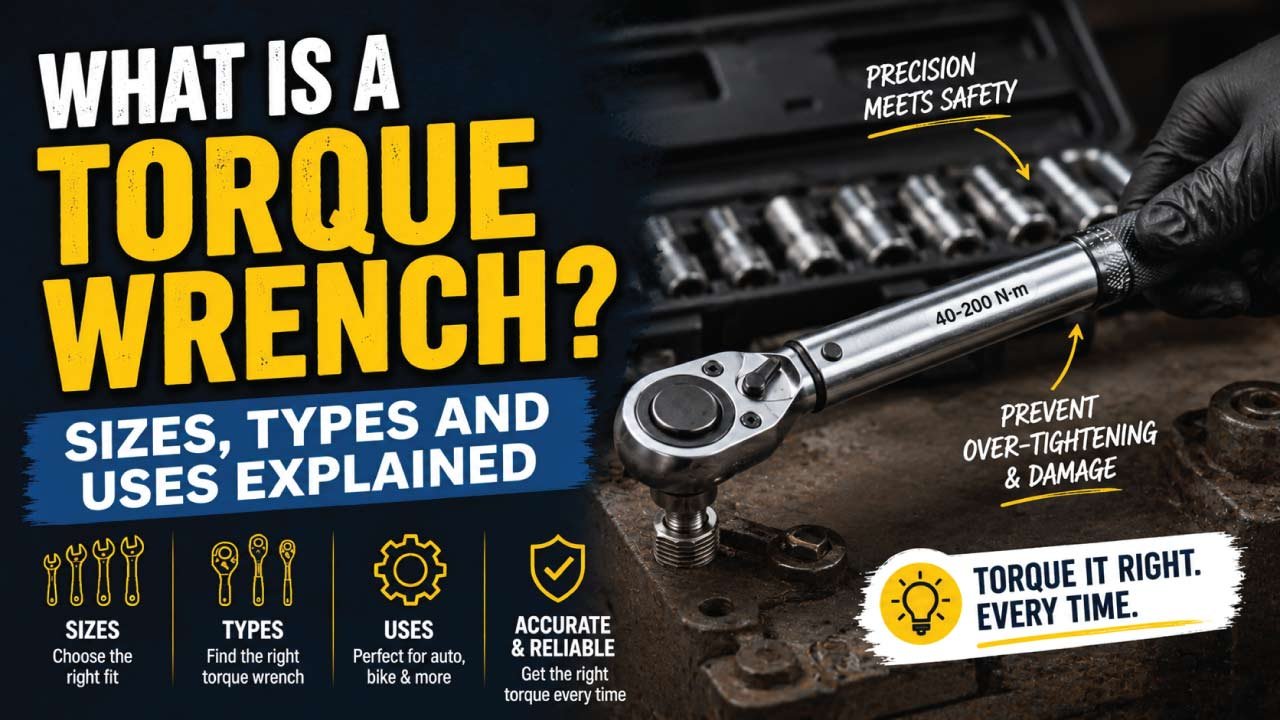
A torque wrench is one of the most important tools used in automotive repair, mechanical work, construction, industrial maintenance, and engineering projects. Unlike standard wrenches, a torque wrench allows users to tighten nuts and bolts to a specific torque value. This ensures proper fastening without over-tightening or under-tightening.
Choosing the correct torque wrench size is extremely important because every fastener requires a specific amount of torque. Using the wrong size or torque range can damage bolts, crack components, strip threads, or create unsafe working conditions.
In this complete torque wrench size guide, you will learn about torque wrench sizes, drive sizes, torque ranges, wrench types, applications, materials, and tips for choosing the correct torque wrench for your work.
Standard Torque Wrench Drive Sizes
Torque wrench drive sizes determine how much force a wrench can safely handle and what type of job it is suitable for. Smaller drives are used for light, precise work, while larger drives are designed for heavy-duty applications. Choosing the correct drive size ensures accuracy, safety, and tool durability.
| Drive Size | Common Torque Range | Typical Uses |
|---|---|---|
| 1/4 inch | 20–200 in-lb | Small fasteners |
| 3/8 inch | 10–100 ft-lb | Automotive and motorcycles |
| 1/2 inch | 20–250 ft-lb | Cars and trucks |
| 3/4 inch | 100–600 ft-lb | Heavy equipment |
| 1 inch | 200–2000 ft-lb | Industrial machinery |
1/4-Inch Torque Wrench
The 1/4-inch torque wrench is the smallest commonly used size, designed for precision work where low torque is required. It is ideal for delicate fasteners and small mechanical or electronic components where accuracy is more important than power.
Features
- Lightweight
- Highly precise
- Low torque range
- Compact design
Common Torque Range
- 20–200 inch-pounds
Best Uses
- Electronics
- Small engines
- Bicycle repair
- Motorcycle components
- Interior automotive work
Advantages
- Excellent precision
- Easy to handle
- Good for delicate fasteners
Disadvantages
- Not suitable for large bolts
3/8-Inch Torque Wrench
The 3/8-inch torque wrench is one of the most versatile and widely used sizes. It provides a balanced combination of power and control, making it suitable for general automotive repair and medium-duty mechanical tasks.
Features
- Medium torque range
- Balanced size
- Common automotive tool
Common Torque Range
- 10–100 foot-pounds
Best Uses
- Spark plugs
- Brake components
- Engine parts
- Motorcycle repair
- Suspension work
Advantages
- Versatile
- Easy control
- Good for medium fasteners
Disadvantages
- Limited for heavy-duty work
1/2-Inch Torque Wrench
The 1/2-inch torque wrench is the most commonly used size in automotive workshops. It is designed for higher torque applications and works well with larger bolts and critical vehicle components.
Features
- High torque capacity
- Durable construction
- Suitable for heavy fasteners
Common Torque Range
- 20–250 foot-pounds
Best Uses
- Lug nuts
- Truck repair
- Engine assembly
- Suspension bolts
- Heavy automotive work
Advantages
- Strong and durable
- Wide torque range
- Ideal for garages
Disadvantages
- Heavier than smaller sizes
3/4-Inch Torque Wrench
The 3/4-inch torque wrench is designed for heavy-duty industrial applications where high torque is required. It is commonly used in construction and large machinery maintenance.
Features
- Very high torque output
- Long handle design
- Heavy-duty construction
Common Torque Range
- 100–600 foot-pounds
Best Uses
- Construction equipment
- Industrial machinery
- Large trucks
- Agricultural equipment
Advantages
- Handles large fasteners
- High torque capability
Disadvantages
- Expensive
- Heavy
1-Inch Torque Wrench
The 1-inch torque wrench is built for extreme heavy-duty industrial work. It is used where very high torque is required for large fasteners in massive machinery and industrial systems.
Features
- Industrial-grade design
- Extremely high torque
- Long handle for leverage
Common Torque Range
- 200–2000 foot-pounds
Best Uses
- Mining equipment
- Shipbuilding
- Power plants
- Large industrial machinery
Advantages
- Massive torque capacity
- Heavy industrial use
Disadvantages
- Very large and costly
Types of Torque Wrenches
Different torque wrench types are designed for different levels of accuracy, user preference, and job requirements. Some are simple and mechanical, while others are advanced and digital. Choosing the right type depends on how precise, durable, or easy-to-use you need the tool to be.
1. Click Torque Wrench
The click torque wrench is the most commonly used type in automotive and general repair work. It is popular because it is simple, reliable, and easy to operate even for beginners.
How It Works
It produces a clicking sound when the preset torque value is reached, signaling the user to stop applying force immediately.
Advantages
- Easy to use
- Affordable
- Reliable
Best For
- Automotive work
- General maintenance
2. Beam Torque Wrench
A beam torque wrench is one of the simplest and most traditional torque tools. It uses a visual pointer and scale to measure applied torque, making it easy to understand without internal mechanisms.
Features
- Simple design
- No calibration spring
- Durable
Advantages
- Affordable
- Accurate over time
Disadvantages
- Harder to read during use
3. Digital Torque Wrench
A digital torque wrench uses electronic sensors to measure torque and displays the reading on an LCD screen. It is designed for modern users who need high precision and advanced features.
Features
- LCD display
- Audible alerts
- High accuracy
Advantages
- Very precise
- Easy reading
- Advanced features
Disadvantages
- Expensive
- Battery dependent
4. Dial Torque Wrench
A dial torque wrench uses a dial indicator to show torque values in real time. It is highly accurate and often used in professional and technical environments where precision is critical.
Features
- High precision
- Professional-grade accuracy
Best For
- Laboratories
- Aerospace
- Engineering work
Torque Units Explained
Understanding torque units is important for achieving correct tightening and avoiding damage to fasteners or equipment. Different industries use different measurement systems, so knowing how each unit works helps ensure accuracy, safety, and proper tool selection in mechanical, automotive, and industrial applications.
1. Foot-Pounds (ft-lb)
Foot-pounds are one of the most commonly used torque units, especially in automotive and heavy machinery work. This unit measures the force applied over a one-foot distance, making it suitable for medium to high torque applications where stronger fastening is required.
Common in:
- Automotive repair
- Heavy machinery
2. Inch-Pounds (in-lb)
Inch-pounds are used for low-torque and precision applications where delicate fasteners need controlled tightening. This unit is commonly found in electronics, bicycles, and small engine work where even slight over-tightening can cause damage or stripping.
Used for:
- Small fasteners
- Electronics
- Precision work
Conversion
- 1 ft-lb = 12 in-lb
3. Newton-Meters (Nm)
Newton-meters are the standard metric unit of torque used worldwide in engineering, automotive manufacturing, and industrial settings. This unit provides a universal measurement system, making it easier to follow international specifications and ensure consistent tightening standards.
Conversion
- 1 ft-lb ≈ 1.356 Nm
👆 Screwdriver Size Selection for All Screws is a complete expert guide to understanding screwdriver sizes, tip types, and correct matching for different screws. Read the full post to avoid stripped screws, improve fastening accuracy, and choose the right screwdriver for DIY, electrical, automotive, and mechanical tasks like a professional.
Choose the Correct Torque Wrench Size
Selecting the right torque wrench size is essential for accuracy, safety, and proper fastening. The correct choice depends on the fastener size, required torque range, and type of work being performed. Using the right size ensures better control, prevents damage, and improves overall tool performance.
Fastener Size
The size of the fastener plays a major role in selecting the correct torque wrench. Small bolts need lower torque and smaller drive sizes, while larger bolts require higher force and stronger tools to avoid breaking or stripping.
Small bolts require:
- 1/4-inch or 3/8-inch drive
Large bolts require:
- 1/2-inch or larger drive
Required Torque Range
Choosing a torque wrench that operates in the middle of its range improves accuracy and tool life. If the required torque is too close to the minimum or maximum limit, the readings may become less reliable and harder to control.
Always choose a wrench where the desired torque falls near the middle of its range for best accuracy.
Application Type
Different jobs require different torque wrench sizes based on workload, precision, and fastener strength. Light-duty tasks use smaller wrenches, while heavy industrial work requires larger, more powerful tools designed for high torque output.
Automotive
Best sizes:
- 3/8 inch
- 1/2 inch
Industrial
Best sizes:
- 3/4 inch
- 1 inch
Bicycle Repair
Best size:
- 1/4 inch
Torque Wrench Materials
The material of a torque wrench plays a major role in its strength, durability, and accuracy. High-quality materials ensure long-lasting performance, resistance to wear, and reliable torque delivery even under heavy use. Different materials are chosen based on whether the tool is for professional, industrial, or precision applications.
1. Chrome Vanadium Steel
Chrome vanadium steel is one of the most commonly used materials in torque wrench construction. It offers a strong balance of durability and corrosion resistance, making it ideal for professional and workshop environments where tools are used frequently.
Features
- Strong
- Corrosion resistant
- Durable
Common Use
- Professional torque wrenches
2. Hardened Steel
Hardened steel is designed for heavy-duty performance and long service life. It can withstand high torque loads and resist wear, making it suitable for industrial environments where tools are exposed to constant stress and pressure.
Features
- Heavy-duty performance
- Wear resistant
Best For
- Industrial tools
3. Aluminum Components
Aluminum is used in some parts of torque wrenches, especially in lightweight and digital models. It reduces overall tool weight, making it easier to handle, especially for extended use or precision work where comfort and control are important.
Features
- Lightweight
- Easy handling
Common In
- Digital torque wrenches
Common Torque Wrench Uses
Torque wrenches are essential tools used across many industries where precise tightening is required. They ensure that bolts and fasteners are tightened to exact specifications, improving safety, performance, and reliability in mechanical systems.
1. Automotive Repair
Torque wrenches are widely used in vehicle maintenance and repair to ensure all critical components are tightened correctly. This prevents mechanical failures and improves vehicle safety and performance.
Used for:
- Lug nuts
- Engine bolts
- Brake systems
2. Motorcycle Maintenance
Motorcycles require precise torque settings to maintain balance, safety, and performance. Torque wrenches help ensure that all key components are securely fastened without causing damage.
Used for:
- Engine covers
- Brake parts
- Handlebar fasteners
3. Bicycle Repair
In bicycle maintenance, especially with lightweight materials like carbon fiber, accurate torque is essential to prevent cracks or damage while ensuring safe assembly.
Used for:
- Carbon fiber components
- Precision tightening
4. Construction
Torque wrenches are used in construction to ensure structural integrity and safety. Proper tightening of bolts in machinery and structures is critical for long-term stability.
Used for:
- Structural bolts
- Machinery assembly
5. Aerospace
In aerospace applications, torque accuracy is extremely important due to strict safety standards. Every fastener must be tightened precisely to ensure aircraft safety and performance.
Used for:
- Aircraft assembly
- Precision engineering
👆 Pliers Size Guide for Accurate Work (Complete Guide) is a detailed expert guide to understanding pliers sizes, types, and proper applications for electrical, mechanical, and DIY tasks. Read the full post to choose the right pliers, improve grip accuracy, and perform cutting, bending, and holding work safely and efficiently like a professional.
Torque Wrench Size Chart
| Drive Size | Torque Range | Main Applications |
|---|---|---|
| 1/4 inch | 20–200 in-lb | Small fasteners |
| 3/8 inch | 10–100 ft-lb | Automotive |
| 1/2 inch | 20–250 ft-lb | Cars and trucks |
| 3/4 inch | 100–600 ft-lb | Heavy equipment |
| 1 inch | 200–2000 ft-lb | Industrial machinery |
How to Use a Torque Wrench Properly
Using a torque wrench correctly is important for achieving accurate tightening and preventing damage to fasteners or tools. Proper technique also improves tool life and ensures safe mechanical performance. Each step should be followed carefully for consistent and professional results.
Step 1: Set the Desired Torque
Adjust the torque wrench to the required torque value based on the manufacturer’s specification. Make sure the setting is accurate before starting the tightening process to avoid under-tightening or over-tightening of bolts and nuts.
Step 2: Attach Correct Socket
Select and attach the correct socket size that fits the fastener properly. A loose or incorrect socket can slip, cause damage, or lead to inaccurate torque application during tightening.
Step 3: Tighten Slowly
Apply smooth and steady pressure while tightening the fastener. Avoid sudden or jerky movements, as they can affect accuracy and increase the risk of over-tightening or damaging the tool.
Step 4: Stop at Click
For click-type torque wrenches, stop immediately when you hear or feel the click. This indicates that the preset torque level has been reached, and continuing to apply force may lead to over-tightening.
For click wrenches:
- Stop immediately after the click sound
Common Torque Wrench Mistakes
Incorrect usage can reduce accuracy and damage both the tool and fasteners. Avoiding common mistakes helps maintain precision, safety, and long-term performance of the torque wrench.
Using as a Breaker Bar: Never use a torque wrench to loosen tight bolts.
Dropping the Tool: Drops can damage calibration.
Incorrect Storage :Always store at the minimum torque setting.
Over-Tightening After Click: Extra force reduces accuracy.
Torque Wrench Calibration
Calibration ensures that the torque wrench delivers accurate and reliable readings. Over time, repeated use or accidental damage can affect performance, making calibration necessary for maintaining precision.
Why Calibration Matters
Improper calibration can lead to serious mechanical issues and safety risks. Inaccurate torque application may cause structural failure or equipment damage.
Improper calibration can cause:
- Loose fasteners
- Broken bolts
- Safety hazards
Recommended Calibration Interval
Regular calibration helps maintain tool accuracy and reliability over time. The frequency depends on usage level and working conditions.
- Every 5,000 cycles
- Once per year
- After dropping the tool
👆 Socket Wrench Sizes and Their Applications is a complete expert guide to understanding socket wrench sizes, drive types, and real-world applications in automotive and mechanical work. Read the full post to select the correct socket size, improve fastening efficiency, and handle repair tasks safely and accurately like a professional technician.
Advantages of Torque Wrenches
Torque wrenches provide precise control over tightening force, which is essential in mechanical, automotive, and industrial applications. They help ensure that fasteners are neither too loose nor too tight, improving overall performance, reliability, and safety of assembled components.
Accurate Tightening
- Prevents fastening errors
Improved Safety
- Critical in automotive and industrial work
Prevents Damage
- Protects bolts and components
Professional Results
- Ensures consistent assembly quality
Disadvantages of Torque Wrenches
Although torque wrenches are highly useful, they also have some limitations. They are more expensive than standard tools and require proper handling and maintenance to maintain accuracy over time. Incorrect use can reduce performance and reliability.
More Expensive Than Standard Wrenches
- Precision tools cost more
Requires Calibration
- Accuracy must be maintained
Sensitive to Mishandling
- Improper use affects precision
Best Torque Wrench Size for Beginners
For beginners, selecting the right torque wrench size is important for ease of use and versatility. The most recommended option covers a wide range of common tasks, especially in automotive and general maintenance work.
For beginners, the best option is usually:
3/8-Inch Torque Wrench
Why?
- Versatile
- Easy to handle
- Suitable for most automotive tasks
- Good torque range
A 1/2-inch model is also excellent for wheel lug nuts and larger bolts.
Safety Tips for Using Torque Wrenches
Safety is important when using torque wrenches to avoid injury and equipment damage. Proper handling, inspection, and following guidelines ensure safe and accurate operation in all types of mechanical work.
Wear Safety Equipment
Use:
- Gloves
- Eye protection
Follow Manufacturer Specifications
- Always use recommended torque values
Inspect the Tool Before Use
Check for:
- Cracks
- Loose parts
- Damage
Use Smooth Force
- Avoid jerking motions during tightening
Conclusion
A torque wrench is an essential precision tool for automotive repair, industrial maintenance, engineering, and mechanical assembly. Understanding torque wrench sizes, drive types, torque ranges, and applications helps users select the right tool for accurate and safe fastening.
Small torque wrenches provide precision for delicate components, while larger models deliver the strength needed for heavy-duty machinery and industrial work. Choosing the proper torque wrench improves safety, protects equipment, and ensures reliable mechanical performance.
Whether you are a beginner mechanic, professional technician, or industrial worker, investing in the correct torque wrench size makes every fastening task safer, easier, and more accurate.
👆 Complete Guide to Adjustable Spanner Sizes is a detailed expert guide to understanding adjustable spanner sizes, jaw capacity, and practical applications in plumbing, automotive, and DIY work. Read the full post to choose the right spanner, improve grip accuracy, and handle fastening tasks safely and efficiently like a professional.
FAQs:
What is the most common torque wrench size?
The 1/2-inch torque wrench is the most commonly used size, especially in automotive repair and garage work. It provides enough strength for wheel lug nuts, suspension parts, and engine components. Its wide torque range makes it suitable for many medium and heavy-duty applications, making it a popular choice among professionals and beginners.
Can a torque wrench loosen bolts?
Torque wrenches are designed mainly for tightening fasteners accurately, not loosening them. Using a torque wrench to break loose tight bolts can damage the calibration and internal mechanism. A breaker bar or standard ratchet should always be used first for loosening stubborn or rusted fasteners safely.
How often should a torque wrench be calibrated?
A torque wrench should generally be calibrated once a year or after about 5,000 uses. Calibration is also recommended if the tool has been dropped or heavily overloaded. Regular calibration ensures accurate torque readings, improves safety, and prevents under-tightening or over-tightening of important fasteners and mechanical components.
What happens if bolts are over-tightened?
Over-tightening bolts can stretch or break fasteners, strip threads, crack components, and damage mechanical parts. It may also create unsafe conditions in vehicles and machinery. Using a torque wrench helps apply the correct amount of force and prevents expensive repairs caused by excessive tightening pressure.
Which torque wrench is best for beginners?
A click torque wrench is usually the best option for beginners because it is simple, reliable, and easy to use. It produces a clicking sound when the desired torque is reached, helping users avoid over-tightening. A 3/8-inch drive size is often recommended for general automotive and household repair work.
Why should torque wrenches be stored at minimum setting?
Torque wrenches should be stored at their minimum torque setting to reduce tension on the internal spring mechanism. This helps maintain calibration accuracy and extends tool lifespan. Leaving the wrench set at high torque for long periods can weaken the spring and reduce measurement precision over time.
What is the difference between ft-lb and Nm?
Foot-pounds (ft-lb) and Newton-meters (Nm) are both units used to measure torque. Foot-pounds are common in the United States, while Newton-meters are widely used in metric systems worldwide. Both represent rotational force, but they use different measurement standards for automotive and engineering specifications.
Can a torque wrench be used on lug nuts?
Yes, torque wrenches are commonly used for tightening wheel lug nuts to manufacturer specifications. Proper torque helps ensure wheel safety and prevents uneven pressure on brake and wheel components. A 1/2-inch torque wrench is usually the preferred size for most car and truck lug nut applications.

Engineer Hassan is a Mechanical Engineer with 16+ years of hands-on experience in mechanical hardware, fasteners, and workshop tools. He focuses on size selection, thread identification, and measurement, helping users choose the correct components with accuracy and safety.