
Wing nuts are among the most practical and user-friendly fasteners available. Designed for easy hand tightening and loosening without tools, they are widely used in furniture assembly, automotive applications, electrical enclosures, machinery, DIY projects, and countless household tasks. Despite their simplicity, choosing the correct wing nut size is essential for safety, durability, and performance.
This complete guide to wing nut size charts will help you understand wing nut dimensions, thread standards, materials, and applications so you can confidently select the right wing nut for your project.
What Is a Wing Nut?
A wing nut is a type of fastener designed with two prominent extensions on opposite sides, commonly known as “wings.” These wings allow the nut to be tightened or loosened easily by hand without requiring tools, making it highly convenient for quick adjustments and repeated assembly tasks.
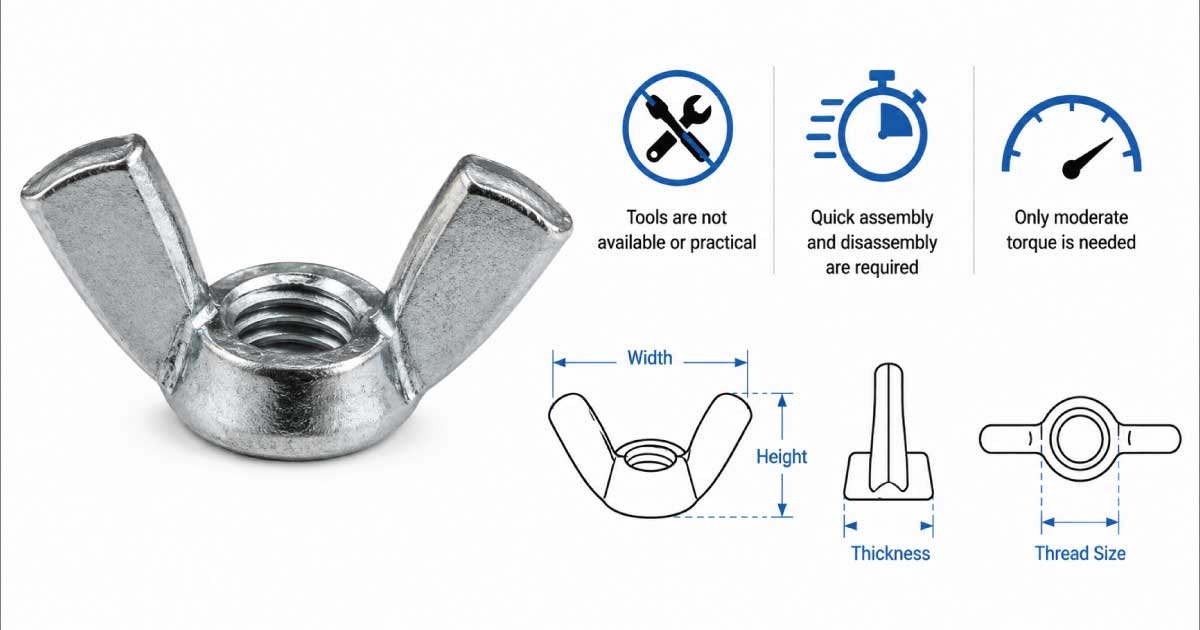
Wing nuts are commonly used where:
- Tools are not available or practical
- Quick assembly and disassembly are required
- Only moderate torque is needed
Why Wing Nut Size Matters
Selecting the correct wing nut size is essential for maintaining safety, stability, and proper mechanical performance. Incorrect sizing can compromise the connection and lead to functional or structural issues in the assembly.
Using the wrong wing nut size can lead to several problems:
- Poor thread engagement
- Stripped threads
- Reduced holding strength
- Safety risks due to loosening under vibration
A proper wing nut size ensures:
- Secure fastening
- Smooth hand operation
- Long service life
- Compatibility with bolts or threaded rods
Understanding wing nut size charts helps you match the nut correctly to your bolt or screw.
Understand The Wing Nut Size Charts
Wing nut size charts provide standardized measurements that help users select the correct fastener for a given application. These charts ensure compatibility between nuts and bolts while supporting both metric and imperial systems.
A wing nut size chart typically includes:
- Nominal thread size
- Thread pitch
- Width across wings
- Height (thickness)
- Thread depth
These measurements vary depending on whether the wing nut follows metric or imperial (inch) standards.
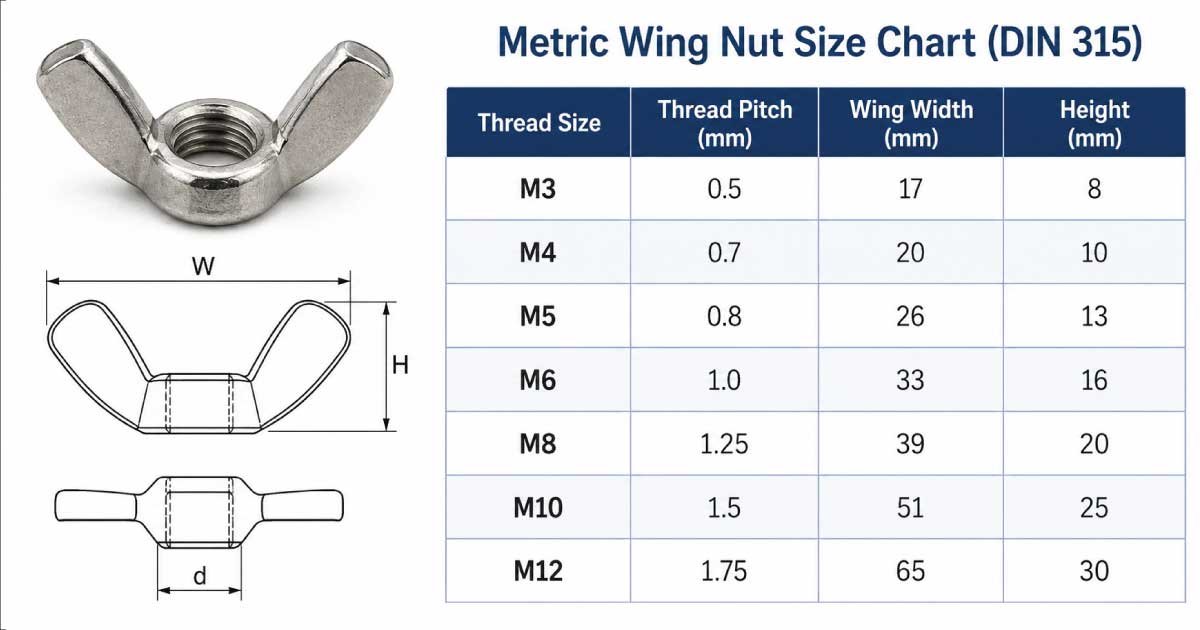
Metric Wing Nut Size Chart (DIN 315)
Metric wing nuts are commonly produced according to DIN 315 standards and are measured in millimeters (mm). These fasteners are widely used in engineering and manufacturing applications where metric threading systems are standard and consistent sizing is essential.
Common Metric Wing Nut Sizes
| Thread Size | Thread Pitch (mm) | Wing Width (mm) | Height (mm) |
|---|---|---|---|
| M3 | 0.5 | 17 | 8 |
| M4 | 0.7 | 20 | 10 |
| M5 | 0.8 | 26 | 13 |
| M6 | 1.0 | 33 | 16 |
| M8 | 1.25 | 39 | 20 |
| M10 | 1.5 | 51 | 25 |
| M12 | 1.75 | 65 | 30 |
How to Read Metric Sizes
- M6, for example, means the nut fits a bolt with a 6 mm diameter
- Thread pitch indicates the distance between threads
- Larger sizes provide higher load capacity and grip
Imperial (Inch) Wing Nut Size Chart
Imperial wing nut sizing is based on Unified Thread Standards, including UNC and UNF series, where dimensions are expressed in inches. The following chart provides common sizes with corresponding thread details and approximate physical dimensions to help ensure correct selection and compatibility.
Common Imperial Wing Nut Sizes
| Thread Size | Threads Per Inch (TPI) | Wing Width (in) | Height (in) |
|---|---|---|---|
| #8-32 | 32 | 0.75 | 0.38 |
| #10-24 | 24 | 0.88 | 0.44 |
| 1/4″-20 | 20 | 1.12 | 0.56 |
| 5/16″-18 | 18 | 1.38 | 0.69 |
| 3/8″-16 | 16 | 1.62 | 0.81 |
| 1/2″-13 | 13 | 2.00 | 1.00 |
Understanding Imperial Sizes
- The first number represents bolt diameter
- The second number indicates threads per inch
- Lower TPI means coarser threads and faster engagement
Types of Wing Nuts by Design
Wing nuts are manufactured in different design styles to suit various handling needs and mechanical requirements. These design differences mainly influence grip comfort, torque capability, and application suitability rather than changing the basic thread sizing standards.
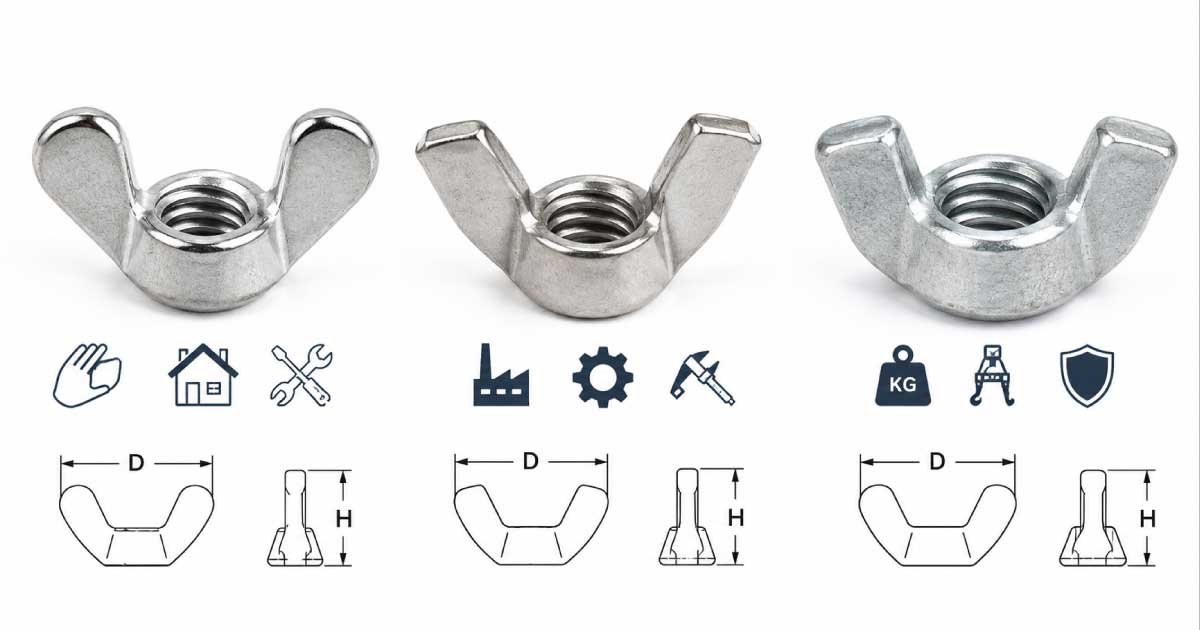
1. American Style Wing Nuts
Rounded wings, comfortable hand grip, commonly used in household and light industrial applications where ease of use and quick adjustments are important.
2. European Style Wing Nuts
Flatter and more angular wings, designed to provide higher torque capability, often preferred in machinery and technical assemblies requiring firmer tightening.
3. Heavy-Duty Wing Nuts
Thicker body with wider wings, built for higher load conditions, offering improved strength and durability in demanding industrial environments.
Wing Nut Materials and Their Impact on Size Selection
The material of a wing nut generally does not change its nominal size, but it significantly affects strength, durability, corrosion resistance, and overall performance in different working environments.
Common Materials
Steel (Zinc-Plated)
Strong and cost-effective, suitable for indoor use where corrosion exposure is minimal and general mechanical strength is sufficient.
Stainless Steel (304/316)
Highly corrosion-resistant, making it ideal for outdoor, marine, and high-moisture environments where long-term durability is required.
Brass
Non-magnetic and corrosion-resistant, commonly used in electrical applications where conductivity and anti-sparking properties are important.
Plastic / Nylon
Lightweight and corrosion-proof, used in delicate assemblies where metal contact must be avoided or weight reduction is necessary.
Material choice can influence how much torque you can apply by hand without damaging the nut, affecting both usability and safe tightening limits in practical applications.
Choose the Right Wing Nut Size
Selecting the correct wing nut is important for ensuring safe fastening, smooth installation, and long-term reliability. The right choice depends on mechanical fit, usage conditions, and handling convenience, especially when the assembly is frequently adjusted or exposed to stress.
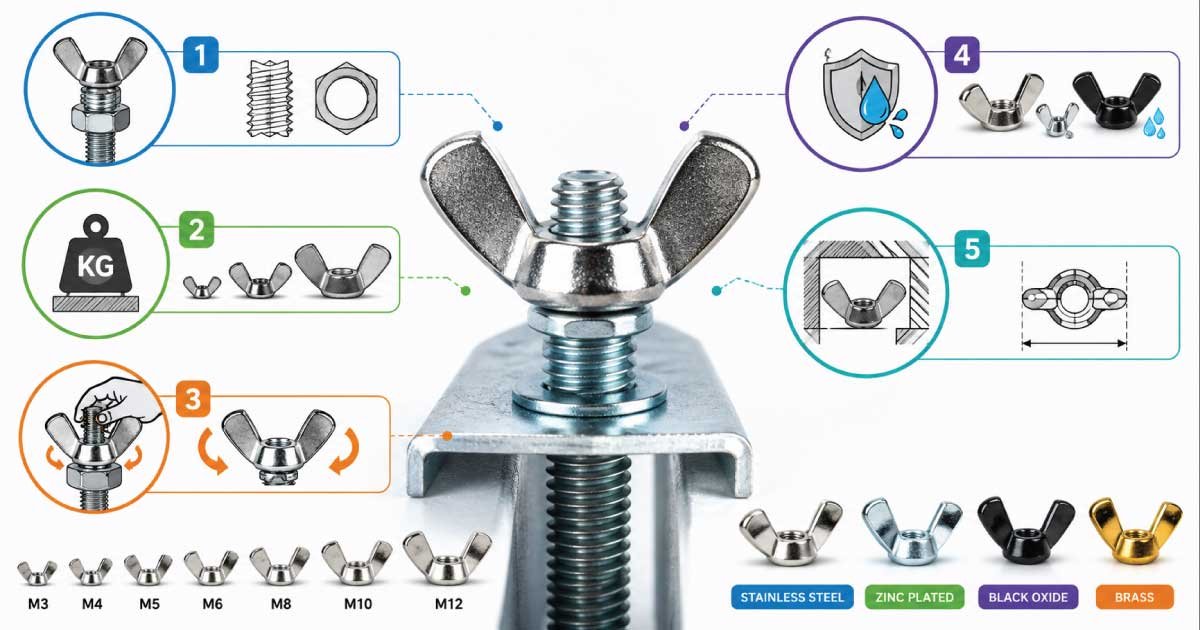
1. Bolt or Threaded Rod Size
The wing nut must match the exact thread diameter and pitch of the bolt, ensuring smooth engagement and preventing cross-threading or instability in the assembled joint.
2. Load Requirements
Heavier loads require larger sizes and stronger materials to maintain structural integrity, reduce the risk of deformation, and ensure the fastening system remains secure under stress.
3. Frequency of Adjustment
Frequent tightening and loosening benefit from larger wings for easier grip, allowing quicker manual operation and reducing hand strain during repetitive assembly or maintenance tasks.
4. Environment
Outdoor or wet environments require corrosion-resistant materials such as stainless steel or coated metals to prevent rusting and maintain reliable performance over time.
5. Space Constraints
Limited space may require smaller wing widths even if the thread size is larger, ensuring the fastener fits properly without interfering with nearby components or assemblies.
Final Thoughts
Understanding a wing nut size chart is essential for selecting the right fastener for your project. Whether you’re working with metric or imperial systems, knowing the thread size, wing dimensions, material, and application requirements will save time, prevent damage, and improve safety.
Wing nuts may seem simple, but choosing the correct size makes a significant difference in performance and reliability. With this complete guide, you now have the knowledge to select the perfect wing nut for any application confidently and correctly.
👉 Choosing the correct machine screw size is essential for a secure fit. This Machine Screw Size Chart includes standard dimensions, metric and inch sizes, thread types, head styles, materials, and selection tips. Read the full guide to compare sizes, understand specifications, and select the right machine screw for your application.

Engineer Hassan is a Mechanical Engineer with 16+ years of hands-on experience in mechanical hardware, fasteners, and workshop tools. He focuses on size selection, thread identification, and measurement, helping users choose the correct components with accuracy and safety.