
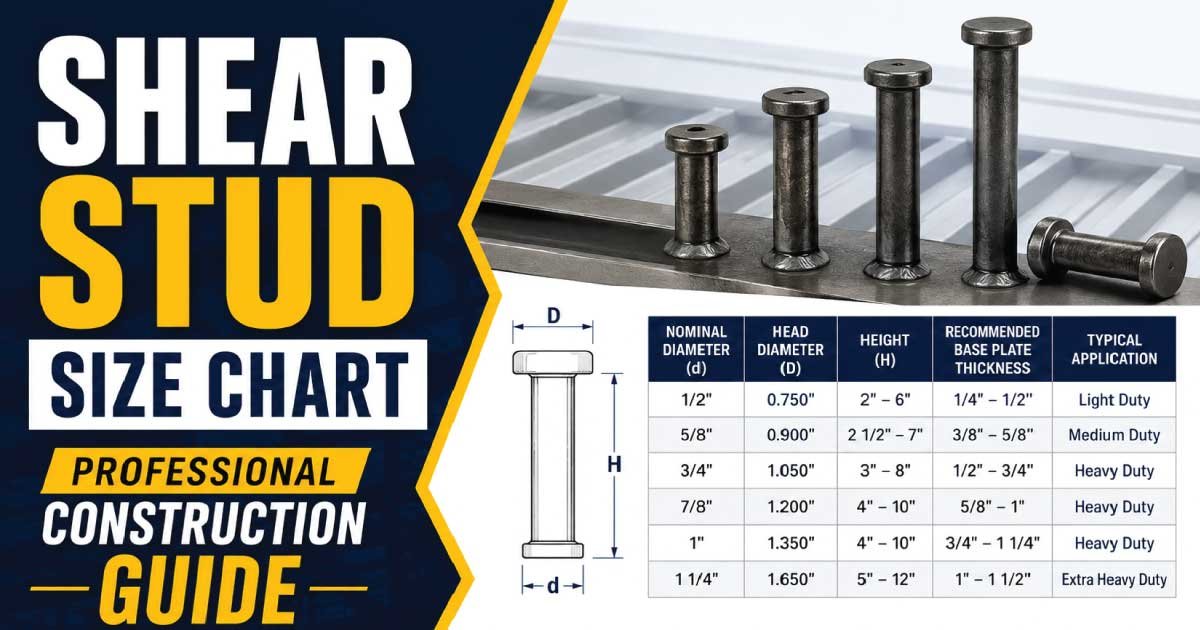
Shear studs are specialized welded fasteners used primarily in composite steel and concrete structures to transfer shear forces between steel beams and concrete slabs.
They create a strong mechanical connection that allows both materials to work together as a single structural unit. Shear studs are widely used in bridges, high-rise buildings, industrial floors, and steel construction projects.
Selecting the correct shear stud size is essential for structural strength, load capacity, and long-term durability. This complete guide explains shear stud sizes, dimensions, materials, applications, installation methods, and selection factors.
What Is a Shear Stud?
A shear stud is a headed metal fastener welded directly onto a steel surface using a specialized stud welding process. After installation, concrete is poured around the stud, creating a mechanical connection between steel and concrete. The welded head prevents the stud from pulling out, while the shank transfers horizontal shear forces between structural components.
Primary Functions
- Transfers shear loads
- Connects steel and concrete
- Improves composite strength
- Increases structural stability
- Prevents material separation
- Enhances load distribution
Common Types of Shear Studs
Different shear stud designs are available to meet specific structural requirements, welding methods, and project standards. Understanding these types helps engineers choose the correct fastener for each application.
1. Headed Shear Stud
Headed shear studs are the most common type used in composite construction. They feature a welded head that provides resistance against pull-out forces.
Advantages
- High load capacity
- Reliable concrete anchorage
- Easy installation
- Excellent shear resistance
- Widely standardized
Applications
- Composite beams
- Bridge decks
- Steel structures
- Industrial buildings
- Concrete slabs
2. Weld Stud
Weld studs are installed using arc stud welding equipment and provide a permanent connection between metal components.
Benefits
- Fast installation
- Strong weld connection
- Reduced labor requirements
- High production efficiency
- Consistent quality
3. Stainless Steel Shear Stud
Stainless steel shear studs are used in environments where corrosion resistance is required, such as marine structures, chemical facilities, and outdoor applications.
Features
- Excellent corrosion resistance
- Long service life
- Suitable for harsh environments
- Reduced maintenance needs
4. Insulation Shear Stud
Insulation shear studs are designed for specialized construction applications where thermal insulation systems require mechanical fastening.
Shear Stud Size Chart (Standard Sizes)
The following table shows commonly used shear stud dimensions in structural construction.
| Stud Diameter | Stud Length | Head Diameter | Common Applications |
|---|---|---|---|
| 1/2 inch | 2 inch | 3/4 inch | Light composite structures |
| 5/8 inch | 2-1/2 inch | 1 inch | Standard beams and slabs |
| 3/4 inch | 3 inch | 1-1/4 inch | Heavy structural applications |
| 7/8 inch | 3-1/2 inch | 1-1/2 inch | High-load structures |
| 1 inch | 4 inch | 1-5/8 inch | Heavy industrial projects |
Metric Shear Stud Size Chart
Metric shear studs are commonly used in international construction projects and engineering applications.
| Stud Diameter | Length | Head Diameter |
|---|---|---|
| M10 | 80 mm | 15 mm |
| M12 | 100 mm | 19 mm |
| M16 | 100 mm | 25 mm |
| M19 | 125 mm | 32 mm |
| M22 | 150 mm | 35 mm |
| M25 | 175 mm | 40 mm |
Understanding Shear Stud Dimensions
Understanding shear stud dimensions helps ensure proper structural performance and compatibility with design requirements. Each dimension affects load transfer, welding quality, and concrete anchorage strength.
1. Stud Diameter
The stud diameter determines the shear capacity and strength of the connection. Larger diameters generally provide higher load resistance but require proper welding equipment and structural design approval.
2. Stud Length
Stud length determines how deeply the fastener extends into the concrete. Adequate embedment improves anchorage and prevents failure under shear loading.
3. Head Diameter
The enlarged head provides mechanical locking inside the concrete and prevents the stud from pulling out under applied forces.
How to Measure a Shear Stud
Accurate measurement ensures that replacement studs match the original design requirements and structural specifications.
Step 1: Measure Stud Diameter
Use a digital caliper to measure the outside diameter of the stud shank.
Measurement Tips
- Measure across the smooth shank
- Avoid measuring weld material
- Verify multiple points
- Compare with standard charts
Step 2: Measure Stud Length
Measure the total length from the base of the stud to the top of the head before installation.
Step 3: Measure Head Diameter
Measure across the widest part of the stud head to confirm the correct stud type and specification.
Common Shear Stud Materials
The material used for shear studs affects strength, weldability, corrosion resistance, and structural performance.
Carbon Steel Shear Studs
Carbon steel is the most commonly used material because it provides excellent strength and reliable welding characteristics.
Advantages
- High strength
- Good weldability
- Cost-effective
- Widely available
- Suitable for structural applications
Stainless Steel Shear Studs
Stainless steel studs are selected for corrosive environments where long-term durability is required.
Benefits
- Excellent corrosion resistance
- Reduced maintenance
- Suitable for marine conditions
- Long service life
- Weather resistant
Low Alloy Steel Shear Studs
Low alloy steel shear studs provide improved mechanical properties for demanding structural applications requiring increased strength and durability.
Applications of Shear Studs
Shear studs are essential components in modern structural engineering where steel and concrete must act together to support heavy loads.
Bridge Construction
Bridge engineers use shear studs to connect steel girders with concrete bridge decks, allowing composite action and improving structural efficiency.
Common Applications
- Highway bridges
- Railway bridges
- Overpasses
- Steel deck systems
- Infrastructure projects
High-Rise Buildings
Tall buildings use shear studs in composite floor systems to improve strength, reduce structural weight, and increase design flexibility.
Typical Uses
- Steel beams
- Composite floors
- Structural frames
- Commercial buildings
- Industrial facilities
How to Choose the Correct Shear Stud Size
Selecting the correct shear stud size is critical for achieving safe and efficient composite structural performance. The stud diameter, length, material grade, spacing, and welding requirements must match the engineering design. Proper selection ensures effective shear transfer between steel and concrete while improving structural strength, durability, and long-term reliability.
Selection Checklist
- Check structural design requirements
- Determine required shear capacity
- Select proper stud diameter
- Choose suitable stud length
- Verify concrete thickness
- Consider beam dimensions
- Confirm welding compatibility
- Select approved material grade
- Follow building standards
- Verify spacing requirements
📊 View Standard Size Guide 👉 Shaft Size Chart: Easy Guide to Standard Dimensions
Shear Stud Welding Process
Shear studs are typically installed using stud welding equipment that creates a strong metallurgical bond between the stud base and steel surface. Proper welding ensures maximum strength and prevents connection failure.
Main Welding Steps
1. Surface Preparation
The steel surface must be clean and free from rust, oil, paint, moisture, and contaminants before welding.
2. Stud Positioning
The shear stud is placed vertically on the prepared steel surface using a stud welding gun.
3. Welding Operation
An electric arc melts the stud base and steel surface, creating a strong welded connection when pressure is applied.
4. Inspection
After welding, studs are inspected for proper fusion, alignment, and structural integrity.
Shear Stud Material Comparison
Different materials provide different levels of strength, corrosion resistance, and durability. Selecting the correct material improves structural performance and service life.
| Material | Best Applications | Main Advantages |
|---|---|---|
| Carbon Steel | General construction | High strength and economical |
| Stainless Steel | Marine and corrosive environments | Excellent corrosion resistance |
| Low Alloy Steel | Heavy structures | Increased strength and toughness |
| Heat-Treated Steel | High-load applications | Superior mechanical properties |
Shear Stud Strength Requirements
Shear studs must meet specific strength requirements to safely transfer loads between steel and concrete. Their performance depends on diameter, material properties, weld quality, and concrete conditions.
Important Strength Factors
- Tensile strength
- Shear capacity
- Stud diameter
- Embedment depth
- Concrete strength
- Welding quality
- Load distribution
- Stud spacing
- Structural design
Properly designed shear stud connections improve the overall strength and stability of composite structures.
Common Shear Stud Installation Mistakes
Incorrect installation can reduce the strength of the connection and create structural risks. Following proper welding procedures and inspection requirements helps prevent failures.
Avoid these common mistakes:
- Welding on dirty surfaces
- Using incorrect stud sizes
- Poor stud alignment
- Insufficient welding energy
- Incorrect stud spacing
- Damaged studs
- Ignoring concrete requirements
- Skipping quality inspections
- Improper storage conditions
- Using unapproved materials
Shear Stud Maintenance Tips
Although shear studs are designed for long-term structural use, regular inspection helps identify corrosion, damage, or connection problems in exposed structures.
Maintenance recommendations include:
- Inspect visible stud areas
- Check for corrosion
- Monitor concrete cracking
- Examine welded connections
- Inspect moisture exposure
- Repair damaged concrete
- Maintain protective coatings
- Perform structural inspections
- Follow engineering recommendations
- Document inspection results
Regular structural monitoring improves safety and extends the service life of composite systems.
📊 View Standard Size Guide 👉 How to Measure a Lag Bolt: Complete Step-by-Step Guide
Advantages of Using the Correct Shear Stud Size
Using properly selected shear studs improves structural efficiency and provides a reliable connection between steel and concrete components.
Major advantages include:
- Strong composite action
- Improved load transfer
- Increased structural capacity
- Reduced material requirements
- Better stability
- Faster construction
- Reliable connection performance
- Improved durability
- Lower maintenance needs
- Enhanced safety
Signs a Shear Stud Connection Needs Inspection
Shear stud failures are uncommon when properly designed and installed, but structural changes or environmental conditions may affect performance over time.
Common warning signs include:
- Concrete cracking around studs
- Visible corrosion
- Damaged weld areas
- Structural movement
- Excessive vibration
- Water penetration
- Reduced load performance
- Surface deterioration
- Unexpected deformation
- Connection damage
Early inspection helps prevent major structural problems and ensures continued safety.
Applications of Shear Studs Across Industries
Shear studs are widely used in industries requiring strong steel-to-concrete connections for improved structural performance and load handling.
Bridge Engineering
Bridge structures use shear studs to connect steel girders with concrete decks, improving load distribution and creating efficient composite structures.
Common Applications
- Highway bridges
- Railway bridges
- Flyovers
- Steel deck systems
- Infrastructure projects
Commercial Construction
Commercial buildings use shear studs in composite floor systems to improve strength, reduce construction weight, and provide flexible structural designs.
Typical Uses
- Office buildings
- Shopping centers
- Parking structures
- Industrial buildings
- High-rise towers
Industrial Facilities
Factories and industrial plants use shear studs in heavy-duty floors, equipment foundations, and structural frames where high load capacity is required.
Conclusion
Choosing the correct shear stud size is essential for creating strong, reliable, and durable composite structures.
Understanding shear stud dimensions, materials, welding methods, strength requirements, and installation procedures helps engineers and contractors achieve safe structural performance.
Proper selection, accurate installation, and regular inspection improve load transfer between steel and concrete, reduce maintenance requirements, extend structural service life, and enhance safety in bridges, high-rise buildings, industrial facilities, and modern construction projects.
📊 View Standard Size Guide 👉 Hose Clamp Size Chart: Best Guide for Every Project
FAQs:
What is the purpose of a shear stud?
A shear stud is used to connect steel beams and concrete slabs, allowing them to act as a single composite structure. It transfers horizontal shear forces between the materials, improving structural strength, stability, load distribution, and overall performance in buildings, bridges, parking structures, and industrial construction projects.
How do I select the correct shear stud size?
The correct shear stud size depends on structural design calculations, required shear capacity, concrete slab thickness, steel beam dimensions, loading conditions, and applicable building standards. Structural engineers determine the appropriate stud diameter, length, and spacing to ensure safe, reliable, and code-compliant composite construction performance.
What material are shear studs made from?
Most shear studs are manufactured from carbon steel because it offers excellent strength, toughness, and weldability for structural applications. Stainless steel and alloy steel shear studs are also available for corrosive environments or specialized projects that require enhanced corrosion resistance or higher mechanical performance.
How are shear studs installed?
Shear studs are installed using a stud welding process, where an electric arc fuses the stud directly to the steel surface. Proper surface preparation, correct welding procedures, and post-installation inspections are essential to achieve a strong, reliable connection that meets structural engineering and safety requirements.
Can damaged shear studs be replaced?
Yes, damaged shear studs can be removed and replaced using approved repair methods. The replacement process should be performed by qualified professionals following structural engineering specifications and welding standards to restore the connection’s strength, maintain structural integrity, and ensure the safety of the completed structure.

Engineer Hassan is a Mechanical Engineer with 16+ years of hands-on experience in mechanical hardware, fasteners, and workshop tools. He focuses on size selection, thread identification, and measurement, helping users choose the correct components with accuracy and safety.