
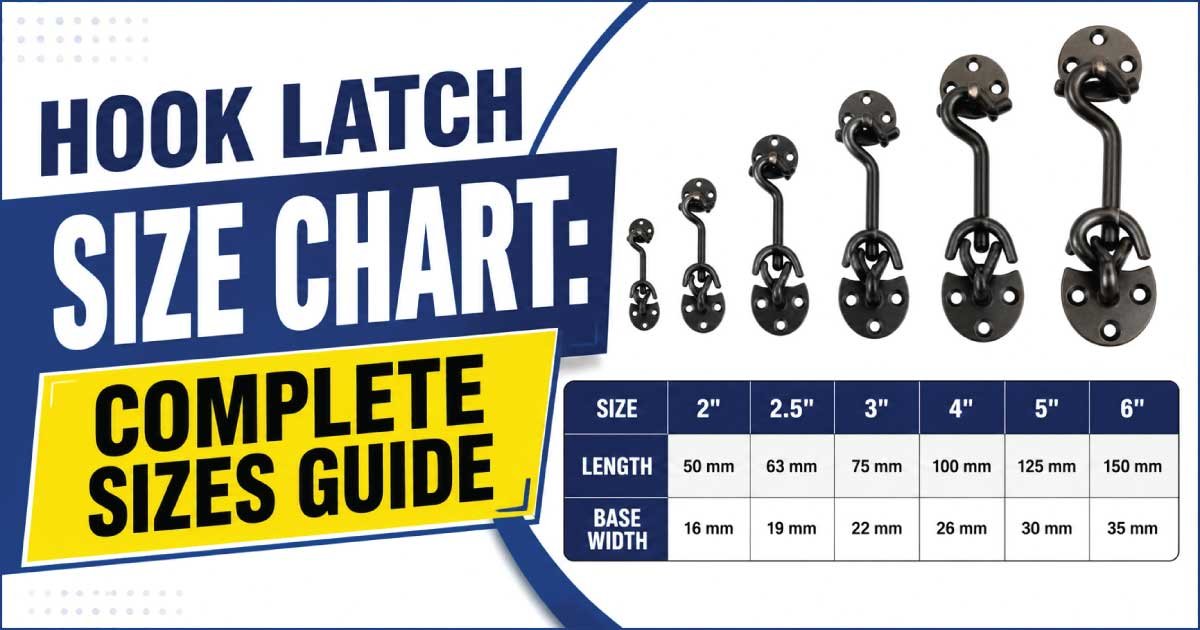
A hook latch is a simple but essential hardware component used to keep doors, gates, cabinets, windows, sheds, and furniture securely closed. It consists of a hook that connects to a matching eye or catch, creating a reliable locking mechanism without requiring a key. Because hook latches are available in multiple sizes, selecting the correct one is important for proper function, durability, and appearance.
Whether you are installing a hook latch on a wooden gate, barn door, cabinet, fence, or interior door, understanding standard hook latch sizes helps you choose the right product for your project. This guide provides a detailed hook latch size chart, explains how to measure a hook latch, discusses common materials, and offers practical tips for selecting the correct size.
Standard Hook Latch Size Chart
The table below shows common hook latch sizes used in residential, commercial, and outdoor applications.
| Hook Latch Size | Overall Length | Hook Length | Eye Diameter | Best For |
|---|---|---|---|---|
| 2 Inches | 50 mm | 25 mm | 8 mm | Small cabinets, jewelry boxes |
| 3 Inches | 75 mm | 40 mm | 10 mm | Cupboards, windows |
| 4 Inches | 100 mm | 55 mm | 12 mm | Interior doors, cabinets |
| 5 Inches | 125 mm | 70 mm | 15 mm | Screen doors, utility rooms |
| 6 Inches | 150 mm | 90 mm | 18 mm | Garden gates, sheds |
| 8 Inches | 200 mm | 120 mm | 20 mm | Large gates, barns |
| 10 Inches | 250 mm | 150 mm | 22 mm | Heavy-duty gates |
| 12 Inches | 300 mm | 180 mm | 25 mm | Industrial doors and farm gates |
The dimensions above represent the most common hook latch sizes found in hardware stores and online retailers.
Why Hook Latch Size Matters
Choosing the correct hook latch size improves both security and usability. A latch that is too small may not withstand repeated use or wind pressure, while an oversized latch can look awkward and may not align properly with the mounting surface.
The right hook latch size provides several advantages:
- Better holding strength
- Improved door alignment
- Longer service life
- Easier installation
- Enhanced appearance
- Reduced maintenance
- Greater resistance to accidental opening
Matching the latch size to the weight and size of the door ensures reliable performance.
How to Measure a Hook Latch
Measuring a hook latch accurately helps ensure you purchase the correct replacement or new hardware.
Follow these simple steps:
- Measure the total length from one end of the hook to the mounting plate.
- Measure the curved hook section separately.
- Measure the diameter of the hook rod.
- Measure the inside diameter of the eye.
- Record the distance between mounting screw holes.
- Check the mounting plate width.
- Verify the clearance needed for the hook to engage properly.
Using a tape measure or digital caliper provides the most accurate results.
Common Hook Latch Materials
Hook latches are manufactured using different materials depending on their intended use.
Stainless Steel
Stainless steel offers excellent corrosion resistance and is ideal for outdoor installations, marine environments, and humid locations.
Galvanized Steel
Galvanized steel provides strong protection against rust and is commonly used for gates, sheds, and fences.
Solid Brass
Brass hook latches are popular for decorative applications due to their attractive finish and natural corrosion resistance.
Zinc-Plated Steel
These latches are affordable and suitable for indoor applications where exposure to moisture is minimal.
Aluminum
Aluminum hook latches are lightweight and resistant to corrosion, making them useful for lightweight doors and cabinets.
Also Read: Globe Valve Size Chart: Find the Right Valve Size Easily
Choosing the Right Hook Latch Size
Several factors should be considered before purchasing a hook latch.
Door Weight: Heavy wooden gates require larger hook latches than lightweight cabinet doors.
Installation Location: Outdoor installations benefit from larger, corrosion-resistant hardware.
Frequency of Use: Frequently opened doors should use durable materials and stronger latch sizes.
Security Requirements: Larger hook latches generally provide better holding strength for gates and storage buildings.
Weather Conditions: Coastal and rainy environments require stainless steel or galvanized finishes.
Common Applications by Size
Different hook latch sizes serve different purposes.
2–3 Inch Hook Latches
Ideal for:
- Small cabinets
- Decorative boxes
- Jewelry cases
- Lightweight furniture
4–5 Inch Hook Latches
Commonly used for:
- Interior doors
- Cupboards
- Pantry doors
- Window shutters
6–8 Inch Hook Latches
Suitable for:
- Garden gates
- Shed doors
- Storage buildings
- Chicken coops
10–12 Inch Hook Latches
Recommended for:
- Barn doors
- Farm gates
- Industrial buildings
- Heavy security doors
Installation Tips
Proper installation improves the life and performance of a hook latch.
- Align both mounting plates carefully.
- Pre-drill pilot holes before installing screws.
- Use stainless steel screws outdoors.
- Keep the hook level during installation.
- Ensure the hook closes without excessive force.
- Check for smooth movement after installation.
- Tighten all fasteners securely without overtightening.
Correct installation prevents misalignment and unnecessary wear.
Also Read: Standard Nut Size Chart: Complete Guide To Nut Sizes
Maintenance Tips
Routine maintenance keeps hook latches functioning smoothly for years.
- Clean dirt and debris regularly.
- Lubricate moving parts every few months.
- Inspect screws for looseness.
- Replace damaged hooks immediately.
- Remove rust when it first appears.
- Avoid excessive force during operation.
- Repaint exposed steel if protective coatings wear away.
Simple maintenance significantly extends the lifespan of the hardware.
Common Mistakes When Selecting Hook Latches
Many buyers choose hook latches based only on appearance. Avoid these common mistakes:
- Choosing a latch that is too short
- Ignoring door thickness
- Using indoor hardware outdoors
- Purchasing low-quality materials
- Forgetting to measure mounting holes
- Selecting decorative latches for heavy-duty use
- Ignoring corrosion resistance
Careful measurement and material selection prevent costly replacements later.
Benefits of Using the Correct Hook Latch Size
Selecting the proper hook latch provides several long-term benefits.
- Stronger door security
- Longer hardware lifespan
- Better resistance to weather
- Improved appearance
- Easier daily operation
- Reduced repair costs
- Greater reliability over time
Properly sized hardware also minimizes stress on doors and mounting surfaces.
Conclusion
Choosing the correct hook latch size is essential for achieving secure, reliable, and long-lasting performance. By understanding standard hook latch dimensions, measuring accurately, and selecting the appropriate material, you can ensure your latch functions properly for years.
Whether you are securing a cabinet, interior door, garden gate, shed, or barn, using the right-sized hook latch improves safety, durability, and ease of use.
Refer to the hook latch size chart before purchasing to make an informed decision and achieve the best fit for your project.
Also Read: Tee Fitting Size Chart: Complete Guide 2026
FAQs:
What is the most common hook latch size for home use?
The most common hook latch sizes for residential applications are 4-inch and 5-inch models. These sizes work well for interior doors, cabinets, cupboards, and small gates, offering a good balance of strength, ease of installation, and reliable everyday performance for most household projects.
How do I choose the right hook latch size?
Choose a hook latch size based on the weight, size, and purpose of the door or gate. Lightweight cabinets usually need 2–4 inch latches, while garden gates, sheds, and heavy doors require 6–12 inch latches for improved strength, durability, and long-lasting security.
Which hook latch material is best for outdoor use?
Stainless steel is the best choice for outdoor hook latches because it provides excellent resistance to rust, corrosion, and harsh weather. Galvanized steel is another reliable option for gates, fences, and sheds where durability and long-term performance are important.
How do I measure a hook latch correctly?
Measure the overall length of the latch from end to end, then measure the hook length, hook diameter, eye diameter, and the distance between mounting holes. Accurate measurements help ensure the replacement latch fits properly and operates smoothly without alignment issues.
Can I use a larger hook latch than recommended?
Using a larger hook latch is possible, but it should match the door or gate size and mounting space. An oversized latch may look out of proportion or cause installation difficulties, while the correctly sized latch provides the best appearance, alignment, and secure operation.

Engineer Hassan is a Mechanical Engineer with 16+ years of hands-on experience in mechanical hardware, fasteners, and workshop tools. He focuses on size selection, thread identification, and measurement, helping users choose the correct components with accuracy and safety.