
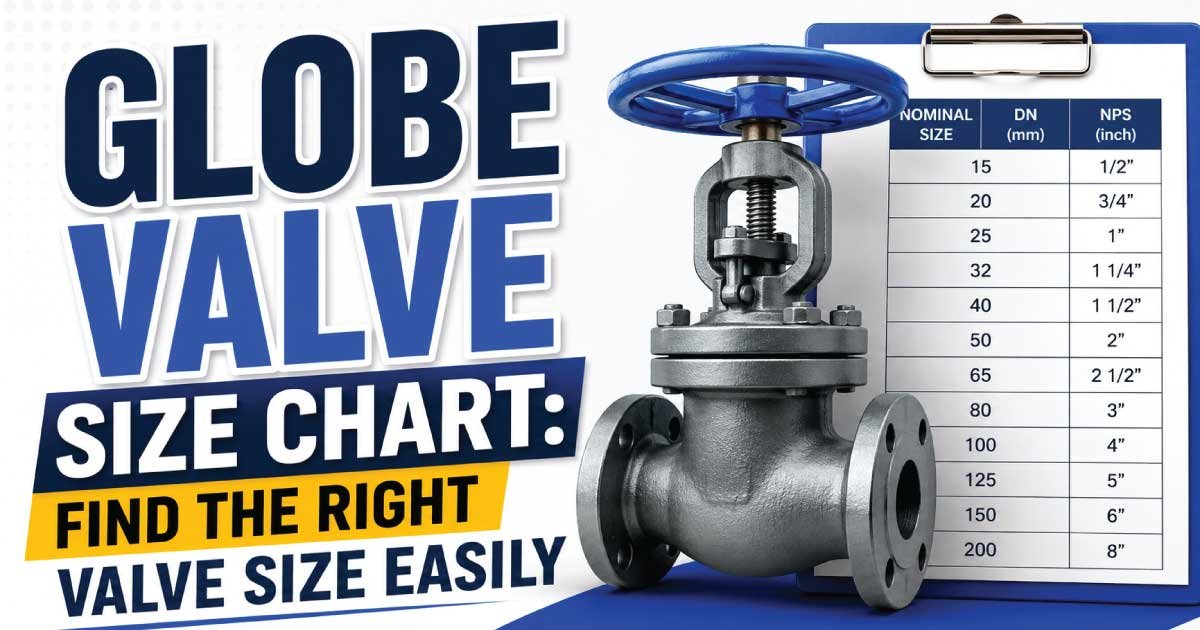
Globe valves are among the most widely used industrial valves for regulating and controlling fluid flow. Unlike gate valves, which are mainly designed for full open or full close service, globe valves provide precise throttling capability, making them ideal for systems where accurate flow control is essential.
Choosing the correct globe valve size improves efficiency, minimizes pressure loss, extends service life, and ensures reliable system performance.
This comprehensive guide explains globe valve sizing, standard dimensions, pressure classes, applications, materials, and selection methods. Whether you’re working with water, steam, oil, gas, or chemical systems, this guide will help you choose the right globe valve.
What Is a Globe Valve?
A globe valve is a linear motion valve designed to start, stop, and regulate fluid flow. Its internal disc moves perpendicular to the valve seat, allowing gradual opening and closing for excellent flow control.
Unlike ball or gate valves, globe valves create a controlled restriction inside the flow path, making them the preferred choice whenever precise regulation is required.
Key features include:
- Excellent throttling capability
- Reliable shut-off performance
- Smooth flow regulation
- Available in numerous materials
- Suitable for high-pressure applications
- Easy maintenance
Why Globe Valve Size Matters
Selecting the correct globe valve size directly affects system performance. An oversized valve may reduce control accuracy, while an undersized valve increases pressure drop and flow restrictions.
Proper sizing helps achieve:
- Stable flow regulation
- Reduced energy consumption
- Longer valve lifespan
- Lower maintenance costs
- Improved operational safety
- Better pressure management
Globe Valve Size Chart (Inches to DN)
The following chart shows the most common globe valve sizes used in industrial piping systems.
| Nominal Size (Inch) | DN Size | Outside Diameter (Approx.) | Common Applications |
|---|---|---|---|
| 1/4″ | DN8 | 13.7 mm | Instrument lines |
| 3/8″ | DN10 | 17.1 mm | Hydraulic systems |
| 1/2″ | DN15 | 21.3 mm | Residential plumbing |
| 3/4″ | DN20 | 26.7 mm | Water supply |
| 1″ | DN25 | 33.4 mm | Commercial buildings |
| 1-1/4″ | DN32 | 42.2 mm | HVAC systems |
| 1-1/2″ | DN40 | 48.3 mm | Steam systems |
| 2″ | DN50 | 60.3 mm | Industrial pipelines |
| 2-1/2″ | DN65 | 73.0 mm | Chemical plants |
| 3″ | DN80 | 88.9 mm | Process industries |
| 4″ | DN100 | 114.3 mm | Municipal water |
| 5″ | DN125 | 141.3 mm | Power plants |
| 6″ | DN150 | 168.3 mm | Industrial utilities |
| 8″ | DN200 | 219.1 mm | Refineries |
| 10″ | DN250 | 273.0 mm | Large process plants |
| 12″ | DN300 | 323.9 mm | Main pipelines |
Standard Globe Valve Pressure Classes
Pressure ratings determine the maximum operating pressure the valve can safely withstand.
Common ANSI Pressure Classes
| Pressure Class | Typical Working Pressure |
|---|---|
| Class 150 | Low pressure |
| Class 300 | Medium pressure |
| Class 600 | High pressure |
| Class 900 | Very high pressure |
| Class 1500 | Severe service |
| Class 2500 | Extreme pressure |
Higher pressure classes usually feature thicker valve bodies and stronger internal components.
Common Globe Valve Materials
Material selection depends on the fluid, pressure, temperature, and operating environment.
1. Cast Iron
Suitable for:
- Water systems
- HVAC
- Low-pressure applications
Advantages:
- Economical
- Easy to machine
- Good corrosion resistance
2. Carbon Steel
Best for:
- Oil pipelines
- Steam service
- Industrial processing
Benefits:
- High strength
- Excellent pressure resistance
- Affordable
3. Stainless Steel
Widely used in:
- Food processing
- Pharmaceuticals
- Chemical plants
- Marine applications
Advantages:
- Corrosion resistant
- Hygienic
- Long service life
4. Bronze
Commonly used in:
- Marine systems
- Potable water
- Low-pressure piping
Benefits:
- Good corrosion resistance
- Easy installation
- Reliable sealing
How to Read a Globe Valve Size
Manufacturers usually stamp important specifications directly on the valve body.
Typical markings include:
- Valve size
- Pressure class
- Material grade
- Flow direction
- Manufacturer logo
- Heat number
- Standard specification
Example:
2″ Class 300 ASTM A216 WCB
Meaning:
- Size = 2 inches
- Pressure rating = Class 300
- Material = Carbon Steel (WCB)
Types of Globe Valves
Different globe valve designs suit different applications.
1. Tee Pattern Globe Valve
The most common design.
Features:
- Simple construction
- Excellent sealing
- High pressure drop
Applications:
- Steam
- Water
- Process control
2. Angle Globe Valve
Changes flow direction by 90 degrees.
Advantages:
- Eliminates one elbow fitting
- Reduces installation cost
- Better drainage
3. Y-Pattern Globe Valve
Designed for reduced pressure loss.
Benefits:
- Lower pressure drop
- Improved flow efficiency
- High-temperature service
🔧 Read Detailed Size Guide 👉 Anchor Bolt Sizes: How to Choose the Right Size
How to Choose the Correct Globe Valve Size
Choosing the right size requires evaluating multiple system factors.
Step 1: Determine Pipe Size
Valve size usually matches the connected pipeline.
Example:
- 2-inch pipe
- 2-inch globe valve
Step 2: Calculate Flow Rate
Know the required:
- Gallons per minute (GPM)
- Liters per minute (LPM)
- Cubic meters per hour (m³/h)
Flow requirements determine valve capacity.
Step 3: Check Operating Pressure
Consider:
- Maximum pressure
- Normal operating pressure
- Pressure fluctuations
Select the proper pressure class.
Step 4: Evaluate Temperature
Temperature affects material selection.
Typical examples:
- Water
- Steam
- Hot oil
- Chemicals
Higher temperatures require specialized materials.
Step 5: Consider Fluid Type
Different fluids require different valve materials.
Examples include:
- Water
- Steam
- Oil
- Natural gas
- Chemicals
- Slurries
Globe Valve Flow Characteristics
Globe valves provide predictable flow control.
Common flow characteristics include:
- Linear flow
- Equal percentage flow
- Quick opening
Each characteristic is selected based on process requirements.
Advantages of Globe Valves
Globe valves remain popular because they provide excellent control.
Major advantages include:
- Accurate flow regulation
- Tight shut-off
- Durable construction
- Easy maintenance
- Suitable for automation
- Wide material selection
- Available in many pressure ratings
- Long service life
Limitations of Globe Valves
Although versatile, globe valves have several disadvantages.
Common limitations:
- Higher pressure drop
- Greater operating force
- Heavier than ball valves
- Slower operation
- Larger installation space
Despite these drawbacks, their superior throttling capability often outweighs the disadvantages.
Common Applications of Globe Valves
Globe valves are used across numerous industries.
Major applications include:
- Power generation
- Oil refineries
- Chemical processing
- Water treatment
- HVAC systems
- Boiler plants
- Marine engineering
- Food processing
- Pharmaceutical production
- Fire protection systems
🔧 Read Detailed Size Guide 👉 Complete Guide to Stud Bolt Sizes and Applications
Globe Valve End Connection Types
Connection type affects installation and maintenance.
Common connection styles include:
Threaded Ends
Suitable for:
- Small pipelines
- Residential systems
- Maintenance-friendly installations
Flanged Ends
Ideal for:
- Industrial pipelines
- High-pressure systems
- Large valve sizes
Butt Weld Ends
Best for:
- High-temperature service
- Steam systems
- Permanent installations
Socket Weld Ends
Common in:
- Small-bore piping
- High-pressure lines
- Chemical plants
Maintenance Tips for Globe Valves
Regular maintenance extends valve life and ensures reliable performance.
Recommended maintenance practices:
- Inspect packing regularly
- Lubricate valve stems
- Check for leaks
- Replace worn seats
- Clean internal components
- Operate valves periodically
- Verify pressure ratings
- Inspect handwheel operation
Routine inspections help prevent unexpected failures.
Common Globe Valve Standards
Most globe valves follow internationally recognized standards.
Important standards include:
- ASME B16.34
- API 600
- API 623
- MSS SP-80
- BS 1873
- DIN standards
- ISO valve standards
These standards ensure compatibility, safety, and consistent manufacturing quality.
Globe Valve vs Gate Valve
Although similar in appearance, these valves serve different purposes.
| Feature | Globe Valve | Gate Valve |
|---|---|---|
| Flow Control | Excellent | Poor |
| Shut-Off | Excellent | Excellent |
| Pressure Drop | Higher | Lower |
| Throttling | Yes | No |
| Speed | Slower | Faster |
| Maintenance | Easy | Moderate |
| Cost | Higher | Lower |
Choose a globe valve when precise flow regulation is required, and a gate valve when full-flow isolation is the primary objective.
Common Globe Valve Installation Mistakes
Improper installation can reduce performance and shorten valve life.
Avoid these common mistakes:
- Installing against the flow direction
- Using the wrong pressure class
- Choosing incorrect materials
- Overtightening flange bolts
- Ignoring thermal expansion
- Skipping maintenance schedules
- Incorrect pipe alignment
- Selecting an oversized valve
Following manufacturer guidelines ensures safe and efficient operation.
The Final Word
Choosing the correct globe valve size is essential for achieving reliable flow control, minimizing pressure losses, and extending equipment life.
By understanding valve dimensions, pressure classes, material options, and application requirements, you can select a globe valve that delivers efficient and dependable performance.
Whether used in water distribution, steam systems, oil and gas facilities, or chemical processing plants, a properly sized globe valve contributes to safer operation, lower maintenance costs, and improved overall system efficiency.
FAQs:
What is the standard globe valve size?
Standard globe valve sizes typically range from 1/4 inch (DN8) to 12 inches (DN300) for most industrial applications. Larger custom sizes are also available for power plants, refineries, chemical processing facilities, and municipal water systems where higher flow capacity and specialized operating conditions are required.
How do I choose the right globe valve size?
Choose the correct globe valve size by considering the pipe diameter, required flow rate, pressure rating, operating temperature, fluid type, and system requirements. Selecting a valve that matches the piping system ensures efficient flow control, minimizes pressure losses, and extends the valve’s overall service life.
Are globe valves suitable for throttling?
Yes, globe valves are specifically designed for throttling and precise flow regulation. Their disc-and-seat design allows gradual adjustment of fluid flow, making them ideal for applications requiring accurate control. Although they create a higher pressure drop than gate valves, they provide superior flow regulation and dependable performance.
What materials are commonly used for globe valves?
Globe valves are commonly manufactured from cast iron, carbon steel, stainless steel, bronze, and alloy steel. The most suitable material depends on factors such as operating pressure, temperature, fluid compatibility, corrosion resistance, and the environmental conditions in which the valve will be installed and operated.
Can a globe valve be installed in any direction?
Most globe valves are designed with a specified flow direction marked on the valve body. Installing the valve according to this direction improves sealing performance, reduces wear on internal components, enhances flow control, and helps ensure reliable, efficient operation throughout the valve’s service life.

Engineer Hassan is a Mechanical Engineer with 16+ years of hands-on experience in mechanical hardware, fasteners, and workshop tools. He focuses on size selection, thread identification, and measurement, helping users choose the correct components with accuracy and safety.