
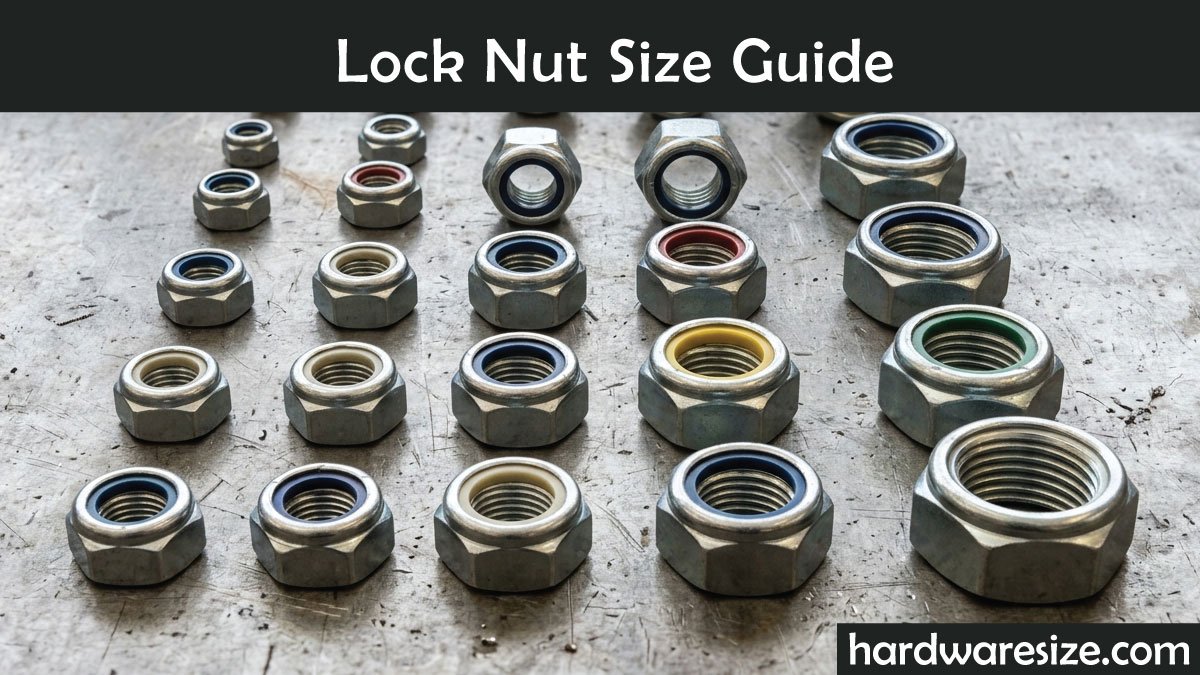
Fasteners are important in mechanical and construction and industrial usage. Lock nuts are among these and they are especially designed not to be loosened when vibrating, when resting on the torque and when moving.
Whether used in machinery, automotive systems, or structural assemblies, lock nuts provide extra safety and reliability where standard nuts may fail.
In this guide, you will learn what a lock nut is, how it works, its types, materials, applications, and advantages, along with easy-to-understand tables for quick reference.
What Is a Lock Nut?
A lock nut is a special nut that is used to ensure that it is not loosened in response to vibration or rotating loads. It is not like regular nuts and it provides the benefit of using mechanical lock systems or friction to keep it firmly attached in place when tightened, which makes it very useful in machinery, automotive assemblies, or structural uses where stability is paramount.
They are commonly used in:
- Heavy machinery
- Automotive assemblies
- Structural steel connections
- Electrical and industrial equipment
Lock nuts are essential where safety, stability, and long-term fastening strength are required.
What Does a Lock Nut Look Like?
A lock nut is like a common hex nut only that it has an internal mechanism that does not allow it to loosen when vibrated or on movement. The precise look will be determined by the lock nut.
The most typical one is the nylon insert lock nut (Nyloc). It resembles a regular hex nut having a nylon ring at one end. This is a white or blue nylon insert that is easily identifiable.
When tightened, the bolt is made to go through the nylon, which will tend to create friction to fix the nut. An all-metal lock nut is similar to a regular hex nut except that at one end it might be a little oval-shaped or distorted.
This is not only deliberate but it develops resistance in the bolt threads. A serrated flange lock nut is characterized by a wide washer-shaped bottom that has teeth on the bottom. These teeth hold on the surface to avoid rotating.
Overall, if a nut has a nylon ring, deformed threads, or serrated base, it’s likely a lock nut.
How Does a Lock Nut Work?
A lock nut is a fastener that provides a bolt with additional resistance between the nut and the bolt threads. The resistance may be done by a deformed thread, nylon inserts, serration or jam nut design which guarantees that the nut remains fixed even when it experiences vibrations, movement, or heavy loads.
- Deformed threads
- Nylon inserts
- Toothed or serrated surfaces
- Jam nut techniques
By increasing friction or mechanically locking against the bolt, the nut stays secure even under constant vibration or load changes.
Lock Nut Orientation: Which Side and How to Install
The lock nut must at all times be installed in a manner that it engages its locking attribute last when tightening. This will provide the highest degree of resistance to loosening. The exact orientation is based on the type of lock nut that is being used and therefore the experience of the nut style is the first thing that can be used before installing.
1- Nylon Insert (Nyloc) Lock Nut Direction
In a nylon insert lock nut, the nut is fitted with the nylon ring turned against the surface being attached. The nylon insert at an end should be pierced by the metal threads, and then the bolt. This enables the nylon to clamp the threads on the bolts to generate friction that will not enable the nut to back off as a result of vibration.
2- All-Metal and Jam Lock Nut Direction
With all-metal lock nuts, the deformed or locking threads are usually located at the top of the nut, that is, they are the last threads to encounter on tightening. Jam nuts: These are fitted by fastening the thinner nut in place against the main nut and both are fixed. Proper orientation secures strength, safety and reliability of fastening over long period of time.
Types of Lock Nuts (With Table)
Lock nuts are available in different types but depending on their use. The choice of the appropriate lock nut, should be done based on the load capacity, operating temperature, level of vibrations, and whether they require being reusable so that the fastening is secured and reliable in all conditions.
Table: Types of Lock Nuts and Their Features
| Lock Nut Type | Key Feature | Best Used For |
|---|---|---|
| Nylon Insert Lock Nut (Nyloc) | Nylon ring grips threads | Automotive, light machinery |
| All-Metal Lock Nut | Deformed metal threads | High-temperature applications |
| Jam Nut | Thin nut tightened against main nut | Adjustable assemblies |
| Serrated Flange Lock Nut | Built-in washer with teeth | Structural and machinery use |
| Castle Nut (with cotter pin) | Slotted nut with pin | Axles, wheel assemblies |
Materials Used in Lock Nuts
The Lock nuts are manufactured in numerous materials in order to satisfy various load, environmental, as well as application requirements. Some of the most common materials are carbon steel, stainless steel, alloy steel, brass and nylon inserts and so on and each material has been selected based on its strength, resistance against corrosion and its ability to handle certain conditions in which it will be used.
Table: Lock Nut Materials and Properties
| Material | Strength Level | Corrosion Resistance | Common Applications |
|---|---|---|---|
| Carbon Steel | High | Low | Construction, machinery |
| Stainless Steel | Medium–High | Excellent | Marine, outdoor use |
| Alloy Steel | Very High | Medium | Heavy-duty equipment |
| Brass | Low–Medium | Good | Electrical fittings |
| Nylon (Insert only) | Not load-bearing | N/A | Vibration resistance |
Material selection is critical, especially in environments exposed to moisture, heat, or chemicals.
Lock Nut Sizes and Thread Standards
Lock nuts are available in metric (ISO) and imperial (UNC/UNF) thread standards. Common sizes range from M3 to M64 in metric and ¼ inch to 2 inches in imperial measurements.
Table : Common Lock Nut Sizes and Applications
| Size Range | Thread Standard | Typical Use |
|---|---|---|
| M3 – M6 | Metric (ISO) | Electronics, light assemblies |
| M8 – M16 | Metric (ISO) | Automotive, machinery |
| M20 – M36 | Metric (ISO) | Structural steel, heavy equipment |
| ¼” – ½” | UNC/UNF | General-purpose fastening |
| ¾” – 2″ | UNC/UNF | Industrial and construction use |
Discover More:
👉 Discover the ultimate Nut Size Chart covering all types, materials, and applications. Whether you are working with lock nuts, hex nuts, or industrial fasteners, this guide helps you choose the right nut for your project. Read the full post to ensure perfect fastening every time!
Advantages of Using Lock Nuts
Lock nuts are constructed to provide better performance than usual nuts hence being used in high-vibration or heavy-duty. Their unique design ensures a secure hold, improves safety, and reduces maintenance. These features make lock nuts a reliable choice for both industrial and mechanical assemblies.
- Prevents loosening due to vibration
- Improves safety and structural integrity
- Reduces maintenance and retightening
- Available in reusable and permanent options
- Works with standard bolts and studs
These benefits make lock nuts a preferred choice in critical assemblies.
Disadvantages to Consider
Despite the fact that lock nuts are the best in terms of security and reliability, they have some shortcomings. Some of them can become ineffective when exposed to high temperatures, they cannot be reused otherwise, cost more than regular nuts, or need additional torque during fixing. The knowledge of these assists in deciding on the appropriate lock nut to use.
- Nylon insert lock nuts may lose effectiveness at high temperatures
- Some types are not reusable
- Higher cost compared to standard nuts
- May require more torque to install
Understanding these limitations helps in selecting the correct type.
Lock Nut Installation and Use
To start with, you need to choose the correct lock nut size and type that fits your bolt and use. Ensure that the threads of the bolts are not dirty or bad since dirt or damaged threads may diminish the locking effect. With a hand thread the lock nut on the bolt so as to thread smoothly ensuring it does not cross thread.
1- Install the Lock Nut Properly
Screw the lock nut on the bolt as per type. In the case of nylon insert lock nuts, the nylon ring would last to lock as tightening is done. Tighten a nut by use of wrench or socket until it was properly seated on the surface. Do not attach too much tightness particularly with nylon insert nuts because too much torque may even ruin the locking feature.
2- Check Tightness and Reusability
Once it is installed make sure that the lock nut is tight and cannot turn freely. Reread the nut after the first use in vibration prone applications. It is important to remember that not all lock nuts, especially the ones that use nylon inserts, are usable more than once and when the locking force becomes weak, change the lock nut.
👉 Explore the complete Heavy Hex Nut Guide, including definition, dimensions, sizes, and materials. Learn how these high-strength nuts are used in construction, machinery, and industrial applications. Read the full post to choose the right heavy hex nut for your project with confidence!
Lock Nut vs Standard Nut
A normal nut does not have any locking mechanism, it is held in place by the tightening torque, whereas a lock nut has a locking mechanism. Under high vibration sources, common nuts may become loose after some time, but lock nuts do not.
Lock nuts are recommended when:
- Vibration is constant
- Safety is critical
- Retightening is difficult or costly
Which Side of the Lock Nut Goes On First?
The lock nut must be positioned in the right position before installation. The side that has the locking feature must be inserted last with the end goal of making the sound fit. The type used (nylon insert, all-metal, or serrated flange) is essential to have its installation properly done to avoid loosening during vibration.
1- Identify the Locking Feature
Prior to installation, examine carefully the lock nut to locate its locking element. This may be a nylon insert, deformed threads, serrations or a thinner jam profile. The overall principle is quite straightforward, the side that does not lock is to be attached first and the locking option is to be connected last to secure the nut on the same spot.
2- Nylon Insert Lock Nut Orientation
In the case of a nylon insert (Nyloc) lock nut the metal-threaded part should be placed in first. The outer side of the joint should have the nylon on it because the bolt would go through the nylon as tightening is done. This enables the nylon ring to have a tight hold over the threads and not to be lost with vibration.
3- All-Metal and Serrated Lock Nuts
In all metal lock nuts the deformed threads are installed last with the rounder or less deformed threads being installed first. The serrated flange lock nuts are fixed with the serrated side facing the material surface to cut into it such that it ensures a secure and vibration-free fixing.
👉 Check out the ultimate Hex Nut Sizes guide, covering dimensions, grades, and how to measure. Whether for mechanical, automotive, or industrial projects, this post helps you select the right hex nut for perfect fit and secure fastening. Read the full guide now!
Which Way Does a Lock Nut Go On a Bolt
A lock nut is to be attached to a bolt in such a way that when tightening it should not lock in first. Put simply, the side with a non-locking element should be installed first, and the other with the locking element should be last to make everything tight.
In the case of nylon insert (Nyloc) lock nut, the metal threads are put on first. The nylon insert is turned in the opposite direction towards the joint. When tapping, the bolt fits through the nylon ring in the last step with friction that would ensure that the nut does not loosen as a result of vibrations.
In all-metal lock nuts, use a method of installing the nut which ensures that the smooth or rounded threads are installed first followed by the deformed locking threads installed last.
This is used to weld the nut lock ensuring that it is fastened firmly. In serrated flange lock nuts, the serrated flange is directed on the surface that is to be fastened to make it cling to the material and prevent movement.
Following the correct orientation ensures maximum holding power, safety, and long-term reliability.
How to Tighten a Lock Nut Correctly
Tightening of a lock nut is done right so that the connection is secure and long lasting. The first one is hand-threading followed by pressing with the appropriate tool and finalizing with the advised torque. When used properly, the nut, the bolt, and the locking feature are not damaged particularly in high-vibration components.
1- Start by Hand-Threading
The lock nut should be positioned over the lock-less part of the bolt. Rotate it by hand a couple of threads to ensure that it is on smoothly and does not cross-thread. This is necessary to protect the bolt as well as the locking of the nut.
2- Tighten with the Proper Tool
Select a proper wrench or socket to the size of the nut. Tighten lock nut till it snaps against the surface. Resistance will be increased when the locking feature (nylon insert or deformed threads) will come into play- this is normal. Do not push it violently, use even pressure.
3- Apply Correct Torque and Final Check
Assuming there are some torque guidelines, a torque wrench can be used to achieve the desired value. It is necessary not to over-tighten particularly with nylon insert lock nuts as it may spoil the locking part. Once tight, ensure the nut does not rotate on its own and it is firmly attached, especially where vibration is a problem.
How to Choose the Right Lock Nut
Choose the right lock nut is essential for secure and reliable fastening. Take into consideration vibration, temperature, load, environment and reusability. Using a lock nut appropriate to the use is guaranteed to provide maximum performance, durability over time as well as avoid loosening when used under strenuous situations.
-
Vibration level – High vibration needs stronger locking
-
Temperature – Avoid nylon inserts in high heat
-
Load requirement – Choose high-strength materials
-
Environment – Corrosion resistance may be required
-
Reusability – All-metal types are often reusable
Matching the lock nut to the application ensures long-lasting performance.
Final Thoughts
Lock nut is a minor yet significant hardware that contributes a significant role to the safety and reliability. Lock nuts, with different types, materials, and sizes, are to be used in light electronics, as well as heavy industrial equipment.
You can avoid loosening and help to reduce maintenance expenses, as well as enhance the overall performance of the system by being in-the-know of how lock nuts should be used and where they should be applied.
The type of lock nut should always be used depending on the vibration, load and environmental aspects of your application.

Engineer Hassan is a Mechanical Engineer with 16+ years of hands-on experience in mechanical hardware, fasteners, and workshop tools. He focuses on size selection, thread identification, and measurement, helping users choose the correct components with accuracy and safety.