
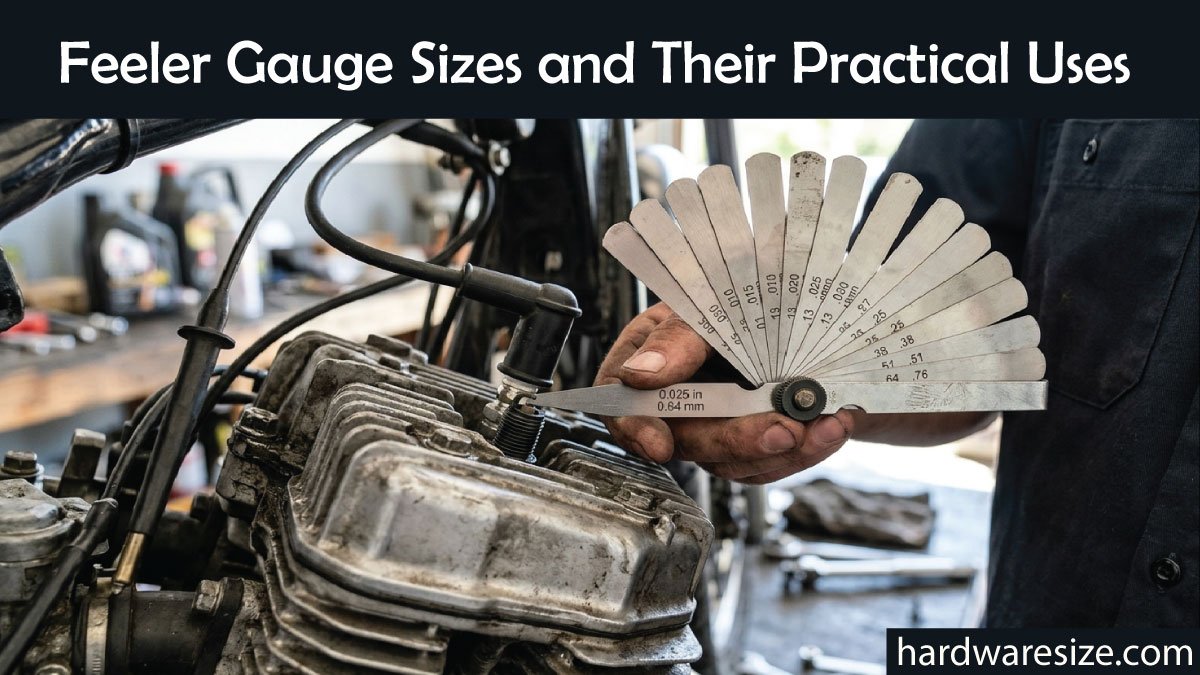
A feeler gauge is a simple but extremely precise measuring tool used to check small gaps, clearances, and spacing between two parts. Whether you’re working on engines, machinery, or delicate mechanical systems, understanding feeler gauge sizes and their practical uses can greatly improve your accuracy and efficiency.
In this complete guide, you will learn about feeler gauge sizes, how they are measured, how to use them properly, and where they are most commonly applied.
What Is a Feeler Gauge?
A feeler gauge is a precision measuring tool made up of thin metal blades, each with a specific thickness clearly marked on it. It is used to measure very small gaps or clearances between two surfaces where accuracy is critical. These blades can be used individually or combined to achieve exact measurements in tight spaces. Feeler gauges are especially useful in mechanical and engineering tasks where even a slight variation in spacing can affect performance, efficiency, or safety.
Feeler gauges are commonly used in:
- Automotive maintenance
- Engine tuning
- Mechanical assemblies
- Industrial equipment
- Precision engineering tasks
Why Feeler Gauge Size Matters
Feeler gauges are designed for high-precision work where even the smallest gap difference can impact performance. In mechanical systems like engines or machinery, incorrect clearances can lead to inefficiency or damage. Choosing the right size ensures components fit and function exactly as intended. Accurate measurement also helps maintain consistency in repeated tasks, especially in professional environments where precision is critical.
Importance of correct sizing:
✔ Ensures proper clearances
✔ Prevents mechanical failure
✔ Improves efficiency and performance
✔ Reduces wear and tear
👉 Using the wrong size can lead to overheating, poor performance, or component damage.
Standard Feeler Gauge Sizes
Feeler gauge sizes are available in both metric (mm) and imperial (inches) units, making them suitable for different standards used worldwide. These sizes range from extremely thin blades for delicate adjustments to thicker ones for larger gaps. Having a full set allows users to handle a wide variety of tasks with accuracy and confidence across different applications.
Common Metric Sizes (mm):
| Thickness (mm) | Description |
|---|---|
| 0.02 mm | Ultra-fine measurement |
| 0.04 mm | Very fine gaps |
| 0.05 mm | Precision tuning |
| 0.10 mm | Common mechanical use |
| 0.20 mm | Medium clearance |
| 0.50 mm | Larger gaps |
| 1.00 mm | Heavy-duty measurement |
Common Imperial Sizes (inches):
| Thickness (inch) | Equivalent (mm approx.) |
|---|---|
| 0.001″ | 0.025 mm |
| 0.002″ | 0.05 mm |
| 0.004″ | 0.10 mm |
| 0.010″ | 0.25 mm |
| 0.020″ | 0.50 mm |
Types of Feeler Gauges
Different types of feeler gauges are designed to handle specific measurement tasks and working conditions. While all serve the same basic purpose, measuring gaps, their shape and design make them suitable for different environments. Choosing the right type improves accuracy, saves time, and makes it easier to work in tight or complex spaces.
1. Straight Feeler Gauge
The straight feeler gauge is the most common and widely used type. It features flat, straight blades that are easy to handle and ideal for standard gap measurements. These gauges are perfect for open and accessible areas where there is enough space to insert the blade without difficulty.
- Most common type
- Flat blades
- Used for general measurements
2. Offset Feeler Gauge
Offset feeler gauges have blades that are bent at an angle, making them extremely useful in tight or hard-to-reach areas. This design allows users to measure gaps in confined spaces without needing to disassemble components, making them popular in automotive and machinery work.
- Blades are bent at an angle
- Useful in hard-to-reach areas
3. Taper Feeler Gauge
Taper feeler gauges have blades that gradually increase in thickness from one end to the other. Instead of selecting multiple blades, users can slide the tapered blade into a gap until it fits snugly. This makes them ideal for quickly estimating gap sizes.
- Gradually increasing thickness
- Used to estimate gap size quickly
4. Wire Feeler Gauge
Wire feeler gauges use round wires instead of flat blades, making them suitable for measuring curved or circular gaps. They are especially useful for tasks like checking spark plug gaps or small отверстия where flat blades cannot fit properly.
- Round wires instead of flat blades
- Used for spark plugs and small holes
How to Read Feeler Gauge Sizes
Reading feeler gauge sizes is simple once you know what the markings mean. Each blade has a thickness value stamped directly onto it, showing the exact size of that blade. These markings help you quickly choose the correct blade for the required gap measurement and avoid guesswork during precise mechanical adjustments.
Example:
- 0.10 mm → blade thickness is 0.10 millimeters
- 0.004″ → blade thickness is 0.004 inches
👉 Some sets include both metric and imperial values for convenience.
How to Use a Feeler Gauge (Step-by-Step)
Using a feeler gauge correctly is essential for precise measurements in mechanical work. Whether you’re checking engine clearances or small gaps, following the right method ensures accuracy and prevents damage. This step-by-step guide will help beginners and professionals use a feeler gauge with confidence and reliability.
Step 1: Clean the Surface
Before taking any measurement, always clean the surfaces properly. Dirt, oil, rust, or debris can affect accuracy and give false readings. Use a clean cloth or mild cleaner to wipe both surfaces. A smooth, clean contact area ensures the feeler gauge blade slides correctly and provides reliable results.
Step 2: Select the Blade
Choose a blade that closely matches the expected gap size. Feeler gauges come with multiple blades of different thicknesses, usually marked in millimeters or inches. Start with an estimated size, then adjust if needed. Picking the correct blade is important to avoid incorrect measurements or unnecessary force during insertion.
Step 3: Insert the Blade
Gently slide the selected blade between the two surfaces you are measuring. Do not force it in, as this can bend the blade or damage the parts. The blade should move smoothly into the gap. Proper insertion helps maintain accuracy and ensures the gauge is positioned correctly for measurement.
Step 4: Feel the Resistance
Pay attention to how the blade feels when moving between the surfaces. A slight drag indicates the correct size. If the blade moves too freely, the gap is larger. If it feels tight or won’t fit, the gap is smaller. This “feel” is key to mastering accurate measurements.
Step 5: Adjust if Needed
If the fit isn’t correct, try a different blade size. Repeat the process until you find the blade that gives a slight, smooth resistance. This confirms the exact gap measurement. Taking time to adjust properly ensures precision, especially in critical applications like engine tuning or mechanical assembly.
Practical Uses of Feeler Gauges
Feeler gauges are widely used across multiple industries where precision and accuracy are essential. From automotive engines to industrial machinery, they help maintain correct clearances and prevent performance issues. Their simple design makes them a reliable tool for both professionals and beginners working on mechanical or technical tasks.
1. Automotive Applications
One of the most common uses of feeler gauges is in the automotive industry. Mechanics rely on them to measure and adjust critical engine components. Accurate gap settings ensure smooth engine operation, better fuel efficiency, and reduced wear on parts over time.
Used for:
- Valve clearance adjustment
- Spark plug gap measurement
- Engine tuning
👉 Proper clearance ensures smooth engine performance.
2. Machinery Maintenance
In industrial environments, feeler gauges are essential for maintaining machinery and ensuring parts operate within specified tolerances. They help technicians detect misalignment or improper spacing, which can prevent breakdowns and improve overall machine reliability.
Applications:
- Checking bearing clearances
- Aligning machine parts
- Setting gap tolerances
3. Metalworking
Feeler gauges are widely used in metalworking and machining processes where precision is critical. Engineers and machinists use them to verify spacing between components and ensure that parts fit together correctly without excessive friction or looseness.
Uses:
- Measuring tool gaps
- Ensuring precision fits
4. Electrical Work
In electrical systems, small gaps can affect performance and safety. Feeler gauges are used to set accurate spacing in components like contact breakers and relays. Proper adjustment ensures efficient electrical flow and reduces the risk of malfunction.
Applications:
- Setting contact breaker gaps
- Measuring relay spacing
5. DIY and Home Projects
Feeler gauges are also useful for hobbyists and DIY enthusiasts working on small projects. They provide an easy way to measure and adjust spacing in tools or assemblies, helping achieve better results even in non-professional settings.
Examples:
- Adjusting tools
- Checking spacing in assemblies
Also Read 👉 Vernier Caliper Sizes Explained: Complete User Guide helps you understand different caliper sizes, measuring ranges, and correct usage. Learn how to read measurements accurately and choose the right tool for precise work. For simple explanations and practical tips, read the full post and improve your measurement skills.
Feeler Gauge Accuracy and Tolerance
Feeler gauges are specifically designed for high-precision measurement tasks where even a very small error can affect performance. Because they are used in critical applications like engines and machinery, their accuracy is extremely important. Each blade is manufactured to a strict standard to ensure consistent thickness and reliable readings during use.
Typical tolerance:
- ±0.01 mm for most blades
👉 High-quality gauges offer better accuracy and durability.
Better-grade feeler gauges are made with tighter manufacturing controls, meaning their blades maintain consistent thickness over time. This reduces measurement errors and ensures more reliable results, especially in professional mechanical and engineering environments where precision is essential.
Choose the Right Feeler Gauge Set
Selecting the right feeler gauge set depends on the type of work you plan to do and the level of precision required. A good set should offer a wide range of blade sizes and be durable enough for repeated use in workshop or field conditions. Investing in a quality set ensures long-term accuracy and better performance.
Consider these factors:
✔ Range of sizes (metric + imperial)
✔ Blade material (stainless steel preferred)
✔ Number of blades
✔ Flexibility and durability
✔ Ease of storage
Advantages of Using Feeler Gauges
Feeler gauges are widely appreciated because they are simple yet extremely effective tools for precision measurement. They do not require any power source or complex setup, making them highly practical in workshops, garages, and fieldwork. Their design allows users to quickly measure small gaps with confidence and accuracy in a variety of mechanical and engineering tasks.
✔ Simple and easy to use
✔ Highly accurate
✔ Portable and lightweight
✔ Affordable tool
✔ Suitable for many applications
Also Read 👉 Complete Guide to Adjustable Spanner Sizes explains how to choose the right spanner for every task. Learn about size ranges, jaw capacity, and proper usage to avoid damage and improve efficiency. For clear tips and practical insights, read the full post and make your tool selection easier and smarter.
Limitations of Feeler Gauges
Although feeler gauges are very useful, they also have some limitations that users should understand. They are best suited for small, precise measurements and may not be effective in every situation. Knowing their limitations helps prevent incorrect usage and ensures better measurement results in practical applications.
❌ Not suitable for large gaps
❌ Requires manual skill
❌ Can wear out over time
❌ Limited to flat or accessible areas
Maintenance Tips for Feeler Gauges
Proper maintenance is important to keep feeler gauges accurate and long-lasting. Since they are made of thin metal blades, they can easily become damaged or corroded if not cared for properly. Regular cleaning and safe storage help maintain their precision and ensure consistent performance over time.
Maintenance checklist:
- Clean after each use
- Keep dry to prevent rust
- Store in protective case
- Avoid bending blades excessively
- Apply light oil if needed
Common Mistakes to Avoid
Feeler gauges are simple tools, but incorrect usage can lead to inaccurate measurements and even mechanical issues. Many beginners make small mistakes that affect precision and performance. By understanding these common errors, you can ensure more reliable results and extend the life of your tool.
❌ Forcing the blade into tight gaps
❌ Using worn or damaged blades
❌ Ignoring cleanliness
❌ Not checking multiple sizes
❌ Misreading units (mm vs inch)
Feeler Gauge vs Other Measuring Tools
Different measuring tools serve different purposes, and understanding their differences helps you choose the right one for each job. Feeler gauges are best for gap measurement, while other tools are designed for dimensions, thickness, or alignment checks in mechanical and engineering applications.
| Tool | Use |
|---|---|
| Feeler Gauge | Gap measurement |
| Vernier Caliper | External/internal dimensions |
| Micrometer | Ultra-precise thickness |
| Dial Gauge | Movement and alignment |
When to Use Metric vs Imperial Gauges
Feeler gauges come in both metric and imperial systems, and choosing the correct one depends on the equipment standards you are working with. Using the right system ensures compatibility and prevents measurement errors during maintenance or assembly tasks.
Use metric when:
- Working with international equipment
- Using ISO standards
Use imperial when:
- Working with US-based machinery
Tips for Accurate Measurement
Accurate measurement with feeler gauges depends not only on the tool itself but also on proper technique. Following a few simple practices can significantly improve precision and reduce errors, especially in sensitive mechanical or engineering work.
✔ Use clean and straight blades
✔ Measure multiple times
✔ Combine blades if needed (stacking)
✔ Always check manufacturer specifications
Stacking Feeler Gauges
In some cases, a single blade may not match the exact gap size you need. In such situations, feeler gauges can be stacked together to achieve a precise measurement. This technique is widely used in mechanical adjustments where exact tolerances are required.
👉 You can combine multiple blades to achieve the required thickness.
Example:
- 0.10 mm + 0.05 mm = 0.15 mm
Final Thoughts
Understanding feeler gauge sizes and their practical uses is essential for anyone working with mechanical systems or precision tools. Despite its simple design, a feeler gauge plays a vital role in ensuring accuracy, smooth operation, and long-term reliability of machines and components.
Always remember:
- Choose the correct size
- Use proper technique
- Keep your gauges clean and maintained
A small gap can make a big difference and a feeler gauge helps you measure it perfectly.
Want to learn more about precision tools and measurement guides? Explore our detailed articles to improve your skills and work with confidence.
FAQs:
What are feeler gauge sizes?
Feeler gauge sizes refer to the thickness of individual blades used to measure small gaps. They typically range from 0.02 mm to 1 mm in metric sets or 0.0015 to 0.040 inches in imperial sets. Choosing the correct size ensures accurate clearance measurement and proper mechanical performance in applications today.
How do I choose the right feeler gauge size?
To choose the right feeler gauge size, first check the recommended clearance in your manual or specification chart. Then select a blade that fits snugly without forcing it. The correct size should slide smoothly with slight resistance, ensuring precise measurement and preventing damage to parts or inaccurate readings.
What are feeler gauges commonly used for?
Feeler gauges are commonly used to measure gap widths and clearances in mechanical systems. They are widely used in automotive engines for valve adjustment, spark plug gaps, and brake systems. They are also used in machining, maintenance, and precision engineering where accurate spacing between components is critical for performance.
What is the difference between metric and imperial feeler gauges?
Metric feeler gauges measure thickness in millimeters, while imperial feeler gauges use inches. Both serve the same purpose but are chosen based on regional standards or equipment requirements. Metric gauges are more common globally, while imperial gauges are widely used in the United States and older machinery setups.
Can multiple feeler gauge blades be used together?
Yes, multiple feeler gauge blades can be stacked together to achieve a specific thickness when a single blade is not sufficient. This method helps reach exact measurements by combining values. However, ensure the blades are clean and properly aligned to maintain accuracy and avoid incorrect gap readings during measurement tasks.
Why is accurate feeler gauge measurement important?
Accurate feeler gauge measurement is important because improper gaps can lead to mechanical failure, reduced efficiency, and increased wear. Correct clearances ensure smooth operation, proper lubrication, and optimal performance. In engines and machinery, even small measurement errors can cause overheating, noise, or long-term component damage.

Engineer Hassan is a Mechanical Engineer with 16+ years of hands-on experience in mechanical hardware, fasteners, and workshop tools. He focuses on size selection, thread identification, and measurement, helping users choose the correct components with accuracy and safety.