
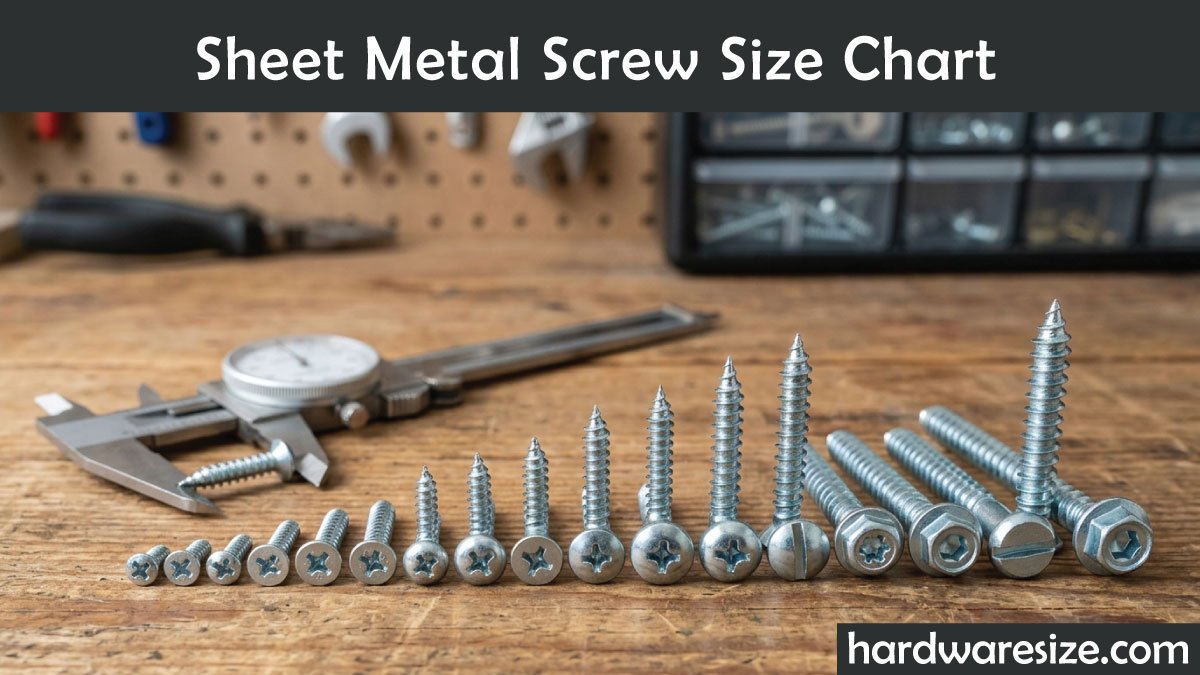
When you are dealing with metal and plastic or even wood, a few details matter, the size of your screw is one of the them. I have learned this the hard way. At some point in my DIY life I had already made a mistake by using the wrong size of sheet metal screw on one of my simple projects and in a few days the joint was loose. It was at that moment that I found out that screw sizing is really an important issue.
In this guide, I will walk you through everything you need to know about sheet metal screw sizes in a simple, practical way—just like someone explaining it to you in a workshop.
What Are Sheet Metal Screws?
Sheet metal screws are special fasteners that are used in connecting thin metal pieces. However, they do not just apply to metal, you will frequently be able to find them in plastic, fiberglass and even wood.
What is special about them is that they have sharp threads. These strings slice through the stuff and give it its own course of action, as you screw it in. That is why they are also referred to as self-tapping screws.
Why Screw Size Matters More Than You Think
Choose the right screw size is not just about fitting parts together. It also guarantees good holding, high-endurance, correct grip, and security of your project, avoiding any damage, loosening, or deterioration during your project.
Here’s what can go wrong if you pick the wrong size:
- Too small → weak hold, screws may pull out
- Too large → material can crack or deform
- Too short → doesn’t grip properly
- Too long → may damage the back surface
A correct size gives you a strong, long-lasting connection.
Sheet Metal Screw Size Chart
Before you select a screw to use in your project, it is much easier to have a good size chart. It makes you find the correct diameter and length fast and you will save time as well as baggage in installing or working on the assembly.
Here’s a simple and practical size chart you can refer to while working:
| Screw Gauge | Diameter (Inches) | Diameter (mm) | Common Lengths (Inches) |
|---|---|---|---|
| #2 | 0.086 | 2.18 mm | 1/4″ – 1/2″ |
| #4 | 0.112 | 2.84 mm | 1/4″ – 3/4″ |
| #6 | 0.138 | 3.51 mm | 1/4″ – 1″ |
| #8 | 0.164 | 4.17 mm | 1/4″ – 1-1/2″ |
| #10 | 0.190 | 4.83 mm | 1/2″ – 2″ |
| #12 | 0.216 | 5.49 mm | 1/2″ – 3″ |
| #14 | 0.242 | 6.15 mm | 3/4″ – 4″ |
This chart covers most of the sizes you’ll encounter in everyday projects.
Sheet Metal Screw Size Chart Pdf:
Metric Sheet Metal Screw Sizes
When you are using international tools/materials then you will find the screw sizes are often given in millimeters rather than in gauge numbers. This conversion will also make you not confuse and make sure that you never choose the wrong screw size in your job.
Here’s a quick reference:
| Size (mm) | Equivalent Gauge |
|---|---|
| 2.2 mm | #2 |
| 2.9 mm | #4 |
| 3.5 mm | #6 |
| 4.2 mm | #8 |
| 4.8 mm | #10 |
| 5.5 mm | #12 |
| 6.3 mm | #14 |
If you work with imported tools or materials, this comparison can save you a lot of confusion.
Common Head Types
The type of head of a sheet metal screw is significant to the way it works, as well as its appearance at the end of the installation. When select the appropriate head, you can make sure that the tool fits well, it is firmly attached, and your project has a clean and professional finish.
- Pan Head – Slightly rounded, good for general use
- Flat Head – Sits flush with the surface
- Hex Head – Used with a wrench, ideal for heavy-duty work
- Oval Head – Decorative finish
From my experience, pan head screws are the most commonly used for general repairs.
How to Choose the Right Sheet Metal Screw Size
Select the right sheet metal screw size may be confuse initially particularly to a beginner. However, the process is quite simplified and more plausible to any project as soon as you know several simple parameters such as thickness, diameter, and strength requirements.
1. Consider Material Thickness
Material thickness This is one of the most significant considerations of choosing a screw. The screw will then have to cut/ slice through the materials and still have sufficient threads to make everything secure that it can have a strong and stable bond that will not loosen with time.
The screw should go through both materials and still have enough thread engagement.
Rule of thumb: At least 2–3 threads should extend beyond the material.
2. Choose the Right Diameter
The gauge (or the screw diameter) will define the strength of the hold. Smaller screws are used with light material whereas larger screws are used with heavy duty or load bearing purposes because they have a higher level of strength and durability.
Thin material → smaller gauge (#4, #6)
Thick or heavy material → larger gauge (#10, #12)
3. Use Pilot Holes When Needed
Although most sheet metal screws are made to cut their own threads, it may be easier to install with the help of a pilot hole. It makes it easier to resist, make it more straight, and avoids damage such as cracks or bending during fastening.
Even though many sheet metal screws are self-tapping, drilling a small pilot hole can:
-
Make installation easier
-
Prevent material damage
-
Improve accuracy
4. Think About Load and Strength
Always think about the amount of load or stress that the joint is going to give. Where weight, movement or vibration are concerned, a heavier and longer screw is better in holding power and long life, without loosen or failure.
If the joint will carry weight or vibration, go for a thicker and longer screw.
Example (From My Experience)
I had just a few months ago been fiddling with a metal door of a cabinet. Initially, I was working with the screws of number 6 since it appeared to be adequate. But the door kept wobbling. It was not that safe and each time I opened it, the movement worsened.
Then I changed to #10 screws of a somewhat longer length–and the difference was enormous. The door had gone hard and steady. It shut so easily and remained in the right position without shaking. This minor modification enhanced the fix strength.
Lesson learned:
Never guess screw size—always choose based on need.
Also Read:
Tips for Working with Sheet Metal Screws
Bending sheet metal screws may be greatly easier and more productive in case you consider several practical rules. These are only habits which will save time, avoid mistakes, and leave you with a strong and professional-looking output each time.
Here are some practical tips that will save you time and frustration:
-
Always match the screwdriver or drill bit to the screw head
-
Don’t overtighten—it can strip the threads
-
Use washers for extra support when needed
-
Keep a variety of sizes in your toolbox
-
Label your screws for easy identification
It is also important to keep your screws in a dry place to avoid rust and corrosion. Sorting the screws by size and type will make sure that you quickly find the right screw to use whenever you are working on any project and this will minimize delays that could lead to errors.
Common Mistakes to Avoid
Experienced DIYers have the chance of making errors with sheet metal screws. The knowledge of these typical mistakes enables strong joints, broken materials, and irritating reworking.
-
Using the Wrong Length: A length that is too short will not fit up, and one that is too long will ruin the material, or run out unnecessarily, weakening its strength and obtaining an unsightly look.
-
Skipping Pilot Holes: In harder metals or plastics in particular, failure to drill pilot holes may lead to bend, stripped or broken screws which are hard to install and result in weakened joints.
-
Over-Tightening: Excessive force can strip the screw threads or damage the material, reduce hold power and potentially ruining both the screw and the surface.
-
Mixing Metric and Imperial Sizes: The use of incompatible screws and tools can cause poor fitting, instability and uneven joints that can cause a safety problem or structural failure.
When to Use Sheet Metal Screws
Sheet metal screws, this is a flexible fastener that is applicable in any project involve thin metal or other materials. Choose the right screw type and size ensures secure, long-lasting connections and makes your work more efficient and professional.
These screws are perfect for:
-
HVAC installations
-
Metal roofing
-
Electrical boxes
-
Automotive repairs
-
Furniture assembly
Essentially, these screws are your life-savior whenever you are dealing with thin metal sheets. They have good grip, are not easy to loosen up and installation is fast and sure and saves you time and does not cause damage to your materials.
Final Thoughts
The literature on sheet metal screw sizes may sound like a minor issue–but the difference it makes on your work is huge.
As soon as you know the way of gauges, the length, and the type, you will succeed in selecting the appropriate screw. And have I told thee, it spares thee much later confusion.
If there’s one thing I do recommend, it’s this:
Keep a printed size chart in your workshop. It’s a simple tool, but incredibly helpful when you’re in the middle of a project.

Engineer Hassan is a Mechanical Engineer with 16+ years of hands-on experience in mechanical hardware, fasteners, and workshop tools. He focuses on size selection, thread identification, and measurement, helping users choose the correct components with accuracy and safety.