
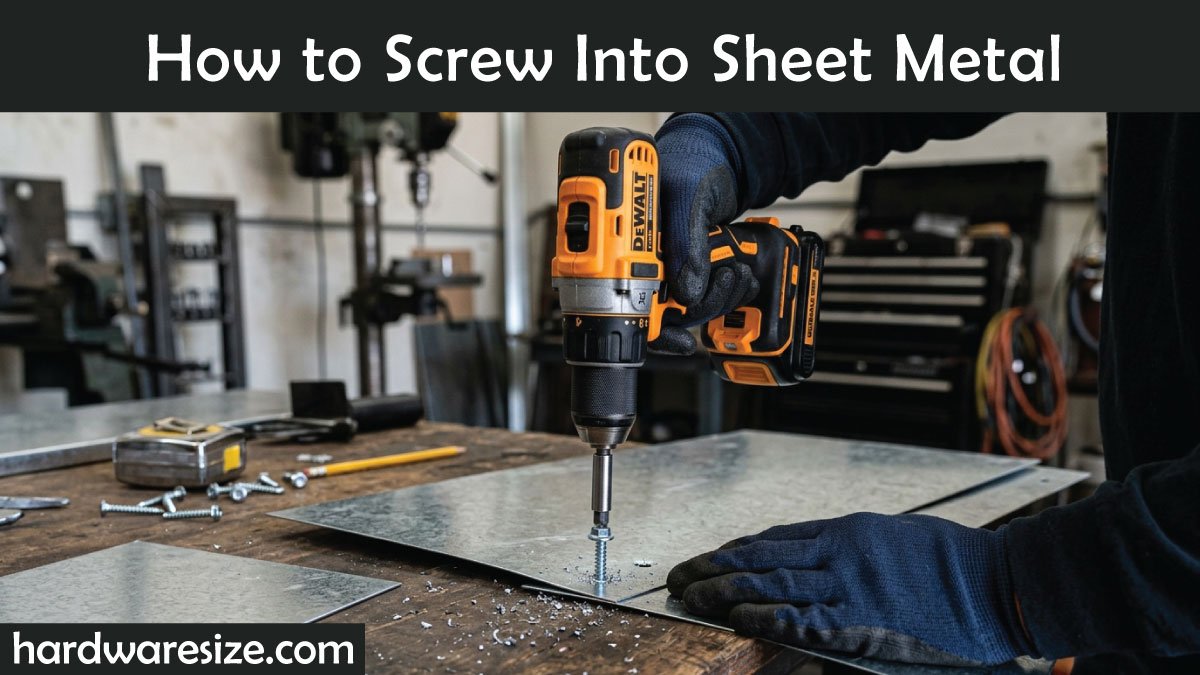
The idea of working with sheet metal might be challenging but with appropriate equipment and skills, it is a straight forward easy job. In DIY work, in the process of installing HVAC systems, repairing metal roofing, or automotive parts, it is necessary to know how to screw into sheet metal so that the final project is strong, secure, and durable.
In this complete guide, you will learn everything from choose the right screws to step-by-step instructions, safety tips, and common mistakes to avoid.
Types of Screws for Sheet Metal
This is the step that is the most crucial when dealing with a sheet metal because the type of screw selected by the user directly influences the strength, durability, and ease of installation. Various screw types are created with purpose, material, or specific thickness in mind, and thus knowing the characteristics of screws will result in firm and durable outcomes.
1. Self-Tapping Screws
Sheet metal is commonly drilled on using self- tap screws due to their ability to cut self-threads into the material once a pilot hole has been drilled. They have a good grip and can be used in the thin metals where a high level of precision and controlled installation is needed.
- Require a pilot hole
- Create their own threads
- Ideal for thin metals
2. Self-Drilling Screws (Tek Screws)
Self-drilling screws also called Tek screws are used to be fast and convenient since no pilot hole is required. Their tip is drill like in nature thus cutting through metal with ease hence suitable in thicker sheet metal and in a hurry project.
- No pilot hole needed
- Have a drill-like tip
- Best for faster work and thicker sheet metal
3. Machine Screws
Machine screws are generally applied in those works, in which the threads are already laid in the material, or in which nuts are employed in the assembling. They are very secure and precise fitted and hence, fit mechanical assemblies and structured connections.
- Used with pre-threaded holes
- Require nuts or tapped holes
4. Stainless Steel Screws
Stainless steel screws are very strong and do not rust and corrode easily so they are very good in the outdoor or wet atmosphere. They are durable in terms of performance over a long period without deteriorating through exposure to the environment or adverse weather conditions.
- Rust-resistant
- Perfect for outdoor applications
Step-by-Step Guide: How to Screw Into Sheet Metal
These procedures should be taken into account in order to work with sheet metal with strong, clean, and professional results. Specifically, every step is significant in the process of proper alignment, safe fastening, and no harm is caused to the material or screws during the installation.
Step 1: Mark the Position
This is to make the screw go in the right place and keep it straight, you do this by marking the point exactly where you will be inserting the screw. Draw a visible mark with a marker or pencil, be precise in order not to make mistakes, and check the distance between screws in case several are needed. Neat professional finish can be achieved with proper marking.
Step 2: Secure the Sheet Metal
Sheet metal is prone to movement or vibration when being drilled and it is therefore crucial to ensure that it is well secured beforehand. Clamps are recommended when they are available, ensure the material is firmly held and continuously work on a stable surface. This will make it impossible to slip, provide more accuracy, and avoid potential injuries significantly.
Step 3: Decide Whether to Drill a Pilot Hole
The decision to drill a pilot hole or not is determined by the kind of screw. Self-drilling screws do away with this requirement, and self-tapping screws must have one. Drill with a slightly smaller drill bit, drill in a straight manner and do not apply too much pressure. Pilot holes enhance precision and eliminate damage of metal.
Step 4: Position the Screw
This is a critical stage, put the screw on the designated spot or inside the pilot hole and put it in, but ensure it is in the right position before doing so using hands or a driver. The right location is necessary in order to prevent bending, slipping, or damaging of the threads.
Step 5: Drive the Screw
Insert a screwdriver or a drill with a steady and controlled force into the sheet metal to insert the screw. The tool should be kept at 90 degrees, but at a slow rate, and gradually increased as necessary. Still until tight to avoid stripping or damaging the material.
Step 6: Check the Fit
Once the screw is installed, make sure to observe the connection and ensure there is no loose screw or that it is tight and in its position. Identify any gaps, looseness or misalignment and adjust where necessary. A properly fitted screw ought to lie on the surface in a clean and solid finish.
Don’t Miss This:
🔧 Learn the correct way to tighten bolts with this How to Tighten a Hex Bolt (Step-by-Step Guide). Discover proper tools, torque tips, and common mistakes to avoid. Read the full post for safe, accurate, and professional results every time.
Best Practices for Screwing Into Sheet Metal
In order to attain clean, safe, and professional finish when handling sheet metal, one should consider adopting some of the best practices that have been tested. These methods aid in enhancing the strength, avoiding the material damage and durability in both amateur and professional uses.
1- Use the Right Screw Length
The screw length to use must be the right one to guarantee a good and stable grip. The screw has to go through the sheet metal without protruding too much out of it. Too short a screw may fail to hold in, and a too long screw may protrude and be unsafe.
2- Maintain Proper Spacing
Screws should be spaced well in order to provide structural strength and balance. This is because screws should not be placed near each other too often and this may cause the metal to be weak. Evenly spaced allows even distribution of loads, and enhances the general durability of the installation.
3- Use Washers When Needed
Washers are also very handy in dealing with thin or delicate sheet metal. They assist in the even distribution of pressure so the screw head would not damage the surface. Washing also enhances the stability and provides a more secure and long lasting fastening.
4- Work at the Correct Speed
It is paramount to ensure the proper drilling or driving speed in order to be properly installed. Excessively fast work can deride the threads or harm the metal and excessively slow work may decrease efficiency. Temperature: A constant and slow speed is more accurate and clean.
Common Mistakes to Avoid
There are easy yet significant errors that newcomers do when dealing with sheet metal that may result in the final product being less strong, unattractive and less resilient. Knowing these mistakes will allow you to damage less, be more efficient and come up with more professional and reliable installations.
1. Over-Tightening the Screw
One of the most widespread problems is over-tightening that may easily ruin the screw and the sheet metal. Using excessive force destroys the bond and decreases the performance of the fastening.
This can:
- Strip threads
- Damage the metal
- Break the screw
2. Using the Wrong Screw Type
Incorrect type of screw may give poor fastening, lose grip, or total failure of the joint. Various applications and thicknesses of sheet metals demand various screws and therefore the right screw will guarantee performance, durability as well as installations.
3. Skipping Pilot Holes (When Required)
It is possible that by skipping pilot holes where they are required, the installation process may become challenging and the sheet metal may be destroyed. Pilot holes also direct the screw in the right direction and minimize stress on the material, particularly when one uses the self-tapping screws rather than the self-drilling screws.
This can lead to:
- Cracks
- Misalignment
- Difficulty in installation
4. Poor Alignment
A driving screw when of wrong angle may make the joint weak and decrease holding strength. Misalignment can also destroy threads and result in a rough finish. Holding the screw straight guarantees a better grip, proper distribution of the loads, and cleaner and more professional look.
Don’t Miss This:
🔩 Struggling with damaged screws? Our How to Remove Stripped Screws from Metal guide shows easy techniques, tools, and tips to safely extract screws without damaging your metal. Read the full post for step-by-step solutions and expert advice.
Safety Tips
It is more important to work with sheet metal due to the sharp edges and the instruments may be dangerous unless the work is done correctly. Safety precautions are simple measures to take prevent any form of injury, and gives the working a smooth and controlled experience.
- Always wear gloves
- Use safety goggles
- Keep hands away from the drill bit
- Work in a well-lit area
Safety should always be your top priority, whether you are working on a small DIY project or a professional installation.
When to Use Self-Drilling vs Self-Tapping Screws
It is very crucial to understand the distinction between self-drilling and self-tapping screws to select an appropriate one to use on your project. All types are tailored to a particular situation, and the appropriateness of a particular type enhances performance in efficiency, accuracy, and overall fastening.
1- Use Self-Drilling Screws When:
Self-drilling screws can be used in the case when rapidity and convenience are key. They do not require pre-drilling and are most applicable in eventualities of dealing with a heavier material or in undertaking of a large scale project within a short time.
- Working with thicker sheet metal
- You want faster installation
- No pilot hole is preferred
2- Use Self-Tapping Screws When:
The screws which have a self-tapping nature are more appropriate in a situation where accuracy and command are demanded. They are used more often with thinner sheet metal and can be placed more accurately particularly in cases when a pilot hole has been made.
- Working with thinner metal
- You need more control
- Precision is important
Don’t Miss This:
📏 Want to measure bolts accurately? Our How to Measure Bolt Size: A Complete Step-by-Step Guide explains everything from diameter to length and thread pitch. Read the full post to master bolt measurement like a pro.
Applications of Screwing Into Sheet Metal
Screwing into sheet metal is an efficient skill that is exposed in most industries and in daily undertakings. Construction to automotive operations, it is essential in the establishment of robust and trustworthy associations. Learning this trick aids in getting efficiency, precision, and a general quality of the project in practical life like:
- Installing metal roofing sheets
- Assembling HVAC ducts
- Automotive repairs
- Mounting brackets and fixtures
- DIY metal projects
This technique will save money and time in professional and home projects because it results in fewer mistakes, longer lifecycles of the construction, and secure fastening on an enormous variety of construction projects.
Pro Tips for Better Results
Small techniques tend to be crucial when providing clean and professional results when working with sheet metal. Such practical suggestions can be used to enhance accuracy, minimize errors and make the whole process easier particularly among novices and those who want to achieve a high quality of finish.
- Use a magnetic bit holder to keep screws steady
- Apply light oil for smoother drilling in thicker metal
- Use a center punch to prevent drill wandering
- Practice on scrap metal before starting your project
These little tips will go a long way in improving your quality of work by increasing the level of control, minimizing the amount of material waste, and enabling you to get a more accurate and reliable outcome with each use.
Conclusion
Understanding how to screw metal sheets is a good skill both to a novice and an expert. With correct choice of screws, proper tools and techniques, you are in a position to get good and sound output. The screw type to be used should always be correct, alignment is to be kept, over-tightening should be avoided, and safety measures should be taken. This process is simple and efficient with time.

Engineer Hassan is a Mechanical Engineer with 16+ years of hands-on experience in mechanical hardware, fasteners, and workshop tools. He focuses on size selection, thread identification, and measurement, helping users choose the correct components with accuracy and safety.