
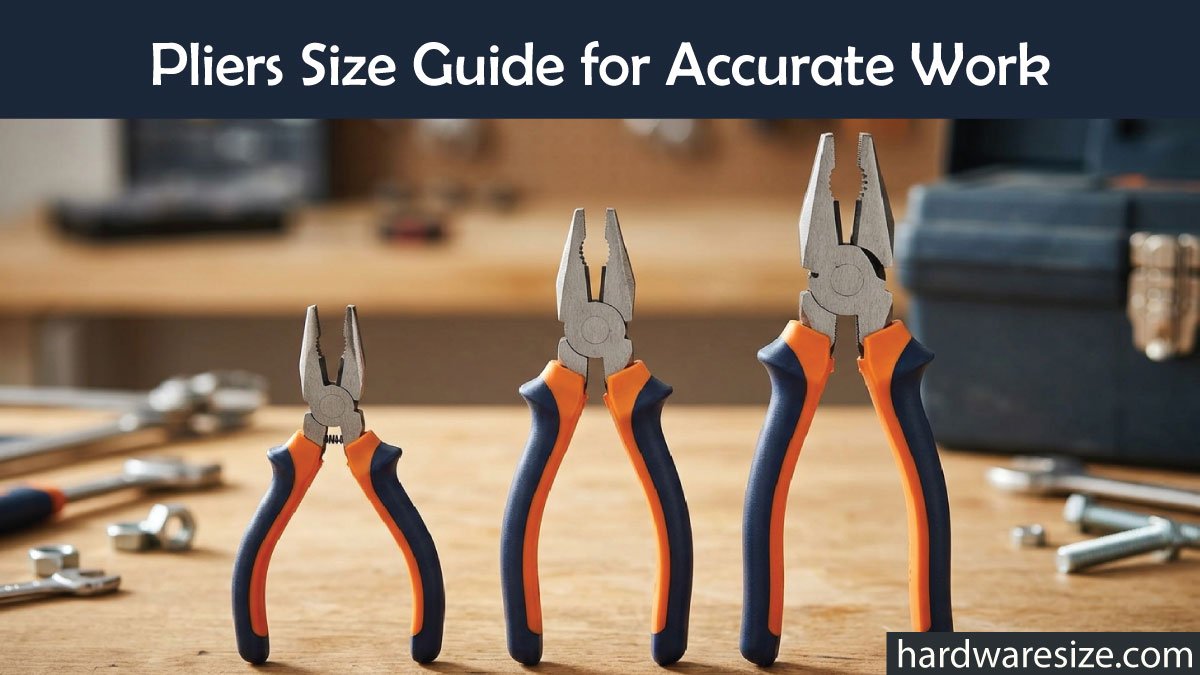
Pliers are one of the most essential hand tools in any toolbox. Whether you are an electrician, mechanic, technician, or DIY enthusiast, choosing the correct pliers size is crucial for accuracy, comfort, and safety.
In this complete guide, you will learn about pliers sizes, types, measurement methods, and how to choose the right size for precise work.
What Are Pliers?
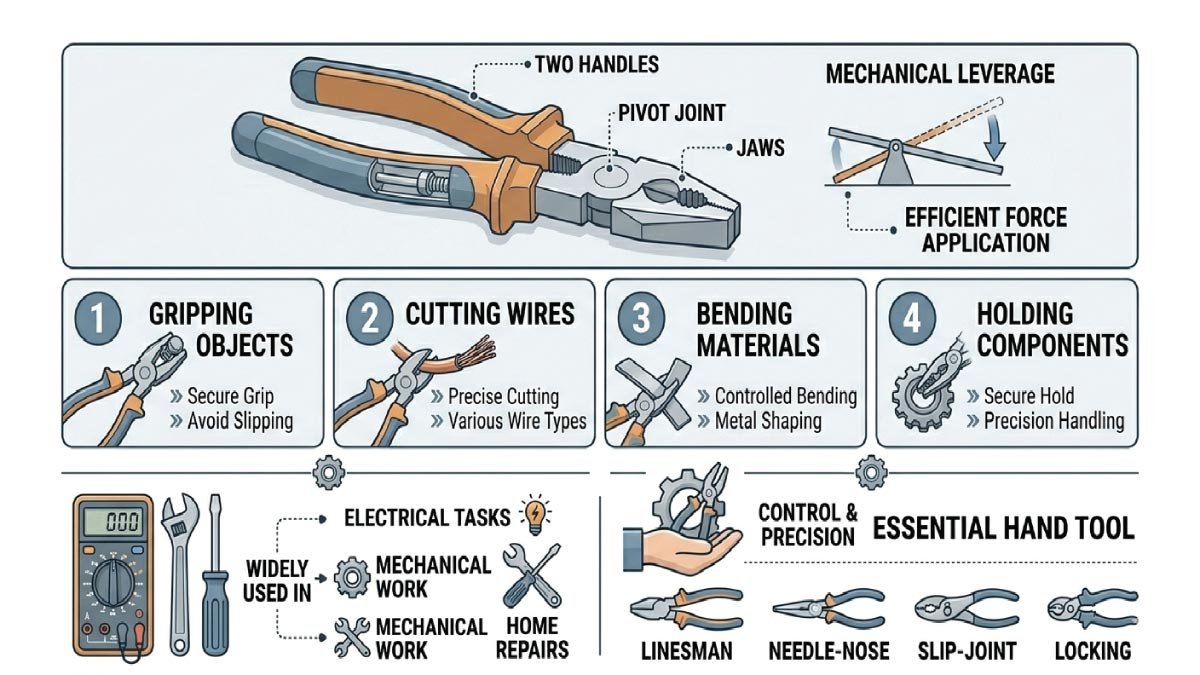
Pliers are essential hand tools designed for gripping, bending, cutting, and holding various materials with control and precision. They consist of two handles, a pivot joint, and jaws that create mechanical leverage. This design allows users to apply force efficiently. Pliers are widely used in mechanical work, electrical installations, automotive repair, and general household maintenance tasks.
They are widely used in mechanical work, electrical tasks, and home repairs.
Main Functions:
- Gripping objects
- Cutting wires
- Bending materials
- Holding components securely
Why Pliers Size Matters
The size of pliers plays a major role in performance, comfort, and safety during work. Choosing the correct size ensures better control and efficiency while reducing the effort required for different tasks. Incorrect sizing can lead to poor grip, material damage, or increased strain on the hand during prolonged use.
Importance of Proper Size:
- Improves grip and control
- Reduces hand fatigue
- Prevents damage to materials
- Increases precision in tasks
- Enhances safety during work
Small pliers may not provide enough force, while oversized pliers can reduce accuracy.
Common Pliers Sizes
Pliers are generally measured by their overall length from the handle end to the jaw tip. Each size is designed for specific applications, balancing force, precision, and accessibility. Selecting the right size ensures efficient performance whether the task is delicate or heavy-duty in nature.
Standard Sizes:
- 4 inches (100 mm) – Precision work
- 6 inches (150 mm) – General use
- 8 inches (200 mm) – Medium-duty tasks
- 10 inches (250 mm) – Heavy-duty work
- 12 inches (300 mm) – Industrial applications
Each size is designed for specific tasks and force requirements.
Types of Pliers and Their Sizes
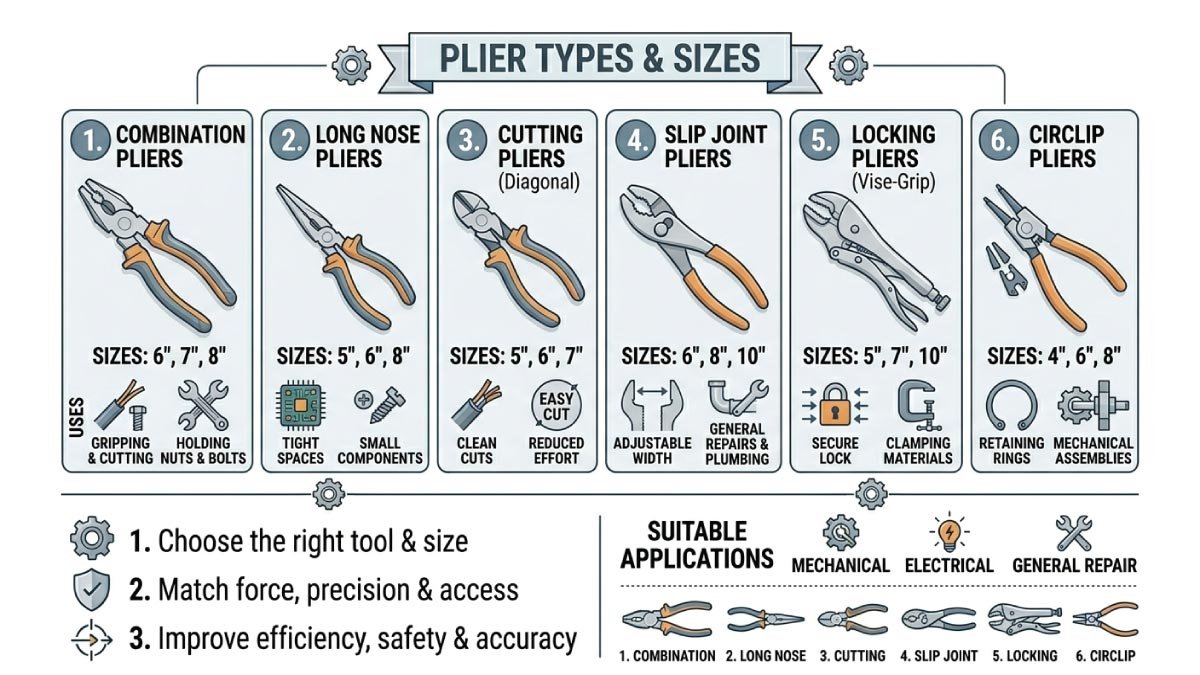
Different types of pliers are designed for specific tasks, and each type comes in multiple sizes to match different levels of force, precision, and accessibility. Choosing the right type and size improves efficiency, safety, and accuracy in mechanical, electrical, and general repair work.
1. Combination Pliers
Combination pliers are the most commonly used type of pliers for general-purpose work. They combine gripping and cutting functions in one tool, making them highly versatile for everyday mechanical and household tasks.
Available Sizes:
- 6″, 7″, 8″
Uses:
- Gripping and cutting wires
- Holding nuts and bolts
2. Long Nose (Needle Nose) Pliers
Long nose or needle nose pliers are designed for precision work in tight and narrow spaces. Their elongated jaws allow access to small components where normal pliers cannot reach, making them ideal for delicate and detailed tasks.
Available Sizes:
- 5″, 6″, 8″
Uses:
- Electrical work
- Jewelry making
- Small component handling
3. Cutting Pliers (Diagonal Pliers)
Cutting pliers, also known as diagonal pliers, are specifically designed for cutting wires and cables with precision. Their sharp cutting edges provide clean cuts and reduce effort during electrical and maintenance work.
Available Sizes:
- 5″, 6″, 7″
Uses:
- Cutting electrical wires
- Trimming cables
4. Slip Joint Pliers
Slip joint pliers are adjustable tools that allow users to change the jaw width according to the size of the object being held. This flexibility makes them suitable for a wide range of general repair and plumbing tasks.
Available Sizes:
- 6″, 8″, 10″
Uses:
- Plumbing tasks
- General repairs
5. Locking Pliers (Vise-Grip)
Locking pliers, commonly known as Vise-Grip pliers, feature a locking mechanism that securely holds objects in place. They are extremely useful when strong, stable gripping force is required without continuous hand pressure.
Available Sizes:
- 5″, 7″, 10″
Uses:
- Holding objects firmly
- Clamping materials
6. Circlip (Retaining Ring) Pliers
Circlip pliers are specialized tools used for installing and removing retaining rings. They are essential in mechanical assemblies where precise handling of internal and external circlips is required.
Available Sizes:
- 4″, 6″, 8″
Uses:
- Internal and external retaining rings
- Mechanical assemblies
👉 Socket Wrench Sizes and Their Applications helps you choose the right tools for accurate mechanical work. Learn different wrench sizes, uses, and practical applications in detail. This guide improves efficiency, safety, and performance. Read the full post for complete insights and expert tips for better understanding and professional results.
Pliers Size Chart (Quick Reference)
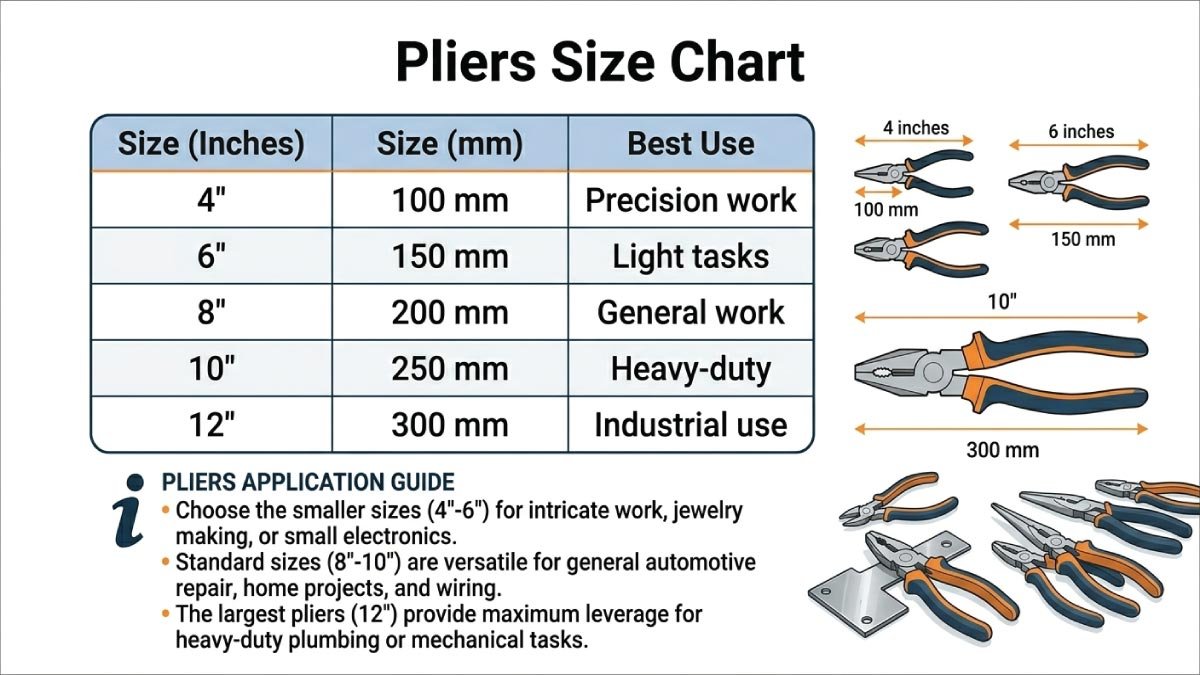
A pliers size chart helps you quickly understand which tool to choose based on task requirements, grip strength, and precision level. Since pliers are measured by their total length, selecting the right size ensures better control, efficiency, and safety in different types of mechanical, electrical, and repair work.
| Size (Inches) | Size (mm) | Best Use |
|---|---|---|
| 4″ | 100 mm | Precision work |
| 6″ | 150 mm | Light tasks |
| 8″ | 200 mm | General work |
| 10″ | 250 mm | Heavy-duty |
| 12″ | 300 mm | Industrial use |
How to Measure Pliers Size
Measuring pliers size correctly is important for choosing the right tool for strength, precision, and comfort. Different sizes affect grip, control, and leverage, so accurate measurement helps you select pliers that match your working needs and application requirements.
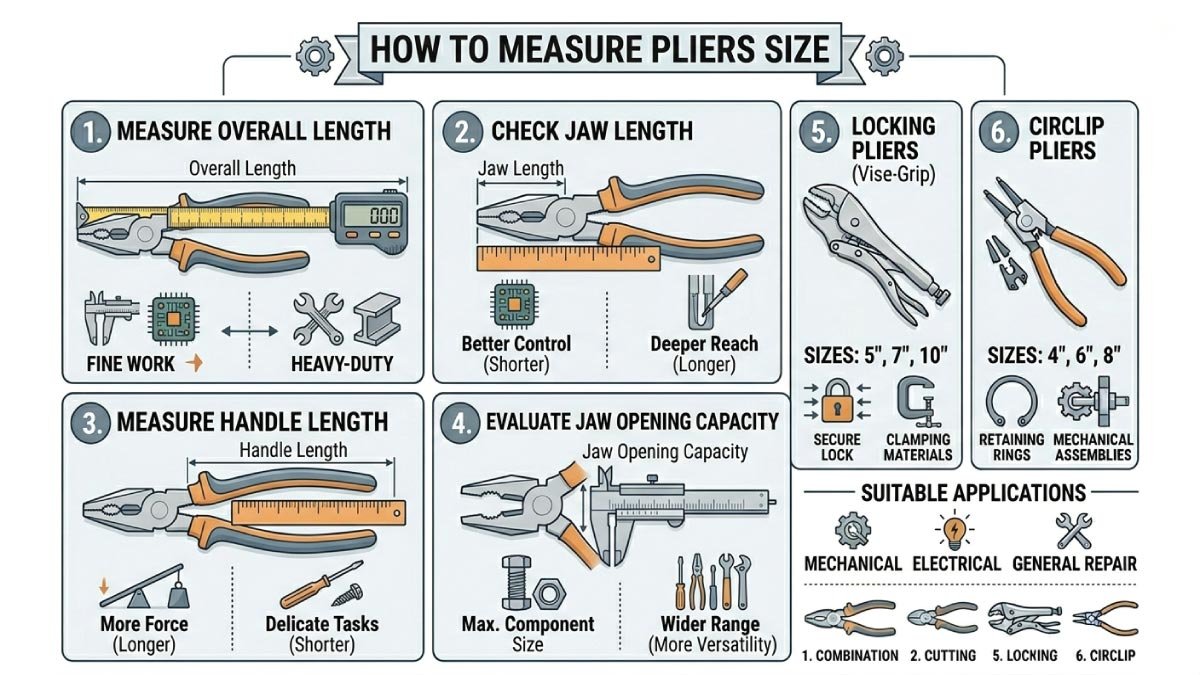
1. Measure Overall Length
Start by measuring the total length of the pliers from the tip of the jaws to the end of the handles. This is the standard size reference for pliers. Overall length affects usability, control, and the type of tasks the tool is suitable for, from fine work to heavy-duty applications.
2. Check Jaw Length
Jaw length refers to the length of the gripping or cutting part of the pliers. It is especially important for precision tasks where access to tight spaces is required. Shorter jaws offer better control, while longer jaws allow you to reach deeper or grip larger surfaces.
3. Measure Handle Length
Handle length impacts leverage and ease of use. Longer handles provide more force with less effort, making them suitable for tough or heavy-duty work. Shorter handles offer better control and are preferred for delicate or detailed tasks where precision is more important than power.
4. Evaluate Jaw Opening Capacity
Jaw opening capacity is the maximum distance the jaws can open to grip objects. This measurement determines what size of components or materials the pliers can handle. A larger opening capacity increases versatility, allowing the tool to be used for a wider range of applications.
Choose the Right Pliers Size
Selecting the correct pliers size is important for achieving accuracy, efficiency, and safety in any task. The right size ensures proper grip, better control, and reduced hand strain during use. Different jobs require different levels of force and precision, so understanding your work requirements helps in making the best choice.
Key Factors:
- Type of task
- Material thickness
- Required force
- Workspace accessibility
- Hand comfort
For delicate work, choose smaller pliers. For heavy tasks, use larger sizes.
👉 Complete Guide to Adjustable Spanner Sizes explains different spanner sizes, uses, and how to choose the right one for any task. This guide helps improve accuracy, safety, and efficiency in mechanical work. Read the full post to gain practical knowledge and expert tips for better tool handling and results.
Applications of Different Pliers Sizes
Pliers come in different sizes to suit various tasks, from delicate precision work to heavy-duty industrial applications. Choosing the correct size improves efficiency, control, and safety during operation. Each size category is designed for specific working conditions and material types.
1- Small Pliers (4″–6″)
Small pliers are designed for fine and delicate tasks where precision is more important than force. They are commonly used in electronics repair, jewelry making, and other detailed assembly work. Their compact size allows easy access to tight spaces and provides excellent control for accurate handling.
2- Medium Pliers (7″–8″)
Medium-sized pliers are the most commonly used type due to their balance of strength and control. They are suitable for household repairs, general mechanical work, and everyday tasks. This size offers versatility, making it ideal for users who need a reliable tool for a wide range of applications.
3- Large Pliers (10″–12″)
Large pliers are designed for heavy-duty applications that require maximum grip and force. They are used in industrial work, construction, and handling thick or tough materials. Their longer handles provide greater leverage, making it easier to cut, bend, or hold strong materials with minimal effort.
Materials Used in Pliers
Pliers are manufactured using strong and durable materials to withstand high pressure, repeated use, and mechanical stress. The quality of material directly affects the tool’s strength, durability, and performance in different working environments. Choosing the right material ensures longer tool life and reliable operation.
1- Carbon Steel:
Carbon steel is widely used for general-purpose pliers due to its strength and affordability. It provides good hardness and durability, making it suitable for basic mechanical and household tasks. However, it may require coating to prevent rust and corrosion over time.
2- Chrome Vanadium Steel:
Chrome vanadium steel is a high-quality material known for its excellent strength, toughness, and wear resistance. It is commonly used in professional-grade pliers because it can handle heavy loads and repeated stress without deforming or breaking easily.
3- Alloy Steel:
Alloy steel combines different elements to improve performance characteristics such as strength, hardness, and corrosion resistance. It is often used in industrial-grade pliers where high durability and long service life are required under demanding conditions.
4- Rubber Grips:
Rubber grips provide comfort and reduce hand fatigue during prolonged use. They also improve grip control, especially in slippery conditions, making the tool safer and easier to handle.
5- PVC Coating:
PVC-coated handles offer basic insulation and a firm grip. They are commonly used in general-purpose pliers and provide protection against minor electrical contact and slipping.
6- Insulated Handles (for Electrical Work):
Insulated handles are specially designed for electrical applications. They protect users from electric shock and are tested for safety standards. These are essential for electricians and high-voltage environments.
Benefits of Using the Correct Pliers Size
Using the correct pliers size is essential for achieving efficient, safe, and accurate work in mechanical, electrical, and general applications. The right tool not only improves performance but also reduces physical strain and enhances overall productivity. Proper selection ensures better control, durability, and professional-quality results in every task.
1- Better Efficiency
The correct pliers size allows tasks to be completed more quickly and with fewer adjustments. It improves workflow by providing better handling and smoother operation, especially when working with different materials. This reduces delays and increases overall productivity in both simple and complex jobs.
2- Improved Safety
Properly sized pliers significantly reduce the risk of slipping or losing grip during use. This helps prevent accidents, injuries, and damage to components. In high-pressure or precision tasks, the right size ensures stable control, making work safer and more reliable for the user.
3- Reduced Effort
Using the correct size minimizes hand strain and physical fatigue. It provides better leverage, allowing users to apply force more effectively with less effort. This is especially useful during repetitive tasks or heavy-duty applications where comfort and control are important for long working hours.
4- Increased Accuracy
Correctly sized pliers offer improved control over gripping, bending, or cutting operations. This leads to more precise results, which is crucial in technical work such as electronics, assembly, or fine mechanical tasks. Better accuracy also reduces material waste and rework.
5- Longer Tool Life
When pliers are used in their appropriate size range, they experience less stress and wear. This helps maintain their strength and sharpness over time, extending their overall lifespan. Proper usage also reduces the risk of deformation or damage to the tool.
Using the right pliers size ensures smoother operation, greater safety, and more professional results across all types of applications.
Common Mistakes When Using Pliers
Using pliers incorrectly can reduce efficiency and even cause damage to both tools and materials. Many users overlook proper technique, leading to unsafe working conditions or poor results. Understanding these common mistakes helps improve performance and ensures longer tool life.
Avoid these common errors:
- Using the wrong size pliers
- Applying excessive force
- Using pliers as a hammer
- Ignoring insulation for electrical work
- Poor grip technique
These mistakes can damage tools and cause injury.
Safety Tips When Using Pliers
Safety is extremely important when working with hand tools like pliers. Proper safety practices help prevent accidents, especially when dealing with electrical components or heavy materials. Following basic safety rules ensures smooth and risk-free operation.
Safety Guidelines:
- Wear safety gloves
- Use insulated pliers for electrical work
- Keep tools clean and dry
- Avoid damaged pliers
- Store tools properly
Maintenance Tips for Pliers
Regular maintenance keeps pliers in good working condition and extends their lifespan. Clean and well-maintained tools perform better, provide smoother operation, and reduce the risk of failure during critical tasks.
Maintenance Practices:
- Clean after use
- Lubricate pivot joint
- Store in dry place
- Inspect for wear and damage
Pliers vs Other Hand Tools
Pliers offer unique advantages compared to other hand tools like wrenches. They provide a stronger grip and better versatility for holding, bending, and cutting tasks. However, each tool has its own strengths depending on the application.
| Feature | Pliers | Wrenches |
|---|---|---|
| Grip | Strong | Moderate |
| Precision | High | Medium |
| Versatility | High | Limited |
| Ease of Use | Easy | Moderate |
Pliers are more versatile and suitable for a wide range of tasks.
Pro Tips for Accurate Work
Using pliers effectively requires proper selection, handling, and technique. Small adjustments in usage can significantly improve accuracy and reduce effort. Professionals often follow these simple practices to achieve better results in everyday work.
- Always match pliers size with the task
- Use needle nose pliers for tight spaces
- Choose longer handles for more leverage
- Keep multiple sizes in your toolbox
- Practice proper grip techniques
Final Thoughts
Understanding pliers sizes is essential for accurate and efficient work. The right size not only improves precision but also ensures safety and comfort.
By selecting the correct type and size of pliers, maintaining them properly, and avoiding common mistakes, you can handle any task with confidence and professionalism.
Pliers may seem like simple tools, but choosing the right size makes a big difference in achieving high-quality results.
FAQs:
What are the common sizes of pliers?
Pliers are commonly available in sizes ranging from 4 inches to 12 inches. Smaller pliers are used for precision work, while larger ones provide more grip and leverage for heavy-duty tasks. Choosing the right size depends on the type of job and required force.
How do I choose the right pliers size?
To choose the right size, consider the task, material thickness, and required grip strength. Small pliers are ideal for electronics and fine work, while medium and large pliers are better for construction, wiring, and mechanical jobs where extra force is needed.
What happens if I use the wrong size pliers?
Using the wrong size pliers can lead to poor grip, damaged materials, and hand strain. Small pliers may not provide enough force, while oversized pliers can reduce control. This increases the risk of errors, injuries, and reduced efficiency during work.
Are larger pliers always better?
No, larger pliers are not always better. While they provide more leverage and strength, they can reduce precision in delicate tasks. Smaller pliers are better for accuracy and tight spaces. The correct choice depends on balancing power and control for the job.
What are the main types of pliers by size?
Pliers come in different types like needle-nose, slip-joint, locking, and cutting pliers, each available in various sizes. Needle-nose pliers are usually smaller for precision work, while locking pliers are larger for gripping heavy materials and industrial applications.
How does pliers size affect performance?
Pliers size directly affects grip strength, control, and accessibility. Smaller sizes offer better precision but less force, while larger sizes provide strong gripping power but reduced control. Selecting the right size ensures efficient work and reduces fatigue during long tasks.
Can one pliers size be used for all tasks?
No single pliers size can handle all tasks efficiently. Different jobs require different sizes for accuracy and strength. Using multiple sizes ensures better performance, improved safety, and professional results across electrical, mechanical, and household repair work.

Engineer Hassan is a Mechanical Engineer with 16+ years of hands-on experience in mechanical hardware, fasteners, and workshop tools. He focuses on size selection, thread identification, and measurement, helping users choose the correct components with accuracy and safety.