
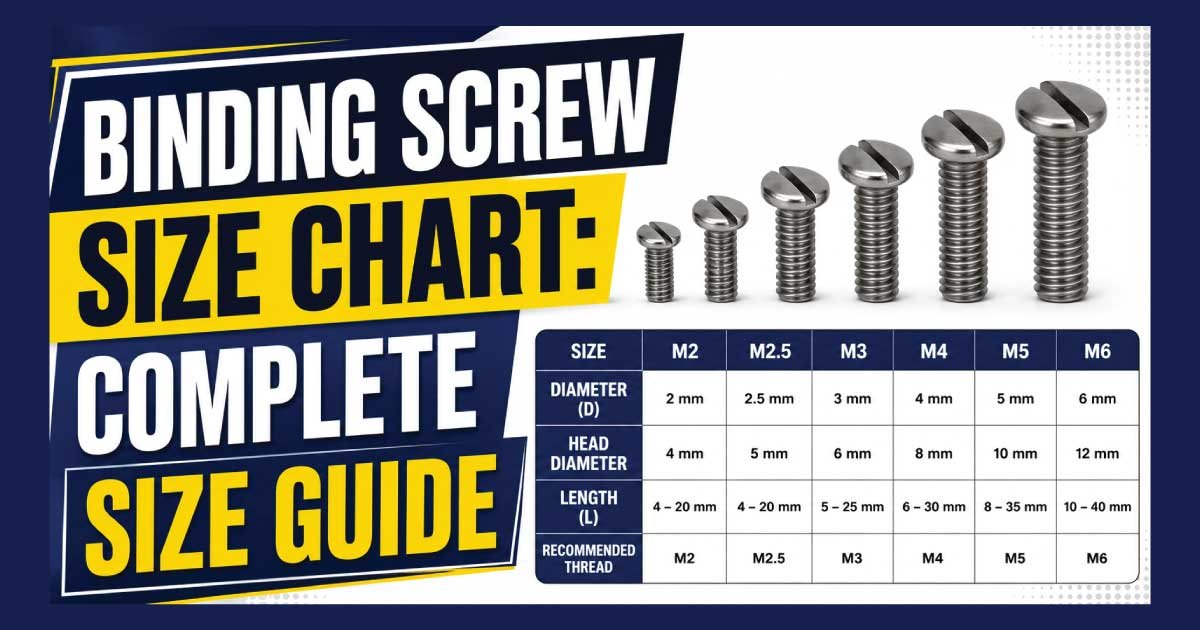
Binding screws, also known as Chicago screws, sex bolts, or barrel nuts, are two-piece fasteners consisting of a male screw and a female barrel. They are commonly used to bind together leather goods, books, menus, belts, binders, signs, architectural panels, furniture, and mechanical assemblies. Their smooth, finished appearance and reusable design make them a popular alternative to traditional nuts and bolts.
Choosing the correct binding screw size is essential for achieving a secure connection while maintaining a clean, professional finish. This guide provides a standard binding screw size chart, explains how to measure binding screws, discusses common materials, and offers practical tips for selecting the right size.
Standard Binding Screw Size Chart
The following chart lists common metric binding screw sizes used in leatherworking, bookbinding, furniture, and general hardware applications.
| Thread Size | Barrel Diameter | Barrel Length | Head Diameter | Head Height | Common Applications |
|---|---|---|---|---|---|
| M3 | 5 mm | 5 mm | 8 mm | 2 mm | Small leather crafts |
| M4 | 6 mm | 6 mm | 9 mm | 2.5 mm | Wallets, notebooks |
| M5 | 8 mm | 8 mm | 12 mm | 3 mm | Menus, folders |
| M5 | 8 mm | 10 mm | 12 mm | 3 mm | Belts and straps |
| M6 | 10 mm | 12 mm | 14 mm | 3.5 mm | Furniture panels |
| M6 | 10 mm | 15 mm | 14 mm | 3.5 mm | Acrylic signs |
| M6 | 10 mm | 20 mm | 14 mm | 3.5 mm | Display boards |
| M8 | 12 mm | 25 mm | 18 mm | 4 mm | Wood assemblies |
| M8 | 12 mm | 30 mm | 18 mm | 4 mm | Heavy-duty binding |
| M10 | 15 mm | 40 mm | 22 mm | 5 mm | Industrial applications |
Imperial Binding Screw Size Chart
| Thread Size | Barrel Length | Head Diameter | Typical Applications |
|---|---|---|---|
| #6-32 | 1/4″ | 3/8″ | Small binders |
| #8-32 | 3/8″ | 7/16″ | Leather goods |
| #10-24 | 1/2″ | 1/2″ | Menus and folders |
| 1/4″-20 | 5/8″ | 5/8″ | Furniture assembly |
| 5/16″-18 | 3/4″ | 3/4″ | Heavy-duty projects |
Why Binding Screw Size Matters
Selecting the proper binding screw size ensures a secure connection while preventing damage to the assembled materials. A barrel that is too short may not engage the threads properly, while an excessively long barrel can create a loose connection.
Benefits of choosing the correct size include:
- Strong fastening performance
- Professional appearance
- Reusable connection
- Easy installation and removal
- Reduced material damage
- Improved durability
- Better alignment of assembled parts
How to Measure a Binding Screw
Accurate measurements help ensure the correct replacement or installation.
Follow these steps:
- Measure the barrel diameter.
- Measure the barrel length.
- Measure the screw length.
- Measure the head diameter.
- Measure the head height.
- Determine the thread size and pitch.
- Measure the total thickness of the materials being joined.
The barrel length should closely match the combined material thickness for the best fit.
Also Read: Screwdriver Types Explained: Complete Guide for Beginners
Common Materials Used for Binding Screws
Binding screws are available in several materials to suit different environments.
Stainless Steel: Provides excellent corrosion resistance and is ideal for outdoor, marine, and humid environments.
Brass: Offers an attractive decorative finish and natural corrosion resistance, making it popular for leather goods and bookbinding.
Nickel-Plated Steel: Provides a polished appearance with moderate corrosion protection for indoor use.
Aluminum: Lightweight and corrosion-resistant, making it suitable for signs, displays, and lightweight assemblies.
Black Oxide Steel: Offers improved wear resistance and a matte black finish for furniture and industrial applications.
How to Choose the Right Binding Screw Size
Consider the following factors before purchasing binding screws.
- Measure the total material thickness.
- Select the correct barrel length.
- Match the thread size.
- Choose the appropriate head diameter.
- Consider the application load.
- Select a corrosion-resistant material when needed.
- Verify compatibility with the installation hole size.
Choosing the proper dimensions ensures a secure and attractive finished assembly.
Common Applications of Binding Screws
Binding screws are used in many industries and DIY projects.
Typical applications include:
- Leather belts
- Wallets
- Bookbinding
- Restaurant menus
- Sample books
- Furniture assembly
- Acrylic signs
- Display panels
- Scrapbooking
- Mechanical assemblies
Installation Tips
Proper installation helps maximize fastener performance.
- Align all mounting holes before assembly.
- Select the correct barrel length.
- Tighten the screw evenly without overtightening.
- Use the proper screwdriver.
- Apply thread-locking compound if vibration is expected.
- Check alignment before final tightening.
- Replace damaged screws or barrels immediately.
Correct installation helps maintain a secure and long-lasting connection.
Also Read: Allen Key Metric & SAE Sizes: Quick Selection Guide
Common Mistakes to Avoid
Avoid these common binding screw installation errors:
- Choosing the wrong barrel length
- Using an incorrect thread size
- Overtightening the screw
- Mixing incompatible materials
- Installing damaged fasteners
- Ignoring corrosion resistance
- Failing to measure material thickness
These mistakes can weaken the connection and reduce the lifespan of the fastener.
Benefits of Properly Sized Binding Screws
Using the correct binding screw size provides several advantages.
- Secure and reusable fastening
- Professional finished appearance
- Easy maintenance and replacement
- Better alignment
- Increased durability
- Reduced wear on materials
- Long-term reliability
These benefits make binding screws an excellent fastening solution for both decorative and structural applications.
Maintenance Tips
Regular maintenance keeps binding screw assemblies secure.
- Inspect for loose screws.
- Tighten fasteners when necessary.
- Check for corrosion.
- Replace worn or damaged parts.
- Clean decorative finishes regularly.
- Apply lubricant to threads if required.
- Store spare fasteners in a dry environment.
Routine inspections help extend the lifespan of both the fasteners and the assembled components.
Also Read: Tap and Die Size Chart: Complete Threading Guide
Conclusion
Choosing the correct binding screw size is essential for creating secure, durable, and attractive assemblies. By accurately measuring the material thickness, selecting the proper barrel length and thread size, and choosing the appropriate material, you can ensure reliable performance in leatherworking, bookbinding, furniture assembly, signage, and industrial applications. Always refer to a binding screw size chart before purchasing to achieve the best fit and long-lasting results.
FAQs:
1. How do I choose the correct binding screw size?
Choose a binding screw with a barrel length that closely matches the combined thickness of the materials being fastened. The correct thread size and head diameter also ensure a secure connection, proper alignment, and a clean, professional finish without leaving the assembly loose or overtightened.
2. What materials are binding screws made from?
Binding screws are commonly manufactured from stainless steel, brass, nickel-plated steel, aluminum, and black oxide steel. Stainless steel offers excellent corrosion resistance, brass provides an attractive decorative finish, and aluminum is lightweight, making each material suitable for different indoor and outdoor applications.
3. Can binding screws be reused?
Yes, binding screws are designed to be reusable. They can be removed and reinstalled multiple times as long as the threads remain undamaged and the fasteners are free from corrosion or excessive wear. Replace any damaged screw or barrel to maintain a secure and reliable connection.
4. What are binding screws commonly used for?
Binding screws are widely used for leather goods, bookbinding, restaurant menus, belts, wallets, furniture assembly, acrylic signs, display boards, scrapbooks, and mechanical assemblies. Their smooth appearance and removable design make them ideal for applications requiring both strength and an attractive finished look.
5. Why is selecting the correct binding screw size important?
Choosing the correct binding screw size ensures proper thread engagement, strong holding power, and accurate alignment of the assembled materials. It also prevents loose connections, reduces material damage, improves durability, and provides a neat, professional appearance that lasts over repeated use.

Engineer Hassan is a Mechanical Engineer with 16+ years of hands-on experience in mechanical hardware, fasteners, and workshop tools. He focuses on size selection, thread identification, and measurement, helping users choose the correct components with accuracy and safety.