
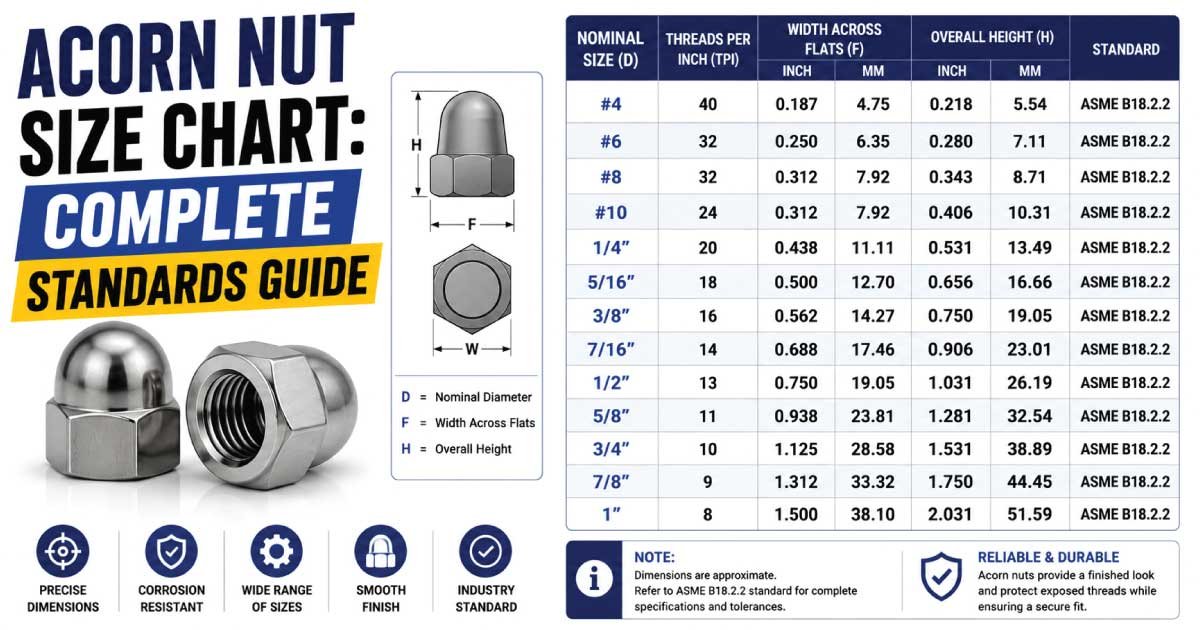
Acorn nuts, also known as cap nuts or dome nuts, are threaded fasteners with a rounded closed end that completely covers the exposed bolt threads.
They provide a clean, finished appearance while protecting threads from corrosion, dirt, moisture, and accidental contact. Acorn nuts are widely used in automotive assemblies, furniture manufacturing, construction, machinery, bicycles, and decorative metalwork.
Selecting the correct acorn nut size ensures secure fastening, improved safety, and long-lasting performance. This guide covers acorn nut sizes, standard charts, dimensions, materials, measurement methods, and selection tips.
What Is an Acorn Nut?
An acorn nut is a hex-shaped nut with a domed closed top that encloses the end of a bolt or threaded rod. The enclosed design prevents thread damage, reduces the risk of injury from exposed fasteners, and enhances the appearance of finished assemblies. Acorn nuts are available in both metric and imperial sizes and are manufactured from carbon steel, stainless steel, brass, and other corrosion-resistant materials.
Primary Functions
- Covers exposed bolt threads
- Protects against corrosion
- Improves appearance
- Enhances user safety
- Prevents thread damage
- Provides secure fastening
Common Types of Acorn Nuts
Acorn nuts are available in several styles designed for different strength, appearance, and environmental requirements. Understanding these types helps ensure the correct nut is selected for each application.
1. Standard Acorn Nut
Standard acorn nuts feature a hexagonal body with a rounded dome that fully encloses the bolt end. They are commonly used in automotive, machinery, and general fastening applications.
Advantages
- Attractive appearance
- Easy installation
- Protects threads
- Prevents injuries
- Widely available
2. High Crown Acorn Nut
High crown acorn nuts have a taller dome that accommodates longer bolt projections. They are ideal when additional thread coverage is required without trimming the bolt.
Benefits
- Covers longer bolts
- Better thread protection
- Decorative finish
- Durable construction
- Improved corrosion resistance
3. Stainless Steel Acorn Nut
Stainless steel acorn nuts provide excellent corrosion resistance and are widely used in marine equipment, food processing machinery, outdoor structures, and chemical facilities.
Applications
- Marine equipment
- Food processing
- Outdoor furniture
- Chemical plants
- Architectural installations
4. Brass Acorn Nut
Brass acorn nuts offer excellent corrosion resistance and an attractive polished finish, making them popular for decorative applications, plumbing fixtures, electrical equipment, and ornamental hardware.
Acorn Nut Size Chart (Inch Sizes)
The following table lists common inch-size acorn nuts used in construction, automotive, and industrial applications.
| Thread Size | Threads Per Inch (TPI) | Common Wrench Size |
|---|---|---|
| #10-24 | 24 | 3/8″ |
| 1/4″-20 | 20 | 7/16″ |
| 5/16″-18 | 18 | 1/2″ |
| 3/8″-16 | 16 | 9/16″ |
| 7/16″-14 | 14 | 5/8″ |
| 1/2″-13 | 13 | 3/4″ |
| 5/8″-11 | 11 | 15/16″ |
| 3/4″-10 | 10 | 1-1/8″ |
Metric Acorn Nut Size Chart
Metric acorn nuts are commonly used in automotive manufacturing, industrial machinery, and international engineering projects.
| Thread Size | Thread Pitch | Common Wrench Size |
|---|---|---|
| M5 | 0.8 mm | 8 mm |
| M6 | 1.0 mm | 10 mm |
| M8 | 1.25 mm | 13 mm |
| M10 | 1.5 mm | 17 mm |
| M12 | 1.75 mm | 19 mm |
| M16 | 2.0 mm | 24 mm |
| M20 | 2.5 mm | 30 mm |
| M24 | 3.0 mm | 36 mm |
Understanding Acorn Nut Dimensions
Understanding acorn nut dimensions helps ensure compatibility with bolts, threaded rods, and fastening assemblies. Correct sizing improves thread engagement, fastening strength, and overall safety.
1. Thread Size
Thread size identifies the internal thread diameter of the acorn nut. It must exactly match the bolt or threaded rod to ensure proper engagement and secure fastening.
2. Thread Pitch
Thread pitch refers to the distance between adjacent threads in metric systems or the number of threads per inch in imperial systems. Matching the correct thread pitch prevents cross-threading and installation problems.
3. Nut Height
Nut height measures the total distance from the base to the top of the dome. High crown acorn nuts provide greater internal clearance for longer bolt threads.
How to Measure an Acorn Nut
Accurate measurements help identify replacement acorn nuts and ensure compatibility with existing bolts and hardware. A thread gauge and digital caliper provide the most accurate measurements.
Step 1: Measure the Thread Diameter
Measure the bolt diameter or the nut’s internal thread using a thread gauge or caliper.
Measurement Tips
- Clean the threads before measuring
- Measure carefully to avoid errors
- Verify thread standards
- Compare with standard size charts
Step 2: Identify the Thread Pitch
Use a thread pitch gauge to determine the exact spacing between threads. Matching the thread pitch ensures smooth installation and proper fastening.
Step 3: Measure the Nut Height
Measure from the bottom of the nut to the highest point of the dome. This helps determine whether the nut provides enough clearance for the bolt length.
Common Acorn Nut Materials
Material selection affects the strength, corrosion resistance, and durability of an acorn nut. Choosing the proper material ensures reliable performance in different operating environments.
Carbon Steel Acorn Nuts
Carbon steel acorn nuts are commonly used in construction, machinery, and general fastening applications because they provide high strength at an economical cost.
Advantages
- High strength
- Affordable
- Easy availability
- Good durability
- Suitable for indoor applications
Stainless Steel Acorn Nuts
Stainless steel acorn nuts resist rust, moisture, and chemicals, making them ideal for marine environments, outdoor installations, and food-grade equipment.
Benefits
- Excellent corrosion resistance
- Long service life
- Hygienic surface
- Low maintenance
- Attractive finish
Brass Acorn Nuts
Brass acorn nuts combine corrosion resistance with an attractive gold-colored finish, making them suitable for decorative hardware, plumbing fixtures, and electrical applications.
Applications of Acorn Nuts
Acorn nuts are used wherever exposed bolt threads need protection while maintaining a clean, finished appearance and improving user safety.
Automotive Industry
Acorn nuts secure wheels, trim components, engine accessories, and decorative assemblies while protecting exposed threads from moisture and corrosion.
Common Applications
- Vehicle wheels
- Engine assemblies
- Motorcycle components
- Bicycle parts
- Automotive trim
Furniture and Decorative Hardware
Furniture manufacturers use acorn nuts to improve appearance, cover exposed fasteners, and protect users from sharp bolt ends on tables, chairs, railings, and display fixtures.
Typical Uses
- Furniture assembly
- Handrails
- Decorative metalwork
- Playground equipment
- Architectural installations
🔩 Read Expert Sizing Guide 👉 Drill Types Explained: Corded vs Cordless Guide
How to Choose the Correct Acorn Nut Size
Selecting the correct acorn nut size is essential for creating a secure, durable, and attractive fastening assembly. The nut must match the bolt diameter, thread pitch, and thread standard exactly. Choosing the proper material and dome height also ensures adequate thread coverage, corrosion resistance, and long-term reliability in the intended application.
Selection Checklist
- Measure the bolt diameter
- Verify the thread pitch
- Confirm the thread standard
- Choose the correct nut height
- Select the appropriate material
- Check corrosion resistance
- Match the wrench size
- Verify load requirements
- Ensure sufficient thread engagement
- Follow manufacturer specifications
Acorn Nut Material Comparison
Different materials provide varying levels of strength, corrosion resistance, and appearance. Selecting the right material helps maximize performance and service life.
| Material | Best Applications | Main Advantages |
|---|---|---|
| Carbon Steel | General industrial use | Strong and economical |
| Stainless Steel 304 | Food processing | Corrosion resistant and hygienic |
| Stainless Steel 316 | Marine environments | Excellent saltwater resistance |
| Brass | Decorative hardware | Attractive finish and corrosion resistance |
| Zinc-Plated Steel | Indoor equipment | Affordable rust protection |
| Chrome-Plated Steel | Automotive trim | Bright finish and improved corrosion resistance |
Acorn Nut Strength Grades
Acorn nuts are available in various strength grades to match the mechanical properties of the bolts they secure. Using compatible grades helps ensure safe and reliable fastening.
Common Strength Grades
The most commonly used strength ratings include:
- Grade 2
- Grade 5
- Grade 8
- Class 5
- Class 8
- Class 10
- Class 12
- ASTM A563
Higher-strength acorn nuts are commonly paired with structural and high-tensile bolts used in industrial machinery and heavy equipment.
Common Acorn Nut Installation Mistakes
Improper installation can damage threads, reduce clamping force, and shorten the life of the fastening assembly. Correct installation practices help maintain strength and reliability.
Avoid these common mistakes:
- Using the wrong thread size
- Installing mismatched thread pitches
- Overtightening the nut
- Undertightening the connection
- Cross-threading during installation
- Using damaged bolts
- Ignoring torque specifications
- Reusing severely worn nuts
- Choosing insufficient dome height
- Installing corroded hardware
🔩 Read Expert Sizing Guide 👉 Drill Bit Types for Wood, Metal & Concrete
Acorn Nut Maintenance Tips
Routine inspection helps maintain secure fastening and preserves the appearance of exposed hardware. Preventive maintenance also reduces the likelihood of unexpected failures.
Maintenance recommendations include:
- Inspect for corrosion
- Check nut tightness
- Clean exposed surfaces
- Replace damaged nuts
- Inspect bolt threads
- Lubricate threads when appropriate
- Remove dirt and moisture
- Monitor vibration
- Replace worn washers
- Perform scheduled inspections
Regular maintenance extends the service life of both the acorn nut and the bolt.
Advantages of Using the Correct Acorn Nut Size
Properly sized acorn nuts improve both the performance and appearance of fastening assemblies while protecting exposed threads from damage.
Major advantages include:
- Covers exposed threads
- Improves user safety
- Enhances appearance
- Prevents thread corrosion
- Reduces thread damage
- Provides secure fastening
- Lowers maintenance requirements
- Extends fastener life
- Improves weather resistance
- Creates a professional finish
Signs an Acorn Nut Needs Replacement
Acorn nuts can deteriorate over time due to corrosion, vibration, repeated tightening, and environmental exposure. Regular inspections help identify worn hardware before failures occur.
Common warning signs include:
- Rust or corrosion
- Damaged internal threads
- Cracked dome
- Rounded hex flats
- Loose fastening
- Cross-threading damage
- Chrome peeling
- Visible deformation
- Excessive wear
- Frequent loosening
Replacing damaged acorn nuts promptly helps maintain the safety, appearance, and reliability of the assembly.
🔩 Read Expert Sizing Guide 👉 Needle Nose Pliers Size Chart: Types and Uses
Applications of Acorn Nuts Across Industries
Acorn nuts are widely used in industries where thread protection, appearance, and user safety are important. Their enclosed design makes them suitable for both functional and decorative applications.
Automotive Industry
Automotive manufacturers use acorn nuts on wheel assemblies, engine components, trim pieces, motorcycles, and custom vehicles to protect threads while providing a clean, finished appearance.
Construction and Architecture
Construction projects use acorn nuts on railings, staircases, fences, structural supports, and architectural metalwork where exposed fasteners require both protection and an attractive finish.
Furniture Manufacturing
Furniture manufacturers install acorn nuts on tables, chairs, shelving units, playground equipment, and decorative fixtures to eliminate exposed bolt ends and improve user safety.
Marine and Outdoor Equipment
Marine hardware and outdoor structures use stainless steel acorn nuts because they resist corrosion, moisture, and harsh weather while protecting threaded fasteners from environmental damage.
Overall Summary
Choosing the correct acorn nut size is essential for achieving secure fastening, protecting exposed threads, and creating a clean, professional appearance.
By understanding thread dimensions, strength grades, materials, and installation practices, users can confidently select the right acorn nut for automotive, construction, furniture, marine, and industrial applications.
Using accurate acorn nut size charts, matching the correct bolt specifications, and performing regular maintenance significantly improves fastening reliability, extends hardware service life, reduces maintenance costs, and enhances both safety and appearance in a wide variety of mechanical and structural assemblies.
FAQs:
How do I determine the correct acorn nut size?
Measure the bolt diameter and identify the thread pitch using a thread gauge or thread chart. Compare these measurements with a standard acorn nut size chart to select the correct thread size, dome height, and wrench size. Proper sizing ensures secure fastening, thread protection, and reliable long-term performance.
What is the difference between an acorn nut and a standard hex nut?
An acorn nut features a closed, domed end that completely covers exposed bolt threads, while a standard hex nut has an open end. The domed design protects threads from dirt, moisture, and damage, while also improving appearance and reducing the risk of injuries from exposed bolt ends.
Which material is best for acorn nuts?
The best material depends on the application. Carbon steel is suitable for general-purpose fastening, stainless steel offers excellent corrosion resistance for outdoor and marine environments, and brass provides outstanding rust resistance along with an attractive finish for decorative and light-duty applications.
Can acorn nuts be reused?
Yes, acorn nuts can often be reused if their internal threads are free from wear, corrosion, cracks, or other damage. However, for critical, high-load, or safety-related applications, replacing worn or damaged acorn nuts is recommended to maintain secure fastening and dependable long-term performance.
How long do acorn nuts last?
The lifespan of an acorn nut depends on material quality, environmental conditions, applied loads, and maintenance practices. High-quality stainless steel or brass acorn nuts can provide many years, and often decades, of reliable service when properly installed and protected from excessive corrosion or mechanical damage.

Engineer Hassan is a Mechanical Engineer with 16+ years of hands-on experience in mechanical hardware, fasteners, and workshop tools. He focuses on size selection, thread identification, and measurement, helping users choose the correct components with accuracy and safety.