
Door hinges are one of the most important hardware components in any home or commercial building. Although they are small, they support the entire weight of the door, allow smooth opening and closing, and improve security. Choosing the wrong hinge size can lead to sagging doors, alignment issues, squeaking noises, and reduced hinge lifespan.
Whether you are installing a new door, replacing old hinges, or working on a DIY renovation project, understanding door hinge sizes is essential. This complete guide explains standard hinge sizes, measurement methods, hinge types, materials, applications, and installation tips to help you select the perfect hinge.
Standard Door Hinge Size Chart
The table below shows common door hinge sizes and their typical applications.
| Hinge Size | Door Thickness | Door Width | Typical Application |
|---|---|---|---|
| 2″ × 2″ | Up to 1″ | Small | Cabinets, small furniture |
| 2.5″ × 2.5″ | 1″–1¼” | Narrow | Interior utility doors |
| 3″ × 3″ | 1⅜” | Up to 30″ | Lightweight interior doors |
| 3.5″ × 3.5″ | 1⅜” | 30″–36″ | Standard residential interior doors |
| 4″ × 4″ | 1¾” | 36″–42″ | Exterior residential doors |
| 4.5″ × 4.5″ | 1¾”–2″ | Heavy doors | Commercial buildings |
| 5″ × 5″ | Over 2″ | Oversized | Industrial and security doors |
| 6″ × 6″ | Heavy-duty | Large | Warehouse and steel doors |
Understanding Door Hinge Dimensions
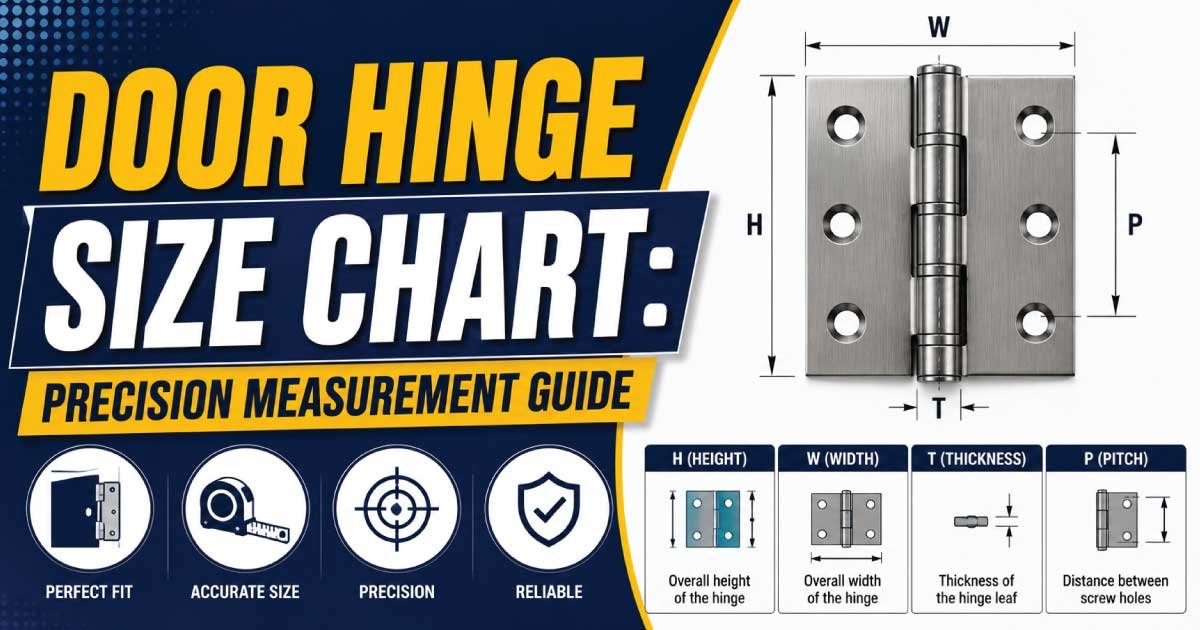
Door hinge size is usually written as width × height.
For example:
- 3.5″ × 3.5″
- 4″ × 4″
- 4.5″ × 4.5″
These measurements represent the hinge when it is fully opened and laid flat.
The main dimensions include:
- Overall height
- Overall width
- Leaf width
- Knuckle diameter
- Pin diameter
- Screw hole spacing
- Leaf thickness
All of these measurements determine whether a hinge fits properly in the existing mortise or on a new door installation.
How to Measure a Door Hinge Correctly
1. Measure the Height
Open the hinge completely and measure from the top edge to the bottom edge.
Example:
- 3 inches
- 3.5 inches
- 4 inches
- 4.5 inches
2. Measure the Width
Lay the hinge flat and measure from one outside edge to the opposite edge.
The width is measured only when the hinge is fully opened.
3. Measure Leaf Thickness
Use a caliper to measure the thickness of one hinge leaf.
Common thicknesses include:
- 0.085″
- 0.095″
- 0.105″
- 0.134″
- 0.180″
Thicker hinges support heavier doors.
4. Count the Screw Holes
Different hinges have varying numbers of mounting holes.
Common configurations include:
- 4 holes
- 6 holes
- 8 holes
Always match the existing screw hole pattern if replacing a hinge.
5. Measure the Pin Diameter
The hinge pin affects strength and compatibility.
Common pin sizes include:
- 1/4 inch
- 5/16 inch
- 3/8 inch
Common Residential Door Hinge Sizes
Most homes use only a few standard hinge sizes.
| Door Type | Common Hinge Size |
|---|---|
| Bedroom Door | 3.5″ × 3.5″ |
| Bathroom Door | 3.5″ × 3.5″ |
| Closet Door | 3″ × 3″ |
| Pantry Door | 3″ × 3″ |
| Front Entry Door | 4″ × 4″ |
| Back Door | 4″ × 4″ |
| Garage Entry Door | 4″ × 4″ |
The majority of modern interior doors use 3.5-inch hinges.
Commercial Door Hinge Size Chart
Commercial buildings require stronger hinges because doors are larger and used more frequently.
| Door Weight | Recommended Hinge |
|---|---|
| Up to 90 lbs | 4″ × 4″ |
| 90–150 lbs | 4.5″ × 4.5″ |
| 150–200 lbs | 5″ × 5″ |
| Over 200 lbs | 6″ × 6″ |
Heavy-duty ball bearing hinges are recommended for commercial applications.
Door Thickness vs Recommended Hinge Size
Door thickness directly affects hinge selection.
| Door Thickness | Recommended Hinge |
|---|---|
| 1⅜” | 3.5″ × 3.5″ |
| 1¾” | 4″ × 4″ |
| 2″ | 4.5″ × 4.5″ |
| 2¼” | 5″ × 5″ |
Always match hinge size to both the door thickness and door weight.
Types of Door Hinges
1. Butt Hinges
The most common hinge found in residential homes.
Features:
- Strong
- Easy to install
- Available in many finishes
- Suitable for wood and metal doors
2. Ball Bearing Hinges
Designed for heavy doors.
Advantages:
- Smooth operation
- Long service life
- Reduced friction
- Excellent for high-traffic areas
3. Spring Hinges
These hinges automatically close the door.
Common applications include:
- Fire doors
- Garage doors
- Commercial exits
- Office entrances
4. Continuous Hinges (Piano Hinges)
Run the full height of the door.
Benefits include:
- Even weight distribution
- Increased durability
- Better security
5. Concealed Hinges
Mostly used on cabinets and modern furniture.
Advantages:
- Hidden appearance
- Adjustable alignment
- Clean modern design
How Many Hinges Does a Door Need?
The number of hinges depends on the door height and weight.
| Door Height | Recommended Hinges |
|---|---|
| Up to 60″ | 2 Hinges |
| 60–90″ | 3 Hinges |
| 90–120″ | 4 Hinges |
| Over 120″ | 5 or More Hinges |
Adding extra hinges improves stability and reduces stress on each hinge.
Door Weight and Hinge Selection
Choosing hinges according to door weight prevents premature wear.
| Door Weight | Suggested Hinge |
|---|---|
| Under 50 lbs | Standard Butt Hinge |
| 50–90 lbs | Heavy Residential Hinge |
| 90–150 lbs | Ball Bearing Hinge |
| 150–250 lbs | Heavy Commercial Hinge |
| Over 250 lbs | Industrial Continuous Hinge |
📏 View Accurate Size Guide 👉 Adjustable Wrench Size Chart: Types, Uses With Full Guide
Door Hinge Materials
Different materials provide different levels of strength and corrosion resistance.
Stainless Steel
Best for:
- Exterior doors
- Coastal areas
- Commercial buildings
Benefits:
- Rust resistant
- Strong
- Long lifespan
Solid Brass
Ideal for decorative doors.
Advantages:
- Attractive finish
- Corrosion resistant
- Premium appearance
Steel
Commonly used for:
- Interior doors
- Residential homes
- Office buildings
Advantages:
- Affordable
- Durable
- Easy to paint
Bronze
Often selected for luxury projects because it develops a beautiful natural patina over time while offering excellent durability and corrosion resistance.
Door Hinge Finish Options
Popular finishes include:
- Satin Nickel
- Matte Black
- Oil-Rubbed Bronze
- Antique Brass
- Chrome
- Polished Brass
- Stainless Steel
- White
Choose a finish that matches door handles, locks, and other hardware for a cohesive appearance.
How to Choose the Correct Door Hinge Size
Consider the following factors:
- Door height
- Door width
- Door thickness
- Door weight
- Frame material
- Frequency of use
- Indoor or outdoor installation
- Fire rating requirements
- Security requirements
- Desired finish
Selecting the correct combination ensures smooth performance and a longer service life.
📏 View Accurate Size Guide 👉 Socket Size Chart: Sizes, Types & Applications Guide
Common Door Hinge Installation Mistakes
Avoid these common errors:
- Using hinges that are too small
- Installing too few hinges
- Misaligning the hinge mortise
- Using short screws
- Ignoring door weight
- Mixing different hinge sizes
- Over-tightening screws
- Failing to lubricate moving parts
Proper installation significantly improves door operation and reduces maintenance.
Maintenance Tips for Door Hinges
Regular maintenance extends hinge life and keeps doors operating smoothly.
Helpful maintenance practices include:
- Tighten loose screws periodically.
- Clean dirt and dust from hinge knuckles.
- Apply lubricant to moving parts every few months.
- Replace bent or damaged hinge pins.
- Inspect hinges for rust or corrosion, especially on exterior doors.
- Repaint or refinish exposed steel hinges when necessary.
Routine care helps prevent squeaking, binding, and premature wear.
When Should You Replace Door Hinges?
You should consider replacing your hinges if you notice:
- Persistent squeaking after lubrication
- Visible rust or corrosion
- Loose hinge pins
- Cracked or bent hinge leaves
- Door sagging or rubbing against the frame
- Worn screw holes that no longer hold screws securely
Replacing worn hinges before they fail can prevent damage to the door and frame.
📏 View Accurate Size Guide 👉 Drill Bit Size Chart: Types, Sizes & Uses Explained
Essential Points to Remember
Selecting the correct door hinge size is essential for ensuring smooth operation, proper door alignment, and long-lasting durability.
By considering factors such as door thickness, weight, height, and intended use, you can choose hinges that provide reliable performance for years.
Whether you are upgrading interior doors, installing a new entry door, or working on a commercial project, using the right hinge size, material, and finish will improve both functionality and appearance while reducing future maintenance.
FAQs:
What is the standard hinge size for an interior door?
The standard hinge size for most residential interior doors is 3.5 × 3.5 inches. These hinges are designed for 1⅜-inch-thick doors and provide reliable support for bedrooms, bathrooms, closets, and other interior spaces. They offer smooth operation, easy installation, and long-lasting performance for everyday residential use.
What size hinge should I use for a front door?
Most residential front doors with a thickness of 1¾ inches use 4 × 4-inch hinges. Heavier entry doors, solid wood doors, or doors with decorative glass often require 4.5 × 4.5-inch ball bearing hinges to provide additional strength, smoother movement, and greater durability under frequent daily use.
How many hinges does a standard door need?
A standard residential interior door typically requires three hinges for proper support and smooth operation. Taller, wider, or heavier doors may need four or more hinges to distribute weight evenly, reduce stress on individual hinges, prevent sagging, and improve long-term durability and overall door performance.
Are ball bearing hinges better than standard butt hinges?
Yes, ball bearing hinges are generally better for heavy doors and high-traffic applications. Their built-in bearings reduce friction, provide smoother operation, minimize wear, and require less maintenance than standard butt hinges. They are commonly used on commercial buildings, entry doors, and frequently operated residential doors.
Can I replace a 3.5-inch hinge with a 4-inch hinge?
You can replace a 3.5-inch hinge with a 4-inch hinge only if the door and frame can accommodate the larger mortise, screw pattern, and leaf dimensions. In most situations, replacing the hinge with the same size is recommended to ensure proper alignment, smooth operation, and secure installation.

Engineer Hassan is a Mechanical Engineer with 16+ years of hands-on experience in mechanical hardware, fasteners, and workshop tools. He focuses on size selection, thread identification, and measurement, helping users choose the correct components with accuracy and safety.