
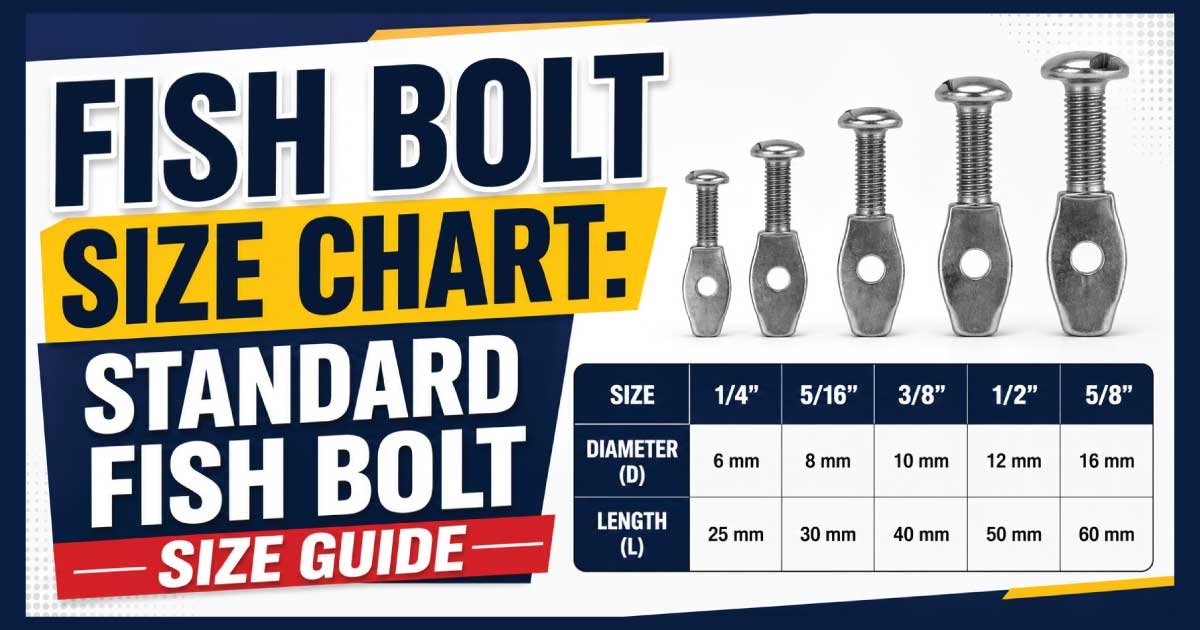
Fish bolts are specialized fasteners used to join railway fish plates (joint bars) and securely connect two sections of rail. These bolts are designed with a rounded or oval neck beneath the head to prevent rotation during tightening, ensuring a secure and stable rail joint. Fish bolts play a critical role in maintaining track alignment, distributing loads, and withstanding the constant vibration and impact generated by passing trains.
Selecting the correct fish bolt size is essential for railway safety, structural integrity, and long-term performance. This guide provides a standard fish bolt size chart, explains how to measure fish bolts, discusses common materials, and offers practical tips for selecting the right size.
Standard Fish Bolt Size Chart
The following chart lists common metric fish bolt sizes used in railway and heavy-duty fastening applications.
| Thread Size | Bolt Diameter | Bolt Length | Thread Length | Hex Head Size | Typical Applications |
|---|---|---|---|---|---|
| M16 | 16 mm | 80 mm | 40 mm | 24 mm | Light rail tracks |
| M20 | 20 mm | 90 mm | 45 mm | 30 mm | Industrial rail systems |
| M22 | 22 mm | 100 mm | 50 mm | 32 mm | Standard railway joints |
| M24 | 24 mm | 110 mm | 55 mm | 36 mm | Heavy rail connections |
| M27 | 27 mm | 120 mm | 60 mm | 41 mm | Freight railway tracks |
| M30 | 30 mm | 130 mm | 65 mm | 46 mm | High-load rail systems |
| M33 | 33 mm | 140 mm | 70 mm | 50 mm | Heavy-duty infrastructure |
| M36 | 36 mm | 150 mm | 75 mm | 55 mm | Mining railways |
| M39 | 39 mm | 160 mm | 80 mm | 60 mm | Crane rail systems |
| M42 | 42 mm | 170 mm | 85 mm | 65 mm | Specialized heavy rail applications |
Imperial Fish Bolt Size Chart
| Bolt Diameter | Bolt Length | Thread Size | Hex Head Size | Common Applications |
|---|---|---|---|---|
| 5/8″ | 3-1/2″ | UNC | 15/16″ | Narrow gauge rail |
| 3/4″ | 4″ | UNC | 1-1/8″ | Light railway tracks |
| 7/8″ | 4-1/2″ | UNC | 1-5/16″ | Standard rail joints |
| 1″ | 5″ | UNC | 1-1/2″ | Heavy-duty rail systems |
| 1-1/8″ | 5-1/2″ | UNC | 1-11/16″ | Industrial railways |
Why Fish Bolt Size Matters
Selecting the proper fish bolt size is critical for maintaining secure rail joints and preventing movement under heavy loads. An undersized bolt may loosen over time, while an oversized bolt may not fit the fish plate correctly.
Benefits of choosing the correct fish bolt size include:
- Improved railway safety
- Stronger joint connections
- Better vibration resistance
- Longer service life
- Reduced maintenance
- Enhanced load distribution
- Reliable long-term performance
How to Measure a Fish Bolt
Accurate measurements help ensure the correct replacement bolt.
Follow these steps:
- Measure the bolt diameter.
- Measure the bolt length from under the head to the tip.
- Determine the thread pitch.
- Measure the threaded portion.
- Check the head dimensions.
- Verify the neck shape beneath the head.
- Match the bolt to the fish plate hole diameter.
Using a digital caliper and thread gauge provides the most accurate measurements.
Also Read: Bolt Diameter, Thread & Length Explained Simply
Common Materials Used for Fish Bolts
Fish bolts are manufactured using high-strength materials to withstand demanding railway conditions.
High-Strength Carbon Steel: Provides excellent tensile strength and durability for standard railway applications.
Alloy Steel: Offers superior strength and fatigue resistance for heavy-duty rail systems.
Heat-Treated Steel: Designed to withstand repeated impact loads and vibration in high-traffic railway environments.
Galvanized Steel: Provides additional corrosion resistance for outdoor and coastal installations.
How to Choose the Right Fish Bolt Size
Consider the following factors before selecting a fish bolt:
- Match the rail manufacturer’s specifications.
- Verify the bolt diameter.
- Select the proper bolt length.
- Confirm thread type and pitch.
- Choose the appropriate material grade.
- Consider environmental conditions.
- Ensure compatibility with the fish plate and nut.
Using the specified bolt size helps maintain track safety and structural integrity.
Also Read: Washer Types and Sizes: Flat, Spring & Lock
Common Applications of Fish Bolts
Fish bolts are used in a variety of railway and industrial applications.
Typical applications include:
- Railway track joints
- Mining rail systems
- Crane rail installations
- Industrial railways
- Port rail infrastructure
- Light rail transit
- Freight rail systems
- Temporary rail installations
- Rail maintenance projects
- Heavy transportation networks
Installation Tips
Proper installation ensures secure rail joints.
- Clean bolt holes before installation.
- Insert bolts in the correct orientation.
- Use matching high-strength nuts.
- Tighten bolts according to the specified torque.
- Recheck bolt tightness after installation.
- Replace damaged or corroded bolts.
- Inspect joints during scheduled track maintenance.
Correct installation improves joint reliability and minimizes rail movement.
Common Mistakes to Avoid
Avoid these common fish bolt installation errors:
- Using the wrong bolt diameter
- Installing incorrect bolt lengths
- Mixing different bolt grades
- Ignoring torque specifications
- Reusing damaged bolts
- Failing to inspect threads
- Neglecting routine maintenance
These mistakes can compromise rail joint strength and safety.
Also Read: Cap Nut Size Chart – Complete Dimensions Guide
Benefits of Properly Sized Fish Bolts
Choosing the correct fish bolt size provides several advantages.
- Improved track stability
- Enhanced passenger and freight safety
- Better resistance to vibration
- Longer fastener lifespan
- Reduced maintenance costs
- Increased structural reliability
- Consistent long-term performance
These benefits make correct fish bolt sizing essential for railway infrastructure.
Maintenance Tips
Routine inspections help maintain safe railway operations.
- Inspect bolts for corrosion.
- Check torque periodically.
- Replace worn or damaged bolts.
- Inspect threads for wear.
- Clean dirt and debris from rail joints.
- Monitor fish plates for movement.
- Include bolts in regular track inspections.
Proper maintenance extends the lifespan of both the fish bolts and the rail joint.
Conclusion
Choosing the correct fish bolt size is essential for maintaining strong, secure, and reliable railway connections. By accurately measuring the bolt diameter, length, and thread specifications, selecting the proper material grade, and following recommended installation practices, you can ensure safe and durable rail joints.
Whether used in standard railways, mining operations, industrial tracks, or crane rail systems, the right fish bolt size improves structural integrity, reduces maintenance, and supports long-term railway performance.
FAQs:
1. How do I choose the correct fish bolt size?
Choose a fish bolt that matches the rail manufacturer’s specifications, including the bolt diameter, length, thread type, and fish plate hole size. Using the correct size ensures a secure rail joint, proper load distribution, improved track stability, and long-term safety under heavy railway traffic.
2. What material is best for fish bolts?
High-strength carbon steel is commonly used for standard railway applications due to its excellent strength and durability. Alloy steel and heat-treated steel are preferred for heavy-duty rail systems, while galvanized steel provides additional corrosion resistance for outdoor and coastal environments.
3. Can fish bolts be reused after removal?
Fish bolts should only be reused if they pass a thorough inspection and show no signs of thread damage, corrosion, deformation, or excessive wear. In critical railway applications, replacing removed or damaged fish bolts is recommended to maintain maximum joint strength and operational safety.
4. Why is selecting the correct fish bolt size important?
Selecting the correct fish bolt size ensures secure rail connections, prevents joint movement, improves vibration resistance, and supports proper load transfer between rail sections. Properly sized fish bolts also reduce maintenance requirements, extend the lifespan of railway components, and help maintain safe, reliable track performance.

Engineer Hassan is a Mechanical Engineer with 16+ years of hands-on experience in mechanical hardware, fasteners, and workshop tools. He focuses on size selection, thread identification, and measurement, helping users choose the correct components with accuracy and safety.