
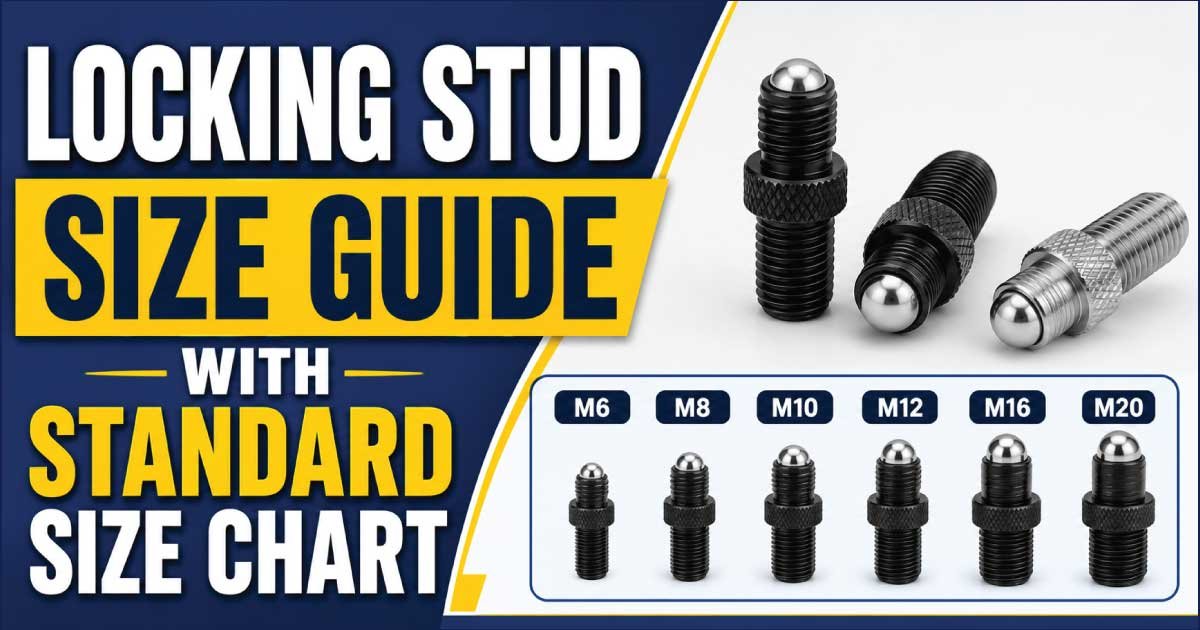
Locking studs are threaded fasteners designed to securely join components while preventing loosening caused by vibration, shock, or repeated movement. They are commonly used in automotive assemblies, aerospace equipment, machinery, electronics, industrial fixtures, and heavy equipment.
Depending on the application, locking studs may incorporate locking grooves, retaining balls, spring-loaded mechanisms, or self-locking threads to provide a secure and reusable connection.
Choosing the correct locking stud size is essential for maintaining structural integrity, ensuring proper thread engagement, and achieving long-term reliability. This guide includes a standard locking stud size chart, explains how to measure locking studs, discusses common materials, and provides practical tips for selecting the right size.
Standard Locking Stud Size Chart
The following chart lists common metric locking stud sizes used in mechanical and industrial applications.
| Thread Size | Stud Diameter | Overall Length | Thread Length | Recommended Hole Size | Common Applications |
|---|---|---|---|---|---|
| M4 | 4 mm | 20 mm | 10 mm | 4.2 mm | Electronics, light fixtures |
| M5 | 5 mm | 25 mm | 12 mm | 5.2 mm | Panels, cabinets |
| M6 | 6 mm | 30 mm | 15 mm | 6.2 mm | Machinery covers |
| M8 | 8 mm | 40 mm | 20 mm | 8.4 mm | Automotive assemblies |
| M10 | 10 mm | 50 mm | 25 mm | 10.5 mm | Industrial equipment |
| M12 | 12 mm | 60 mm | 30 mm | 12.5 mm | Heavy machinery |
| M16 | 16 mm | 80 mm | 40 mm | 16.5 mm | Structural components |
| M20 | 20 mm | 100 mm | 50 mm | 20.5 mm | Construction equipment |
| M24 | 24 mm | 120 mm | 60 mm | 24.5 mm | Heavy-duty machinery |
| M30 | 30 mm | 150 mm | 75 mm | 30.5 mm | Mining and industrial equipment |
Imperial Locking Stud Size Chart
| Thread Size | Stud Length | Thread Length | Typical Applications |
|---|---|---|---|
| #8-32 | 3/4″ | 3/8″ | Electrical panels |
| #10-24 | 1″ | 1/2″ | Machine assemblies |
| 1/4″-20 | 1-1/4″ | 5/8″ | Automotive components |
| 5/16″-18 | 1-1/2″ | 3/4″ | Equipment mounting |
| 3/8″-16 | 2″ | 1″ | Industrial machinery |
| 1/2″-13 | 2-1/2″ | 1-1/4″ | Heavy-duty equipment |
| 5/8″-11 | 3″ | 1-1/2″ | Structural applications |
Why Locking Stud Size Matters
Choosing the correct locking stud size is important for maintaining a secure connection under vibration and heavy loads. A stud that is too small may fail under stress, while an oversized stud may not fit the mounting hole or threaded component.
Benefits of selecting the proper locking stud include:
- Improved joint strength
- Better vibration resistance
- Secure thread engagement
- Longer service life
- Reduced maintenance
- Easier assembly and disassembly
- Increased operational safety
How to Measure a Locking Stud
Accurate measurements help ensure proper replacement and installation.
Follow these steps:
- Measure the stud diameter.
- Measure the overall stud length.
- Determine the thread pitch.
- Measure the threaded portion.
- Check the locking feature location.
- Verify the recommended hole size.
- Confirm compatibility with mating components.
Using a digital caliper and thread pitch gauge provides the most accurate results.
Also Read: Vernier Caliper Sizes Explained: Complete User Guide
Common Materials Used for Locking Studs
Locking studs are manufactured from several materials depending on the application.
Carbon Steel
Provides excellent strength and is commonly used in general industrial applications.
Alloy Steel
Offers higher tensile strength and fatigue resistance for heavy-duty machinery.
Stainless Steel
Ideal for marine, food processing, and outdoor environments because of its corrosion resistance.
Hardened Steel
Used in high-load applications where superior wear resistance is required.
How to Choose the Right Locking Stud Size
Consider these factors before selecting a locking stud:
- Match the thread size exactly.
- Verify the required stud length.
- Ensure adequate thread engagement.
- Select the appropriate material grade.
- Consider environmental conditions.
- Check load capacity requirements.
- Follow the equipment manufacturer’s specifications.
Choosing the proper size improves fastening reliability and equipment performance.
Also Read: Complete Guide to Stud Bolt Sizes and Applications
Common Applications of Locking Studs
Locking studs are widely used in numerous industries.
Typical applications include:
- Automotive assemblies
- Industrial machinery
- Aerospace equipment
- Electronic enclosures
- Construction equipment
- Manufacturing fixtures
- Hydraulic systems
- Agricultural machinery
- Mechanical assemblies
- Heavy equipment maintenance
Installation Tips
Proper installation maximizes locking performance.
- Clean the threaded hole before installation.
- Verify thread compatibility.
- Tighten according to the recommended torque.
- Avoid cross-threading.
- Inspect locking features before use.
- Replace damaged studs immediately.
- Perform a final inspection after installation.
Correct installation helps prevent loosening during operation.
Common Mistakes to Avoid
Avoid these common locking stud installation errors:
- Using the wrong thread size
- Selecting an incorrect stud length
- Overtightening the stud
- Cross-threading during installation
- Ignoring material compatibility
- Reusing damaged locking studs
- Skipping routine inspections
These mistakes can reduce fastening performance and shorten the lifespan of the assembly.
Also Read: Adjustable Spanner Size Chart: Complete Guide
Benefits of Properly Sized Locking Studs
Using the correct locking stud size offers several advantages.
- Stronger and more secure connections
- Improved resistance to vibration
- Longer fastener life
- Reduced maintenance costs
- Better equipment reliability
- Easier servicing
- Enhanced workplace safety
These benefits make locking studs a dependable fastening solution for demanding mechanical applications.
Maintenance Tips
Regular inspection helps maintain reliable fastening performance.
- Inspect threads for wear.
- Check locking features for damage.
- Replace bent or corroded studs.
- Clean threaded surfaces regularly.
- Lubricate threads if recommended by the manufacturer.
- Verify torque during scheduled maintenance.
- Store replacement studs in a clean, dry environment.
Routine maintenance extends the lifespan of locking studs and helps prevent unexpected equipment failures.
Conclusion
Choosing the correct locking stud size is essential for creating secure, vibration-resistant, and long-lasting mechanical connections.
By accurately measuring the stud diameter, length, and thread specifications, selecting the proper material, and following recommended installation practices, you can ensure reliable performance in automotive, industrial, aerospace, and construction applications.
Always consult a locking stud size chart and manufacturer specifications before selecting a locking stud to achieve the best fit and long-term durability.
Frequently Asked Questions
1. How do I choose the correct locking stud size?
Choose a locking stud with the correct thread size, length, and thread pitch for your application. It should provide sufficient thread engagement and match the mounting hole dimensions. Proper sizing ensures a secure, vibration-resistant connection, improves load distribution, and extends the service life of the assembly.
2. What materials are locking studs made from?
Locking studs are commonly made from carbon steel, alloy steel, stainless steel, and hardened steel. Carbon steel is suitable for general applications, alloy and hardened steel provide higher strength for heavy-duty use, while stainless steel offers excellent corrosion resistance in outdoor and marine environments.
3. Can locking studs be reused?
Yes, locking studs can often be reused if their threads and locking features remain in good condition. Before reinstalling, inspect the stud for wear, corrosion, cracks, deformation, or damaged threads. Replace any compromised locking stud to maintain a secure connection and ensure reliable long-term performance.
4. Why is selecting the correct locking stud size important?
Selecting the correct locking stud size ensures proper thread engagement, strong joint strength, and reliable resistance to vibration and shock. It also helps prevent loosening, reduces maintenance requirements, improves equipment safety, and extends the lifespan of both the fastener and the connected components.

Engineer Hassan is a Mechanical Engineer with 16+ years of hands-on experience in mechanical hardware, fasteners, and workshop tools. He focuses on size selection, thread identification, and measurement, helping users choose the correct components with accuracy and safety.