
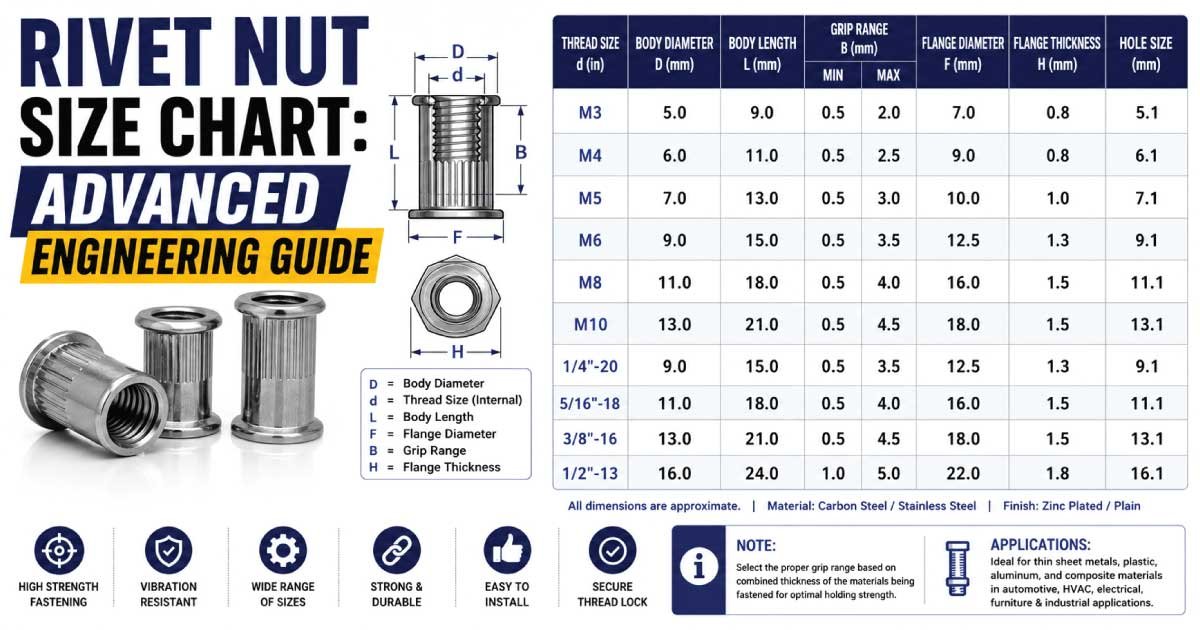
Rivet nuts, also known as threaded inserts or nutserts, are blind fasteners that create strong, reusable internal threads in thin materials such as sheet metal, aluminum, fiberglass, and plastic.
They are widely used in automotive manufacturing, aerospace, construction, furniture, electronics, and industrial fabrication where access is available from only one side of the workpiece.
Choosing the correct rivet nut size ensures secure fastening, proper load distribution, and long-lasting performance.
This complete guide explains rivet nut sizes, standard size charts, dimensions, materials, measurement methods, and selection tips.
What Is a Rivet Nut?
A rivet nut is a tubular threaded fastener that is installed into a pre-drilled hole using a specialized rivet nut tool. During installation, the unthreaded portion collapses behind the material, creating a permanent threaded insert that securely grips the workpiece. Rivet nuts provide strong internal threads without requiring access to the opposite side, making them ideal for enclosed structures and thin materials.
Primary Functions
- Creates reusable internal threads
- Fastens thin materials
- Allows one-sided installation
- Improves assembly strength
- Eliminates loose nuts
- Simplifies maintenance
Common Types of Rivet Nuts
Rivet nuts are available in several body styles and head designs to accommodate different materials, load requirements, and installation conditions. Understanding these variations helps ensure the correct fastener is selected.
1. Round Body Rivet Nut
Round body rivet nuts are the most commonly used type and provide excellent performance in general-purpose fastening applications. They are suitable for metal, plastic, and composite materials.
Advantages
- Easy installation
- Strong thread engagement
- Wide availability
- Cost-effective
- Suitable for general applications
2. Knurled Body Rivet Nut
Knurled body rivet nuts feature textured outer surfaces that improve grip and prevent rotation after installation. They are commonly used in softer materials where additional holding power is required.
Benefits
- Increased rotational resistance
- Improved grip
- Better pull-out strength
- Reliable fastening
- Suitable for aluminum panels
3. Hex Body Rivet Nut
Hex body rivet nuts have a hexagonal exterior that locks into matching holes, preventing the insert from rotating during bolt installation or removal.
Applications
- Automotive panels
- Machinery frames
- Structural assemblies
- Sheet metal fabrication
- Heavy equipment
4. Closed-End Rivet Nut
Closed-end rivet nuts feature a sealed bottom that prevents moisture, dirt, and fluids from entering through the threaded hole. They are commonly used in outdoor and waterproof applications.
Rivet Nut Size Chart (Inch Sizes)
The following table lists common inch-size rivet nuts used in manufacturing, automotive, and industrial applications.
| Thread Size | Drill Hole Size | Grip Range |
|---|---|---|
| #8-32 | 0.281″ | 0.020″–0.130″ |
| #10-24 | 0.343″ | 0.020″–0.160″ |
| 1/4″-20 | 0.375″ | 0.020″–0.200″ |
| 5/16″-18 | 0.453″ | 0.030″–0.250″ |
| 3/8″-16 | 0.531″ | 0.030″–0.300″ |
| 7/16″-14 | 0.625″ | 0.040″–0.350″ |
| 1/2″-13 | 0.688″ | 0.050″–0.400″ |
Metric Rivet Nut Size Chart
Metric rivet nuts are widely used in automotive manufacturing, machinery, electronics, and international engineering projects.
| Thread Size | Drill Hole Size | Grip Range |
|---|---|---|
| M4 | 6.0 mm | 0.5–2.5 mm |
| M5 | 7.0 mm | 0.5–3.0 mm |
| M6 | 9.0 mm | 0.5–3.5 mm |
| M8 | 11.0 mm | 0.5–4.0 mm |
| M10 | 13.0 mm | 1.0–5.0 mm |
| M12 | 15.0 mm | 1.0–6.0 mm |
| M16 | 21.0 mm | 2.0–8.0 mm |
Understanding Rivet Nut Dimensions
Understanding rivet nut dimensions helps ensure proper installation, reliable thread engagement, and compatibility with the base material. Correct sizing improves joint strength and prevents installation failures.
1. Thread Size
Thread size identifies the internal threads of the rivet nut and must exactly match the bolt or machine screw that will be installed after fastening.
2. Drill Hole Diameter
The drill hole diameter determines the size of the installation hole. Using the correct hole size ensures proper expansion and secure gripping during installation.
3. Grip Range
Grip range refers to the minimum and maximum material thickness the rivet nut is designed to clamp securely. Selecting the correct grip range is essential for maximum holding strength.
How to Measure a Rivet Nut
Accurate measurements help identify replacement rivet nuts and ensure compatibility with bolts, installation tools, and base materials. Proper measurement also reduces installation errors.
Step 1: Measure the Thread Size
Use a thread gauge or matching bolt to determine the correct internal thread size.
Measurement Tips
- Clean internal threads
- Verify thread pitch
- Use a digital caliper
- Compare with standard charts
Step 2: Measure the Body Diameter
Measure the outside diameter of the rivet nut body using a caliper. This measurement determines the required drill hole size.
Step 3: Measure the Grip Range
Measure the thickness of the material being fastened and compare it with the manufacturer’s specified grip range to ensure proper installation.
Common Rivet Nut Materials
The material used to manufacture a rivet nut determines its strength, corrosion resistance, and suitability for different operating environments. Selecting the proper material improves durability and long-term performance.
Steel Rivet Nuts
Steel rivet nuts provide high strength and are widely used in construction, machinery, and general industrial applications where durability is required.
Advantages
- High strength
- Cost-effective
- Excellent durability
- Good wear resistance
- Suitable for heavy-duty applications
Stainless Steel Rivet Nuts
Stainless steel rivet nuts offer excellent corrosion resistance, making them ideal for marine environments, food processing equipment, and outdoor installations.
Benefits
- Superior corrosion resistance
- Long service life
- Hygienic surface
- Low maintenance
- Weather resistant
Aluminum Rivet Nuts
Aluminum rivet nuts are lightweight and corrosion resistant, making them suitable for aerospace, automotive, electronics, and lightweight structural applications.
Applications of Rivet Nuts
Rivet nuts are widely used wherever strong internal threads are required in thin materials or where only one side of the workpiece is accessible during installation.
Automotive Industry
Automotive manufacturers use rivet nuts to install body panels, brackets, interior trim, battery mounts, and accessories while reducing assembly time and improving serviceability.
Common Applications
- Vehicle body panels
- Interior assemblies
- Battery trays
- Mounting brackets
- Chassis components
Industrial Manufacturing
Manufacturing facilities use rivet nuts in sheet metal fabrication, machinery frames, equipment enclosures, electrical cabinets, and production equipment requiring reusable threaded connections.
Typical Uses
- Sheet metal fabrication
- Machine enclosures
- HVAC systems
- Electrical cabinets
- Industrial equipment
🔩 Read Expert Sizing Guide 👉 Flange Size Chart 2026: Complete Flange Size Guide
How to Choose the Correct Rivet Nut Size
Selecting the correct rivet nut size is essential for creating a strong, reliable, and reusable threaded connection. The rivet nut must match the bolt size, material thickness, hole diameter, and load requirements. Proper selection prevents spinning, pull-out failure, and installation problems while improving the overall strength and durability of the assembly.
Selection Checklist
- Measure the material thickness
- Check the required thread size
- Select the correct grip range
- Verify drill hole diameter
- Choose the proper body style
- Consider installation access
- Select suitable material
- Check load requirements
- Match bolt specifications
- Follow manufacturer guidelines
Rivet Nut Material Comparison
Different rivet nut materials provide different levels of strength, corrosion resistance, and weight advantages. Choosing the correct material improves performance and ensures compatibility with the application environment.
| Material | Best Applications | Main Advantages |
|---|---|---|
| Steel | Heavy-duty applications | High strength and durability |
| Stainless Steel 304 | Outdoor and industrial use | Excellent corrosion resistance |
| Stainless Steel 316 | Marine and chemical environments | Superior corrosion protection |
| Aluminum | Lightweight applications | Low weight and corrosion resistant |
| Brass | Decorative and electrical uses | Attractive finish and corrosion resistance |
| Zinc-Plated Steel | Indoor applications | Affordable rust protection |
Rivet Nut Strength Grades
Rivet nuts are available in different strength levels to handle various loads and operating conditions. Selecting the correct strength ensures reliable fastening performance.
Common Strength Considerations
Important factors affecting rivet nut strength include:
- Material type
- Thread size
- Body design
- Installation quality
- Base material thickness
- Load direction
- Pull-out resistance
- Shear strength
Heavy-duty rivet nuts made from steel or stainless steel are preferred for applications requiring higher load capacity and vibration resistance.
Common Rivet Nut Installation Mistakes
Incorrect installation can reduce the holding strength of a rivet nut and may cause spinning, loosening, or complete failure. Proper installation techniques ensure maximum performance.
Avoid these common mistakes:
- Using the wrong drill hole size
- Selecting an incorrect grip range
- Over-compressing the rivet nut
- Under-compressing the insert
- Misaligning the installation tool
- Using damaged threads
- Installing in weak materials
- Applying excessive force
- Skipping hole preparation
- Using the wrong tool setting
Rivet Nut Installation Process
Proper installation ensures the rivet nut locks securely into the base material and provides a strong threaded connection.
Step 1: Drill the Correct Hole
Create a clean hole according to the manufacturer’s recommended diameter. The hole should be free from burrs and damage.
Step 2: Insert the Rivet Nut
Place the rivet nut into the prepared hole until the flange sits flush against the surface.
Step 3: Install Using a Rivet Nut Tool
Use a manual, pneumatic, or hydraulic rivet nut tool to compress the body behind the material and create a secure mechanical lock.
Step 4: Check Installation Quality
Verify that the rivet nut is firmly attached and that the internal threads remain clean and undamaged.
🔩 Read Expert Sizing Guide 👉 Stud Bolt Size Chart: Complete Beginner’s Guide
Rivet Nut Maintenance Tips
Although rivet nuts require minimal maintenance, regular inspection helps ensure reliable performance, especially in vibration, outdoor, and heavy-duty environments.
Maintenance recommendations include:
- Inspect threaded areas
- Check for corrosion
- Verify bolt tightness
- Replace damaged inserts
- Clean internal threads
- Monitor vibration effects
- Avoid overloading connections
- Inspect surrounding material
- Use protective coatings when needed
- Perform routine checks
Advantages of Using the Correct Rivet Nut Size
Using the correct rivet nut size provides strong fastening performance while simplifying assembly and maintenance operations.
Major advantages include:
- Creates permanent threads
- Allows one-side installation
- Works in thin materials
- Reduces assembly time
- Provides reusable fastening
- Improves load distribution
- Prevents loose nuts
- Supports maintenance access
- Reduces fabrication costs
- Increases product reliability
Signs a Rivet Nut Needs Replacement
Rivet nuts may fail due to incorrect installation, excessive loads, corrosion, or repeated use. Identifying warning signs early prevents damage to the surrounding assembly.
Common replacement indicators include:
- Insert spinning inside the hole
- Damaged internal threads
- Loose connection
- Corrosion damage
- Cracked flange
- Reduced clamping force
- Bolt loosening repeatedly
- Deformed body
- Pull-out failure
- Damaged surrounding material
Replacing damaged rivet nuts helps maintain structural integrity and safe operation.
Applications of Rivet Nuts Across Industries
Rivet nuts are used in many industries because they provide strong threaded connections in areas where traditional nuts cannot be installed.
Aerospace Industry
Aircraft manufacturers use lightweight aluminum and stainless steel rivet nuts for interior panels, equipment mounting, and structural components where weight reduction and reliability are important.
Electronics Industry
Electronic equipment manufacturers use rivet nuts in cabinets, control panels, server racks, and enclosures where removable threaded connections are required.
Furniture Manufacturing
Furniture companies use rivet nuts for modular designs, metal frames, office furniture, and products requiring repeated assembly and disassembly.
Construction Industry
Construction equipment and metal fabrication industries use rivet nuts for panels, brackets, railings, HVAC systems, and structural assemblies requiring secure fastening.
Things to Remember
Choosing the correct rivet nut size is essential for creating strong, reliable, and reusable threaded connections in thin materials.
By understanding rivet nut dimensions, types, materials, installation methods, and application requirements, professionals can select the ideal fastener for automotive, aerospace, construction, manufacturing, and industrial projects.
Using accurate rivet nut size charts, following proper installation procedures, and performing regular inspections improves fastening reliability, reduces maintenance requirements, and extends the service life of assembled components.
🔩 Read Expert Sizing Guide 👉 Gear Size Chart: Complete Guide 2026 with PDF
FAQs:
How do I determine the correct rivet nut size?
Measure the material thickness, required bolt size, and installation hole diameter before selecting a rivet nut. Compare these measurements with a standard rivet nut size chart to choose the correct thread size, grip range, and body style for a secure, reliable, and long-lasting threaded connection.
What is the difference between a rivet nut and a regular nut?
A regular nut requires access to both sides of the material during installation and tightening. A rivet nut is installed from one side only, creating a permanent threaded insert in thin materials where the back side is inaccessible, making it ideal for enclosed or hollow structures.
Which rivet nut material is best?
The best material depends on the application. Steel rivet nuts provide excellent strength for industrial use, stainless steel offers superior corrosion resistance for outdoor and marine environments, and aluminum rivet nuts are preferred when lightweight construction and good corrosion resistance are important design requirements.
Can rivet nuts be removed and replaced?
Yes, damaged rivet nuts can usually be removed using specialized removal tools or drilling techniques and replaced with new inserts. Before installing a replacement, inspect the surrounding material for damage or enlargement to ensure the new rivet nut fits securely and performs reliably.

Engineer Hassan is a Mechanical Engineer with 16+ years of hands-on experience in mechanical hardware, fasteners, and workshop tools. He focuses on size selection, thread identification, and measurement, helping users choose the correct components with accuracy and safety.