
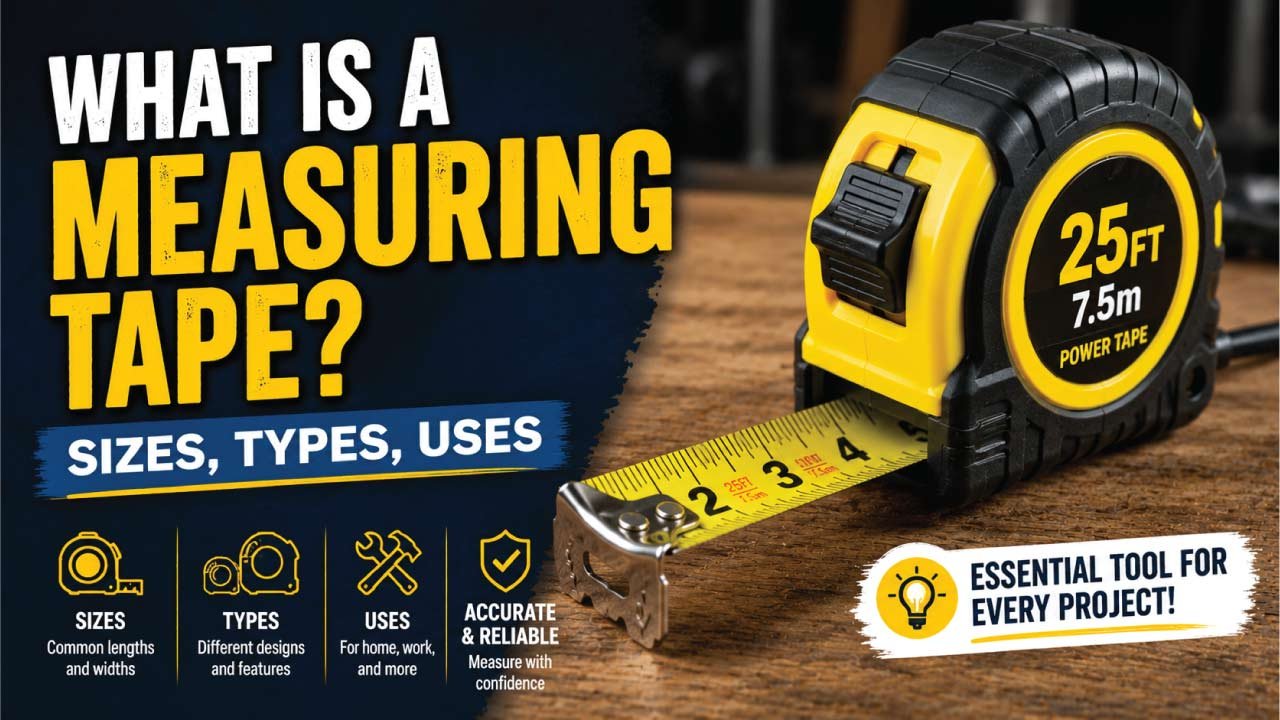
A measuring tape is one of the most commonly used measuring tools in construction, woodworking, tailoring, engineering, interior design, and household work. It is designed to measure length, width, height, distance, or dimensions accurately and quickly.
From carpenters and mechanics to tailors and DIY users, measuring tapes are essential tools for both professional and everyday tasks. They are portable, flexible, easy to use, and available in different sizes and styles for various applications.
In this complete guide, you will learn what a measuring tape is, its sizes, types, uses, materials, and important tips for choosing the right measuring tape.
What Is a Measuring Tape?
A measuring tape is a flexible ruler used to measure distance or size. It usually consists of a long strip marked with measurement units such as inches, feet, centimeters, or meters.
The tape may be made from steel, fiberglass, cloth, plastic, or other flexible materials depending on its purpose. Most modern measuring tapes are retractable and stored inside a protective case.
Measuring tapes are widely used because they can measure straight lines, curved surfaces, and large distances more easily than rigid rulers.
Main Parts of a Measuring Tape
Understanding the main parts of a measuring tape helps users take accurate measurements safely and efficiently. Each component has a specific purpose that improves usability, precision, durability, and convenience during construction, woodworking, tailoring, engineering, and household measuring tasks.
1. Tape Blade
The tape blade is the long flexible metal or fiberglass strip marked with measurement units such as inches, feet, centimeters, or millimeters. It extends from the case to measure distances accurately. Strong and curved blades provide better durability, stiffness, and easier long-distance measurements.
2. Hook or Tang
The hook, also called the tang, is the small metal piece attached to the end of the tape blade. It grips edges and surfaces to ensure accurate inside and outside measurements. The slight movement of the hook compensates for its thickness during measurement tasks.
3. Lock Button
The lock button is used to hold the tape blade securely in position while taking measurements. This feature prevents the tape from retracting unexpectedly and improves accuracy during marking or cutting work. Lock mechanisms are especially useful for long-distance and one-person measuring tasks.
4. Case
The case is the protective outer housing that stores and protects the tape blade and internal spring mechanism. Measuring tape cases are commonly made from plastic, rubber-coated materials, or metal for improved durability and grip. A strong case helps protect the tool from drops and damage.
5. Return Spring
The return spring is the internal mechanism that automatically retracts the tape blade back into the case after use. It allows smooth and quick storage of the tape while preventing tangling. Proper spring tension improves convenience and keeps the measuring tape functioning efficiently over time.
6. Belt Clip
The belt clip is attached to the side of the measuring tape case and allows users to carry the tool conveniently on a belt or pocket. This feature improves portability and quick access during work. Belt clips are especially useful for construction workers, carpenters, and technicians.
How Does a Measuring Tape Work?
A measuring tape works by extending the marked blade to the required distance. The user reads the measurement from the printed scale on the tape.
In retractable measuring tapes, an internal spring mechanism pulls the blade back into the case when released.
The sliding hook at the end is designed to move slightly to compensate for its own thickness, ensuring accurate inside and outside measurements.
Measuring Tape Size Chart
Measuring tapes are available in different lengths and widths.
| Tape Length | Common Uses |
|---|---|
| 3 ft (1 m) | Small crafts and tailoring |
| 6 ft (2 m) | Household measuring |
| 12 ft (3.5 m) | DIY projects |
| 16 ft (5 m) | Carpentry and woodworking |
| 25 ft (7.5 m) | Construction work |
| 50 ft (15 m) | Outdoor measuring |
| 100 ft (30 m) | Land surveying |
Common Measuring Tape Widths
The width of the tape affects durability and readability.
| Tape Width | Features |
|---|---|
| 1/4 inch | Flexible and lightweight |
| 1/2 inch | Good for household use |
| 3/4 inch | Stronger blade support |
| 1 inch | Heavy-duty construction work |
Wider blades are usually stronger and easier to read.
Types of Measuring Tapes
There are many types of measuring tapes designed for specific tasks and industries. Each type offers unique features that improve accuracy, convenience, and efficiency depending on the work environment. Choosing the correct measuring tape helps users complete projects more accurately, whether for construction, tailoring, engineering, or professional surveying work.
1. Retractable Tape Measure
The retractable tape measure is the most commonly used measuring tool for construction, woodworking, and household projects. It features a metal blade stored inside a compact case with an automatic retraction system. This type is popular because it is portable, durable, and easy to use for everyday measurements.
Features
- Steel blade
- Automatic retraction
- Compact design
- Easy to carry
Uses
- Carpentry
- Home repairs
- Furniture installation
- Construction work
2. Cloth Tape Measure
Cloth tape measures are soft, flexible tools mainly used for sewing, tailoring, and body measurements. Their flexible material allows them to wrap easily around curved surfaces without losing accuracy. This type is lightweight, portable, and ideal for measuring fabric, clothing sizes, and other soft materials.
Features
- Flexible material
- Lightweight
- Easy to wrap around curves
Uses
- Tailoring
- Body measurements
- Sewing projects
- Fashion design
Tailors commonly use this type for measuring fabric and clothing sizes.
3. Fiberglass Measuring Tape
Fiberglass measuring tapes are designed for durability and outdoor use. They are resistant to water, moisture, and stretching, making them suitable for rough job site conditions. These tapes are often available in longer lengths and are commonly used in construction, landscaping, and land surveying projects.
Features
- Water resistant
- Non-conductive
- Flexible
- Long measuring lengths
Uses
- Outdoor projects
- Landscaping
- Surveying
- Construction
4. Steel Measuring Tape
Steel measuring tapes are known for their strength, durability, and high measurement accuracy. The steel blade resists stretching and wear, making it ideal for demanding industrial and engineering applications. These tapes are commonly used where precise measurements are important for metal fabrication and professional mechanical work.
Features
- Strong blade
- Resistant to stretching
- Accurate measurements
Uses
- Engineering
- Metalworking
- Industrial tasks
5. Digital Measuring Tape
Digital measuring tapes use electronic technology to provide fast and highly accurate measurements. Many models include LCD screens, memory functions, and automatic calculation features that improve convenience during professional work. These tools are commonly used in construction, interior design, and projects requiring precise dimension recording.
Features
- LCD screen
- Fast readings
- Memory storage
- High precision
Uses
- Professional construction
- Interior design
- Precision measurement
6. Laser Measuring Tape
Laser measuring tools use laser beams to measure long distances quickly and accurately. They are ideal for large spaces where traditional tape measures are difficult to use. Professionals in architecture, construction, and real estate often rely on laser measuring devices for fast calculations and efficient room measurements.
Features
- Long-distance measuring
- High accuracy
- Fast calculations
Uses
- Architecture
- Real estate
- Construction
- Large room measurements
Laser measuring tools are ideal for large spaces.
Measuring Tape Materials
Different measuring tapes use different materials depending on their purpose, durability requirements, and working environment. The material affects flexibility, strength, weather resistance, and measurement accuracy. Choosing the right measuring tape material helps improve performance and ensures reliable results for construction, tailoring, engineering, and professional measuring tasks.
1. Steel
Steel is the most commonly used measuring tape material because it provides excellent durability and precise measurements. Steel tapes are widely used in construction, carpentry, and industrial work where strong and reliable measuring tools are required. They maintain their shape well and offer long-lasting performance under regular use.
Benefits
- Strong and durable
- Accurate measurements
- Resistant to bending
Drawbacks
- Can rust if not maintained
- Less flexible than cloth
2. Fiberglass
Fiberglass measuring tapes are designed for outdoor and heavy-duty applications where flexibility and weather resistance are important. These tapes perform well in wet or rough conditions and are commonly used in landscaping, surveying, and construction work. Fiberglass material also provides electrical safety because it is non-conductive.
Benefits
- Waterproof
- Non-conductive
- Lightweight
Drawbacks
- Less rigid
- May wear over time
3. Cloth
Cloth measuring tapes are soft and flexible, making them ideal for tailoring, sewing, and body measurements. They can easily wrap around curved surfaces without damaging fabrics or losing convenience. This material is lightweight and portable, which makes it popular among tailors, fashion designers, and sewing professionals.
Benefits
- Soft and flexible
- Easy to wrap around curves
- Lightweight
Drawbacks
- Can stretch over time
- Less durable
4. Plastic
Plastic measuring tapes are affordable and lightweight tools commonly used for simple household tasks and basic measurements. They are flexible and resistant to water, making them useful for light-duty applications. However, plastic tapes are generally less durable and may not provide the same level of accuracy as steel tapes.
Benefits
- Affordable
- Water resistant
- Flexible
Drawbacks
- Less durable
- Lower accuracy
Common Uses of Measuring Tapes
Measuring tapes are essential tools used in many industries and everyday activities. They help ensure accurate dimensions, proper fitting, and precise layouts during construction, design, manufacturing, and repair work. Different types of measuring tapes are chosen depending on the task, material, and level of measurement accuracy required.
1. Construction Work
Construction workers use measuring tapes daily for planning, cutting, and building structures accurately. Proper measurements are important to ensure materials fit correctly and projects stay aligned with design specifications. Measuring tapes help improve efficiency and reduce costly mistakes on construction sites.
Common Tasks
- Measuring walls
- Cutting materials
- Room dimensions
- Structural layout
2. Carpentry and Woodworking
Carpenters and woodworkers rely heavily on accurate measurements to create precise cuts and properly fitted wooden structures. Measuring tapes are essential for reducing material waste and ensuring professional-quality results in furniture making, cabinetry, and general woodworking projects.
Common Tasks
- Measuring wood
- Furniture building
- Cabinet installation
3. Tailoring and Fashion Design
Tailors and fashion designers use cloth measuring tapes to take accurate body and fabric measurements. Flexible measuring tapes make it easy to measure curved surfaces comfortably. Correct measurements are essential for producing properly fitted clothing and maintaining design accuracy during sewing projects.
Common Tasks
- Chest measurement
- Waist measurement
- Fabric sizing
4. Interior Design
Interior designers use measuring tapes to plan room layouts, furniture placement, and decorative installations. Accurate measurements help create balanced and functional spaces while ensuring furniture, curtains, flooring, and decorative items fit properly within the available area.
Common Tasks
- Curtain sizing
- Furniture spacing
- Flooring measurements
5. Engineering and Manufacturing
Accurate measurements are extremely important in engineering and manufacturing industries where precision directly affects product quality and machine performance. Measuring tapes are commonly used for equipment setup, machine dimensions, and manufacturing processes that require exact specifications.
Common Tasks
- Machine dimensions
- Equipment installation
- Product manufacturing
Disadvantages of Measuring Tapes
Although measuring tapes are highly useful and widely used, they also have some limitations. Factors like blade durability, reading accuracy, wear over time, and safety risks can affect performance, especially when used frequently in construction, carpentry, and DIY projects.
1. Blade Damage
The steel blade of a measuring tape can bend, twist, or even break if it is pulled too far or handled roughly. Repeated stress or dropping the tape can also damage the blade, reducing accuracy and making it difficult to use for precise measurements over time.
2. Reading Errors
Incorrect positioning of the tape, such as measuring at an angle instead of a straight line, can lead to inaccurate readings. User mistakes, parallax error, or improper alignment with the measuring point can all affect measurement precision, especially in construction and layout work.
3. Wear Over Time
With heavy use, the printed measurement markings on the tape blade may start to fade or become unclear. Dirt, friction, and exposure to moisture can also reduce visibility. This wear makes it harder to read measurements accurately and may require replacing the tape.
4. Retraction Risks
Measuring tapes have strong internal springs that retract the blade quickly into the case. If not controlled properly, the fast retraction can cause hand injuries or damage nearby surfaces. Careful handling and using the lock button helps reduce these safety risks during use.
👆 How to Measure Bolt Size: A Complete Step-by-Step Guide is an essential expert guide for beginners and professionals to understand accurate bolt size measurement, including diameter, length, and thread pitch. Read the full post to avoid fitting errors, choose the right hardware, and master precise measurements like a pro with confidence.
Measuring Tape Measurement Units
Most measuring tapes include multiple unit systems.
| Unit | Common Regions |
|---|---|
| Inches | USA |
| Feet | USA and construction |
| Centimeters | International use |
| Meters | Engineering and surveying |
Some tapes include both metric and imperial scales.
How to Read a Measuring Tape
Many beginners find tape measurements confusing at first, but it becomes easy with practice. Understanding the markings, intervals, and proper alignment helps you get accurate results. A measuring tape uses different units and lines to show length in a clear and structured way.
1. Identify the Units
Most measuring tapes show inches on one side and centimeters/millimeters on the other. Inches are divided into fractions like 1/2, 1/4, and 1/8, while metric units are divided into millimeters and centimeters. Always check the correct side before starting your measurement.
2. Understand the Markings
Longer lines represent whole units, while shorter lines show fractions or smaller divisions. In inches, the longest line is usually a full inch, and smaller lines show fractions. In metric, each small line represents millimeters, making it easier to measure with high accuracy.
3. Align the Hook Properly
Place the metal hook at the starting point of what you are measuring. The hook may move slightly to adjust for accurate inside and outside measurements. Always ensure it is firmly positioned so the tape does not slip during reading.
4. Read at Eye Level
Always read the measurement at eye level to avoid parallax errors. Looking from an angle can give incorrect readings. Keep the tape flat and straight for accurate results, especially when measuring long distances or marking materials for cutting.
5. Record the Measurement
Once you read the correct value, lock the tape in place and note the measurement carefully. Double-check if needed, especially for construction or woodworking tasks where precision is important. Accurate recording helps avoid mistakes during cutting or fitting work.
👆 How to Measure Hex Nut Size: 4 Easy Ways with Size Charts is a must-read expert guide for accurate fastening and perfect fitting. Learn step-by-step methods, use size charts, and avoid common mistakes. Read the full post to master hex nut size measurement like a professional with complete confidence and accuracy.
Reading Inches
The large numbered marks represent inches.
Smaller marks between inches represent fractions such as:
| Fraction | Meaning |
|---|---|
| 1/2 | Half inch |
| 1/4 | Quarter inch |
| 1/8 | One-eighth inch |
| 1/16 | One-sixteenth inch |
Reading Metric Measurements
Metric measuring tapes use a simple decimal system based on millimeters, centimeters, and meters, making them easy to understand and apply in real work. This system is widely used in construction, tailoring, and engineering because it provides accurate and consistent readings without complex conversions.
Key Conversions
- 10 millimeters = 1 centimeter
- 100 centimeters = 1 meter
Metric systems are often easier for beginners because they follow a clear and logical structure based on units of ten, which simplifies measurement and calculation tasks.
Common Measuring Tape Problems
Measuring tapes may develop issues with frequent use.
| Problem | Cause |
|---|---|
| Bent blade | Excessive force |
| Weak retraction | Spring wear |
| Loose hook | Frequent impact |
| Faded markings | Heavy usage |
Proper care helps prevent these problems.
Measuring Tape Maintenance Tips
Proper maintenance of a measuring tape improves its accuracy, durability, and overall lifespan. Regular care helps prevent damage to the blade, markings, and internal spring mechanism, ensuring smooth performance during construction, carpentry, and DIY projects.
1. Keep the Tape Clean
Always wipe the tape blade after use to remove dust, dirt, grease, and moisture. Accumulated debris can affect readability and damage the markings over time. A clean cloth is enough to keep the blade in good condition and maintain accurate measurement visibility.
2. Avoid Fast Retraction
Do not let the tape snap back quickly into the case. Instead, guide the blade slowly while retracting it. Fast retraction can weaken the internal spring and cause damage over time. Controlled retraction also improves safety and prevents accidental injury.
3. Store Properly
Store the measuring tape in a dry toolbox or storage area when not in use. Avoid leaving it in wet or humid environments, as this can reduce its lifespan. Proper storage helps protect the blade, spring mechanism, and casing from unnecessary damage.
4. Prevent Rust
Steel tape blades can develop rust if exposed to moisture for long periods. Applying a light coat of oil helps protect the surface and maintain smooth operation. Rust prevention ensures long-lasting accuracy and keeps the measuring tape in reliable working condition.
How to Choose the Right Measuring Tape
Choosing the right measuring tape is important for accuracy, convenience, and efficiency in different tasks. The ideal tape depends on the type of work, required length, material strength, and measurement system. Selecting the right tool helps improve performance in construction, tailoring, carpentry, and DIY projects.
1. Consider Length
The length of the measuring tape should match your project needs. Short tapes are suitable for indoor tasks like furniture or small repairs, while longer tapes are better for construction and outdoor work where large distances need to be measured accurately.
2. Check Blade Width
Blade width affects both durability and readability. Wider blades are stronger and can extend farther without bending, making them ideal for long measurements. They also display markings more clearly, helping users read measurements easily and reduce errors during use.
3. Choose Material Carefully
Measuring tapes come in different materials such as steel, fiberglass, and cloth. Steel blades are strong and durable for construction work, while cloth or fabric tapes are flexible and ideal for tailoring or sewing where soft and curved measurements are needed.
4. Evaluate Measurement Units
It is important to choose a tape that matches your preferred measurement system. Some tapes show only metric units (millimeters and centimeters), while others show imperial units (inches and feet). Dual-scale tapes are useful for users who work with both systems regularly.
5. Look for Locking Features
A reliable locking mechanism helps hold the tape in place during measurement. This feature improves accuracy and safety by preventing the blade from retracting unexpectedly. Good locking systems are especially useful for one-person measurements and long-distance marking tasks.
Measuring Tape Safety Tips
Safety is very important when using measuring tapes, especially retractable types with sharp metal blades. Improper handling can cause cuts, pinched fingers, or damage to the tape itself. Following basic safety practices helps ensure accurate measurements while protecting the user from unnecessary injuries during work.
- Avoid letting the blade snap back quickly
- Wear gloves during heavy work
- Keep fingers away from retracting edges
- Do not use damaged tapes
- Store safely after use
These precautions help prevent injuries.
Measuring Tape vs Ruler
Many people compare measuring tapes and rulers.
| Feature | Measuring Tape | Ruler |
|---|---|---|
| Flexibility | High | Low |
| Portable | Yes | Limited |
| Long Measurements | Excellent | Limited |
| Curved Surfaces | Good | Poor |
| Accuracy | High | High |
Measuring tapes are more versatile for large and curved measurements.
Conclusion
Measuring tapes are essential tools used in construction, woodworking, tailoring, engineering, and many daily tasks. Their flexibility, portability, and accuracy make them one of the most useful measuring tools available.
Different types of measuring tapes are designed for different jobs. Steel tapes are ideal for construction, cloth tapes work best for tailoring, and laser measuring tools provide quick long-distance measurements.
Understanding measuring tape sizes, materials, and uses helps users select the right tool for every project. With proper handling and maintenance, a quality measuring tape can provide accurate measurements and reliable performance for many years.
👆 External vs Internal Thread Size Explained for Beginners is a must-read expert guide that clearly explains thread sizing, differences, and real-world uses in fasteners. Read the full post to avoid fitting errors, improve accuracy, and understand measurements like a pro. Start reading now for complete expert knowledge and confidence.
FAQs:
What is the most common measuring tape size?
The 25-foot measuring tape is the most commonly used size in construction and DIY projects. It is long enough for most indoor and outdoor tasks while still being easy to carry. This size provides a good balance between portability, durability, and measuring range for general-purpose use. It is widely available and affordable.
Why is the hook loose on a measuring tape?
Measuring tape hooks are designed to move slightly to ensure accurate readings. This movement compensates for the hook thickness when measuring inside or outside surfaces. The loose design helps maintain precision whether the hook is pushed or pulled against an object. It improves accuracy in both inside and outside measurements.
What material is best for measuring tapes?
Steel measuring tapes are considered the best for general use because they are strong, durable, and resistant to wear. They provide accurate measurements over time and are suitable for construction, carpentry, and engineering work where precision and reliability are required. They are commonly used by professionals.
Can measuring tapes lose accuracy?
Yes, measuring tapes can lose accuracy due to wear and tear. A stretched blade, bent hook, or damaged markings can lead to incorrect readings. Regular inspection and proper storage help maintain accuracy and extend the tool’s lifespan. This helps avoid costly mistakes.
What is a laser measuring tape used for?
Laser measuring tools are used to measure long distances quickly and accurately without physical contact. They are commonly used in construction, interior design, architecture, and real estate to improve speed, precision, and efficiency in measuring large spaces. They are also useful for estimating room dimensions.
How do you read a measuring tape correctly?
To read a measuring tape correctly, align the hook with the starting point and note the markings carefully. Each line represents a specific unit such as millimeters, centimeters, or inches. Always keep the tape straight to avoid errors in measurement. This reduces measurement errors significantly.
What is the difference between metric and imperial measuring tapes?
Metric and imperial measuring tapes differ in their units of measurement. Metric tapes use millimeters, centimeters, and meters, while imperial tapes use inches and feet. Many tapes include both systems for convenience, especially in international construction and engineering work. Some professionals prefer dual-scale tapes for flexibility.

Engineer Hassan is a Mechanical Engineer with 16+ years of hands-on experience in mechanical hardware, fasteners, and workshop tools. He focuses on size selection, thread identification, and measurement, helping users choose the correct components with accuracy and safety.