
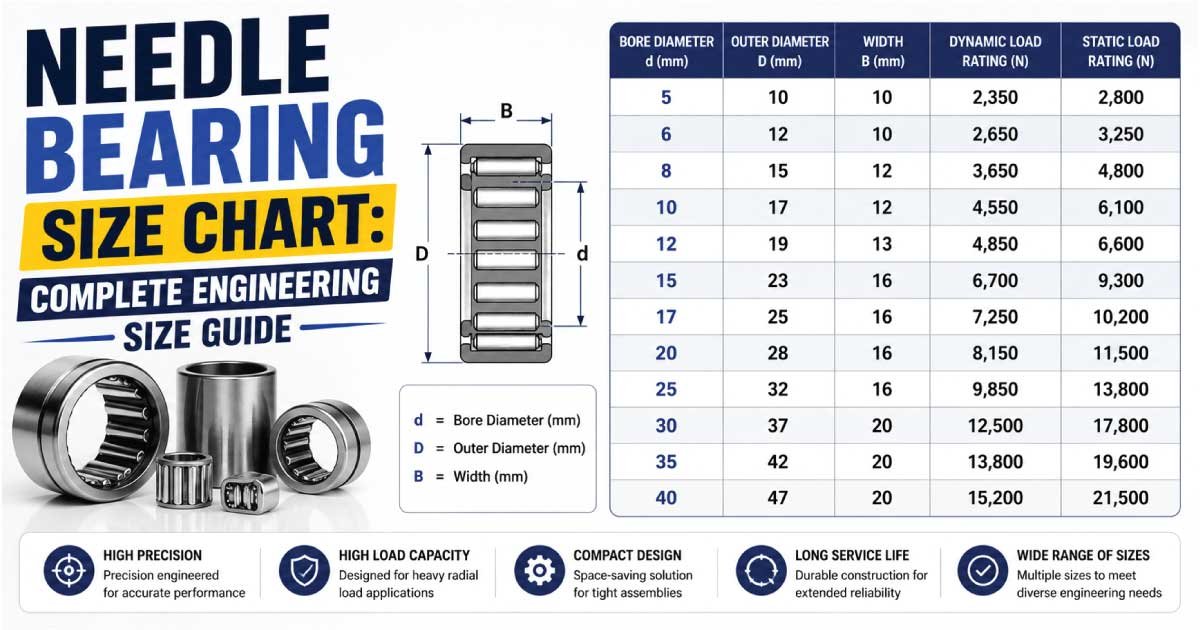
Needle bearings are compact rolling-element bearings designed to support high radial loads while occupying minimal space.
Their long, thin cylindrical rollers provide excellent load distribution, making them ideal for automotive transmissions, industrial machinery, power tools, agricultural equipment, and many other mechanical systems.
Choosing the correct needle bearing size is essential for maximizing performance, extending service life, reducing friction, and preventing premature failure.
This complete guide explains how needle bearing sizes work, how to read a size chart, measurement methods, selection tips, applications, materials, maintenance, and common mistakes when choosing a needle bearing.
What Is a Needle Bearing?
A needle bearing is a roller bearing that contains slender cylindrical rollers with a much smaller diameter compared to their length. Because of this design, needle bearings offer a larger contact area than ball bearings while maintaining a compact profile.
Key characteristics include:
- High radial load capacity
- Compact design
- Low friction
- High rotational speed
- Excellent durability
- Suitable for limited installation space
They are commonly used where shaft diameter is large but available housing space is limited.
Types of Needle Bearings
Different applications require different needle bearing designs. Understanding these types helps you choose the correct size and configuration.
1. Drawn Cup Needle Bearings
These bearings feature a thin outer shell made from hardened steel.
Features:
- Lightweight
- Easy installation
- Compact design
- High radial load capacity
- Cost-effective
Common applications include gearboxes, power tools, and automotive systems.
2. Machined Ring Needle Bearings
Machined bearings have solid inner and outer rings for higher precision.
Advantages include:
- Better rigidity
- Improved alignment
- Higher load ratings
- Longer service life
- Better performance at higher speeds
They are widely used in industrial machinery.
3. Needle Roller and Cage Assemblies
These bearings contain only rollers and a cage without inner or outer rings.
Benefits include:
- Extremely compact
- Maximum load capacity
- Lower weight
- Reduced friction
- High-speed capability
They require hardened shaft and housing surfaces.
4. Needle Thrust Bearings
Needle thrust bearings support axial loads instead of radial loads.
Typical applications include:
- Automotive transmissions
- Steering systems
- Machine tools
- Gear assemblies
- Heavy-duty equipment
Needle Bearing Size Chart (Metric)
The following metric chart shows commonly available needle bearing sizes.
| Bearing Size | Bore (mm) | Outer Diameter (mm) | Width (mm) |
|---|---|---|---|
| HK0608 | 6 | 10 | 8 |
| HK0810 | 8 | 12 | 10 |
| HK1010 | 10 | 14 | 10 |
| HK1012 | 10 | 14 | 12 |
| HK1212 | 12 | 16 | 12 |
| HK1412 | 14 | 20 | 12 |
| HK1512 | 15 | 21 | 12 |
| HK1612 | 16 | 22 | 12 |
| HK1816 | 18 | 24 | 16 |
| HK2016 | 20 | 26 | 16 |
| HK2216 | 22 | 28 | 16 |
| HK2516 | 25 | 32 | 16 |
| HK3016 | 30 | 37 | 16 |
| HK3516 | 35 | 42 | 16 |
| HK4016 | 40 | 47 | 16 |
Needle Bearing Size Chart (Inch Series)
Many industrial and automotive applications still use inch-sized needle bearings.
| Bearing Number | Bore (inch) | Outside Diameter (inch) | Width (inch) |
|---|---|---|---|
| B-44 | 1/4 | 7/16 | 1/4 |
| B-66 | 3/8 | 9/16 | 3/8 |
| B-88 | 1/2 | 11/16 | 1/2 |
| B-1010 | 5/8 | 13/16 | 5/8 |
| B-1212 | 3/4 | 15/16 | 3/4 |
| B-1412 | 7/8 | 1-1/8 | 3/4 |
| B-1616 | 1 | 1-1/4 | 1 |
| B-1816 | 1-1/8 | 1-3/8 | 1 |
| B-2016 | 1-1/4 | 1-1/2 | 1 |
📏 View Accurate Size Guide 👉 What Is a Torque Wrench? Sizes, Types and Uses Explained
How to Read a Needle Bearing Size
Every needle bearing has three primary dimensions that determine its compatibility with a machine.
1. Bore Diameter (ID)
The bore diameter is the inside diameter that fits over the shaft. It must match the shaft size precisely to prevent slipping or excessive wear.
2. Outside Diameter (OD)
The outside diameter determines how the bearing fits inside the housing. A proper fit ensures correct load distribution and stable operation.
3. Width
Bearing width affects load capacity and installation space. Wider bearings generally support higher loads while narrower bearings fit compact assemblies.
How to Measure a Needle Bearing
Accurate measurement ensures proper replacement and reliable performance.
Step 1: Measure the Bore
Use a digital caliper to measure the inside diameter.
Tips:
- Measure several locations
- Record in millimeters
- Avoid worn surfaces
Step 2: Measure the Outside Diameter
Measure across the outer ring carefully.
Remember:
- Keep caliper straight
- Measure at multiple points
- Record the largest accurate value
Step 3: Measure Width
Measure the total bearing thickness from one side to the other.
A precise width measurement prevents installation issues.
📏 View Accurate Size Guide 👉 File Tool Size Chart: Types and Uses With Full Guide
Understanding Needle Bearing Part Numbers
Manufacturers use standardized numbering systems that indicate bearing dimensions.
Example:
HK2016
- HK = Drawn cup needle bearing
- 20 = 20 mm bore
- 16 = 16 mm width
Always verify dimensions using the manufacturer’s catalog because numbering conventions can vary slightly.
Factors to Consider When Choosing Needle Bearing Size
Selecting the correct bearing involves more than matching dimensions.
Load Capacity
Determine the expected radial load before selecting the bearing.
Consider:
- Static load
- Dynamic load
- Shock loading
- Continuous operation
- Safety factor
Operating Speed
Higher rotational speeds require bearings designed with tighter tolerances and appropriate lubrication.
Check:
- Maximum RPM
- Lubrication method
- Heat generation
- Cage material
Available Installation Space
Needle bearings are preferred where installation space is limited.
Evaluate:
- Housing diameter
- Shaft size
- Width restrictions
- Clearance
Operating Environment
Environmental conditions affect bearing life significantly.
Factors include:
- Dust
- Moisture
- Chemicals
- High temperatures
- Corrosion
Common Materials Used in Needle Bearings
Material quality directly affects durability and performance.
Chrome Steel
Chrome steel is the most common material.
Advantages:
- Excellent hardness
- Wear resistance
- High strength
- Long service life
Stainless Steel
Suitable for corrosive environments.
Benefits include:
- Rust resistance
- Food-grade compatibility
- Moisture resistance
- Longer lifespan in wet conditions
Engineered Plastic Cages
Modern bearings often use polymer cages.
Advantages:
- Reduced weight
- Lower noise
- High-speed operation
- Improved lubrication flow
📏 View Accurate Size Guide 👉 Bolt Cutter, Size Chart, Types, Uses And How to Choose
Applications of Needle Bearings
Needle bearings are widely used across many industries because of their compact size and high load capacity.
Automotive Industry
Common automotive uses include:
- Transmission systems
- Gearboxes
- Differential assemblies
- Steering columns
- Universal joints
Industrial Machinery
Industrial equipment relies on needle bearings for smooth operation.
Examples include:
- Conveyor systems
- CNC machines
- Pumps
- Compressors
- Packaging equipment
Agricultural Equipment
Agricultural machinery often operates under heavy loads.
Applications include:
- Harvesters
- Tractors
- Seeders
- Balers
- Rotary cutters
Power Tools
Many handheld tools use compact needle bearings.
Examples:
- Drills
- Grinders
- Sanders
- Impact drivers
- Circular saws
Advantages of Needle Bearings
Needle bearings provide numerous benefits over conventional ball bearings.
Major advantages include:
- High radial load capacity
- Compact dimensions
- Low friction
- Lightweight construction
- Long operating life
- High rotational speeds
- Easy installation
- Cost-effective performance
- Reduced maintenance
- Better load distribution
Common Needle Bearing Installation Mistakes
Improper installation significantly shortens bearing life.
Avoid these mistakes:
- Installing with excessive force
- Incorrect lubrication
- Misalignment
- Dirty installation environment
- Wrong shaft tolerance
- Mixing old and new components
- Ignoring manufacturer specifications
- Using damaged bearings
Needle Bearing Maintenance Tips
Proper maintenance extends bearing service life and improves machine reliability.
Maintenance checklist:
- Keep bearings clean
- Lubricate regularly
- Inspect for wear
- Monitor operating temperature
- Replace damaged seals
- Avoid contamination
- Check shaft alignment
- Store bearings correctly
Routine maintenance reduces unexpected equipment downtime.
How to Choose the Correct Needle Bearing Size
Selecting the correct size involves evaluating both dimensions and operating conditions.
Follow these steps:
- Measure shaft diameter accurately.
- Measure housing bore carefully.
- Determine required load capacity.
- Check operating speed.
- Verify available installation space.
- Select proper bearing material.
- Confirm lubrication requirements.
- Compare dimensions using the manufacturer’s size chart.
- Ensure compatibility with surrounding components.
- Purchase bearings from reputable manufacturers.
A properly selected bearing improves efficiency, reduces maintenance costs, and increases equipment reliability.
Signs Your Needle Bearing Needs Replacement
Even high-quality bearings eventually wear out.
Watch for these warning signs:
- Excessive vibration
- Grinding noises
- Increased operating temperature
- Shaft movement
- Uneven wear
- Reduced machine efficiency
- Metal particles in lubricant
- Bearing seizure
Replacing worn bearings promptly prevents expensive equipment damage.
Making the Right Choice
A properly selected needle bearing improves equipment efficiency, minimizes friction, supports heavy radial loads, and extends machinery life.
Understanding the bore diameter, outside diameter, width, load capacity, operating speed, and installation requirements helps ensure reliable performance in automotive, industrial, agricultural, and power tool applications.
By using a comprehensive needle bearing size chart and following proper measurement, installation, and maintenance practices, you can confidently choose the right bearing for your specific mechanical application.
FAQs:
What do the numbers on a needle bearing mean?
The numbers on a needle bearing typically indicate its bore size, outside diameter, width, and sometimes its design series. While many manufacturers follow similar numbering systems, the exact meaning can vary. Always check the manufacturer’s catalog or specification sheet to confirm the correct dimensions and bearing compatibility.
How do I measure a needle bearing correctly?
Measure a needle bearing by determining its inside diameter, outside diameter, and overall width with a digital caliper or micrometer. Take measurements at several points to account for wear or manufacturing tolerances. Comparing these dimensions with a bearing size chart helps ensure an accurate replacement and proper machine performance.
Can needle bearings handle axial loads?
Standard needle bearings are designed mainly to support radial loads and are not intended for significant axial forces. If your application requires axial load capacity, use a needle thrust bearing or a combination bearing specifically engineered to handle both radial and axial loads safely and efficiently.
Which material is best for needle bearings?
Chrome steel is the most common material for needle bearings because it offers excellent strength, hardness, and wear resistance. Stainless steel is preferred in corrosive or wet environments, while engineered polymer cages are suitable for high-speed applications where lightweight construction, reduced friction, and quieter operation are important.
Why is selecting the correct needle bearing size important?
Selecting the correct needle bearing size ensures proper shaft fit, even load distribution, reduced friction, and maximum service life. An incorrectly sized bearing can cause excessive vibration, overheating, premature wear, poor machine efficiency, increased maintenance costs, and potentially serious equipment failure during operation.

Engineer Hassan is a Mechanical Engineer with 16+ years of hands-on experience in mechanical hardware, fasteners, and workshop tools. He focuses on size selection, thread identification, and measurement, helping users choose the correct components with accuracy and safety.