
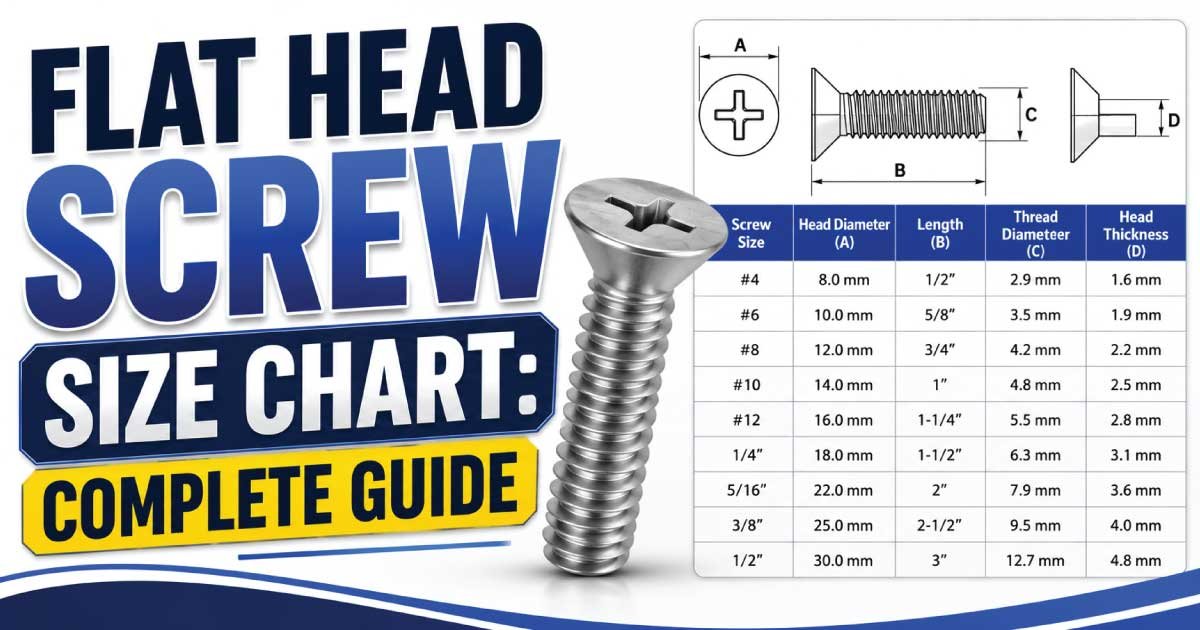
Flat head screws are one of the most commonly used fasteners in woodworking, metalworking, construction, furniture assembly, and machinery.
They feature a conical head with a flat top that sits flush with the material surface when installed in a countersunk hole. This flush finish improves appearance, reduces snagging, and creates a smooth, professional installation.
Choosing the correct flat head screw size is essential for achieving a strong connection, proper countersinking, and long-lasting performance. This guide includes a standard flat head screw size chart, explains how to measure flat head screws, discusses common materials, and provides practical tips for selecting the right size.
Standard Metric Flat Head Screw Size Chart
The following chart lists common metric flat head screw sizes used in woodworking, furniture, machinery, and general construction.
| Thread Size | Screw Diameter | Head Diameter | Head Height | Available Lengths | Common Applications |
|---|---|---|---|---|---|
| M2 | 2 mm | 4 mm | 1.2 mm | 4–16 mm | Electronics |
| M2.5 | 2.5 mm | 5 mm | 1.5 mm | 5–20 mm | Precision equipment |
| M3 | 3 mm | 6 mm | 1.7 mm | 6–30 mm | Small machinery |
| M4 | 4 mm | 8 mm | 2.2 mm | 8–40 mm | Cabinets and hardware |
| M5 | 5 mm | 10 mm | 2.8 mm | 10–60 mm | Furniture assembly |
| M6 | 6 mm | 12 mm | 3.3 mm | 12–80 mm | Machinery |
| M8 | 8 mm | 16 mm | 4.4 mm | 16–100 mm | Structural fastening |
| M10 | 10 mm | 20 mm | 5.5 mm | 20–120 mm | Heavy equipment |
| M12 | 12 mm | 24 mm | 6.5 mm | 25–150 mm | Industrial machinery |
Imperial Flat Head Screw Size Chart
| Screw Size | Major Diameter | Head Diameter | Common Lengths | Typical Applications |
|---|---|---|---|---|
| #2 | 0.086″ | 0.167″ | 3/8″–1″ | Electronics |
| #4 | 0.112″ | 0.219″ | 1/2″–1-1/2″ | Light woodworking |
| #6 | 0.138″ | 0.270″ | 1/2″–2″ | Furniture |
| #8 | 0.164″ | 0.322″ | 3/4″–3″ | General construction |
| #10 | 0.190″ | 0.373″ | 1″–4″ | Decking and framing |
| #12 | 0.216″ | 0.425″ | 1-1/4″–4″ | Heavy wood connections |
| 1/4″ | 0.250″ | 0.531″ | 1″–6″ | Machinery and steel fabrication |
Why Flat Head Screw Size Matters
Choosing the correct flat head screw size ensures a secure connection while allowing the screw head to sit flush with the material surface. An undersized screw may not provide enough holding strength, while an oversized screw can split the material or require an oversized countersink.
Benefits of selecting the proper size include:
- Flush surface finish
- Strong holding power
- Improved appearance
- Better load distribution
- Reduced material damage
- Easier installation
- Longer service life
How to Measure a Flat Head Screw
Accurate measurements help ensure the correct replacement or installation.
Follow these steps:
- Measure the thread diameter.
- Measure the overall screw length from the top of the head to the tip.
- Measure the head diameter.
- Measure the head height.
- Determine the thread pitch.
- Verify the drive type (Phillips, Torx, Hex, or Slotted).
- Check the countersink angle if required.
Unlike pan head screws, flat head screw length includes the height of the head.
Also Read: U Bolt Dimensions and Selection Guide for Your Project
Common Materials Used for Flat Head Screws
Flat head screws are available in several materials for different environments.
Stainless Steel
Provides excellent corrosion resistance and is ideal for outdoor, marine, and humid environments.
Carbon Steel
Offers high strength and is commonly used for indoor construction and machinery.
Brass
Provides an attractive decorative finish and natural corrosion resistance for furniture and architectural applications.
Alloy Steel
Designed for heavy-duty industrial applications requiring high tensile strength.
Zinc-Plated Steel
An economical option that offers moderate corrosion resistance for general indoor use.
Also Read: Cotter Pin Size Chart for Secure Connections
How to Choose the Right Flat Head Screw Size
Consider these factors before selecting a flat head screw:
- Measure the material thickness.
- Select the correct screw diameter.
- Choose an appropriate screw length.
- Match the thread type to the material.
- Select the proper drive style.
- Consider indoor or outdoor use.
- Choose a corrosion-resistant material if necessary.
Selecting the correct size improves fastening performance and extends the life of the assembly.
Common Applications of Flat Head Screws
Flat head screws are widely used across many industries.
Typical applications include:
- Woodworking
- Cabinet making
- Furniture assembly
- Deck construction
- Drywall installation
- Sheet metal fabrication
- Electrical enclosures
- Machinery assembly
- Door hardware
- DIY home improvement projects
Also Read: Socket Wrench Size Chart and Their Applications
Installation Tips
Proper installation ensures a secure and professional finish.
- Drill a pilot hole when required.
- Countersink the hole for a flush fit.
- Use the correct screwdriver or bit.
- Tighten the screw evenly.
- Avoid overtightening.
- Match the screw length to the material thickness.
- Inspect the installation after tightening.
Correct installation reduces the risk of stripped heads and material damage.
Common Mistakes to Avoid
Avoid these common flat head screw installation errors:
- Using the wrong screw length
- Skipping the countersink
- Overtightening the screw
- Selecting the wrong thread type
- Using indoor screws outdoors
- Applying excessive torque
- Ignoring pilot holes in hardwood
These mistakes can weaken the connection and shorten the lifespan of the fastener.
Benefits of Properly Sized Flat Head Screws
Using the correct flat head screw size offers several advantages.
- Smooth flush finish
- Strong and secure fastening
- Improved structural integrity
- Better appearance
- Longer fastener lifespan
- Reduced maintenance
- Reliable long-term performance
Proper screw selection helps improve both the strength and appearance of the finished project.
Maintenance Tips
Routine inspections help maintain reliable fastening performance.
- Check screws for looseness.
- Inspect for corrosion.
- Replace stripped or damaged screws.
- Clean exposed screw heads regularly.
- Retighten if vibration causes loosening.
- Apply anti-corrosion protection in outdoor environments.
- Replace worn fasteners during routine maintenance.
Regular maintenance extends the service life of both the screws and the assembled structure.
Conclusion
Choosing the correct flat head screw size is essential for creating strong, secure, and flush-mounted connections in woodworking, metalworking, furniture, and construction projects.
By accurately measuring the screw diameter, length, and thread specifications, selecting the proper material, and following recommended installation practices, you can achieve reliable performance and a professional finish.
Always consult a flat head screw size chart before purchasing to ensure the best fit for your specific application.
Frequently Asked Questions
1. How do I choose the correct flat head screw size?
Choose a flat head screw based on the material thickness, required holding strength, and application. The screw should be long enough to provide secure thread engagement while allowing the head to sit flush in a properly countersunk hole for a strong and professional-looking installation.
2. What materials are flat head screws made from?
Flat head screws are commonly available in stainless steel, carbon steel, brass, alloy steel, and zinc-plated steel. Stainless steel is ideal for outdoor use, carbon steel offers high strength, brass provides a decorative finish, and alloy steel is suitable for heavy-duty industrial applications.
3. Do flat head screws require a countersunk hole?
Yes, flat head screws are designed to be installed in a countersunk hole so the head sits flush with or slightly below the material surface. A properly countersunk hole improves appearance, reduces snagging, and distributes the load evenly for a stronger, more secure connection.
4. Can flat head screws be used outdoors?
Yes, flat head screws can be used outdoors if they are made from corrosion-resistant materials such as stainless steel or are coated with a protective finish. Choosing the right material helps prevent rust, extends fastener life, and ensures reliable performance in harsh weather conditions.

Engineer Hassan is a Mechanical Engineer with 16+ years of hands-on experience in mechanical hardware, fasteners, and workshop tools. He focuses on size selection, thread identification, and measurement, helping users choose the correct components with accuracy and safety.