
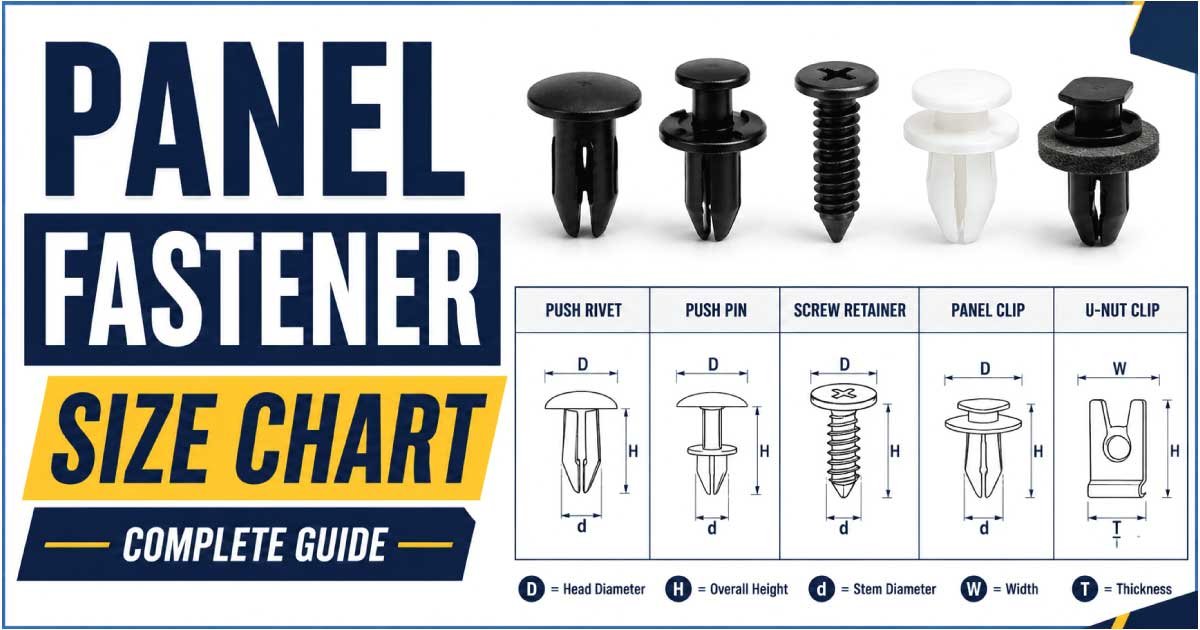
Panel fasteners are specialized fastening components used to securely attach panels, covers, sheets, and removable components in automotive, industrial, electrical, construction, and manufacturing applications.
They are designed for quick installation, easy removal, and reliable holding performance without damaging the connected surfaces.
Choosing the correct panel fastener size ensures proper fit, secure attachment, and long-term durability. This guide explains panel fastener sizes, dimensions, materials, types, and common applications.
What Is a Panel Fastener?
A panel fastener is a mechanical fastening device used to join two or more panels together or attach panels to a supporting structure. These fasteners are available in various designs, including clips, screws, rivets, push fasteners, and quarter-turn fasteners.
Panel fasteners are commonly designed for applications where panels need frequent removal for maintenance, inspection, or repair.
Key features include:
- Quick installation and removal
- Lightweight construction
- Strong panel retention
- Vibration resistance
- Available in plastic and metal designs
- Suitable for permanent or removable panels
Why Panel Fastener Size Matters
Selecting the correct panel fastener size is important for achieving proper grip, preventing panel damage, and maintaining structural stability. A fastener that is too small may loosen, while an oversized fastener can crack or deform the panel.
Benefits of correct sizing include:
- Secure panel attachment
- Reduced vibration
- Improved appearance
- Easy maintenance
- Longer service life
- Better load distribution
Panel Fastener Size Chart (Metric)
The following table shows common metric panel fastener sizes used in automotive, industrial, and general applications.
| Fastener Diameter | Grip Range | Hole Size | Common Applications |
|---|---|---|---|
| 3 mm | 0.5–3 mm | 3 mm | Small panels |
| 4 mm | 1–5 mm | 4 mm | Interior covers |
| 5 mm | 1–6 mm | 5 mm | Automotive panels |
| 6 mm | 2–8 mm | 6 mm | Equipment covers |
| 8 mm | 3–10 mm | 8 mm | Heavy panels |
| 10 mm | 5–12 mm | 10 mm | Industrial panels |
| 12 mm | 6–15 mm | 12 mm | Large assemblies |
Panel Fastener Size Chart (Imperial)
Imperial panel fasteners are commonly used in automotive and industrial equipment manufactured in North America.
| Fastener Size | Hole Diameter | Grip Range | Common Uses |
|---|---|---|---|
| 1/8″ | 0.125″ | Light panels | Electronics |
| 3/16″ | 0.187″ | Medium panels | Machinery covers |
| 1/4″ | 0.250″ | General panels | Automotive applications |
| 5/16″ | 0.312″ | Heavy panels | Industrial equipment |
| 3/8″ | 0.375″ | Large panels | Structural covers |
| 1/2″ | 0.500″ | Heavy-duty panels | Industrial systems |
Main Parts of a Panel Fastener
Understanding the different components of a panel fastener helps in selecting the correct type and size for specific applications.
1. Head or Cap
The head provides the visible fastening surface and transfers installation force. Different head designs are available depending on appearance, tool requirements, and application needs.
Common head styles include:
- Flat head
- Round head
- Button head
- Flanged head
2. Shank or Body
The shank provides the connection between the panels and determines the grip strength. The length and diameter of the shank must match the thickness of the materials being joined.
3. Locking Mechanism
The locking mechanism keeps the fastener securely attached after installation. Different fasteners use different locking methods, including clips, threads, expansion systems, and spring action.
Common Types of Panel Fasteners
Panel fasteners are available in several designs depending on installation requirements and application conditions.
1. Push-Type Panel Fastener
Push fasteners use a central pin that expands the legs of the fastener when pressed into place. They are commonly used for automotive interior panels and plastic covers.
Advantages include:
- Fast installation
- No tools required
- Lightweight
- Easy removal
2. Screw Panel Fastener
Screw-type panel fasteners use threaded engagement to provide stronger holding force. They are suitable for applications requiring secure attachment and repeated removal.
Common uses include:
- Equipment covers
- Machinery panels
- Electrical enclosures
3. Quarter-Turn Panel Fastener
Quarter-turn fasteners allow quick access by rotating the fastener approximately 90 degrees. They are widely used in aircraft panels, industrial equipment, and service doors.
Benefits include:
- Very fast access
- Reusable design
- Secure locking
- Tool-operated versions available
4. Snap-In Panel Fastener
Snap-in fasteners use flexible clips that lock into pre-drilled holes. They are commonly used where fast installation and clean appearance are required.
Common Panel Fastener Materials
Material selection affects strength, durability, corrosion resistance, and operating temperature capability.
1. Plastic Panel Fasteners
Plastic fasteners are widely used for lightweight panels, automotive interiors, and decorative applications.
Advantages include:
- Lightweight
- Corrosion resistant
- Low cost
- Easy installation
Common materials:
- Nylon
- Polypropylene
- Acetal plastic
2. Steel Panel Fasteners
Steel fasteners provide higher strength and are used for heavier panels and industrial applications.
Benefits include:
- High load capacity
- Excellent durability
- Strong mechanical connection
- Suitable for vibration environments
3. Stainless Steel Panel Fasteners
Stainless steel panel fasteners provide excellent corrosion resistance for outdoor, marine, and harsh industrial environments.
Advantages include:
- Rust resistance
- Long service life
- High durability
- Low maintenance
Common Applications of Panel Fasteners
Panel fasteners are used in many industries where panels require secure attachment and easy access.
Major applications include:
- Automotive body panels
- Vehicle interiors
- Electrical cabinets
- HVAC equipment
- Machine covers
- Aircraft panels
- Electronic enclosures
- Construction panels
- Industrial equipment
- Appliance manufacturing
How Panel Fasteners Work
Panel fasteners create a secure connection by using mechanical locking methods that hold panels together while allowing controlled removal when required.
Working process:
- Fastener is aligned with the panel hole.
- Fastener body enters the opening.
- Locking mechanism expands or engages.
- Panels are held securely together.
- Fastener can be removed when maintenance is required.
Factors Affecting Panel Fastener Selection
Several factors should be considered before choosing a panel fastener for a specific application.
Important factors include:
- Panel thickness
- Hole diameter
- Required load capacity
- Material compatibility
- Vibration level
- Environmental conditions
- Installation method
- Removal frequency
How to Choose the Correct Panel Fastener Size
Choosing the correct panel fastener size is essential for achieving a secure connection without damaging the panel or supporting structure. The right fastener depends on panel thickness, hole diameter, material type, required holding force, and environmental conditions. Proper selection improves durability, appearance, and maintenance efficiency.
1. Measure Panel Thickness
Panel thickness is the most important factor when selecting a panel fastener. The fastener must have the correct grip range to securely hold the panels together without being too loose or too tight.
Measure:
- Single panel thickness
- Combined panel thickness
- Mounting bracket thickness
- Total grip requirement
2. Check the Installation Hole Size
The hole diameter must match the fastener body size. A hole that is too large may cause looseness, while a smaller hole can prevent proper installation.
Consider:
- Hole diameter
- Hole shape
- Panel material
- Fastener diameter
- Installation clearance
3. Determine Required Holding Strength
Different applications require different levels of fastening strength. Lightweight decorative panels need less holding force compared with industrial machine covers or vehicle body components.
Load factors include:
- Panel weight
- Vibration exposure
- Impact forces
- Operating conditions
- Safety requirements
4. Select the Proper Material
The fastener material should match the operating environment. Plastic fasteners are suitable for lightweight applications, while steel fasteners are preferred for high-strength requirements.
Material selection:
- Nylon → Automotive interiors and electronics
- Steel → Heavy-duty panels
- Stainless steel → Outdoor and corrosive environments
📊 View Standard Size Guide 👉 Roller Chain Size Chart: Ultimate Guide to Chain Sizes
Panel Fastener Load Capacity Chart
Load capacity varies depending on fastener type, material, installation method, and panel condition. The following values provide general guidelines.
| Fastener Size | Plastic Fastener | Steel Fastener | Heavy Duty Fastener |
|---|---|---|---|
| 3 mm | 5–10 lbs | 15–25 lbs | 30 lbs |
| 5 mm | 10–20 lbs | 30–50 lbs | 60 lbs |
| 6 mm | 20–35 lbs | 50–80 lbs | 100 lbs |
| 8 mm | 30–50 lbs | 80–120 lbs | 150 lbs |
| 10 mm | 50–80 lbs | 120–180 lbs | 200 lbs |
| 12 mm | 80–120 lbs | 180–250 lbs | 300 lbs |
Panel Fastener Material Comparison
Selecting the correct material improves performance, durability, and resistance to environmental conditions.
| Material | Strength | Corrosion Resistance | Common Applications |
|---|---|---|---|
| Nylon | Medium | Excellent | Automotive interiors |
| Polypropylene | Medium | Excellent | Plastic panels |
| Carbon Steel | High | Moderate | Industrial equipment |
| Stainless Steel | Very High | Excellent | Outdoor and marine applications |
Advantages of Panel Fasteners
Panel fasteners provide an efficient solution for joining removable and permanent panels. Their versatile designs make them suitable for many industries.
Advantages include:
- Quick installation
- Easy removal
- Lightweight design
- Strong panel retention
- Reduced assembly time
- Cost-effective fastening
- Improved appearance
- Available in many sizes
- Suitable for vibration applications
Limitations of Panel Fasteners
Although panel fasteners are widely used, they have certain limitations depending on design and application requirements.
Common limitations include:
- Limited load capacity compared with bolts
- Plastic types may weaken at high temperatures
- Incorrect sizing can cause loosening
- Some designs require special tools
- Not suitable for extreme structural loads
How to Install a Panel Fastener
Proper installation ensures the fastener provides maximum holding strength and prevents damage to the panel.
Basic Installation Steps
- Measure panel thickness.
- Select the correct fastener size.
- Align the panel holes.
- Insert the fastener into the opening.
- Engage the locking mechanism.
- Confirm secure attachment.
- Inspect the final installation.
Tools Used for Panel Fastener Installation
Different panel fasteners require different installation methods. Using the correct tools improves efficiency and prevents damage.
Common tools include:
- Screwdriver
- Panel clip removal tool
- Rivet gun
- Drill
- Push pin installer
- Torque driver
📊 View Standard Size Guide 👉 Oil Seal Size Chart: Ultimate Guide to Standard Sizes
Maintenance Tips for Panel Fasteners
Regular inspection helps maintain secure panel attachment and prevents unexpected failures.
Maintenance recommendations:
- Check loose fasteners
- Replace damaged clips
- Inspect cracks in plastic fasteners
- Remove corrosion from metal fasteners
- Ensure proper alignment
- Replace missing fasteners immediately
Common Installation Mistakes
Incorrect installation can reduce the performance of panel fasteners and may cause panels to loosen or become damaged.
Avoid these mistakes:
- Using incorrect fastener size
- Installing in oversized holes
- Selecting weak materials
- Forcing fasteners into holes
- Reusing damaged clips
- Ignoring panel thickness
- Over-tightening screw fasteners
- Mixing incompatible materials
Panel Fastener vs Rivet
Panel fasteners and rivets are both used for joining panels, but they serve different purposes.
| Feature | Panel Fastener | Rivet |
|---|---|---|
| Removal | Usually removable | Often permanent |
| Installation | Easy | Requires tools |
| Maintenance Access | Excellent | Limited |
| Reusable | Many types | Usually no |
| Applications | Covers and panels | Permanent joints |
Panel Fastener vs Screw
Both provide secure panel attachment, but their designs are suited for different applications.
| Feature | Panel Fastener | Screw |
|---|---|---|
| Installation Speed | Faster | Slower |
| Removal | Easy | Easy |
| Load Capacity | Medium | High |
| Tools Required | Minimal | Screwdriver required |
| Best Use | Covers and trim | Structural panels |
Industries That Use Panel Fasteners
Panel fasteners are essential components in industries where quick assembly, easy maintenance, and reliable panel attachment are required.
Major industries include:
- Automotive manufacturing
- Aerospace
- Electronics
- Construction
- HVAC systems
- Machinery manufacturing
- Appliance production
- Transportation
- Marine equipment
- Industrial manufacturing
Choosing the Right Panel Fasteners
Panel fasteners provide a simple, efficient, and reliable method for attaching removable and permanent panels across many industries.
Selecting the correct size, material, and fastening style ensures proper fit, improved durability, and secure performance.
Whether used in automotive interiors, industrial machinery, electrical cabinets, or construction systems, properly chosen panel fasteners reduce installation time, simplify maintenance, and provide dependable long-term panel retention.
📊 View Standard Size Guide 👉 Cap Nut Size Chart – Complete Dimensions Guide
FAQs:
What is a panel fastener used for?
A panel fastener is used to securely attach panels, covers, sheets, and removable components while allowing quick installation and removal. They are widely used in automobiles, machinery, electrical cabinets, appliances, aerospace equipment, and industrial systems where secure fastening and easy maintenance access are essential.
How do I measure a panel fastener size?
Measure the installation hole diameter, panel thickness, grip range, and overall fastener length before selecting a panel fastener. Matching these dimensions with the manufacturer’s specifications or a size chart ensures a secure fit, proper holding strength, and reliable performance throughout the fastener’s service life.
Are plastic panel fasteners durable?
Yes, plastic panel fasteners made from materials such as nylon and polypropylene are highly durable for lightweight applications. They resist corrosion, moisture, and many chemicals, making them suitable for automotive interiors, electronic equipment, appliances, and other environments where metal fasteners may not be necessary.
Can panel fasteners be reused?
Many panel fasteners, including quarter-turn and screw-type fasteners, are designed for repeated use without losing performance. However, some plastic push clips and snap fasteners may become damaged during removal, making replacement necessary to maintain secure fastening and proper retention after reinstallation.
What is the strongest type of panel fastener?
Heavy-duty steel and stainless steel panel fasteners generally provide the greatest strength and durability. Threaded panel fasteners and quarter-turn fasteners are commonly chosen for demanding applications because they offer strong retention, resist vibration, and allow convenient access for maintenance, inspection, and repeated assembly.

Engineer Hassan is a Mechanical Engineer with 16+ years of hands-on experience in mechanical hardware, fasteners, and workshop tools. He focuses on size selection, thread identification, and measurement, helping users choose the correct components with accuracy and safety.