
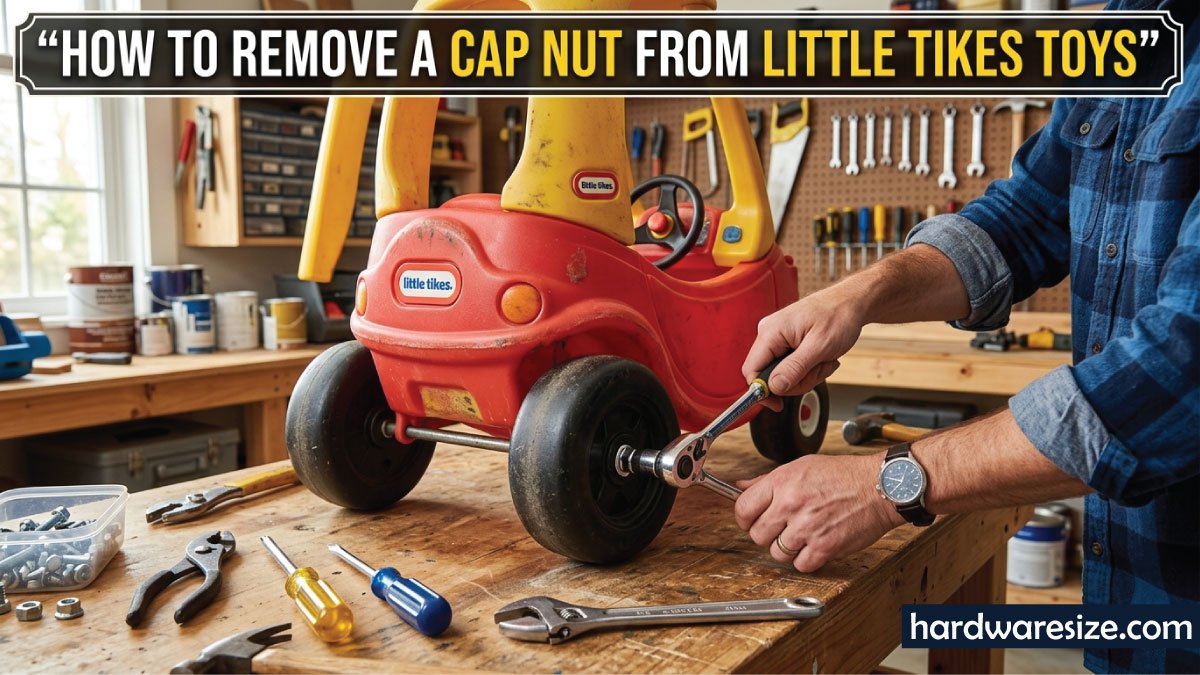
The question of how to take out a cap nut off the Little Tikes toys may seem difficult initially. These are ride-on cars, slides and activity centers among other toys, which use cap nuts to hold parts in place.
They are installed to guard against the sharp bolts to the children, but are very difficult to remove. Be it repairs, maintenance or changing parts, the correct method of removing a cap nut will need the appropriate tools, time and technique.
This detailed guide takes you through step-by-step directions on how to take various styles of the cap nuts off safely without damaging the toy or the nut to be reassembled.
Understand Little Tikes Cap Nuts
Little Tikes cap nuts are typically plastic or light-weight metal, which is used to encompass bolts and threaded fasteners.
They ensure that the edges are not exposed which would lead to injury on the children during the play. The plastic caps can usually be snap-on, although threaded metal nuts can be used in some toys that ride on.
Cap nuts are required as they keep the structural elements together and the toy is safe. Stripping them off without know, how they are designed may cause stripped threads, broken nuts or broken plastic components.
The first step to a safe and possible removal of your nut is to know whether it is Snap-On, threaded or decorative-
Why Cap Nut Removal Can Be Tricky
Although these nuts are tiny in size, it is easy to find that they are not easy to remove. Little Tikes toys are manufactured very snugly at the factory, so that they could take the weight of a child climbing, riding or sliding.
The plastic caps can break over time, or dust and dirt can get stuck in the threads hence making it even more difficult to remove.
Other challenges include:
-
Rounded or stripped nut edges from previous attempts
-
Tight assembly that resists hand turning
-
Hidden threads under decorative covers
-
Brittle plastic that may crack under excessive force
Recognize these challenges allows you to approach removal carefully, minimize the risk of damage to the toy or cap nut.
Tools You will Need For Remove a Cap Nut from Little Tikes Toys
To take off the Little Tikes cap nuts you do not have to have any professional equipment, but appropriate household tools can make the task easier and less risky. Being well prepared in advance will help avoid frustration and unintentional breakages.
Recommended tools include:
-
Adjustable wrench or small socket set: for the threaded nuts
-
Needle-nose pliers: for stubborn nuts or tight the spaces
-
Flathead screwdriver: to pry Snap-On the plastic caps gently
-
Rubber mallet: for lightly tap the stuck nuts
-
Cloth or towel: to protect the toy surface and catch small nuts
Use proper tools ensures a damage-free removal process while keep the small parts from being lost.
Step By Step Guide How to Remove a Cap Nut from Little Tikes Toys
To remove a cap nut of Little Tikes toys, one needs to know how to do it to repair, maintain, or replace the part. The step-by-step instructions are safe and easy to follow for remove various kinds of the cap nuts without any damage to the toy, and thus long functionality and with safety of the children.
Step 1: Prepare the Toy and Work Area
Start by create the safe, organize workspace. Clear clutter, gather all necessary tools, and also protect surfaces. Prepare the toy and area properly reduces accidents, keeps small parts contained, and ensures you can focus fully on remove the cap nut.
Steps:
-
Place the toy on a flat, stable surface like a table or floor.
-
Clear the surround area of toys, clutter, or children to avoid distractions.
-
Place a towel or mat under the nut location to catch any small components that may fall.
-
Keep all tools within easy reach but out of a child’s reach.
A well-prepared workspace ensures you can focus on the task and avoid accidents or scratches on the toy.
Step 2: Identify the Cap Nut Type
The type of cap nut is so important in the renovation. Little Tikes toys can include snap on nuts, threaded nuts or ornamental nuts. Identify the right type would help you to select the appropriate tool and technique and avoid damage both nut and toy.
-
Plastic Snap-On nuts: Easily pried off with minimal force.
-
Threaded plastic or metal nuts: Require rotation with the wrench or socket.
-
Decorative caps: May twist off or require gentle tapping.
Use the correct technique for each type prevents damage to the cap or toy. Misidentify the nut type often leads to crack, stripped threads, or incomplete removal.
Step 3: Loosen the Cap Nut
It is necessary to be careful when unscrewed the cap nut. Rub evenly and softly with the right tool. The concentration around the nut, work slowly and continuously makes the nut not crack, strip or deform, and the plastic and metal parts of the toy should not be crushed by the nut.
-
Plastic Snap-On nuts: Use a flathead screwdriver or your fingernail to gently pry the edge upward, also move gradually around the circumference until it pops off.
-
Threaded nuts: Place correct size wrench or socket over the nut and turn the counterclockwise slowly. Avoid the pliers on plastic nuts, which can crush them.
-
Stubborn nuts: Tap lightly with the rubber mallet while turn to break the friction or minor deformation.
Apply slow, even pressure to avoid crack the plastic or stirp threads. Rush can damage both the nut and the toy.
Step 4: Remove the Nut Safely
Once it has been loosened not too hard, remove the nut with hands or pliers. Do not drop it and break it.
An insurance of the nut will make sure that it is not lost whereas insure the parts around the toy will make sure that the toy is intact to be used later.
Steps:
-
Grip the nut securely without squeeze too tightly.
-
Rotate counterclockwise until fully removed.
-
Place the nut in a container or small bag to prevent losing it.
-
Inspect the bolt threads inside the toy for any damage or dirt.
Safe removal ensures the toy can be reassembled without problems later.
Step 5: Inspect the Nut and Bolt
When this has been done, examine the nut and bolt carefully, looking after cracks, wear, or debris. Wash and investigate these parts will guarantee a secure reassemble. Early detection of the damage will avoid later problems, ensure toy stability, and make it safe to play by kids.
Inspection steps:
-
Check the cap nut for cracks, splits, or the deformations.
-
Examine the bolt threads for strip, bend, or corrosion.
-
Clean dirt or dust with the dry cloth or brush.
-
Determine whether replacement the parts are needed.
This inspection step ensures that the toy remains safe and functional after repair.
Step 6: Replace or Repair the Cap Nut
In case of damage to the cap nut, then either pick a compatible replacement or repair it with great caution. Tighten them by hand, and then use tools.
When replaced properly, there is long term sustainability, safety level is maintained and the stripping or cracking that may occur in future play is avoided.
Steps:
-
Select a match nut for size, thread type, and the material.
-
Place the nut over the bolt and the hand-tighten clockwise first.
-
Use a wrench or socket only if needed; avoid over-tighten, especially on the plastic components.
-
Ensure the nut is snug but not stress the plastic.
Replace worn or stripped nuts ensures long-term durability and child safety.
Step 7: Reassemble and Test the Toy
Reassemble all toy parts methodically after removing or replacing the nut. Tighten nuts gradually, check moving parts for smooth operation, and inspect stability.
Testing will ensure that it has a proper function and will be safe and secure and will be able to be used.
Steps:
-
Reattach all parts removed during the disassembly.
-
Tighten all nuts and bolts carefully, use the hand pressure before tools.
-
Check moveable parts such as wheels, slides, or the handles for smooth operation.
-
Observe for wobbling, looseness, or gaps in the structure.
Testing confirms that the repair was successful and prevents future safety hazards.
Discover More:
Prevent Future Problems
To avoid problems in the future, routine maintenance will avoid future problems with Little Tikes cap nuts.
Check and tighten components every now and then, maintain the cleanliness of nuts and threads, replace worn out parts,
And play with toys without damaging them to increase their longevity, durability and safety to continue playing.
Tips:
-
Periodically check all nuts and bolts for tightness.
-
Avoid over-tighten the Snap-On plastic nuts.
-
Keep threads and nuts clean of dirt and debris.
-
Replace cracked, warped, or brittle nuts promptly.
-
Handle toys gently during play or assembly.
Routine maintenance keeps the toys safe, functional, and long-lasting.
Safety Precautions
The safety should always be a first priority when fixing toys. Store tools and small parts out of reach of children, use a flat working surface, use gloves where needed and use no excessive force.
Safety measures will prevent damage to the toy itself as well as to the individual carrying out repairs.
Safety measures:
-
Keep tools and small parts away from children.
-
Wear gloves if using pliers on tight nuts.
-
Work on the flat, stable surface.
-
Avoid excessive force on plastic components.
-
Dispose of broken or damaged nuts safely.
Following these safety measures ensures a damage-free and safe repair process.
Discover More:
Common Mistakes to Avoid
Many cap nut issues arise from improper handling or carelessness. Avoid these mistakes to ensure a safe and effective repair:
-
Apply excessive force on brittle plastic nuts.
-
Reuse damaged or worn nuts.
-
Using the wrong tool, causing slipping or crushing.
-
Over-tighten during reassembly.
-
Not test the toy after repair.
Avoid these errors protects both the toy and children during play.
When to Replace the Bolt or Toy Part
The bolt or other part of the toy can be worn or broken, and needs to be replaced. It is much more appropriate to replace parts than to spend time in vain attempts to break the stubborn nuts.
Replacement guidelines:
-
Replace the bolt if threads are stripped or damaged.
-
Replace any cracked or warped the toy parts.
-
Ensure replacement parts match size, thread type, and material.
-
Reassemble carefully using proper torque for long-term durability.
Replacement ensures safety, stability, and smooth operation of the toy.
Final Thoughts
It is time-consuming, needs the appropriate tools and gentle treatment to remove a cap nut of a Little Tikes toy. Determine the type of the nut, loosen, check the damage and replace or reinstall.
Frequent repairs and care will help avoid future problems and preserve toys in their proper condition and ensure their functionality.
Through this extended step-by-step tutorial parents and DIYers are able to maintain, repair or replace cap nuts without breaking the toy or jeopardizing the safety of the children.
Discover More:

Engineer Hassan is a Mechanical Engineer with 16+ years of hands-on experience in mechanical hardware, fasteners, and workshop tools. He focuses on size selection, thread identification, and measurement, helping users choose the correct components with accuracy and safety.