
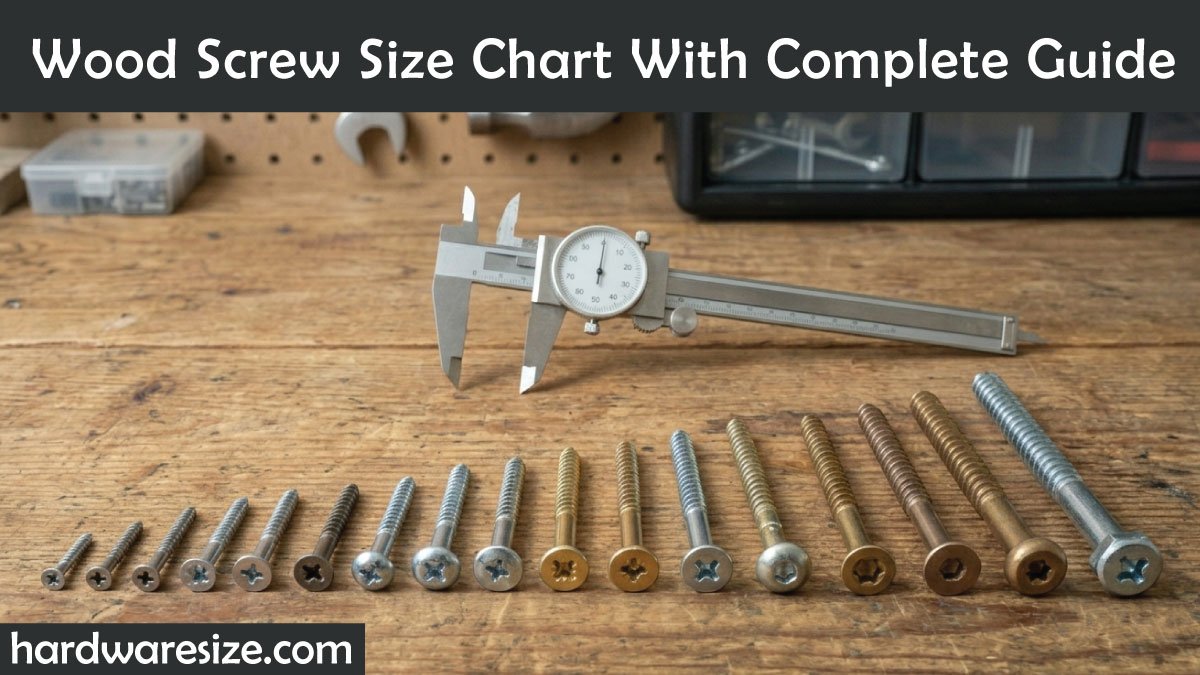
Wood screws are one of the most commonly used fasteners in woodworking, carpentry, furniture making, and construction projects. You are either making the piece of furniture, constructing cabinets, laying down decking, or are fixing a piece of wood, the size of screws to use is vital in strength, durability and safety.
Nevertheless, the issue of wood screw sizes is not easily comprehended by a lot of beginners as well as those well versed in DIY work. The use of such terms as #6, #8, and #10 screws, screw length, type of threads, or head style may bewilder without the necessary instructions.
This complete guide explains wood screw sizes, how to read a wood screw size chart, common screw dimensions, and how to select the right screw for your project.
By the end of this guide, you will clearly understand how wood screws are measured and how to choose the correct size every time.
What Is a Wood Screw?
A wood screw is a threaded screw that is tailored made to be used to fasten wood together. The wood screws unlike the machine screws are sharp with rough threads and they ensure that the wood fibers are bound together.
The design allows the screw to pull wood pieces together securely without split the material when used correctly.
Wood screws are commonly used in:
- Furniture assembly
- Cabinet making
- Deck building
- Framing and carpentry
- Interior woodwork
- DIY woodworking projects
Because different applications require different strengths and penetration depths, wood screws come in many sizes.
Understand Wood Screw Size Numbers
Wood screws are usually identified by the gauge number and length, which indicate their diameter and how deep they will penetrate. Understand these numbers helps select the correct screw for any woodworking project.
For example: #8 × 2 inch wood screw – the first number indicates diameter, and the second shows length from tip to head.
1. Screw Diameter (Gauge Number)
The gauge number (#4, #6, #8, #10, #12) represents the screw’s thickness. Higher numbers mean thicker screws, providing stronger holding power for heavier loads or structural applications.
Common wood screw diameters include:
-
#4 – small, delicate work
-
#6 – light-duty woodworking
-
#8 – general-purpose woodworking
-
#10 – heavy-duty wood connections
-
#12 – structural applications
2. Screw Length
Screw length is used to measure the tip to head length and it is used to tell the depth of the screw into the material. The proper length is determined by the thickness of the pieces of wood to be joined.
Common lengths include:
-
1/2 inch
-
3/4 inch
-
1 inch
-
1 1/4 inch
-
1 1/2 inch
-
2 inch
-
2 1/2 inch
-
3 inch
Choose the proper length ensures strong joints without the screw protrude from the other side.
Standard Wood Screw Size Chart
Below is a general reference chart show the common wood screw sizes and their approximate diameters.
| Screw Size | Diameter (inch) | Diameter (mm) | Common Uses |
|---|---|---|---|
| #4 | 0.112″ | 2.84 mm | Small hardware, hinges |
| #5 | 0.125″ | 3.18 mm | Light woodworking |
| #6 | 0.138″ | 3.51 mm | Cabinets, furniture |
| #7 | 0.151″ | 3.84 mm | Medium wood joints |
| #8 | 0.164″ | 4.17 mm | General woodworking |
| #9 | 0.177″ | 4.50 mm | Structural wood joints |
| #10 | 0.190″ | 4.83 mm | Decking, framing |
| #12 | 0.216″ | 5.49 mm | Heavy-duty wood construction |
| #14 | 0.242″ | 6.15 mm | Structural applications |
This chart helps you quickly compare screw diameters when selecting fasteners for woodworking tasks.
Wood Screw Size Chart PDF
Wood Screw Size Chart PDF – A quick reference guide showing common wood screw sizes, diameters, and typical uses for woodworking projects.
Common Wood Screw Length Chart
Wood screws are also available in a wide range of lengths depend on the depth of penetration required.
| Screw Length | Typical Use |
|---|---|
| 1/2 inch | Thin materials and light hardware |
| 3/4 inch | Small woodworking joints |
| 1 inch | Furniture assembly |
| 1 1/4 inch | Cabinet installation |
| 1 1/2 inch | Light structural work |
| 2 inch | General construction |
| 2 1/2 inch | Framing connections |
| 3 inch | Decking and heavy wood joints |
| 3 1/2 inch | Structural carpentry |
| 4 inch | Heavy structural connections |
The key rule is that the screw should penetrate the second piece of wood by at least half its thickness.
Wood Screw Head Types
Wood screws are also produced in various head designs depending on the usage, appearance, and strength needs. The screw in the head design influences the nature in which the screw fits within the wood, the amount of torque it will have the ability to sustain and whether the screw would be exposed or concealed in a completed project.
1- Flat Head
This design of the wood screws is designed to lay flat with the wood surface when installed in a countersunk hole. The tapered underside helps them to disappear into the material smoothly to give them a clean and smooth finish without sticking out screw heads.
They are commonly used in:
-
Furniture making
-
Cabinet installation
-
Wood trim
2- Round Head
Round head screws have a domed top that is smooth and slightly dome shaped and is visible once installed.
Since the head is positioned over the wooden surface, it offers more clamping force and is frequently applied in those instances where looks are of less importance than solid fastening.
They are used where the screw head needs to remain visible.
3- Oval Head
Oval head screws have the benefit of the flat head and the round head. The bottom is cut like a flat head at a slight angle making it partially countersunk and the top is rounded with a decorative finish.
This allows them to be used in woodworking projects where both the appearance and the functional aspect count.
4- Pan Head
Pan head screws have a rounded top and flat bottom which is placed on the surface of the material instead of being incorporated into it.
This type of design has a uniform distribution of pressure and offers a good holding power and is applicable in the installation of hardware and mixed material fastening.
These screws are common in metal-to-wood connections.
Wood Screw Thread Types
Thread design The thread design is significant in determining the degree to which a wood screw grips and holds the material.
The distance, thickness and length of the threads determine the relative strength with which the screw penetrates the wood fibers and how well its grip on two pieces of wood is fastened.
1- Coarse Threads
Coarse threads are the widely applied thread in wood screws. They are more spaced out and their grooves are more pronounced and therefore serve to aggressively bite into softwood fibers and give high holding power without stripping or loosening when installed.
2- Fine Threads
Fine threads are less spaced apart and have less deep grooves than coarse threads. They are normally applied to dense hardwood surfaces where better thread engagement is desired to prevent splitting of wood and still offer a good and firm fastening handle.
3- Partial Threads
The partial thread screws are threaded only on lower portion of the screw shaft and the upper portion of the screw shaft is plain. This design enables the screw to drag the top board firmly against the bottom board producing a firmer and firmer joint.
Choose the Right Wood Screw Size
It is important to use the right wood screw size to achieve strong with reliable woodworking joints. The correct choice of screw is determined by factors such as the thickness of the wood, the load, the type and whether the screw is to be used indoors or outdoors.
1. Wood Thickness
The screw should cut deep into the base wood without coming out of the other side. It is generally supposed to penetrate the second board by a half to three quarters of its thickness to be firmly fixed.
A common rule is:
The screw should enter the second board at least 50–70% of its thickness.
Example:
If attaching a 3/4 inch board, a 1 1/2 inch screw usually works well.
2. Load Strength
Screws should be equal to the weight and stress of the project. Screws of larger diameter are required when the weight to be supported is greater and when lighter duty work is to be done, the screws may be of smaller size to be safely and reliably jointed together.
Typical guidelines:
- Light duty → #4 or #6
- Medium duty → #8
- Heavy duty → #10 or #12
3. Wood Type
Wood density affects screw choice. The coarser screws should be used in softwoods and the finer threads and pilot holes in hardwoods to ensure that they do not split during installation.
Softwood examples:
- Pine
- Cedar
- Fir
Hardwood examples:
- Oak
- Maple
- Walnut
Hardwoods usually require pilot holes to prevent splitting.
4. Indoor vs Outdoor Use
Screws used in outdoor projects must be rust and corrosion resistant. Stainless steel, galvanized or coated deck screws are also a solid choice to make as this will provide a long performance even in wet or exposed environments.
Common outdoor screw materials include:
- Stainless steel
- Galvanized steel
- Deck screws with protective coating
These materials prevent rust and ensure long-term durability.
Pilot Hole Size for Wood Screws
A pilot hole is useful to avoid splitting of wood and eases the work of screw drivers. The size of pilot holes is depended on screw diameter.
General guideline:
| Screw Size | Pilot Hole (Softwood) | Pilot Hole (Hardwood) |
|---|---|---|
| #4 | 1/16″ | 3/32″ |
| #6 | 3/32″ | 7/64″ |
| #8 | 7/64″ | 1/8″ |
| #10 | 1/8″ | 9/64″ |
| #12 | 9/64″ | 5/32″ |
Using the correct pilot hole reduces the risk of damaging the wood.
Common Wood Screw Materials
The wood screw is produced in various materials based on their strength, corrosion prevention or use. The material will influence the durability, appearance and suitability of the screw to the indoor or outdoor woodworking project.
1- Steel
Steel screws are robust, tough and find extensive application in general woodworking and construction works. They have great holding power, but they can easily rust with time when they are applied outside without any protective coating.
2- Stainless Steel
Stainless steel screws are very good in corrosion and rust resistance. They are usually employed in the outdoor projects like the decking, fencing, outdoor furniture, and also in the marine environment where exposure to moisture is quite common.
3- Brass
Brass screws apply primarily in the decorative woodworking and furniture due to the attractive appearance of golden color. They are not as hard as steel screws thus pilot holes are commonly suggested in installation.
Tips for Using Wood Screws Correctly
When installing wood screws it is always important to follow techniques so as to provide stronger and durable joints. Proper installation will minimize the splitting, enhance hold the capacities and avoid damages to both the wood and screws.
-
Always drill pilot holes in hardwood to prevent splitting and ensure smooth screw entry.
-
Use countersink bits when install the flat-head screws for a flush, professional finish.
-
Choose screws long enough to securely grip both wood pieces without over-penetrate.
-
Avoid over-tightening to prevent strip the screw hole or damage the wood.
-
Use a power drill with adjustable torque for consistent, controlled screw installation.
Common Mistakes When Choose the Wood Screws
Most DIYers commit easy errors by picking the wrong wood screws that may lead to a weak joint and shorten the life of woodworking project. These are the mistakes that may be explained to guarantee more solid, safeties and integrity of wood connections.
1- Using Screws That Are Too Short
Short screws are unable to go deep enough into the second piece of wood, which makes gripping and holding less effective. This may lead to the loosening of joints with time or collapse of the joints under load.
2- Using Screws That Are Too Long
Screws which are too long can go full through the wood and come out on the other side. This not only spoils the appearance, but may also cause problems with the connection and safety concerns.
3- Ignoring Screw Diameter
Use of a screw whose diameter is too small may decrease its load carrying capacity. Thin screws can be bent or broken under load, particularly when they are employed in heavy timber work or in the structure.
4- Not Drilling Pilot Holes
Not drilling pilot holes will heighten the chances of splitting of wood especially hardwoods. Pilot holes make installation force less and make the screw enter the wood easily and correctly.
These errors are to be avoided in order to enhance the strength, durability and the entire quality of woodworking joints.
Wood Screws vs Deck Screws
Wood screws and deck screws can resemble each other however their applications are different. When selecting the right type, it provides good, permanent, and secure fastening of indoor and outdoor projects.
-
Wood Screws: Commonly used for indoor woodworking, furniture assembly, and cabinetry. They provide strong hold the power in softwoods and hardwoods when properly installed.
-
Deck Screws: Designed specifically for outdoor construction, decking, and fencing. They feature corrosion-resistant coatings to withstand moisture and weather conditions.
-
Self-Drilling Tips: Many deck screws include self-drilling tips, allow the faster installation without pre-drilling, save the time and effort.
-
Correct Usage: Understand these differences ensures you select the right fastener for your project, improving strength and longevity.
When to Use Large Wood Screws
Large wood screws are used in the heavy-duty and structural work of wood, such as #10 or #12. They provide excellent strength of holding, bear heavy loads, and provide strong permanent resilient joints in heavy and strenuous applications.
Examples include:
-
Deck framing
-
Fence installation
-
Heavy furniture construction
-
Load-bearing wooden joints
These screws provide greater stability, strength, and durability compared to smaller screws, make them essential for projects required strong structural integrity.
Final Thoughts
To work with wood, it is necessary to know about wood screw sizes. With the understanding of the cooperation of screw diameter, screw length, thread, and material selection, you are able to choose the right fastener to use in any woodworking project.
A wood screw size chart is a useful resource that enables you to spot the most appropriate screw to use within a short time. Whether it is the assembly of furniture, constructing a set of cabinets, or a structural carpentry work, the right screw size will give you good connections, wood will not be damaged, and it will add to the quality of its work as well.
In all woodworking projects, saving time may be accomplished by selecting the right wood screw, which will avoid wasting time, making errors, and accomplish professional work.
Discover More:

Engineer Hassan is a Mechanical Engineer with 16+ years of hands-on experience in mechanical hardware, fasteners, and workshop tools. He focuses on size selection, thread identification, and measurement, helping users choose the correct components with accuracy and safety.