
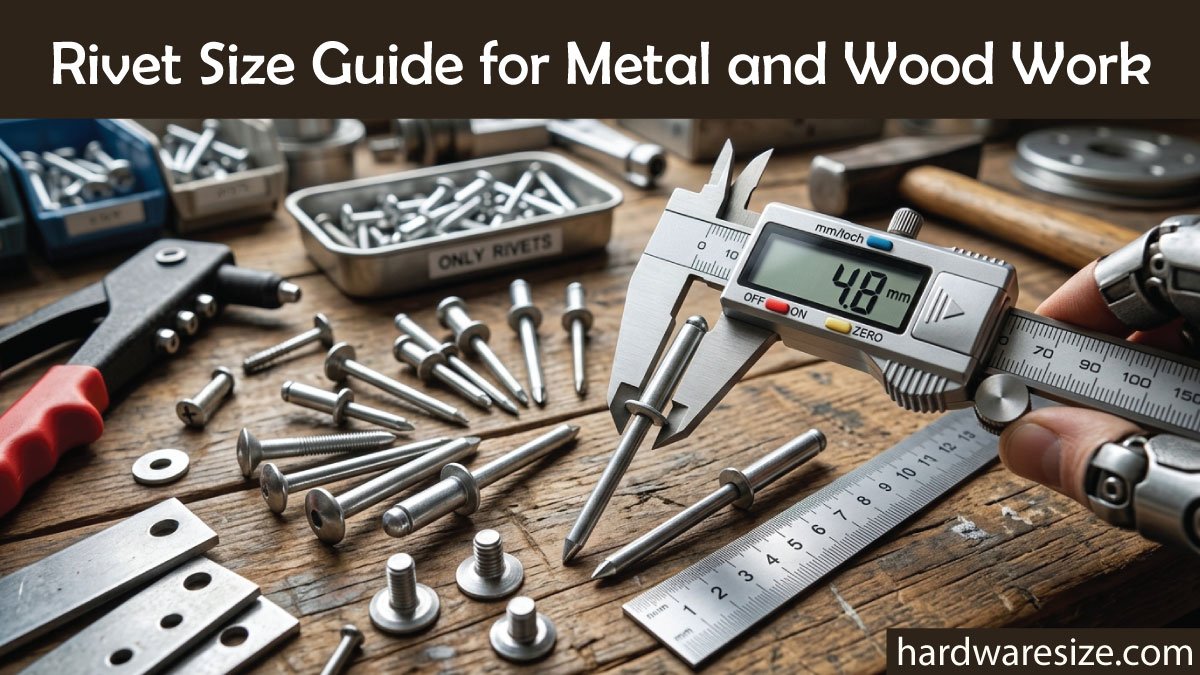
Rivets may look simple, but they play a powerful role in holding materials together. From metal sheets in fabrication to wooden panels in furniture, rivets create strong, permanent joints that don’t loosen easily over time.
However, the strength of a riveted joint depends heavily on one thing—choosing the correct rivet size. If the size is wrong, the joint can fail, even if everything else is done perfectly.
In this complete guide, you will learn how to choose the right rivet size for both metal and wood work, step by step, in a clear and practical way.
What Is a Rivet?
A rivet is a permanent mechanical fastener used to join two or more materials like metal, wood, or plastic. It has a smooth shaft with a head on one side, while the other end is deformed during installation to create a strong, secure joint that cannot be easily removed.
Rivet Definition:
A rivet is a non-threaded fastening device designed to create a fixed and durable connection between materials. It works by inserting the shaft into a hole and then shaping the tail end to form a second head. This process locks the parts together permanently, ensuring strength and resistance to vibration.
Rivet Meaning:
The term “rivet” refers to a fastening element used to permanently hold materials together. It is widely used in engineering, construction, and manufacturing where strong and reliable joints are required. Rivets are especially useful in situations where bolts or screws may loosen over time.
Why Rivet Size Is Important
Rivet size is important because it directly affects the strength, durability, and safety of a joint. Using the correct diameter and length ensures proper load distribution and a tight fit between materials. If the rivet is too small, the joint may fail under stress or vibration. If it is too large, it can damage the material or create improper alignment. Choosing the right rivet size also improves installation efficiency and ensures long-lasting performance in construction, automotive, and industrial applications.
Main Rivet Dimensions You Must Know
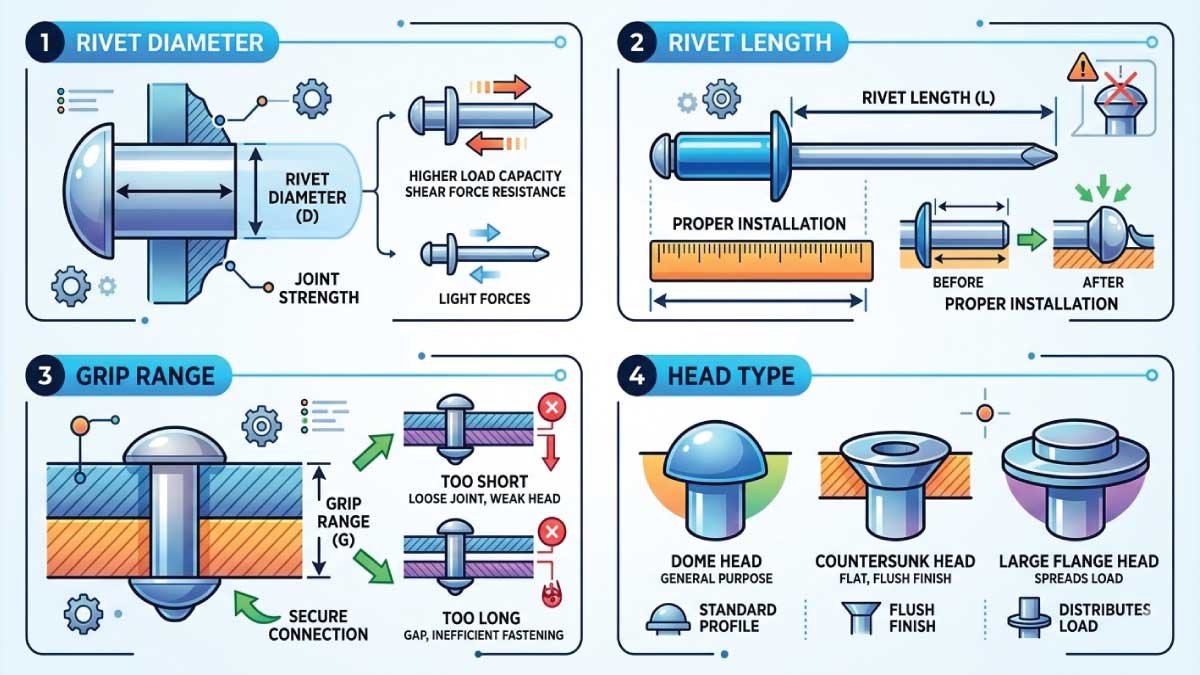
Before selecting a rivet, understanding its main dimensions is essential for a secure and reliable joint. Each dimension plays a key role in strength, fit, and performance. Choosing the correct size ensures proper installation, prevents joint failure, and improves durability in both light-duty and heavy-duty applications.
1. Rivet Diameter
The rivet diameter refers to the thickness of its shaft and is a major factor in joint strength. A larger diameter provides higher load capacity and better resistance to shear forces, while a smaller diameter is suitable for lighter tasks. Always match diameter with the load requirements.
2. Rivet Length
Rivet length is measured from beneath the head to the tip of the shaft. It determines how well the rivet can pass through materials and form a secure closing head. If the length is incorrect, the rivet may not hold properly or could weaken the joint.
3. Grip Range
Grip range is the total thickness of all materials being fastened together. Selecting the correct grip ensures the rivet forms a tight and secure connection. If the grip range is too short or too long, the joint may become loose, reducing overall strength and reliability.
4. Head Type
Rivet head type affects both appearance and function. Dome heads are commonly used for general purposes, countersunk heads provide a smooth, flush finish, and large flange heads distribute load over a wider area. Choosing the right head type ensures better performance for specific materials and applications.
How to Choose the Right Rivet Size
Selecting the correct rivet size ensures a strong and reliable joint. It depends on proper measurement, material thickness, and choosing suitable diameter and length. Following a simple method helps avoid weak joints, improves durability, and ensures safe performance in mechanical, construction, and woodworking applications.
Step 1: Measure Total Thickness
First, measure the total thickness of all materials being joined. Add each layer carefully to get an accurate value. For example, combine metal and wood thickness together. This total measurement is essential because it determines the required rivet length for a proper and secure fit.
Step 2: Choose Rivet Diameter
Rivet diameter controls joint strength and load capacity. A general guideline is to select a diameter suitable for the thickest material. Since standard sizes are available, choose the closest matching diameter that provides enough strength without damaging or weakening the joined materials during use.
Step 3: Select Rivet Length
Rivet length must be enough to pass through all materials and allow proper head formation. It should be slightly longer than the total material thickness. This extra length ensures correct deformation during installation, creating a tight, strong, and permanent connection between the joined parts.
Step 4: Pick the Closest Standard Size
Always choose the nearest available standard rivet size after calculations. If unsure between two options, selecting a slightly larger rivet is safer. A bigger rivet improves grip and strength, while a smaller one may lead to weak joints or early failure under load.
Rivet Size Guide for Metal Work
Metal work requires strong, accurate, and long-lasting fastening because metal sheets and structures do not compress like wood. That is why selecting the correct rivet size is very important for safety and durability. Rivets are widely used in sheet metal fabrication, automotive panels, steel frames, and industrial projects where vibration and load resistance matter.
Choosing the right diameter depends on the thickness of the metal and the strength required in the joint.
Recommended Rivet Sizes
Thin metal sheets: 3 mm to 4 mm rivets are ideal for light fabrication work.
Medium metal plates: 4 mm to 5 mm rivets are commonly used in automotive and general metal structures.
Heavy steel structures: 5 mm to 6 mm or larger rivets are used for high-strength and load-bearing applications.
Important Tips
Always use steel or stainless steel rivets for better strength and corrosion resistance. Proper hole alignment is essential because even a small mismatch can weaken the joint. Avoid oversized holes, as they reduce grip and durability. Using the correct riveting tool also ensures a tight and secure fit.
Metal does not allow flexibility, so precision is more important than in wood or plastic. When rivet size matches material thickness correctly, the joint becomes strong, clean, and long-lasting.
Also Read Our Latest Guide:
Rivet Size Guide for Wood Work
Wood is a natural material that behaves very differently from metal. It is softer, more flexible, and can easily crack, split, or deform if fastened incorrectly. That’s why choosing the right rivet size and type is very important in woodworking applications such as furniture making, carpentry, and light structural projects.
Unlike metal, wood fibers can be damaged by excessive pressure, so rivets must distribute the load evenly to maintain strength and appearance.
Recommended Rivet Sizes for Wood Work
-
Light wood joints: 3 mm to 4 mm rivets are suitable for small fixtures and decorative work
-
Furniture work: 4 mm to 5 mm rivets are commonly used in chairs, tables, and cabinets
-
Structural wood applications: 5 mm to 6 mm rivets are used for stronger joints in frames and support structures
Important Tips for Wood Riveting
Use rivets with large flange heads so the load is spread over a wider surface area, reducing the risk of wood damage. Avoid over-tightening because it can crush the wood fibers or cause cracking. Always drill clean and properly sized holes before inserting rivets to prevent splitting. For best results, use softer materials like aluminum rivets, which are more compatible with wood.
Wood requires a careful and controlled approach because even small mistakes in fastening can weaken the entire structure. When the correct rivet size is used with proper technique, wood joints remain strong, stable, and long-lasting while maintaining a clean finish.
Types of Rivets You Should Know
Rivets come in different types, and each type is designed for specific applications. Choosing the right rivet type ensures better strength, ease of installation, and long-term durability. Understanding these basic types helps you select the most suitable option for metal, wood, plastic, and industrial projects.
1. Blind Rivets (Pop Rivets)
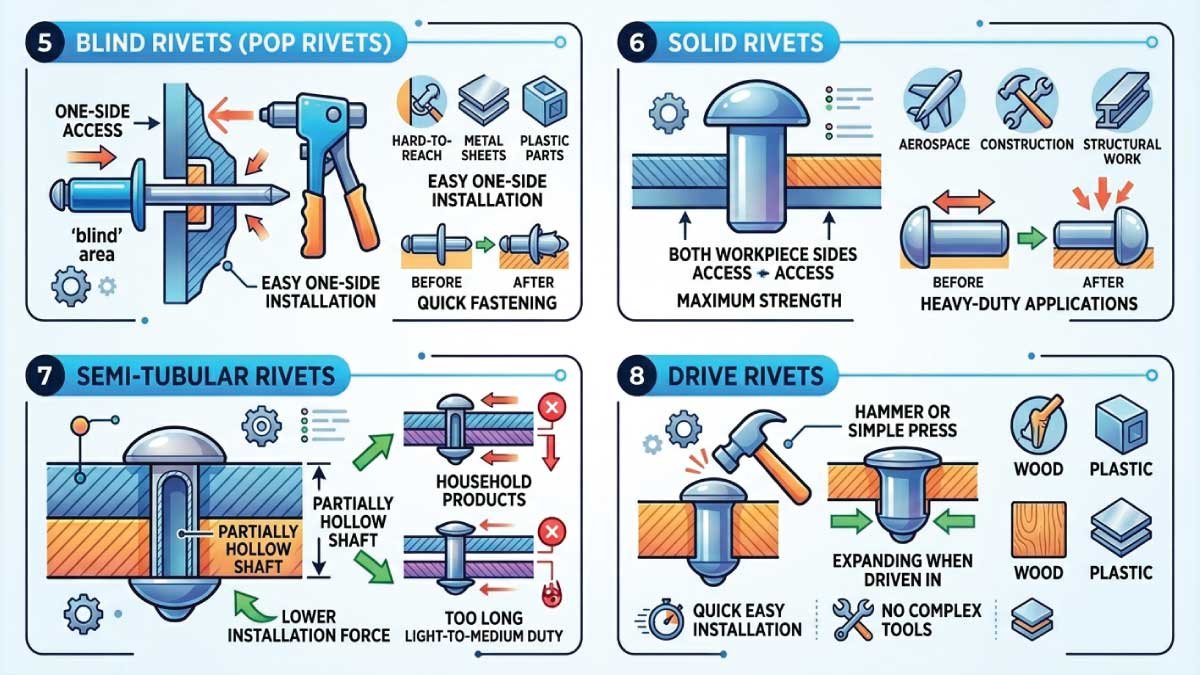
Blind rivets are installed from one side of the material, making them very convenient for hard-to-reach areas. They are easy to use and do not require access to both sides. Commonly used in metal sheets, plastic parts, and wood panels where quick and simple fastening is needed.
2. Solid Rivets
Solid rivets are one of the strongest types of rivets used in heavy-duty applications. They require access to both sides of the workpiece and proper tools for installation. These rivets are commonly used in aerospace, construction, and structural work where maximum strength and durability are required.
3. Semi-Tubular Rivets
Semi-tubular rivets have a partially hollow shaft, which makes them easier to deform during installation. They require less force compared to solid rivets and are suitable for light to medium-duty applications. These rivets are commonly used in household products, light machinery, and simple assembly work.
4. Drive Rivets
Drive rivets are designed for quick and easy installation using a hammer or simple pressing tool. They are commonly used in wood, plastic, and light-duty materials. These rivets expand when driven in, creating a secure hold without complex tools, making them ideal for fast assembly work.
Choose the Right Rivet Material
The material of a rivet plays a key role in its strength, durability, and resistance to environmental conditions. Selecting the right material ensures better performance, longer life, and proper compatibility with the materials being joined. Different rivet materials are used for light, medium, and heavy-duty applications.
1. Aluminum Rivets
Aluminum rivets are lightweight and easy to install, making them ideal for general-purpose use. They offer good corrosion resistance and are commonly used in wood, plastic, and light metal applications. Because of their low weight, they are widely used where strength is needed without adding extra load.
2. Steel Rivets
Steel rivets are known for their high strength and durability. They are commonly used in heavy-duty applications where strong mechanical loads are involved. These rivets are suitable for construction, machinery, and structural projects. However, they may require protection against rust in moist environments.
3. Stainless Steel Rivets
Stainless steel rivets provide excellent resistance to rust and corrosion, making them ideal for outdoor and marine environments. They combine strength with durability and are used where long-term performance is required. These rivets are perfect for harsh weather conditions and demanding industrial applications.
4. Copper Rivets
Copper rivets are soft, flexible, and easy to shape during installation. They are often used in woodwork, leather goods, and decorative applications. Their attractive appearance also makes them suitable for design-focused projects where both function and aesthetics are important, rather than heavy structural strength.
Also Read Our Latest Guide:
Common Mistakes to Avoid
Selecting and using rivets may seem simple, but small mistakes can seriously affect joint strength and durability. Avoiding these errors ensures better performance, safer connections, and longer-lasting results in metal, wood, and industrial applications.
1. Using the Wrong Length
Using an incorrect rivet length is a common mistake. If the rivet is too short, it cannot form a proper head, resulting in a weak joint. If it is too long, it may bend instead of gripping tightly, reducing overall strength and stability.
2. Choosing Incorrect Diameter
Rivet diameter must match the application requirements. A diameter that is too small creates a weak connection that may fail under load. On the other hand, an oversized rivet can make installation difficult and may damage the material or reduce alignment accuracy.
3. Ignoring Material Type
Different materials require different rivet types. Using a hard rivet on soft materials like wood can cause cracking or splitting. It is important to match rivet material with the base material to ensure proper grip, durability, and long-term performance without damage.
4. Poor Hole Preparation
Proper hole preparation is essential for strong rivet joints. Rough, oversized, or misaligned holes weaken the connection and reduce strength. Always ensure clean, smooth, and correctly sized holes before installation to achieve a tight fit and reliable, long-lasting fastening result.
Tools Required for Riveting
To install rivets properly, you need the right tools for accuracy, strength, and safety. Using proper equipment ensures clean holes, correct alignment, and strong fastening results. These basic tools are commonly used in both workshop and industrial riveting work.
1. Rivet Gun
A rivet gun is the main tool used to install blind (pop) rivets. It pulls and expands the rivet to lock materials together tightly. It is easy to use, fast, and ideal for sheet metal, wood, and plastic applications where one-sided access is required.
2. Drill Machine
A drill machine is used to create precise holes in the materials before inserting rivets. Proper drilling ensures correct alignment and fit. Without accurate holes, the rivet joint may become weak or misaligned, reducing overall strength and durability of the connection.
3. Drill Bits
Drill bits are cutting tools attached to the drill machine. They come in different sizes depending on rivet diameter. Choosing the correct drill bit size is important because it ensures a clean, properly sized hole for secure and stable rivet installation.
4. Measuring Tools
Measuring tools like rulers, calipers, or tape measures help determine thickness and alignment before riveting. Accurate measurement ensures correct rivet size selection and proper hole placement. This improves joint strength, reduces errors, and ensures a professional and reliable finishing result.
Also Read Our Latest Guide:
When to Use Rivets Instead of Screws
Rivets are preferred over screws in situations where a permanent, strong, and vibration-resistant joint is needed. Unlike screws, rivets do not loosen over time, making them ideal for applications where reliability and long-term performance are more important than removability or adjustments.
1. Permanent Joint Requirement
Use rivets when you need a permanent connection that will not be disassembled. Once installed, rivets cannot be easily removed without damage, making them suitable for structures, machinery, and assemblies where long-lasting fastening is essential and maintenance is minimal.
2. One-Sided Access
Rivets are the best choice when you only have access to one side of the material. Blind rivets, in particular, allow easy installation without needing back-side access, making them very useful in tight spaces, enclosed structures, and sheet metal work.
3. Vibration Resistance
Rivets perform better than screws in environments with constant vibration. They do not loosen like threaded fasteners, which makes them ideal for automotive, aerospace, and heavy machinery applications. This ensures the joint remains stable and secure even under continuous movement or stress.
4. Lightweight Fastening Needs
Rivets are also useful when lightweight fastening is required. They provide strong joints without adding excessive weight to the structure. This is especially important in aircraft, vehicles, and lightweight metal or composite assemblies where reducing overall weight improves performance and efficiency.
Final Tips for Perfect Rivet Selection
Choosing the right rivet requires attention to detail and proper planning. Following a few simple guidelines ensures strong, safe, and long-lasting joints in any application, whether you are working with metal, wood, or plastic materials.
1. Measure Materials Carefully
Always measure the total thickness of materials accurately before selecting a rivet. Proper measurement helps determine the correct length and ensures a tight fit, preventing weak joints or installation errors that can affect performance and durability.
2. Choose the Right Diameter for Strength
Select the rivet diameter based on the load and material strength requirements. A correct diameter ensures the joint can handle stress without failure. Too small a rivet weakens the connection, while too large may damage the material or make installation difficult.
3. Ensure Proper Length for Grip
Rivet length must be enough to pass through all materials and form a secure head. Proper grip ensures tight fastening and prevents loosening. Incorrect length can lead to weak joints or improper deformation during installation.
4. Match Rivet Material with Application
Different materials like aluminum, steel, stainless steel, or copper serve different purposes. Always match rivet material with the working environment. For example, use stainless steel for outdoor use and aluminum for lightweight applications to ensure better performance and durability.
5. Use Clean and Accurate Holes
Drilled holes must be clean, smooth, and properly aligned. Poor hole quality reduces joint strength and may cause misalignment. Accurate holes ensure the rivet fits tightly, improving stability and creating a professional, reliable fastening result.
Conclusion
Rivet sizing may seem technical at first, but once you understand the basics, it becomes simple and practical. The right rivet size ensures strong, durable, and long-lasting joints in both metal and wood work.
Whether you are working on a small DIY project or a professional job, taking a few extra minutes to select the correct rivet size will improve the quality of your work and prevent future problems.
Master this skill, and your projects will always be stronger, cleaner, and more reliable.

Engineer Hassan is a Mechanical Engineer with 16+ years of hands-on experience in mechanical hardware, fasteners, and workshop tools. He focuses on size selection, thread identification, and measurement, helping users choose the correct components with accuracy and safety.