
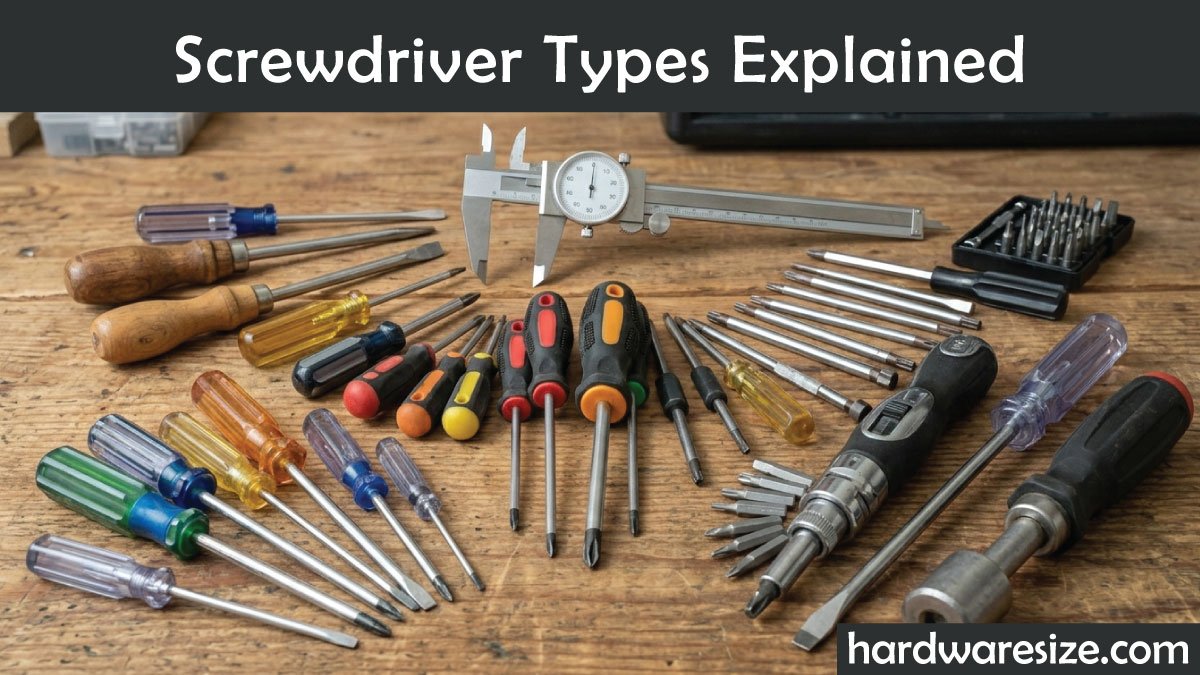
The first thing I used to think about tools was that a screwdriver was simply a tool, which was used to either tighten or loosen the screws. However, follow the completion of the small DIY projects at home and assist the friend in repairing furniture, I learned that there are many different types of screwdrivers, and each has the particular screw type.
It is simple to ruin a screw head, the screwdriver or even the piece of work with the wrong screwdriver. That is why it should be known what are the types of screwdrivers, particularly among the beginners.
In this guide, I will explain the most common screwdriver types, their uses, and how to choose the right one for your project.
What Is a Screwdriver?
A screwdriver is a basic hand tool, which is used to loosen or tighten screws. It is typically composed of three distinct components: the handle to hold on, the part that joins the tool and the tip that can be inserted into the screw head.
- Handle – The part you hold for grip and control
- Shaft – The metal rod connecting the handle and tip
- Tip (Blade) – The end that fits into the screw head
The screwdriver is made in different designs and types depending on the screws the screwdriver is supposed to work with. In my case, the tip shape is the factor to consider the most. When the tip is not fitting the screw head the screwdriver will slip and possibly strip the screw.
Common Screwdriver Types
These are the most frequently utilized types of screwdrivers and each beginner is supposed to be familiar with them. Each of the types is created to fit a particular screw-head, which facilitates better gripping, anti-slip features, and makes it much easier to tighten or loosen screws, whether in the course of repairs or during aesthetic DIY work.
1. Flathead Screwdriver (Slotted)
One of the most common screwdrivers that is the oldest is the flathead screwdriver. It has a straight and flat blade that fits into screws having one horizontal slit hence it is a simple yet handy tool in most simple household chores.
Common Uses
-
Furniture assembly
-
Basic home repairs
-
Electrical switch plates
-
Simple mechanical work
Advantages
-
Very common and widely available
-
Simple design
-
Works for many household screws
Disadvantages
-
Can slip easily if not aligned properly
-
Less torque compared to modern screw designs
My Experience
The first tool that I used when starting to do DIY repairs at home was the flathead screwdriver. I applied it to tighten loose cabinet handles and attachment of small appliances. However, I soon discovered that the screws used to attach the flats are easy to slip and when you are too rough, they slip.
2. Phillips Screwdriver
Phillips screwdriver is also one of the most widespread screwdrivers of the modern tools and household repair sets. Its cross-shaped tip is inserted into Phillips screws and, therefore, is easier to hold to and provides better torque than the conventional flathead screwdrivers.
Common Uses
-
Electronics
-
Furniture assembly
-
Appliances
-
Automotive work
Advantages
-
Better grip than flathead screws
-
Less slipping
-
Allows more torque
Disadvantages
-
Can strip if the wrong size is used
My Experience
Phillips screws are mostly applicable in most modern furniture and I tend to use this screwdriver when joining desks, chairs or shelves. Another lesson that I had to learn was the hard way; that there are various sizes of Phillips screwdrivers. The damage of the screw head may occur because of the wrong size usage.
3. Torx Screwdriver (Star)
Torx screwdriver has a six-point tip that is star-shaped and gives it a good grip and control. It is typically used in industries where accuracy and increased torque is an absolute must, e.g. electronics, automotive repair, and mechanical equipment.
Common Uses
-
Electronics
-
Automotive repairs
-
Computer hardware
-
Industrial machinery
Advantages
-
Very strong grip
-
Less slipping
-
Handles high torque easily
Disadvantages
-
Requires specific Torx bits
My Experience
The initial experience that I had with a Torx screw was when I attempted to repair a laptop by opening it and cleaning it. My regular screwdrivers were not effective. Having purchased a Torx screwdriver set, I understood why manufacturers prefer them to use them because they minimize slipping and they give greater control.
4. Hex Screwdriver (Allen)
A hex screwdriver is made to take screws with a hex socket. These screws are commonly known as Allen screws and are commonly applied in furniture, bicycles and mechanical machines where a good grip and reliable torque is needed.
Common Uses
-
Furniture assembly
-
Bicycle repairs
-
Mechanical equipment
-
Machinery
Advantages
-
Strong grip
-
Allows high torque
-
Less risk of slipping
Disadvantages
-
Limited to hex screws only
My Experience
Have you ever ever used a flat-pack furniture? Chances are that you used an Allen key or hex screwdriver. I recall how I constructed a wardrobe, and nearly all the screws needed a hex key. The grip was very strong and reliable, but it took more time than anticipated.
5. Robertson Screwdriver (Square)
The screwdriver used in Robertson is square in shape and fits into square socket screws. It is highly utilized in Canada and in woodworking as well as construction due to the fact that it gives good gripping and lowers the possibility of slipping.
Common Uses
-
Woodworking
-
Construction
-
Deck building
Advantages
-
Excellent grip
-
Less slipping
-
Easy one-hand operation
Disadvantages
-
Less common in some regions
My Experience
Robertson screws were first observed when we were repairing a wooden cabinet. The screwdriver was locked into the screw by the square design and this ensured that the screw drove into the screw much easier.
6. Pozidriv Screwdriver
Pozidriv screwdriver resembles Phillips screwdriver except that it has more grooves that enhance grip and lessen slipping. It is often applied in the building and woodworking that require higher torque and control.
Common Uses
-
Construction work
-
Wood screws
-
Furniture assembly
Advantages
-
Less slipping than Phillips
-
Higher torque capacity
Disadvantages
-
Requires specific Pozidriv screws
My Experience
I once attempted to cut a Pozidriv screw with a Phillips screwdriver and it kept on slipping. Once the right Pozidriv tool was used, the screw was easily tightened. This lesson taught me that minor variations in the design of screws are significant.
Specialty Screwdriver Types
There are screwdrivers that are specific to a particular application and have a need of precision, convenience, or speed. The specialty tools are usually applied in electronics, small openings or long jobs where better control and efficiency are needed.
1. Precision Screwdrivers
Precision screwdrivers are miniature and lightweight screwdrivers that are used in light and finer work. They come into use when handling extremely tiny screws in electronics, watches or eyeglasses where a regular screwdriver would be oversized.
Common Uses
-
Eyeglasses repair
-
Watches
-
Electronics
-
Mobile phones
My Experience
I keep a small precision screwdriver set at home. It has helped me repair glasses, open remote controls, and fix small gadgets.
3. Magnetic Screwdrivers
A magnetic screwdriver is one that has a magnetized end where the screw is securely held as you work. This helps in attaching screws much easier particularly when one is in a tight space or area that the screws may fall easily into.
Benefits
-
Prevents dropping screws
-
Makes work easier in tight spaces
My Experience
When I was forced to screw things into the inside of a cabinet with a small opening and screws fell. Once a magnetic screwdriver was used the work became much easier.
4. Ratcheting Screwdrivers
Ratcheting screwdrivers are shaped with a special feature whereby the tool can be turned continuously without the removal of the tool into the screw. This design can save time and effort particularly in long projects which need tightening of a lot of screws.
Advantages
-
Faster work
-
Less hand fatigue
-
Great for long projects
My Experience
When assemble a large desk with many screws, a ratcheting screwdriver saved a lot of time and effort
How to Choose the Right Screwdriver
When selecting a screwdriver, one should pay attention to the efficiency and safety. The right tool will assist in avoiding any screw damage, better grip, and an easier and more productive work.
Here are some tips beginners should follow.
1. Match the Screw Head
It is important to always use a screwdriver that is the right shape of the screw. A correct fit will also ensure you are not likely to slip, the screw is not going to be damaged, and you will have a better grip when tightening or loosening the screw.
2. Use the Correct Size
Use the correct screwdriver size is very important. If the tip is too small or too large, it can strip the screw head and make it difficult to remove or tighten properly.
3. Choose a Comfortable Handle
There is a handle that is comfortable giving a better grip and control to the use. It also lessens the tiredness of the hands particularly when one is working on a project where the screws are to be tightened or removed in large numbers.
4. Consider Magnetic Tips
Magnetic screwdriver tips keep the screw in position thus easier to position and install. This is particularly useful to an inexperienced person or in a tight or remote area.
Essential Screwdrivers Every Beginner Should Own
If you are start your tool collection, I recommend have these basic screwdrivers:
- Flathead screwdriver
- Phillips screwdriver
- Torx screwdriver set
- Hex/Allen keys
- Precision screwdriver set
These tools can handle most household and DIY tasks.
Common Mistakes Beginners Make
I made a number of errors as a beginner when I first started using tools. Knowing about these frequent errors can allow you to use the tools more efficiently, keep your tools safe, and not to break the screws when performing the repairs.
1- Using the Wrong Screwdriver
It is easy to break the screw head when the wrong type of screwdriver is used and it becomes hard to remove this screw head in the later future. It is always important that the screwdriver tip is matched with the correct screw type to prevent slipping and the damage of the tool.
2- Applying Too Much Force
Overstraining when screwing may strip the screw head or it may scratch the tool tip. One should use consistent, gradual force as opposed to too tough force.
3- Ignoring Screwdriver Size
Size of screwdriver is important, even to beginners. The incorrect size may lead to slipping, screw head destruction and difficult screw tightening and loosening.
4- Using Cheap Tools
The screwdrivers can be low-quality and they wear easily and do not fit in screws. Good quality tools can enhance the longevity, safety and overall performance when doing an overall DIY or repair job.
Safety Tips When Using Screwdrivers
Screwdrivers are very basic tools, but they should be used safely. Using tools in the right way can avoid injuries, secure materials, and make sure that you do your job in the most efficient and proper way.
1- Wear Proper Grip
Before using a screwdriver, always make sure that your hands are dry and clean. Holding it is a good way to ensure that it does not slip and to maintain more control when tightening or loosening a screw.
2- Use the Tool Correctly
Screwdriver is to be used just when turning screws. The tool could be destroyed using it as a chisel, pry bar, or hammer which might result in injuries during the work.
3- Keep Tools in Good Condition
Have your screwdrivers checked frequently to make sure they have not worn out or damaged ends. Changing broken equipment enhances the level of safety and makes screws tighten or come out without stumbling.
Final Thoughts
Know the type of screwdriver is a crucial activity every person would want to undertake to have knowledge of DIY projects, home repairs, and mechanical work. Based on my own experience, a screwdriver should have the correct screwdriver.
The work is simplified, the screws remain intact and work is accomplished much faster. There are several types of screwdrivers; you need to have the basic ones such as the flathead, Phillips, and Torx screwdriver first before adding other tools to your set as you complete additional projects.
Eventually, you will find which tools are the most frequently used by you and you will be willing how the simplest tool like a screwdriver can make any repair and any project easier and more enjoyable.
Also Read:

Engineer Hassan is a Mechanical Engineer with 16+ years of hands-on experience in mechanical hardware, fasteners, and workshop tools. He focuses on size selection, thread identification, and measurement, helping users choose the correct components with accuracy and safety.