
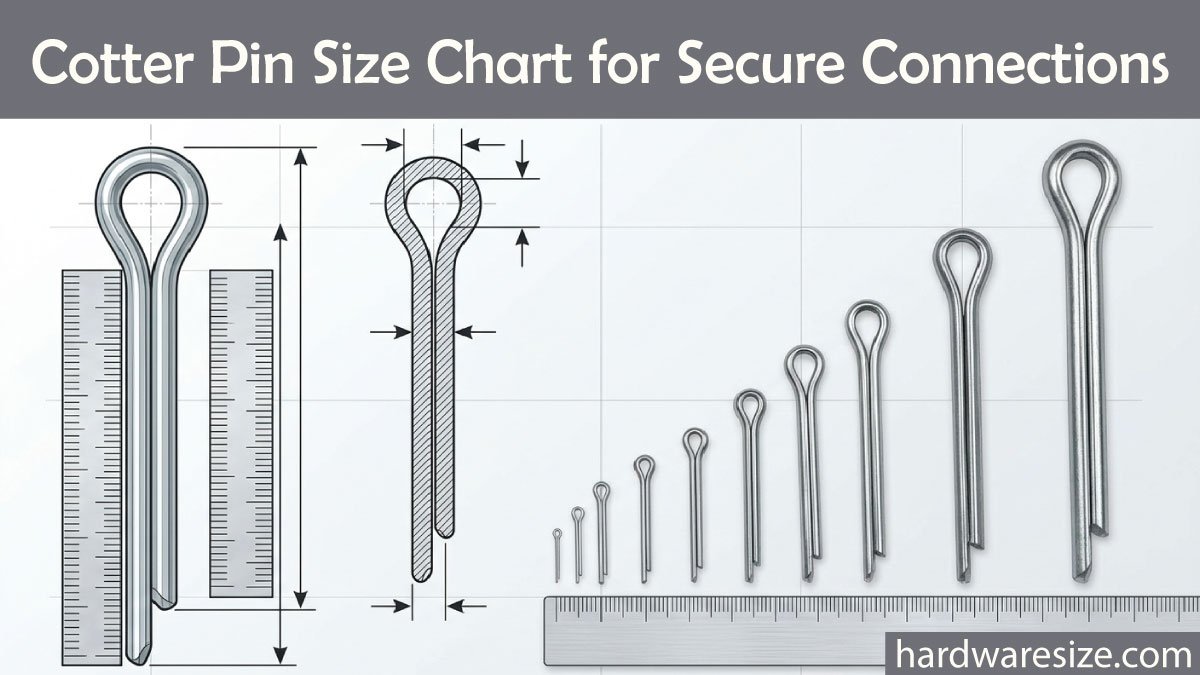
When it comes to mechanical fastening, sometimes the smallest components carry the biggest responsibility. A cotter pin may look simple, but it plays a critical role in preventing nuts, bolts, and clevis pins from loosening under vibration, load, or movement.
Whether you are working on automotive assemblies, machinery, or structural connections, choosing the correct cotter pin size is essential for safety and performance.
In this detailed guide, you will learn everything about cotter pins, including a complete cotter pin size chart, how to measure them, and how to select the right one for your application.
What Is a Cotter Pin?
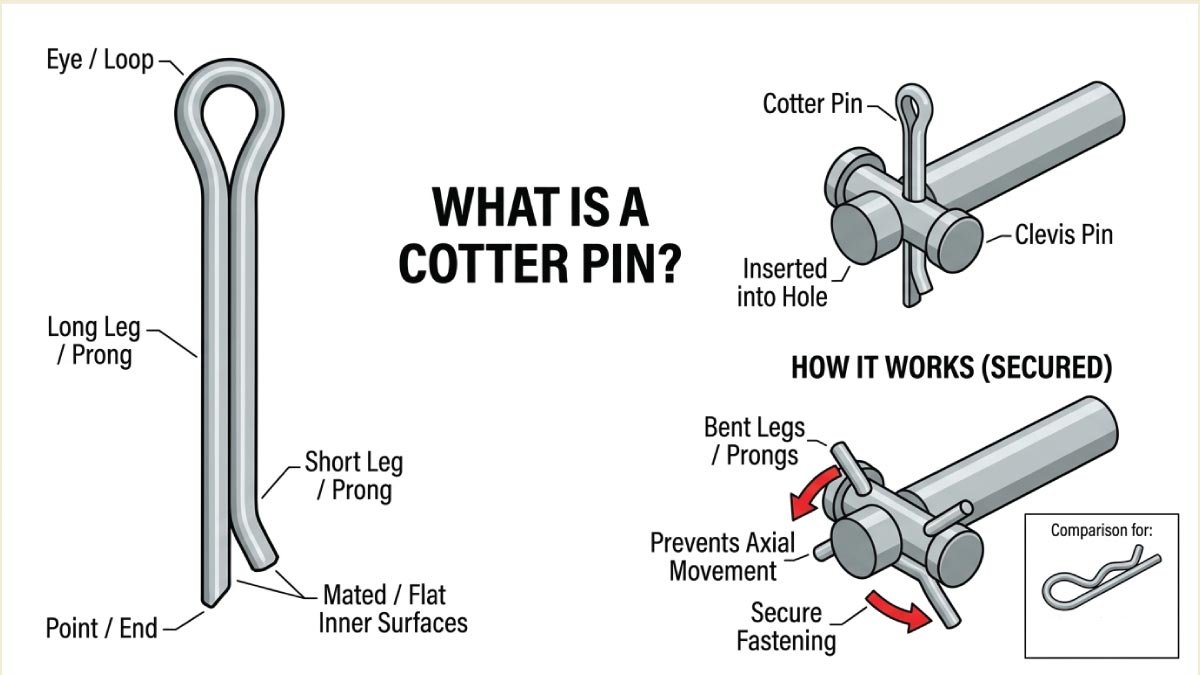
A cotter pin (also known as a split pin) is a simple yet highly effective mechanical fastener designed to secure components and prevent loosening under motion or vibration. It works by inserting through a drilled hole and bending its ends outward, creating a locking mechanism that holds parts firmly in place over time.
It is commonly used to lock components such as:
- Castle nuts
- Slotted nuts
- Clevis pins
- Axle shafts
Once inserted through a pre-drilled hole, the ends are bent apart to prevent the pin from slipping out.
Why Cotter Pin Size Matters
Selecting the correct cotter pin size is critical for maintaining the safety, reliability, and durability of any mechanical assembly. An incorrect size can compromise the entire connection, especially in high-load or vibration-prone environments where secure fastening is essential for proper operation.
Choosing the wrong cotter pin size can lead to serious problems:
- Loose connections
- Component failure
- Safety hazards in machinery or vehicles
A properly sized cotter pin ensures:
- Tight and secure locking
- Resistance to vibration
- Long-lasting performance
Cotter Pin Size Chart (Standard Dimensions)
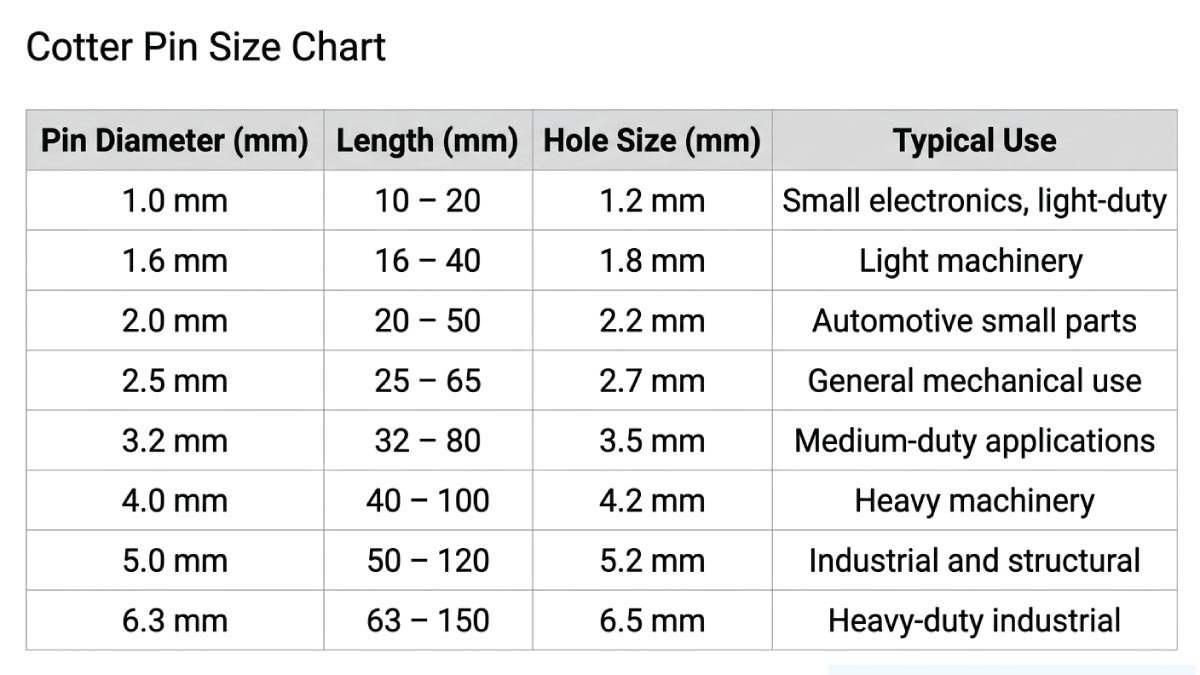
Understanding standard cotter pin sizes helps engineers, technicians, and DIY users quickly select the right pin for their application. These dimensions are based on common industry standards and ensure compatibility with pre-drilled holes, nuts, and mechanical components used in various engineering fields.
Below is a general cotter pin size chart used in most engineering and mechanical applications:
| Pin Diameter (mm) | Length (mm) | Hole Size (mm) | Typical Use |
|---|---|---|---|
| 1.0 mm | 10 – 20 | 1.2 mm | Small electronics, light-duty |
| 1.6 mm | 16 – 40 | 1.8 mm | Light machinery |
| 2.0 mm | 20 – 50 | 2.2 mm | Automotive small parts |
| 2.5 mm | 25 – 65 | 2.7 mm | General mechanical use |
| 3.2 mm | 32 – 80 | 3.5 mm | Medium-duty applications |
| 4.0 mm | 40 – 100 | 4.2 mm | Heavy machinery |
| 5.0 mm | 50 – 120 | 5.2 mm | Industrial and structural |
| 6.3 mm | 63 – 150 | 6.5 mm | Heavy-duty industrial |
👉 If you work with construction or mechanical fastening, understanding anchor bolt sizes is very important. This guide explains how to choose the right size for safety and strength. Learn practical tips and real-world uses—read the full post to make smarter and more reliable engineering decisions today.
Understand the Cotter Pin Dimensions
To correctly select a cotter pin, you must understand its key dimensions, as each measurement directly affects how securely the pin performs in real-world applications. Proper sizing ensures a tight fit, reliable locking, and safe operation, especially in systems exposed to vibration, load, or continuous movement.
1. Diameter (Thickness)
This is the most critical measurement because it determines how well the cotter pin fits into the drilled hole. The diameter must closely match the hole size to ensure proper engagement and prevent movement or failure during operation.
- Too small → loose fit
- Too large → cannot insert
2. Length
The length is measured from the eye (head) to the end of the pin and determines how effectively the pin can be secured after insertion. A proper length allows both tines to be bent firmly, ensuring the pin stays locked under working conditions.
- Should be long enough to bend securely
- Excess length can be trimmed if necessary
3. Eye Size
The eye is the rounded loop at the top of the cotter pin, and it plays an important role during installation. It provides a surface for holding, aligning, and guiding the pin into position, especially in tight or hard-to-reach assemblies.
- Helps in easy gripping during installation
- Assists in proper alignment of the pin
- Improves handling in confined spaces
Materials Used in Cotter Pins
Material selection is just as important as choosing the correct size because it directly affects strength, durability, and resistance to environmental conditions. The right material ensures the cotter pin performs reliably under load, moisture, temperature changes, and exposure to chemicals or corrosive elements.
1- Stainless Steel
Stainless steel cotter pins are widely preferred for their excellent resistance to rust and corrosion, making them ideal for harsh environments where moisture or chemicals are present. They also maintain strength over time without degrading quickly.
- Corrosion-resistant
- Ideal for outdoor and marine use
2- Mild Steel
Mild steel cotter pins are a budget-friendly option commonly used in general-purpose applications. They provide adequate strength for low to moderate loads but may require protective coatings to prevent rust in humid or outdoor environments.
- Cost-effective
- Suitable for indoor applications
3- Brass
Brass cotter pins are chosen for specialized applications where non-magnetic and non-sparking properties are important. They also offer good corrosion resistance and are commonly used in electrical or sensitive equipment assemblies.
- Non-magnetic
- Used in electrical applications
4- Zinc-Plated Steel
Zinc-plated steel cotter pins combine the strength of steel with a protective zinc coating that helps resist corrosion. This makes them a popular choice in automotive and mechanical systems exposed to moderate environmental conditions.
- Added corrosion protection
- Widely used in automotive parts
How to Choose the Right Cotter Pin Size
Selecting the correct cotter pin size is essential for ensuring a secure and reliable connection. A properly chosen pin prevents loosening, improves safety, and extends the life of mechanical assemblies. Follow these simple steps to make the right choice for your application.
Step 1: Measure the Hole Diameter
Start by measuring the diameter of the hole in the bolt, shaft, or clevis using a caliper or precise measuring tool. Accuracy here is critical because the pin must fit properly.
👉 Choose a cotter pin slightly smaller than the hole size so it can be inserted easily without excessive play.
Step 2: Determine the Required Length
Next, determine the correct length of the cotter pin. It should pass completely through the hole and extend enough on both sides to allow bending of the tines.
👉 A good rule of thumb is to select a length at least 1.5 times the hole depth to ensure a firm and secure lock.
Step 3: Consider Load and Application
Always match the cotter pin size with the load requirements of your application. Different working conditions demand different strengths and thicknesses.
👉 Light-duty applications can use smaller, thinner pins, while heavy-duty or high-load environments require thicker and stronger cotter pins for better reliability.
Step 4: Check Material Requirements
Material selection plays a major role in durability and performance, especially in harsh environments. The right material prevents corrosion and failure.
👉 For outdoor or moisture-exposed use, choose stainless steel. For high-stress or load-bearing applications, hardened steel provides better strength and longevity.
Common Applications of Cotter Pins
Cotter pins are widely used across multiple industries because of their simple design, low cost, and dependable performance. They are ideal for securing components and preventing fasteners from loosening under vibration or load.
1- Automotive Industry
In the automotive sector, cotter pins are commonly used to secure castle nuts on wheel hubs and suspension systems. They also play a role in brake assemblies, ensuring critical components remain locked in place even under constant movement and vibration.
2- Machinery
In industrial machinery, cotter pins are used to lock rotating parts and secure fasteners. They help prevent nuts and bolts from loosening due to continuous motion, making them essential for maintaining operational safety and equipment reliability over time.
3- Construction
In construction work, cotter pins are used in structural joints and temporary fastening setups. Their ease of installation and removal makes them suitable for applications where components may need to be adjusted or disassembled during the building process.
4- Agriculture Equipment
Agricultural machinery frequently uses cotter pins in tractor linkages, hitch pins, and other moving parts. Their quick installation and dependable hold make them ideal for field equipment that requires regular maintenance and adjustments.
Installation Guide: How to Use a Cotter Pin
Proper installation of a cotter pin is essential to ensure a secure and reliable connection. Even though the process is simple, following the correct steps helps prevent loosening, slipping, or failure in mechanical systems, especially those exposed to vibration or dynamic loads.
Follow these steps for proper installation:
- Insert the cotter pin through the hole
- Ensure the head sits firmly against the surface
- Bend one tine straight
- Bend the other tine in the opposite direction
- Trim excess length if needed
👉 Always ensure both ends are securely bent to prevent slipping.
Common Mistakes to Avoid
Even simple components like cotter pins can fail if not used correctly. Many mechanical issues arise from small oversights, so understanding common mistakes helps improve safety, performance, and longevity of your assemblies in both professional and DIY applications.
Avoid these mistakes:
- Using the wrong size
- Reusing damaged cotter pins
- Not bending the ends properly
- Choosing incorrect material
Cotter Pin vs Other Fasteners
Cotter pins are just one of several locking methods used in mechanical assemblies. Comparing them with other fasteners helps you understand when to use each type based on strength, reusability, and ease of installation in different engineering applications.
| Fastener Type | Reusable | Strength | Ease of Use |
|---|---|---|---|
| Cotter Pin | No | Medium | Easy |
| R-Clip | Yes | Medium | Very Easy |
| Lock Nut | Yes | High | Moderate |
| Safety Wire | No | High | Difficult |
Maintenance and Inspection Tips
Regular maintenance and inspection are important to ensure cotter pins continue to perform effectively over time. Environmental exposure, vibration, and repeated use can weaken the pin, so routine checks help prevent unexpected failures and improve overall system reliability.
To ensure long-term safety:
- Regularly inspect for corrosion
- Replace bent or worn pins
- Never reuse critical cotter pins
- Check tightness in vibrating systems
Safety Considerations
Cotter pins are often used in critical applications where failure can lead to serious consequences. Following proper safety practices ensures that connections remain secure and reliable, particularly in high-load or high-risk environments like automotive and industrial systems.
- Always use the correct size
- Never substitute with wire or makeshift pins
- Follow engineering standards
- Replace after removal
Pro Tips for Engineers and DIY Users
Using cotter pins efficiently requires a combination of proper tools, organization, and practical experience. These tips can help both professionals and beginners improve their workflow, reduce errors, and ensure faster, safer installations in any mechanical project.
- Keep a cotter pin assortment kit
- Label sizes for quick identification
- Use pliers for clean bending
- Always carry spare pins in fieldwork
Conclusion
A cotter pin may be small, but it plays a huge role in mechanical safety and reliability. By understanding cotter pin sizes, materials, and applications, you can ensure secure connections in any project.
Using the cotter pin size chart and selection tips in this guide, you can confidently choose the right pin for your needs—whether you’re working on a vehicle, machine, or structural assembly.
👉 If you work with fastening systems, understanding stud bolt sizes is essential. From selection tips to real-world uses, this guide simplifies everything for you. Discover how the right stud bolt applications improve safety and performance—read the full post to make smarter, more reliable engineering decisions today.
FAQs:
What size cotter pins?
Cotter pins come in a wide range of sizes, typically from 1/32 inch to 3/8 inch in diameter and various lengths. The correct size depends on the hole diameter and thickness of the assembly. Always choose a pin slightly smaller than the hole but long enough to bend securely.
How big is a 38 mm pin?
A 38 mm pin refers to its length, not diameter. It is approximately 1.5 inches long. The diameter can vary depending on application, usually between 1 mm to 6 mm. Always confirm both length and thickness before use to ensure proper fit, strength, and safe mechanical locking performance.
What are the three types of cotter pins?
The three main types of cotter pins are standard split cotter pins, hairpin cotter pins (R-clips), and clevis pins with cotter ends. Each type serves different locking purposes in mechanical assemblies. They prevent loosening of fasteners and are widely used in automotive, machinery, construction, and agricultural equipment applications.
How to check pin size?
To check pin size, measure both diameter and length using a caliper or ruler. The diameter must match the hole size, while the length should extend enough to bend securely. Always compare with manufacturer specifications to ensure correct fit, strength, and safe performance in mechanical applications.
How to measure cotter pin size?
Measure a cotter pin by checking its wire diameter and overall length. Use a vernier caliper for accuracy. The length is measured from the head to the tip. Ensure the pin fits the hole properly and allows bending after insertion for secure locking and reliable mechanical holding strength.
What is the standard size of a pin?
There is no single standard size for all pins. Cotter pin sizes vary by application, typically ranging from 1 mm to 10 mm in diameter and 10 mm to 100 mm in length. Standards differ by industry, so always select size based on load, hole diameter, and design requirements.

Engineer Hassan is a Mechanical Engineer with 16+ years of hands-on experience in mechanical hardware, fasteners, and workshop tools. He focuses on size selection, thread identification, and measurement, helping users choose the correct components with accuracy and safety.